






Secure Tomorrow

Practice What You Plan

· 2 min read

Practice What You Plan Wendell Brock Dec 11, 2024 2 min read Ah, the g...

Estate Planning Doesn’t Have To Be Scary

· 2 min read

Estate Planning Doesn’t Have To Be Scary Wendell Brock Oct 18, 2024 3 ...

The Real Unemployment Data

· 1 min read

The Real Unemployment Data Wendell Brock Oct 11, 2024 1 min read We’ve...

Spooky Spending

· 2 min read

Spooky Spending Wendell Brock Sep 26, 2024 2 min read In spite of an u...

Do You Find It All Taxing?

· 2 min read

Do You Find It All Taxing? Wendell Brock Aug 16, 2024 2 min read It mi...

Food-flation: There’s No Sugar Coating It

· 2 min read

Food-flation: There’s No Sugar Coating It Wendell Brock Aug 7, 2024 3 ...

Secure a Flexible Retirement

· 1 min read

Secure a Flexible Retirement Wendell Brock Jul 15, 2024 2 min read In ...

An Unreachable Dream?

· 2 min read

An Unreachable Dream? Wendell Brock Jul 8, 2024 3 min read There is an...

Avalanche Your Debt

· 2 min read

Avalanche Your Debt Wendell Brock Jun 27, 2024 2 min read A new epidem...

Should You Take an Interest In Your Interest Rate?

· 2 min read

Should You Take an Interest In Your Interest Rate? Wendell Brock Jun 2...

Secure Tomorrow

Practice What You Plan

Posted by Wendell Brock

Dec 11, 2024 12:00:00 AM

Practice What You Plan

  • Wendell Brock
  • Dec 11, 2024
  • 2 min read

Ah, the golden years...those glistening years you worked so hard to reach. It would be   disappointing to open the pot at the end of your rainbow and find it’s only half full.

I often advise people to “try out” their retirement plan. This would mean living for a few months on what you plan to live on and how you plan to live financially once you retire. This gives you an opportunity to really see if those plans will work for you or if it won’t be enough. This trial period offers you a chance to find the weak spots in your planning and make adjustments.


Trying out your retirement is all fine and good, but how do you start? How do you know how much to aim for? The amount you will need to retire depends on several factors like your desired lifestyle, when you want to retire, and what your income currently is. The general rule of thumb is to save 7-8 times your annual salary. Remember, money is emotional, your rainbow and pot are as unique as you are. No two retirement plans are exactly the same.

Analysts have reported that many Americans’ expectations for retirement are higher than what their current savings will allow. A survey done by Northwestern Mutual found that the average American thinks they will need $1.46 million in retirement savings to retire comfortably, this is up from last year, in which American’s reported a retirement goal of $1.27 million, a 15% increase. In 2020, we saw a target goal of $951,000, resulting in an increase of 53% just in 4 years. That is pretty significant. Unfortunately, the average retirement account at age 60 is $610,00. That’s a pretty big gap.


Some things that will help you along the way: Start early and put away as much as you can, try saving a specific percentage of your income, and include long-term investment strategies. The average American starts saving for retirement at about age 31. This starting point allows for 30-40 years to save, but starting earlier allows for more growth and better planning.


Another thing to consider while planning is the impact taxes will have on your retirement savings. Most retirement accounts have an early withdrawals (before age 59 ½) penalty 20% tax. Your retirement plan should include strategies to address and minimize the tax burden on your withdrawals. There are other ways to save for retirement than just a “retirement account.” There are myriad financial tools that can help strengthen your retirement savings.

My advice is to not wait. Don’t wait to start planning and putting money into a retirement account. Don’t wait to try out your retirement, find the weak spots now. Don’t wait until retirement to realize taxes are eating up too much of your income. Start now. Make a plan and practice that plan. Secure tomorrow, especially those golden years.


Read More

Estate Planning Doesn’t Have To Be Scary

Posted by Wendell Brock

Oct 18, 2024 12:00:00 AM

Estate Planning Doesn’t Have To Be Scary

  • Wendell Brock
  • Oct 18, 2024
  • 3 min read

Everyone has an estate plan; however, it comes down to whether you want it personalized to your wishes or not. You see, if you have not done the work ahead of time to organize and plan, your resident State has a plan for how they handle the distribution of your assets once you pass. That means that regardless of how you feel about it, your estate will go through probate (which could take months), making your estate public, and ultimately be decided by people who don’t know you or your family’s needs.


Effective estate planning involves creating a will(s) and/or trust, designating executors, trustees (in the case of a trust) and beneficiaries. Typically, it includes planning your possible incapacitation, which includes documents for your healthcare and financial decisions. This not only provides peace of mind for you and your loved ones, but also ensures that your financial and personal affairs are handled in a manner that reflects your values and intentions. Proper estate planning can prevent legal disputes, protect your heirs, and facilitate a smoother transition of your assets, ultimately preserving your legacy and providing for the future of your loved ones. 


Currently, if your estate is less than $13.61 million in assets, you may not need to worry about federal estate tax. This amount is good through the end of 2025 when the 2017 Tax Cuts and Jobs Act (TCJA) expires. However, beneficiaries may have to pay Income tax and capital gains tax depending on the  assets they inherit. This could become a substantial financial burden to your loved ones. Remember spouses inherit estates completely estate tax free. Children and other people or entities do not. Often times it is the second death that causes the problems concerning taxation. Proper estate planning should include proactively organizing your estate in a way that reduces the tax burden placed on your heirs. Luckily there are strategies to help you remove some of that tax burden.


One strategy is to create an irrevocable trust, which may help alleviate some tax burden because it transfers the ownership from the original owner to the trust. Because those assets no longer belong to the person who set up the trust, they may not be subject to inclusion in an estate when that person passes away. Another benefit to using a trust is it removes the probate process from the dispersal of your assets and keeps your estate private.

Another option is to make small, non-taxable gifts to your heirs during your lifetime. The IRS allows you to gift up to $18,000 per person without filing a gift tax return. By giving your loved ones the maximum gift each year, you reduce the size of your estate, thereby lowering its taxability.


When the TCJA expires at the end of 2025 if it is not renewed by congress and the president, the estate tax exemption could revert to about half its current level. It’s also important to know your state laws pertaining to estate taxation, because several states have lower estate tax thresholds than the federal government’s. When in doubt it is always wise to seek the advice and counsel of an estate planning attorney to help you settle your estate in a way that is best for you and your family.


Photo by Dan Meyers


8 views
0 comments
Read More

The Real Unemployment Data

Posted by Wendell Brock

Oct 11, 2024 12:00:00 AM

The Real Unemployment Data

  • Wendell Brock
  • Oct 11, 2024
  • 1 min read

We’ve been hearing about unemployment on the news a lot lately, especially leading up to the Fed’s meeting back in August. The Fed expressed concern about the unemployment rate, stating that was part of the data they took into consideration when deciding to lower interest rates.


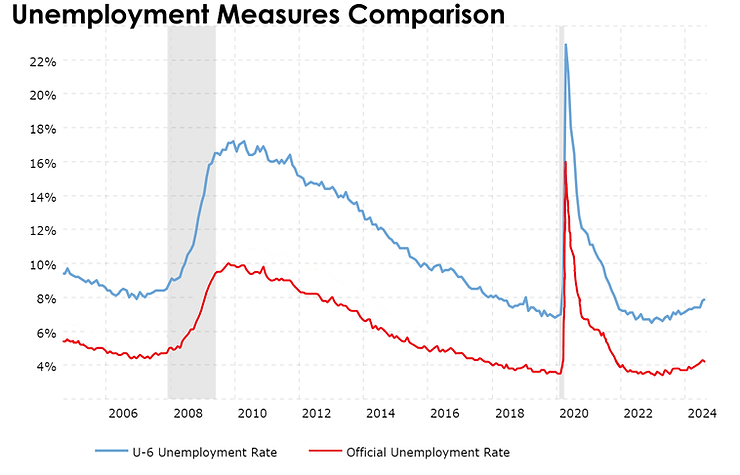
The official unemployment rate we hear about on the news is called U-3 measure. While this is the data broadcast most often, it unfortunately does not give a complete picture of the unemployment situation because it only accounts for unemployed people actively searching for jobs within a 4-week window.


The unemployment rate in the US fell from 4.3% to 4.2%, representing 7.1 million people looking for work, which means, in theory, fewer people were unemployed. However, this does not include Discouraged Workers. These are adults who have looked for jobs at some point in the last 12 months but are not within the four-week period. Often, they have given up looking for a job (possibly temporarily). Ignoring these people makes it seem like there are fewer unemployed people.


Another issue with the U-3 unemployment measure is it does not take into consideration the quality of jobs that workers are accepting, nor does it distinguish if they are working part-time or temporary jobs.


The Real Unemployment Rate (U-6 measure) uses the data from the U-3 measure as well as four other measures of unemployment accounting for people outside the four-week window. Using this data will give a much better understanding of the actual unemployment situation in our country.


Read More

Spooky Spending

Posted by Wendell Brock

Sep 26, 2024 12:00:00 AM

Spooky Spending

  • Wendell Brock
  • Sep 26, 2024
  • 2 min read

In spite of an unstable economy and uncertainty going forward, the last few years have shown that Americans are resilient spenders. Last year, according to the National Retail Federation (NRF), consumers spent over 12 billion dollars on Halloween purchases. It seems even fear of a recession isn’t enough to spook Halloween enthusiasts.


For many adults, Halloween is a highly anticipated holiday marked by parties, trick-or-treaters, and the opportunity to escape the real world and immerse themselves in a socially acceptable world of make-believe. There’s a whole slew of people ticking off the days until Fall, eagerly awaiting the release of seasonal and holiday decorations and goodies.


However, lately those autumn enthusiasts haven’t had to wait until September and October.

Retailers have been bringing out the Halloween merchandise earlier each year. For some retailers, like Michaels, 2024 marks the earliest release of Halloween yet stocking their shelves in late June with their spooky collections. This is quite a jump from a few years ago when the earliest they would bring out cauldrons and skeletons was August.

Similarly, Halloween online sales pretty much started during the last week of September, but according to trend forecasting service Granularity, peak online sales have been inching back a week each year Since 2019.


Most retailers state their reason for bringing out the creepy commodities earlier is to boost sales during what is normally a slow sales period. On most polls, Halloween ranks in the top three favorite holidays in America. Retailers are jumping at the chance that most buyers won’t be able to pass up purchasing for their favorite holiday, regardless of the time of year. 2024 is the second year in which Home Depot hosted their “Halfway to Halloween” event on April 25 at which they sold limited quantities of Halloween items. Home Depot isn’t the only one, Lowe’s and Target also released Halloween items online earlier than previous years, jumping on the “Summerween” bandwagon in which spooks and summer BBQs share shelf space.

The marketing ploy seems to be working. The $12.2 billion spent last Halloween was a record high, surpassing the $10.6 billion spent in 2022. When we break the numbers down it comes out to an average of $108.24 spent per person. The majority of that was spent on costumes, followed by Halloween décor, proving there’s way more to Halloween than just trick-or-treating.


Halloween isn’t the only holiday bringing in the big bucks. Halloween may be one of the favorite holidays to celebrate, but when it comes to spending it only ranks in the upper top ten. Last year Americans spent an estimated $886 billion on Christmas purchases, $24 billion on Easter, and $23 billion on Valentine’s Day. All this goes to show that even during times of uncertainty people still want to celebrate and enjoy the holidays.


Read More

Do You Find It All Taxing?

Posted by Wendell Brock

Aug 16, 2024 12:00:00 AM

Do You Find It All Taxing?

  • Wendell Brock
  • Aug 16, 2024
  • 2 min read

It might not seem like it, what with all the sunshine and hot summer temps, but 4th quarter is nearly upon us. Now is the perfect time to start thinking about…your taxes. There, I said it. I know no one likes to think about taxes, and while it may seem a bit early to worry about taxes, the end of the year will be here before you know it, and it’s never really too early to review, organize, and plan for filing your taxes.


End-of-year tax planning is a practice that involves making financial decisions aimed at optimizing tax efficiency, reducing liabilities, and taking advantage of available deductions and credits. Effective tax planning not only ensures compliance with tax laws but also allows individuals and businesses to retain more of their hard-earned income, reinvest in growth, or save for future endeavors.


While preparing for the current tax year, it is a good idea to review your previous year’s tax return and make note of any changes that have occurred since the last time that you filed. i.e. did you move, retire, change jobs, get married/divorced, or did your tax bracket change? Highlight any of those changes and find any paperwork associated with them.

Each time you file you are eligible for standard deductions and certain tax credits. If your tax bracket has changed, so may have some of your credits and deductions.


Remember that tax deductions help to reduce your taxable income, which means you will have a lower tax bill. You do not want to miss out on any that are available to you. Check your for eligibility for retirement contributions, educational expenses, medical bills, property taxes, mortgage interest, charitable donations, etc. Make sure you have the needed paperwork to prove you qualify for each one; this will protect you in the event of getting audited.


You might need to consider maximizing contributions to retirement accounts such as IRAs or 401(k)s, which can lower taxable income and provide long-term savings benefits. Similarly, businesses may accelerate deductible expenses or defer income to reduce taxable income for the current year.


Timing is also crucial in end-of-year tax planning. By strategically timing income and expenses, you or your business can smooth out their tax liabilities over multiple years, thereby optimizing their overall tax burden. This may involve deferring income into the following year or accelerating deductible expenses into the current year to maximize tax savings.


Don’t wait until the end of the year, or worse April 15th, to figure out what you can or could have qualified for. It’s like the old saying, “if you snooze, you lose.” Once we cross December 31, there’s no going back to claim things you might have been able to claim. When you plan ahead and keep your paperwork organized throughout the year, it will help you better manage your tax burden. If you stay on top of it, you will be able and ready to take advantage of all the available tax credits and deductions.


Read More

Food-flation: There’s No Sugar Coating It

Posted by Wendell Brock

Aug 7, 2024 12:00:00 AM

Food-flation: There’s No Sugar Coating It

  • Wendell Brock
  • Aug 7, 2024
  • 3 min read

Updated: Aug 12, 2024


If you have felt frustrated with the exorbitant cost of groceries, you’re not alone. People all over the country are getting fed up and frustrated with the ongoing rise in food prices. Inflation may have slowed its pace, but that doesn’t mean consumers aren’t still feeling the sting of sky-high food prices. According to the Bureau of Labor Statistics, The Consumer Price Index for All Urban Consumers (CPI-U) increased 3.0% over the last 12 months to an index level of 314.175 (1982-84=100).


Overall, food prices have risen 26% since the beginning of 2020. Since 2019, according to Bloomberg, the average cost of a fast-food meal has surged 47%. The Labor Department reported back in May that dining out will cost you almost 30% more than back in 2019. As of May, the cost of eggs had been on the rise with triple-digit year-over-year increases throughout 2022 and 2023. Lately, U.S. consumers spend more than 11% of their disposable income on food. This is higher than it’s been in thirty years.


Back in May it looked as if food prices might be on the decline, but after finally dipping, grocery prices rose by 0.2% from May to June, igniting frustration in consumers. The latest CPI report shows food prices are up 0.24% from June 2024 and 2.23% higher than they were 12 months ago. When compared to overall prices in 2023 there was a 5.7% increase.


Historically, food price spikes have been linked to social unrest and political instability, especially in the more economically vulnerable regions. While we’re not seeing people taking to the streets (at least not yet) people are taking to their social media platforms. Social media has been splattered with shocked consumers comparing their grocery bill from 4 years ago to today’s outrageous prices. Since February of 2020 consumer prices have increased over 20%. That’s quite a bit above the historic average for a four-year period. According to Yahoo finance, a basket of groceries that cost $100 in November 2020 would not cost $125.80, an increase of nearly $26 dollars for the exact same food items.


The rising cost isn’t the only sting. Adding salt to the wound is what’s now called “shrink-flation.” This is where companies charge the same price (or more) for a smaller amount of product. So that basket of food that increased $26 dollars may have the same products, but many of them are smaller than they were back in 2020, increasing the gouge consumers are feeling.


While we have seen some individual food items like some fruits and vegetables come down, the overall cost of groceries hasn’t really decreased, at least not enough to make a difference in people’s budgets. We are seeing a glimmer of light, however, as wages are slowly catching up and inflation begins to ebb. (As reported by the BLS, From June 2023 to June 2024, wages have increased 5.1%).


So, what can you do? One of the best ways to combat food inflation is the old fashion practice of growing your own garden. You could also find reliable local sources. Visiting your community farmer’s market is a great way to invest in farm fresh produce, preserves, salsa, soaps, lotions, and other products. Not only do local farms provide higher quality and better tasting foods they usually offer products that are less likely to contain harmful chemicals. Supporting your local farmers and makers is also another great way to support your local economy.


Photo 1 by: Stevepb

Photo 2 by: Bruno Kelzer

8 views
0 comments
Read More

Secure a Flexible Retirement

Posted by Wendell Brock

Jul 15, 2024 12:00:00 AM

Secure a Flexible Retirement

  • Wendell Brock
  • Jul 15, 2024
  • 2 min read

In order to create a secure retirement plan, a little flexibility is needed. Often people think a retirement plan needs to be strict and rigid, which they can be, however, developing a flexible plan allows you to live comfortably and securely without the unnecessary     restrictions.


Using annuities can be a great way to create a flexible retirement plan. Using careful consideration of your financial goals, risk tolerance, and your personal retirement timeline, you can develop a retirement plan that meets your needs and gives you the freedom to enjoy your post-working years.


An annuity is a financial product offered by insurance companies that provides regular payments over a specific period of time.


The first step is to assess your retirement needs and goals. This means estimating your retirement expenses and   determining your expected retirement age and the length of time you’ll need income. You’ll also need to evaluate how much risk you’re willing to take. (This can help determine which type of annuity will work best for you).


Annuities offer flexibility through their different options. There are Immediate or Deferred annuities, Fixed or   Variable annuities, and Indexed annuities. Each provides unique options allowing you to choose something that aligns with your retirement goals and risk tolerance.

Annuities also offer additional features and riders that allow you to support the flexible and secure retirement you’re planning for. They offer options like Guaranteed Minimum Income Benefit which provides a minimum income amount regardless of market performance, Long-Term Care  Riders which allow you to use annuit funds to cover long-term care expenses if needed, and Death Benefit Riders which guarantees that your beneficiary receives a certain minimum amount if you pass away before receiving all annuity payments.


An annuity can be part of a diversified retirement strategy that includes other investments like stocks, bonds, and savings accounts. This diversity helps you manage your risk and optimize returns over time giving you better flexibility and security.


Remember, flexibility does not mean unstable. Instead, it can provide more stability, giving you options. Using  multiple annuities in succession can give you this desired workability along with a reliable income.


Read More

An Unreachable Dream?

Posted by Wendell Brock

Jul 8, 2024 12:00:00 AM

An Unreachable Dream?

  • Wendell Brock
  • Jul 8, 2024
  • 3 min read

There is an expectation in America that when children grow up and go out into the world they will be able to provide for themselves, every parent’s dream. Part of that is the ability to pay for housing. Yet nowadays, many young people are questioning if they can afford to buy a house in this economy. Worse is the cost of owning a home, which goes way beyond the initial price tag, making home ownership seem like an unobtainable dream for more than just the young adults of society. Below are some of the factors that have increased the cost of home ownership.


The national average sales price of an existing single-family home in the U.S., as of earlier this year, is $375,000. This number could vary greatly depending on where you are looking to buy a home. The current interest rate, depending on your type of mortgage, can range from 6.3% to 7.16%. While these rates are higher than the historically low rates of the past 15 years, they are more in line with the normal range of mortgage rates.


Moreover, the rise in homeowner’s insurance premiums continues to push the dream of owning a home even further out of reach. According to the National Association of Realtors, homeowners nationwide are expected to see a 6% increase in premiums by the end of the year. This is on top of the 20% increase over the previous two years.


The cost of owning a home has surged in the last four years. If someone were lucky enough to have enough cash to pay the full value of a home and eliminate the added cost of paying interest, they would still have the on-going costs of living in and maintaining that home. Expenses such as homeowners’ insurance, property taxes, utilities, and the cost of upkeep and repairs add up very quickly. These costs have gone up by 26% since 2020 coming to about $18,000 per year, with some states paying as much as $25,000.


On top of the rising costs, another obstacle making it difficult for aspiring homeowners is the imbalance between housing supply and demand. The U.S. population grew by more than 1.75 million during 2023, coupled with a push toward urbanization the housing markets in many metropolitan areas is strained. Many cities have seen prices soar way beyond the national average, driven by limited available land for new construction, zoning regulations that restrict development, stricter building codes, and the bloated costs of building materials and labor.


These unfavorable conditions can truly make home ownership seem impossible, but there are steps to take that can help you get your foot in the door. Create a financial plan and a budget then STICK TO IT. One idea, as part of the plan, is to save the difference between rent and home ownership. If rent is $2,000 per month and home ownership would cost $3,000 per month, then save the $1,000 per month towards home ownership.


No doubt, home ownership takes sacrifice, your budget needs to reflect that. The larger your down payment, the smaller your mortgage payments will be. One of the major benefits of owning a home is that the mortgage payment is typically fixed for the life of the loan. Unlike rent which can and often increases over time. Owning a home may seem like a farfetched dream, but through dedication and smart planning, it is possible.


Read More

Avalanche Your Debt

Posted by Wendell Brock

Jun 27, 2024 12:00:00 AM

Avalanche Your Debt

  • Wendell Brock
  • Jun 27, 2024
  • 2 min read

A new epidemic is spreading across our country, fueled by inflation, credit cards, and “buy now pay later” options for almost all online purchases. This seemingly  invisible epidemic is spreading at an alarming rate. Have you guessed it? Consumer debt.


Our country is racked with debt. So far, in 2024, the average personal debt increased from $21,800 to $22,713. About 13% of that comes from auto loans, but over 28% comes from credit card debt. Only about 23% of American’s are debt free, and about 65% of American’s say they are living paycheck to paycheck, an increase from last year which was about 58% of Americans. It’s becoming more important than ever to pay off debt and stay out of debt.

When tackling your debt you need to have a plan. There are many strategies for paying down debt; one of the more popular methods is the avalanche method. With this strategy, you focus on paying off the debt with the highest interest rate first, while making minimum payments on all other debts. Unlike the snowball method, which focuses on paying off the smallest debt first and working your way up through your debt with increased payments, the avalanche method aims to minimize the overall interest you pay overtime, resulting in significant savings over the long term while simultaneously paying down your debts. Like the snowball method, once you pay off a debt, that payment is then applied to the next debt in line.


For an example: if you have three debts- a credit card balance with a 15% interest rate, an auto loan with a 6% interest rate, and a personal loan with a 4% interest rate, you would prioritize the credit card debt first and aggressively pay it down first. Once paid off, you would move on to the auto loan, then the personal loan, following the order of the interest rates.


A downside with the avalanche method is it can take more time to see results, especially if your highest interest rate debt is substantial. This can be  discouraging. If you are the type of person that needs to see immediate results to stay motivated, it may be more advantageous to use the snowball method or some other method of paying down debt.


The avalanche method provides a way to organize and prioritize debts while saving you money in the long run. It can empower individuals to take control of their finances. However you choose to manage and eliminate your debt, the critical thing is to start and do. Take the time to go over your budget, list all your debts, and decide what method will work best for you and your situation. Overcoming debt will help your own personal economy flourish, which will then help   bolster your own community, helping bit by bit to overcome the debt epidemic. 


Read More

Should You Take an Interest In Your Interest Rate?

Posted by Wendell Brock

Jun 27, 2024 12:00:00 AM

Should You Take an Interest In Your Interest Rate?

  • Wendell Brock
  • Jun 27, 2024
  • 2 min read

People always ask me where the interest rates are  going. If I knew that, I’d be living on an ivory tower some place making millions. That fact is companies and experts can try and predict, or forecast, where interest rates will go, but there is no way to tell for sure. There are many factors that determine what the interest rate will be including things like Central Bank policy, inflation expectations, national economic conditions, global economic conditions, as well as many other things.


Interest rates are essentially the cost of borrowing money or the rate of  return on investments for lending  money. When you take out a loan you typically pay back more than what you borrowed. That additional amount is the interest. Interest rates are expressed as a percentage of the total amount of borrowed money. These could be fixed rates (meaning they stay the same over the life of the loan) or variable rates (meaning the rate changes based on market conditions). Central banks, like the Federal Reserve, set benchmark interest rates, which influences the rates at which banks lend to each other. Changes in benchmark rates ripple through the economy and affect borrowing and  lending rates for consumers and businesses.


On May 1, 2024, the Federal Reserve made the decision to keep its benchmark rate unchanged. The federal funds rate is the interest rate that banks lend or borrow funds from each other overnight to meet reserve requirements or manage their short-term liquidity needs. When the Fed lowers interest rates, it means that it reduces the target range for the federal funds rate. This latest decision by the Fed is the sixth consecutive in which they have kept its policy rate steady between 5.25% and 5.5%. Rates have not moved since the start of 2024 after eleven rate hikes between 2022 and 2023.


Interest rates can act like a barometer, giving us an idea of how the economy is performing. In an effort to stabilize the economy, the Federal government will adjust the prime interest rate. If the economy is performing well, interest rates will typically be higher, but when there is an economic slowdown, interest rates will come down to stimulate consumer spending and economic growth.


It’s important to understand how interest rates affect your personal financial   economy as well as your community. Interest rates play a crucial role in the financial landscape of our nation and influence everything from the cost of borrowing money to the return on your investments. Whether it’s interest you pay on an auto loan or home mortgage, or interest you earn on your investments, you should always be aware of the interest rates that affect you. Interest rates play a critical role in our lives and are something we should always take an interest in.


Read More

About this blog

This is where you give the visitor a brief introduction to both this blog and your company. Keep the intro pithy and punchy.

Subscribe to Email Updates

Recent Posts