










Secure Tomorrow

Six Tips to Becoming Self Reliant

· 3 min read

Six Tips to Becoming Self Reliant Feb 7, 2019 3 min read Recently I wa...

Got Cash Flow?

· 3 min read

Got Cash Flow? Jan 17, 2019 4 min read I have an uncle who, during his...

Faucet_-_25.jpg

Got Cash Flow?

· 3 min read

I have an uncle who, during his professional career, was a very well r...

An Annuity - Why?

· 3 min read

When talking about annuities, over the years I have met with many peop...

Start Saving For Retirement Now

· 2 min read

Americans these days talk a lot about retirement, what they want to do...

Thanksgiving

· 2 min read

It has been nearly 400 years since the first Thanksgiving was held in ...

Secure Tomorrow

Six Tips to Becoming Self Reliant

Posted by Admin

Feb 7, 2019 12:00:00 AM

Six Tips to Becoming Self Reliant

  • Feb 7, 2019
  • 3 min read

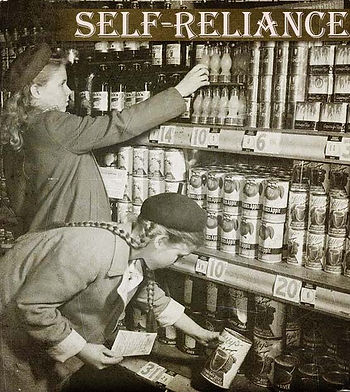
Recently I was in a meeting and the thought occurred to me; why do people even attempt to have a financial plan? What is the purpose of having a financial plan? Why take the time to create a financial plan and put forth the effort to implement it and follow through with it? The answer to these questions may sound obvious, but as I have studied financial planning and worked in the financial industry for the past 30 years, I have concluded that people have an innate desire to be self-reliant. However being self-reliant is a learned trait while we may have the innate desire, we have to act on it, and learn self-reliance.


What does it mean to be self-reliant? According to Dictionary.com, the adjective originated around 1826 and means, “relying on oneself or on one’s own powers, resources, etc.” Another definition, one that is a little broader is this: The ability, commitment, and effort to provide for the spiritual and temporal necessities of life for self and family. Both definitions explain the necessity to provide for one’s self.


The second definition is more comprehensive. My thinking is; how can you be self-reliant if you are not mentally or spiritually in the game? Can someone provide for self and others without that inner strength that comes from being mentally or spiritually prepared? I believe that self-reliance is more than just a good job and a fat bank/retirement account(s).

Self-reliant people not only have a good source of income, they have money in the bank, investments, as a friend of mine would add some food storage, debt free, and they are spiritually and mentally able to care for their own. This is a challenge in todays world where people are pulled in every direction, often wasting time and money. In some cases, children don’t have a complete understanding of what it took to earn the money they are now spending. 


With the challenges of providing for one’s self and family, may I submit that it would also include the necessity to continue to learn and improve one’s self. Consistently learning and integrating new concepts of truth, would help a person accomplish a goal of self-reliance. For example read good books, work with a mentor, be a mentor, help someone else reach their goals.


How does someone become self-reliant? Here are six ideas that will help you become more self-reliant:


1. Pay yourself first: Take some money out of each pay check and send it to savings (savings accounts, retirement accounts, investment accounts). The discipline of saving money and living on less than one’s income is a critical part of self-reliance.


2. Using a family budget: Using a budget is one of the basic principles of good money management.


3. Risk management: Risk management is taking care of the risks we are exposed to on a daily basis. There are four things that can be done with the risks: Keep the risk yourself and personally pay for the things that may happenControl the risk through behaviorPrevention - don’t engage in behavior/activity that would enhance the riskTransfer the risk through some means of insurance.


4. Be prepared: Things happen in life that cause great pain or financial difficulty (loss of a job, divorce, death of a loved one, business reversal, etc.) These trials may cause us to stretch and grow in ways we never knew we could, so finding, and developing coping skills is critical (developing the mental/spiritual side of self-reliance).


5. Daily improvement: Find something to do on a daily basis that will help you improve various aspects of your life. For example each morning, I spend time, praying, reading, writing in a journal, exercising, and meditating. 


6. Become debt free: Debt is truly a bondage that never sleeps, never eats, is always your companion where ever you go; becoming debt free is a blessing of self-reliance. Get out of debt!


These steps towards complete self-reliance take time and work. Don’t be too hard on yourself if you are not self-reliant in the next year - keep working towards it. “Claim progress”, as my wife would say. Map these things out how you personally might implement them in your own families’ and measure your progress. And then realize that life happens and each of us can experience a reversal.


Reversals that can cause a person to be completely wiped out and they have to start over, some people go through life with no issues at all (at least not that we see), so be patient with people around you as we are all be on the road to self-reliance, we aren’t at the same level, or we may have just suffered a reversal.


Finally, remember that there is always hope; keep the embers of hope alive by working on the above six items in some manner, as part of your financial plan regularly measure and keep track of your efforts, and you will become self-reliant.


REMEMBER:

"Strive not to be a success, but to be of value." ~ Albert Einstein


Read More

Got Cash Flow?

Posted by Admin

Jan 17, 2019 12:00:00 AM

Got Cash Flow?

  • Jan 17, 2019
  • 4 min read

I have an uncle who, during his professional career, was a very well respected city manager. Periodically he would come and visit us in Los Angeles. On one such trip during my high school years, we all went to dinner and he told us about a developer in his community who was planning to build a shopping center of some sort. My uncle was really excited about this project because it looked like it was really going to happen, and would be a great addition to his community. 


"Nowadays people know the price of everything and the value of nothing." -Oscar Wilde

He commented that he had seen many development projects come and go across his desk and they would get down the road a bit and the developer would pull the plug. Upon investigating the reason, he found the interest rate had changed a quarter or a half a percent and the project would no longer cash flow at the new rates.   


That was the first time I remember learning about cash flow. I had known something about interest rates and how if you borrow money you are charged interest. I knew that if you put your money in the bank or owned bonds you earned interest. But cash flow was a different story. He went on to say in these projects “cash is king.”


At this time I had a job, I had been working for the Los Angeles Daily Journal running their dark room, developing film, and printing photos to be published in the news paper (great gig for a 16 year old). I had a bit of cash flow myself, but I never thought of my income as cash flow. And yet that is exactly what it is: Income = Cash Flow.


In financial planning, cash flow is key. It is the basis of all financial decisions. What is the total cash flow? How will this expenditure affect cash flow? Will this investment improve cash flow? Managing cash flow, for some families, can be incredibly difficult; it starts with the goal of self reliance.


Every dollar earned goes in some manner towards self-reliance, which is usually a goal most families have. In today’s world, a large part of that is earning an income. Self-reliance is the sum total of the ability to provide for the necessities of life for our family. 


Spending money always has an effect on our cash position. Unchecked spending will destroy a family’s hard earned resources. I have seen families destroyed because one spouse will not give up the unchecked spending, racking up debt in the process. In counseling with these couples, and helping them understand the difference between needs and wants, can be a challenge, especially when they are set in their ways. I maintain faith that a person can change. 


Needs vs. wants is a tricky thing, simply be cause people can alway justify their spending. After all that is what good marketing is about, “creating the need.” Marketers help us justify spending and perceived needs will always grow to whatever the income is, again justifying the spending. Every spendthrift clearly justifies their spending!


To get an understanding of the most basic needs, a starting place is to list all the places where money is spent, then prioritize that list based on the simple fact if they don’t have that item someone in the family will suffer physically (I realize physical suffering is extreme, but you have to start somewhere). While many people may think cable T.V. is a need, millions in the world get along just fine without it, food and water on the other hand are essential. 

Growing a stable cash flow or improving cash flow is important to the family’s self reliance. As people manage the cash flow for asset growth, self reliance becomes more of a reality. Putting some money aside on a weekly or monthly basis from cash flow is critical to becoming self reliant. The only money that will be in the future is what is sent on ahead. 

One of my financial planning professors use to say, there are only two things you can do with cash flow, to make things balance, increase income or decrease spending. Decreasing spending only works to a certain point, at some point cash flow or income must be increased. To the extent a person can increase or maintain a decent cash flow and keep spending in check they can enjoy the blessings of self reliance.  


Self reliance does not only come to people of great wealth, it comes to people of all income strata; the basic level is simply to live on less than the cash flow that comes in. Diverting some of that cash flow as it comes, into some sort of savings vehicle is how to start becoming self reliant and properly managing income. It is true what George S. Clason said in his world famous book, The Richest Man in Babylon, “part of all I earn is mine to keep.” This is great advice - always keep some of what you work so hard to earn!


Read More

Got Cash Flow?

Posted by Wendell Brock, MBA, ChFC

Sep 1, 2017 2:17:00 PM

I have an uncle who, during his professional career, was a very well respected city manager. Periodically he would come and visit us in Los Angeles. On one such trip during my high school years, we all went to dinner and he told us about a developer in his community who was planning to build a shopping center of some sort. My uncle was really excited about this project because it looked like it was really going to happen, and would be a great addition to his community. 

Read More

Topics: Interest Rates, cash flow

An Annuity - Why?

Posted by Wendell Brock, MBA, ChFC

Dec 18, 2013 10:55:00 PM

When talking about annuities, over the years I have met with many people who get a glazed look on their faces and ultimately they throw their hands up and say, “I am so confused”. I will admit that some investments are confusing. But here is one that almost anyone can get their arms around – a retirement income contract, commonly known as an annuity. (Say "an annuity" 10 times really fast!)

Read More

Topics: retirement, Annuities, annuity, investments, retirement income

Start Saving For Retirement Now

Posted by Wendell Brock, MBA, ChFC

Dec 12, 2013 10:33:00 AM

Americans these days talk a lot about retirement, what they want to do, when they want to retire and where they dream about living. While there are many issues in planning a comfortable retirement, the most important is having enough money.

One fear these days is that a retired person may outlive their money. With people living longer, the 10 year retirement plan that worked for our grandparent’s generation no longer equals security.

To be on the proverbial save side, plan for at least 25 years of retirement. This puts an

Read More

Topics: retirement, Saving, Investment, money, planning

Thanksgiving

Posted by Wendell Brock, MBA, ChFC

Nov 30, 2013 5:56:00 PM

It has been nearly 400 years since the first Thanksgiving was held in Plymouth. I don’t think the pilgrims knew what they were starting – or how the holiday has evolved, perhaps they would not be pleased either. The original idea was for it to be three days of thanksgiving and prayer for our bountiful blessings in this great land. Now it’s a day of amazing feasting and preparation for the biggest shopping day of the year! Maybe someplace in the mix are a few prayers.

Growing up we always had family around, being the youngest of seven kids, my older brothers and sisters with their spouses and kids would get together as often as possible. My father would usually offer a humble heart felt prayer of gratitude for our many blessings. We would eat a meal my mother had prepared and visit, then she would whip some cream and we would eat pumpkin pie and visit some more. After a while folks would begin to head home with feelings of gratitude for a wonderful family and the blessings our Heavenly Father had poured out on us. Today in my own family we try to emulate those thanksgivings of my childhood.

I was saddened when I went shopping the day before for a few last minute things and the clerk tells me that if I still need something I can always come back and get it tomorrow because they will be open. I told the clerk at Walmart that I won’t be back tomorrow, and I felt bad that Walmart would be open on such a day. And that they would take employees away from their families on this holiday. I wished her a good holiday. 

It’s too bad that corporations like that, just to get a competitive edge, require employees to work and stay open. Why can’t America just for two days a year (Christmas included) put aside the quest for more and more profits and take a break. Don’t get me wrong, I am all for capitalism and earning a good profit – but at what cost? Early Friday morning I saw in the news of altercations in Walmart stores, where people were videotaping with their phones the craziness of people grabbing discounted products. I had to ask myself WHY? Is a sale item that important that you would trample the person next to you to get the item? If so what have we become as a society? What were our prayers about the day before? That we would get to the sale items first? 

In my mind nothing is that important. Period. 


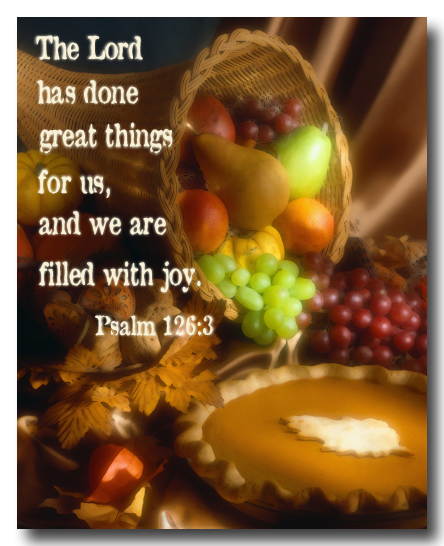
Thanksgiving should be about being grateful for the blessings that God has granted us individually and as a people. Gratitude is one of the most important virtues a person can possess and everyone should have it. We, as a people, have so much in life to be grateful for. I am personally grateful for my wife, kids, extended family, friends, clients, our great country, the gospel of Jesus Christ, and so many more things space won't allow to list.

I am reminded of the old Hymn, “When upon life’s billows you are tempest-tossed, When you are discourage thinking all is lost, Count your many blessings; name them one by one, And it will surprise you what the Lord has done.” Counting our blessings can be an eye opening exercise and one worth doing on a regular basis – not just saved for Thanksgiving. When was the last time you counted your many blessings and expressed gratitude for what the Lord has done? The feeling you have is amazing when counting your blessings and recognizing the Lord’s hand in providing each blessing. Count on…
Read More

Topics: Thanksgiving, Pilgrims, Plymouth