








Secure Tomorrow

Are You a Risk Taker?

· 3 min read

Are You a Risk Taker? Wendell Brock Mar 19, 2021 3 min read Years ago ...

What’s the big deal about Annuities?

· 3 min read

What’s the big deal about Annuities? Wendell Brock Mar 15, 2021 4 min ...

What Is the Emotional State of Money?

· 2 min read

What Is the Emotional State of Money? Wendell Brock Mar 5, 2021 2 min ...

How Well Do You Know Your 401(k)?

· 2 min read

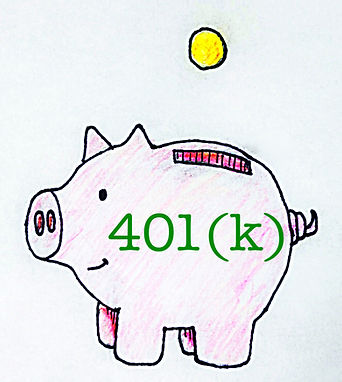
How Well Do You Know Your 401(k)? Wendell Brock Feb 27, 2021 3 min rea...

What are Exchange Traded Funds (EFTs)?

· 2 min read

What are Exchange Traded Funds (EFTs)? Wendell Brock Feb 20, 2021 2 mi...

Do You Really Want a Mutual Fund?

· 1 min read

Do You Really Want a Mutual Fund? Wendell Brock Feb 13, 2021 2 min rea...

You're paying how much?!

· 2 min read

You're paying how much?! Wendell Brock Feb 6, 2021 2 min read People o...

Do You Have a Bucket List?

· 2 min read

Do You Have a Bucket List? Wendell Brock Jan 30, 2021 2 min read Updat...

What if I'm not ready yet?

· 1 min read

What if I'm not ready yet? Wendell Brock Jan 18, 2021 2 min read Updat...

Where do I start?

· 1 min read

Where do I start? Wendell Brock Jan 7, 2021 1 min read It’s the start ...

Secure Tomorrow

Are You a Risk Taker?

Posted by Wendell Brock

Mar 19, 2021 12:00:00 AM

Are You a Risk Taker?

  • Wendell Brock
  • Mar 19, 2021
  • 3 min read

Years ago I heard Steve Forbes, the publisher of Forbes Magazine, say “everyone is a disciplined, long-term investor until the market goes down.”


When it comes to investing there are definitely some investments that are riskier than others. How do you know which investments to jump on and which ones to give a pass? It’s common for investors to make the mistake of not matching their investments with their overall objectives. It can be hard to gauge if the risk is worth the potential payout, or if you should use something with little less risk.


Financial planners use different methods to help clients understand the types of investments they should be looking into. A risk profile is one tool that gives insight into your ability and disposition towards taking on financial risks. It aids in determining the proper investments or portfolios to invest in; it can align investors with the appropriate level of risk associated with their personal goals. For example, some investments come with a much higher risk, which can produce fantastic returns, but also come with potential for financial loss. On the other hand, there are investments that carry a much lower risk, but produce a much lower return as well.


When we look at risk we can see it as a balanced scale. If you place higher risk on one side, the other side is typically balanced out with a higher payout. If you place lower risk on the scale, the other side will have a lower payout to keep it balanced. There are several types of investment risks, and some can be managed, but perhaps that is an article for a different day.


The most common way to discover your risk profile is through a Risk Profile Questionnaire. It’s like a financial personality quiz that reveals a person's ability or willingness to take risks. It consists of questions that measure your attitude and understanding of financial markets. It also helps gauge how you might react to certain investment scenarios. Your responses are calculated to determine your risk level. The results are used to develop a portfolio.


Once you know your risk profile, it’s helpful to revisit these questionnaires regularly because a person’s risk profile changes over time. This is helpful in maintaining an alignment with your investment goals.


Typically there are five types of investors. The score you receive from the Risk Profile Questionnaire will determine which type of investor you are.


Conservative

A conservative investor’s focus is on protecting principal instead of seeking higher returns. They are comfortable accepting lower returns for a higher level of security and more liquidity of their investments. Overall, a conservative investor minimizes risk of loss.


Moderate-Conservative

A moderate-conservative investor’s objective is principal preservation, but is comfortable accepting a small degree of risk to seek some degree of appreciation. This investor is willing to accept lower returns, and is willing to accept minimal losses.


Moderate

A moderate investor permits some risks in order to enhance returns.

They are prepared to accept modest risks to seek higher long-term returns. A moderate investor can endure a short-term loss for the trade-off of long-term appreciation.


Moderate-Aggressive

A moderate-aggressive investor places a higher value on long-term returns and is willing to accept significant risk. This investor believes higher long-term returns are more important than protecting principal. A Moderately-Aggressive investor may endure large losses in favor of potentially higher long-term returns.


Aggressive

An aggressive investor prizes profitability and is willing to accept substantial risk. This investor believes maximizing long-term returns is more important than protecting principal. An Aggressive investor may endure extensive volatility and significant losses.


Knowing your personal risk tolerance gives you an understanding of what’s important to you, as an investor, and will guide you to make decisions that reflect your overall goals. It is hard to classify as a moderate risk investor, and expect to “beat the market”, and then be upset at times when your account goes in a negative direction. Investors can’t have it both ways.


If you want to complete a risk profile questionnaire, you can do so here, it takes about five minutes and you will receive your score in your email.


“The only people who never get criticized are those who never do anything.”

-Linda Prevatt

Pg. 132 The Maxims of Wall Street by Mark Skousen


Read More

What’s the big deal about Annuities?

Posted by Wendell Brock

Mar 15, 2021 12:00:00 AM

What’s the big deal about Annuities?

  • Wendell Brock
  • Mar 15, 2021
  • 4 min read

If you’ve started planning for retirement you may have heard of annuities. Doing a quick online search will result in a lot of information, as well as some misinformation. The reason for this is because there are a wide variety of annuities, each with their own specialized options. While this can seem overwhelming and complicated at first glance, it's what allows annuities to be customizable.


So what exactly is an annuity? Basically, an annuity is a retirement income contract offered by insurance companies. They are a long-term agreement that allows you to accumulate funds on a tax-deferred basis, which are then paid out in regular instalments, guaranteeing income during your retirement years. Annuities are structured to give your retirement plan a reliable foundation to build on. Because of this, annuities are not primarily an investment, rather they are a disbursement vehicle. In this way, they work much like corporate pension or Social Security. The payments you receive may last for a predetermined length of time, such as 20 years, or they can be ongoing for your lifetime, and/or the lifetime of your spouse.


So why would you want to consider an annuity?

The main reason people look at annuities is because they provide guaranteed income that you may not outlive. Annuities generate a consistent income stream. Some other benefits are:


  • You may get back the money you put into it; you won't lose the money you started with.

  • Annuities aren’t subject to an annual contribution limit, if you have more to contribute to your retirement after you’ve reached your 401(k) and IRA limits you can put it into an annuity.

  • You can design annuities to fit your needs and lifestyle. You can manage how much income and how much risk, and using riders, you can add on, and customize your annuity to meet your specific needs.

  • They can also provide for your loved ones when you are gone.


As mentioned before, there are different types of annuities. This is where people tend to get confused. There are fixed, variable, and indexed annuities. Each of these come with their own level of risk and payout potential. You can also choose between immediate or deferred annuities.


  • A fixed annuity guarantees a set interest rate for a length of time, which may be adjusted on the annuity’s anniversary. The distributions may also be a fixed amount for the term established. With this option you are guaranteed your initial investment and it earns interest at a fixed rate.

  • A variable annuity fluctuates depending on the returns of the subaccount(s) (similar to a mutual fund(s)) you have selected, making its value go up or down, which in turn could affect the payment amount you receive.

  • An indexed annuity is a type of fixed annuity that has features from both the fixed and variable annuities. With indexed annuities your investment is protected when the market is down, but still has the possibility of growing your investment more when the market is up.


  • An immediate annuity begins issuing payments after a lump-sum has been deposited. Once you give the insurance company a lump sum of money you start receiving payments. This option is great if you have acquired a large amount of money like an inheritance.

  • A deferred annuity starts payments on a future date determined by the owner. You can purchase a deferred annuity with a lump sum, a series of periodic contributions, or a combination of the two.


Think about making a salad- Salads start with a base of leafy greens, but there are a few different choices out there, you’ll pick the one you like best. Once you’ve picked your base you can start adding on the toppings and extra things.


There are some downsides to going with an annuity. Some annuities have fees (generally variable annuities) associated with annuities, which may reduce the value of your annuity. And, like many retirement accounts, if you withdraw money before age 59 ½ you are subject to a 10% penalty penalty tax. You could also get hit with a surrender fee. However, depending on how your annuity is structured,you may be allowed to take out a certain percentage each year without paying a surrender fee, which decreases each year.


While annuities provide a lot of flexibility and options, you pay for all those extras. Those riders mentioned earlier, they can add up quickly. The more riders you add, the more expensive your annuity will be. You will have to weigh the advantages against the costs, and decide if those are really worth it.


Often an annuity works well to fill the gap between desired income, and what Social Security, and/or what a pension is paying. For example: if your planned retirement income is $6,000 per month and you are receiving $2,400 from a pension, and $1,800 from Social Security, totalling $4,200, then you can use an annuity to fill in the gap that would provide a guaranteed income of $1,800.


The word annuity comes from an ancient Roman term annaus - meaning payment, which was a gift to soldiers and their families.


“If you take care of the pennies, the dollars will take care of themselves.”

~ Russell Sage, The Maxims of Wall Street, p. 62


Read More

What Is the Emotional State of Money?

Posted by Wendell Brock

Mar 5, 2021 12:00:00 AM

What Is the Emotional State of Money?

  • Wendell Brock
  • Mar 5, 2021
  • 2 min read

Money has a strong connection to our emotions. There are many aspects of money, including how we use money, that cause us to experience different emotions.


How do you feel when you’ve saved money on a purchase? How does it feel when you spend your hard earned money on something you’ve eagerly been waiting for? On the other hand, how does it feel when you have to borrow money to pay for something you need? How do you feel when you look at your bank account, knowing your finances are tight?


If money were not emotional, simply having more would make people happy, secure, and there would be no negativity associated with having more or less money. We see movies (as well as real life stories), about miserable rich people.


Researchers have identified that the most common emotions associated with money are:

embarrassment, fear, depression, guilt, shame, anger, panic, hate, jealousy, and anxiety.

Why are so many of the emotions we associate with money negative?


One factor might be that our perception of money is linked to our childhood. How did our parents or caretakers handle money? How did they feel about it, manage it, etc? If their relationship with money was negative, unknowingly that could very well bleed over into your own perception.


Too often, people find their finances in a self-destructive cycle. They tend to have money problems, which then causes them to think negatively about money. And thinking negatively about money tends to cause more money problems. If we allow our negative emotions to override our critical thinking, it will negatively influence the decisions we make with our money. This could lead to a negative money cycle.


Can we break these negative cycles, and feelings by changing our perception of money? Absolutely! People who think positively about money and believe it is something they can control tend to be more successful with their money. Experiencing success with money leads them to feel more positive about money, and thus creates a positive money cycle.


Money really isn’t the problem, it's all in how we approach it and how we feel about it. Money can also make us feel happy, excited, satisfied, and mostly, secure. Money should enhance our lives, not ruin them.


We need to be careful with money. It's far better for us to control our money, than allowing it to control us. We can learn to control it through practicing self discipline in the way we manage our resources. By being aware of the role our emotions play in our finances we can have more control over our money.


“I can calculate the motion of heavenly bodies, but not the madness of people.”

~Sir Isaac Newton; The Maxims of Wall Street, p.89


Read More

How Well Do You Know Your 401(k)?

Posted by Wendell Brock

Feb 27, 2021 12:00:00 AM

How Well Do You Know Your 401(k)?

  • Wendell Brock
  • Feb 27, 2021
  • 3 min read


“401(k)” is one of those terms that frequently gets tossed around in regular finance or work conversations, but how well do you understand it?


A 401(k) is an employer-sponsored savings account with perks. Money is automatically deducted from your paycheck, goes into an account, and is invested on your behalf. Once there, you have the responsibility to invest it into different investments, most often mutual funds, which may hold stocks, bonds, or REITS (Real Estate Investment Trusts).


Because money is withheld from your paycheck, and deposited regularly into your account, you are using an investment method called dollar cost averaging. This occurs when every deposit purchases shares at different prices, because of the market fluctuations. Some deposits are made when the market is low, and others are made when the market is higher, giving an average cost for all shares owned.


Early on in your career it may be a good idea to invest in some higher risk/return securities like stocks. This gives you time to ride the fluctuations of the stock market. Later on in your career you might want to shift those investments to more stable choices like bonds.


The name 401(k) comes from a section of the Internal Revenue Code that authorizes profit-sharing plans. This term is now used to describe these employer-sponsored retirement plans that specifically use this code.


There are two types of 401(k)s. There is the traditional 401(k) that takes money from your paycheck PRE TAX. This means that your money that you invest in your account is not taxed at the time it is earned, and your investments grow tax deferred.


The second type is a Roth 401(k). This takes money from your paycheck after it has been taxed.


These differences really come into play when you begin taking money out of your 401(k) during retirement. If you have gone with the traditional, the contributions and earnings will be taxed when they are withdrawn. With a Roth 401(k) your withdrawals will not be taxed, because you already paid taxes on that money before it was put into the account.


Some employers offer to match your contributions to a certain percentage. If this is an option take it. It’s a good idea to, at the very least, take advantage of matching benefits. In these situations the employer is taking money from corporate profits and assisting you in planning for your retirement. (This is why 401(k) plans are often referred to as profit sharing plans.)


There are two key ages that come into play with a 401(k) - 59 ½ and 72. If you take money out of your 401(k) before the age of 59 ½ you will get hit with a 10% early withdrawal penalty tax.


At 72 you must begin taking Required Minimum Distributions (RMDs). The RMD age was increased from age 701/2 to 72 last year as part of the COVID funding laws.


Additionally, you can continue to contribute to your 401(k) for as long as you are working. If you are still working at the age of 72, as a participant you do not have to take RMDs from that 401(k).


If your employer offers a 401(k) it may be a good idea to jump on board. When you reach retirement, all that will be there is what you have sent on ahead. Save and invest lots! At retirement, you are replacing your physical work with your dollars working for you, and you want as many dollars working for you as possible. That is how you Secure Tomorrow!


“Good investing is simple: buy a good asset at a good price and hold it for a good long time.”

-Adrian Day

The Maxims of Wall Street by Mark Skousen


Read More

What are Exchange Traded Funds (EFTs)?

Posted by Wendell Brock

Feb 20, 2021 12:00:00 AM

What are Exchange Traded Funds (EFTs)?

  • Wendell Brock
  • Feb 20, 2021
  • 2 min read

Have you ever had a craving for pizza, but couldn’t decide on which kind to get? What if you could only get one? Wouldn’t it be great if you could have a couple slices of lots of different flavors, or different types of crust, maybe even a bread stick or two all in one pizza? This is pretty much how an exchange traded fund or ETF works. Here are some basics about ETFs:


An ETF compiles lots of different stocks into one group or basket- kind of like a pizza made from lots of different styles, toppings, and flavors, but sold as one pizza.


Exchange Traded Funds get their name because they are traded on an exchange just like a stock. This means they can be bought and sold throughout the day, unlike their cousin the mutual fund, which we learned about last week.

At first glance ETFs can look a lot like mutual funds; they are both collections of stocks, bonds, or securities, but there are a few key differences.


  • Mutual funds are actively managed so that assets within the fund are bought and sold to gain the most profit. ETFs are more passively managed and typically track or mirror specific indexes.


  • Mutual funds typically have a minimum investment requirement, whereas ETFs typically do not have a minimum. In some cases may even be purchased in fractional shares


  • ETFs are more tax efficient than mutual funds.


  • ETFs allow you to keep more of the profits compared to mutual funds because they typically have a lower management expense.


ETFs can hold hundreds of different stocks across myriad industries, or it can be focused on a single sector or industry. This allows the investor to create a balanced portfolio between risk and potential returns.


If we go back to our pizza analogy, we could say that you are an adventurous eater and like trying new things. It would be nice to be able to order just one slice with crazy flavors, rather than the whole pizza, and still get some tried and true flavors, because what if you end up not liking the new one? With an ETF, you can have a lot of diversification, meaning if one company’s stock (or slice) doesn't do well, there's plenty of other really great tasting stocks to make up the difference. This means you don’t feel the loss as greatly as you would if the whole pizza had been made up of the new adventurous but not-so-great-flavor.


There are some negatives to ETFs. At times they can be a little more complex than traditional mutual funds, this can be overcome with the help of a knowledgeable advisor. Another downside is they pay lower dividend yields-because ETFs track a broader market the yield is averaged out and will end up being slightly lower. There is no one perfect type of investment, and the bottom line always comes down to knowing and understanding what you're investing in, both the good and the bad.


"An investment in knowledge pays the best interest."

-- Benjamin Franklin


Read More

Do You Really Want a Mutual Fund?

Posted by Wendell Brock

Feb 13, 2021 12:00:00 AM

Do You Really Want a Mutual Fund?

  • Wendell Brock
  • Feb 13, 2021
  • 2 min read


A mutual fund is both an investment as well as a company. It allows you to pool your money with other investors which is then used to invest in a portfolio of different things like stocks, bonds, money market instruments, properties, etc.


Mutual funds are operated by money managers who decide how to invest the money in an attempt to produce growth or income for the fund’s investors. A mutual fund’s portfolio is structured and maintained to match a particular investment strategy. In other words, the money managers pick investments that they believe will meet the stated goal of the fund.


When you buy into a mutual fund you are actually buying a portion of the portfolio’s value. The value of the mutual fund doesn’t fluctuate during the day like an individual stock, rather its value is settled at the end of the trading day.


The positives:

  • Mutual funds are an easy way for beginner investors to get started.

  • Mutual funds give you diversification allowing you to invest in many different things. The more diverse the fund the fewer risks you take on.

  • Mutual funds are managed by a professional that makes investment decisions based on the goals of the fund. Typically you don’t have to babysit your investment.

  • Mutual funds allow you to reinvest the interest, dividends, and capital gains into additional mutual fund shares.


The negatives:

  • Mutual funds may have high fees. Be aware of the expense ratio before buying.

  • Mutual fund prices are only calculated at the end of the day, compared to stock, which fluctuates throughout the day.

  • You can only sell your shares at the end of the day after the market closes. This limits your ability to react to the market swings, up or down.

  • You don’t have control over the portfolio, that lies with the fund manager.

  • Mutual funds can sell profitable investments to create capital gain, even if the fund has performed poorly, which means you could lose money on an investment, but still pay taxes on it.


Overall, a mutual fund creates an opportunity for new and experienced investors to diversify their investment dollars in one place, helping you as an investor control some investment risks. Today, mutual funds are used mostly in 401(k) type retirement plans. Very few investors still use mutual funds outside of retirement plans.


Next week I will explain Exchange Traded Funds, (ETF’s). Informal Survey: What is your favorite Mutual Fund? Post in the comments!


“Better to buy part of a company than the whole thing.” - Warren Buffet


Read More

You're paying how much?!

Posted by Wendell Brock

Feb 6, 2021 12:00:00 AM

You're paying how much?!

  • Wendell Brock
  • Feb 6, 2021
  • 2 min read

People often want to know how to calculate their living expenses to create a workable budget. There are plenty of formulas out there for allocating income. There are many factors that go into your cost of living that need to be taken into account - things like where you live and how much you make, or if you live on a variable income (commission) or a fixed income (salary or hourly type wages).


Often, what ‘you make’ is far different from the paycheck brought home. Taxes can eat a large amount of those wages, as well as other benefit deductions, health care, retirement, etc.


Budgeting is a personal process, unique to you and your circumstances, it is very emotionally driven. What is important to one family, may not be to another family. Considering identical income, neighborhood, etc. no one budget or plan will be identical.


Often the fewer categories to keep track of the easier it will be to follow through and keep within a budget. At times drilling down into a broad category to see the actual details will be helpful when changes need to be made.


For this reason, use a budget formula as a springboard or template to get started. Once you have an understanding of your expenses you can tweak the numbers to fit your personal needs and goals.

A budget formula can be as simple as 50/30/20


  • 50% of your income going to all general or basic needs. This is easier than itemizing your separate bills and expenses. These are things like mortgage, utilities, groceries, transportation, medical, etc.

  • 30% of your income going to creature comforts and fun things. These would be things like entertainment, eating out, hobbies, gym memberships, etc.

  • 20% of your income going towards savings and an emergency fund.


You can use this as a guideline, ultimately you should aim to to live on much less than you take home.


If you really want to create financial security, switch the last two numbers, the 30% and the 20%. Save 30% and spend the 20% on the fun things. With this formula, your savings and investing will skyrocket. Your financial security will truly materialize much faster.


You will be blessed with the results of financial self discipline, which in today’s world, with so many places to spend money, you may create real wealth!


Once you map out where your money is going you can make decisions that allow you to save more. Saving should always be a priority - “pay yourself first” has become the leading advice for sound financial planning. Remember that financial success is directly related to the effort you put into it.


“Do not save what is left after spending; instead spend what is left after saving.”

- Warren Buffet


Read More

Do You Have a Bucket List?

Posted by Wendell Brock

Jan 30, 2021 12:00:00 AM

Do You Have a Bucket List?

  • Wendell Brock
  • Jan 30, 2021
  • 2 min read

Updated: Jun 30, 2021


Saving money can be a challenge for even the most financially savvy. It takes willpower, sacrifice, determination...and a plan. A lot of people have a savings account, but is that really enough to meet your needs and make your future secure?

Often when sitting down with people to discuss savings we make a “bucket list.” This is a list of 5-6 savings buckets. Each bucket serves a different purpose, and allows families to plan - and save - more effectively.


The buckets are:


Save-to-Spend

Emergency Fund

Long Term Savings

Retirement

Health Savings Account

College Fund*


Bucket 1 - Save-to-Spend: This bucket is for the money you know you're going to need in the near future, for things like Christmas, birthdays, vacations, repairs/replacements, and small emergencies. $1,000-$5,000 may accomplish these immediate needs.


Bucket 2 - Emergency Fund: This bucket is for all those unexpected accidents or disasters. Aim for three to six months income - at a minimum. Depending on your income $30,000-$60,000 might work.


Bucket 3 - Long Term Savings: This bucket is for collecting money for some of the bigger projects you plan for, things like remodeling a bathroom, new HVAC system, or replacing a car. Paying cash for these large ticket items is the way to go. Aim for $10,000-$40,000.


Bucket 4 - Retirement: This bucket is for the next biggest change in your life - retirement, not working again. Actually, retirement may have a few different stages: there are the go-go years, the slow-go years, and the no-go years. Each of these time periods may consume different amounts of your retirement resources.

Bucket 5 - Health Savings Account: Save as much as you can for future healthcare expenses. This account is very valuable, due to the tax advantages.


*Bucket 6 - College Fund: Not everyone needs to have this bucket, but if this is something you want to save for, then certainly it should be included in your list.


If the worst happens and you need money now, if you have properly filled your buckets, you have multiple reserves to pull from. You would start by using the money from your 2nd bucket - your emergency fund. Then, if you needed more you would pull from your 3rd bucket - your long term savings fund, followed by your 1st bucket - your save-to-spend bucket. If things are still uncertain you could then pull from your 5th bucket - your HSA. Only under the worst scenario should you pull from your 4th bucket - your retirement fund.


It's important to know that each bucket is actually a separate account. Don’t think that compiling the funds will accomplish the same thing as each bucket would. When spending it’s often emotional and if the money is there, without a clear demarcation it will get spent on the wrong things. Remember it takes mountains of self-discipline to save money, but not much at all to spend it!!


This plan keeps your future secure while still allowing you to meet your current needs.


“If we command our wealth, we shall be rich and free. If our wealth commands us, we are poor indeed.” - Edmund Burke


28 views
0 comments
Read More

What if I'm not ready yet?

Posted by Wendell Brock

Jan 18, 2021 12:00:00 AM

What if I'm not ready yet?

  • Wendell Brock
  • Jan 18, 2021
  • 2 min read

Updated: Apr 12, 2021

People inherently want to be prepared before they tackle something new or difficult. We want to get ourselves ready and organized. Throughout my career in guiding people with their finances I’ve heard many people say things like, “we’d love to get a financial plan, but we’re not ready yet,” “it will take me a few weeks to get ready”, or “I don’t even have a job, how can I make a financial plan?”


The two biggest killers to personal finance are ego and procrastination. Both may be involved when we say or feel that “we’re not ready.”


It’s often our ego that gets in the way of us wanting to open up and talk to someone about something so personal as our finances. I don’t know what everyone’s idea of what “ready” looks like, but in my experience people don’t want to reveal mistakes, a lack of knowledge, or bad planning choices that were made in the past. People may have fear of being judged or embarrassed. This puts them in a conundrum-struggling with their current financial situation, wanting help, but fearful of revealing their current situation. Hiding something out of sight will never fix the problem.


Often, this also tends to be a procrastination issue. Unfortunately, procrastination has a real financial cost. Securing tomorrow starts with planning today. Your financial future is not something that can be put off. The sooner you begin the more money you can save, and the easier the process can be.


Sometimes, life throws a curveball and there’s just no getting ready. Your Boss wouldn’t come into your office Monday morning and say, “Hey, I’m going to fire you Friday, make sure you’re ready.” Instead, it’s usually abrupt - “there’s the door” and you exit the workplace. It’s always better to tackle it head on, as soon as possible. You can do this!

It is the process of doing that actually gets us ready. Planning your secure tomorrow is never a cookie cutter blueprint. Everyone starts at a different point, which means it doesn’t matter where you are at right now. What matters is you take that first step.


“You can’t pick cherries with your back to the tree.” -J.P. Morgan


Read More

Where do I start?

Posted by Wendell Brock

Jan 7, 2021 12:00:00 AM

Where do I start?

  • Wendell Brock
  • Jan 7, 2021
  • 1 min read

It’s the start of a new year, a time when people make resolutions and set goals. 2020 was chaotic and created difficulties, especially financially, for many people. This has prompted many to reevaluate their finances and attempt to gain a little more financial security, some for the first time. This has forced many to ask, “Where do I start?”


The short answer- at the bottom. When building anything, be it a physical structure, a business, or a financial platform you need a strong foundation.


Your number one task is to get organized. Build a personal balance sheet containing a summary of your assets and your liabilities. Subtract your liabilities from your assets to determine your net worth.


Your net worth is the bottom line-foundation number. This is the number you want to grow. It’s that simple.


Next you want to protect yourself, your family, and your assets. This includes proper insurance and an estate plan.


Now that you have a base you can work on developing your cash reserves. You should be putting money into a savings account every month. He who saves early saves the most. The bigger your savings grow the more you can invest and build a sound financial future.


“Compound interest is the eighth wonder of the world. He who understands it, earns it...He who doesn’t...pays it.” -Albert Einstein


Read More

About this blog

This is where you give the visitor a brief introduction to both this blog and your company. Keep the intro pithy and punchy.

Subscribe to Email Updates

Recent Posts