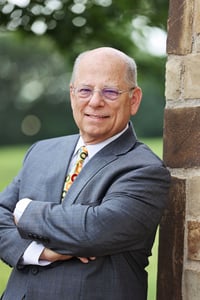
Wendell Brock

Posts by Wendell Brock

What It Means To Be a Caregiver

· 2 min read

What It Means To Be a Caregiver Wendell Brock Feb 12, 2024 2 min read ...

Unavoidable

· 2 min read

Unavoidable Wendell Brock Jan 15, 2024 2 min read We can’t escape payi...

The Keys To Success

· 2 min read

The Keys To Success Wendell Brock Jan 8, 2024 3 min read Here we go ag...

Get to Know the Economic Indicators

· 1 min read

Get to Know the Economic Indicators Wendell Brock Dec 19, 2023 2 min r...

Avoid the Christmas Cashflow Crunch!

· 2 min read

Avoid the Christmas Cashflow Crunch! Wendell Brock Dec 13, 2023 2 min ...

Tis the Season of Giving - Machines!

· 2 min read

Tis the Season of Giving - Machines! Wendell Brock Dec 7, 2023 2 min r...

Shop Small For a Big Impact

· 2 min read

Shop Small For a Big Impact Wendell Brock Nov 16, 2023 3 min read It’s...

An Amazing Experience

· 1 min read

An Amazing Experience Wendell Brock Nov 7, 2023 2 min read Many of you...

Get A Hobby!

· 1 min read

Get A Hobby! Wendell Brock Oct 24, 2023 1 min read In today’s world mo...

Good, Better, Best

· 2 min read

Good, Better, Best Wendell Brock Oct 17, 2023 2 min read It’s good to ...

Secure Tomorrow

Wendell Brock

Recent Posts

What It Means To Be a Caregiver

Posted by Wendell Brock

Feb 12, 2024 12:00:00 AM

What It Means To Be a Caregiver

  • Wendell Brock
  • Feb 12, 2024
  • 2 min read

It’s usually pretty easy to love and care about the people in our lives, especially when it comes to family, but sometimes life calls on us to take that a step further and become caregivers.


People become caregivers for many different reasons. Often times, an elderly parent is in need of care from their children, sometimes a grandparent steps in to care for a grandchild. Other times, it could be the need of a sibling or other relative, or perhaps a friend stepping in to help another friend or neighbor. However, it comes about, becoming a caregiver can be both rewarding and burdensome. 


A caregiver is someone that provides care and tends to the needs of a person with short- or long-term limitations due to age, injury, disability, or illness. This could mean providing physical, social, medical, and emotional support. While it’s easy to list the black and white expectations of a caregiver, it goes much deeper than superficial actions. Being a caregiver means becoming an advocate, a cleaner, a medication dispenser, a cook, and requires flexibility. All those responsibilities can feel overwhelming. It can also create a huge financial  burden to both the person needing care and the caregiver. A study done in 2011 showed that women over 50 who leave the workforce to care for a loved one lose up to $324,000 in wages, Social Security   benefits, and private pensions over their lifetime      because of their caregiving responsibilities.


Being a caretaker is not all bad, though. It is, in fact, a wonderful opportunity to develop a sense of empathy and greater understanding of others. It allows you the chance to learn patience and problem-solving and enhance communication skills. You can develop many abilities that could be useful in other areas of your life.


So where is the balance between the overwhelm and the reward? A lot of it comes down to how well the person needing aid has prepared financially. When people include a Long-Term Care (LTC) policy in their retirement and financial plan it ensures that if the time comes, there is money set aside for their needs, easing the burden a lack of money could place on them and their caretaker. Having LTC insurance in place changes the role of the caregiver to a care manager, allowing them to pay for professional help when needed, relieving the burden of being a sole caregiver. The role change can also relieve other personal burdens felt as a caregiver, reducing the pressure it places on their family and work life. However, one of the greatest blessings comes from the piece of mind it can provide.


Being a caregiver can be a rewarding and fulfilling role. It provides an opportunity to give back and help someone else. It’s important to plan financially and avoid the negative pitfalls of being financially unprepared. Having a LTC policy could be an option as you plan for your future retirement needs, for both you and your loved ones that would be taking care of you, providing peace of mind for everyone involved.


Photo by Lina Trochez


Read More

Unavoidable

Posted by Wendell Brock

Jan 15, 2024 12:00:00 AM

Unavoidable

  • Wendell Brock
  • Jan 15, 2024
  • 2 min read
 

We can’t escape paying taxes. It’s a part of life; it’s unavoidable. Even folks that try to evade paying their taxes end up paying. Afterall, failing to pay his income taxes was the tipping point in being able to convict famous mob boss, Al Capone. One way or another, Uncle Sam gets his payday. So, what does this mean for your retirement accounts?

 
R e quired Minimum Distributions (RMDs) are a minimum amount you must withdraw from your retirement accounts and act as a safeguard for the IRS against people using a retirement account to avoid paying taxes. Since traditional IRAs and 401(k) plans use pre-tax dollars, the IRS enforces RMDs to keep people from avoiding paying the deferred tax which is owed on the contribution. RMDs generally kick in when you reach age 72.
 
The amount you are required to withdraw changes from year to year and is determined by your life expectancy. It is calculated by dividing your account(s) year-end value by a factor associated with the estimated remaining years of your lifetime based on a table that can be found on the IRS website.
 
To calculate your RMD, the first step is to determine your account(s) balance as of December 31 of the pervious year. Then, using the IRS chart, find the distribution factor that corresponds to your age on your birthday for the current year (The factor number goes down the older a person gets). Then you divide your account(s) total by the factor number. Your withdrawal can occur periodically throughout the year, but the total amount must be withdrawn by December 31 of the current year. There are a couple different tables used when finding your divisor for beneficiaries of retirement accounts and for account holders that have a spouse that is much younger, make sure you use the one that applies to your situation. Click here to see the IRS RMD Table iii.
 
H ere’s an example: Let’s say Abe turned 74 on September 3rd of 2023, and his IRA was worth $300,00 on December 31 of the prior year. Abe would need to divide $300,000 by 25.5 (from IRS table iii), making his RMD $11,765. If Abe has multiple IRAs, he will need to calculate the RMDs separately. Depending on the type of retirement accounts Abe has, he may be able to add all the RMDs together and withdraw the totals from one account, otherwise he will need to withdraw from each retirement account separately.
 
The minimum distribution rule applies to the original account holder and their beneficiaries in the following types of plans: Traditional IRAs, SEP IRAs, Simple IRAs, 401(k) & 403(b) plans, profit sharing plans, and Roth IRA beneficiaries.

Most people begin making withdrawals from their retirement accounts before the required 74-year threshold. If you put off your withdrawals until later, it could bump you into a higher tax bracket. It’s important to have a retirement plan involving tax strategy.


Photo by Josh Appel


Read More

The Keys To Success

Posted by Wendell Brock

Jan 8, 2024 12:00:00 AM

The Keys To Success

  • Wendell Brock
  • Jan 8, 2024
  • 3 min read

Here we go again. Another round of New Year’s resolutions. Making New Year's resolutions dates back over 4,000 years to the ancient Babylonians and Romans. The New Year as we know it came about when Julius Caesar implemented the Gregorian calendar, shifting the start of a new year to January instead of March (the planting season). During this time, resolutions were made to their gods and included things like being better people and honoring commitments. Overtime as cultures changed, so did the resolutions.


Nowadays, the top resolutions are things like exercising more, losing weight, saving more money, etc. A recent survey found that 80% of respondents felt confident in their ability to reach their goals. Yet research suggest that only 9% of Americans that made resolutions actually  complete them, with most people quitting by the end of January.  With so much confidence, why do so many people fail to finish?


We’d like to share a few keys to success to help you  complete the goals you have set for yourself.


Key 1: When and why a goal is set is important. Many people set new year’s resolutions for traditions sake, which doesn’t offer the proper motivation to truly commit to something. Goals should be set when the change is needed. The need for change can be a powerful motivator.


Key 2: Keep things simple. If you try and tackle too many goals at once or commit to something too big it leads to failure. When most people experience failure, they lose the motivation to keep trying. To avoid that, pick one goal and focus on it.


Key 3: Keep it short. Don’t set your finish line a year away. By setting a shorter timeframe you allow for easier and multiple successes, and each of those successes compound throughout the year.


Key 4: Remember to make it fun. Making changes can be hard, which can be discouraging. That’s why it’s important to add an element of fun to whatever you’re trying to achieve. If you can make something fun and enjoyable, you tend to look forward to it, increasing your chances of sticking with it.


Key 5: Be realistic. We’ve all been told as children to “reach for the stars,” or “you can be anything!” While these are great sentiments, they are not very realistic. If you want to achieve a goal, you need to make your goal something that you can realistically complete.


Key 6: Don’t get caught up in doing it perfectly. Go into it knowing there will be mistakes. That’s OK! Sometimes making mistakes along the way teaches us and helps us grow more than doing something perfectly would have. Typically, a goal is meant to improve you or your life. Learning from mistakes is a great way to improve yourself.


Key 7: Have a backup plan. If you do fall off the wagon or feel like you’ve completely failed it’s important to have a plan in place with steps that get you back on track.


Key 8: Don’t be afraid to ask for help. There are no bonus points or extra fancy crowns awarded at the finish line if you did it without any help. Often, a little nudge from a friend or a professional gives momentum as well as accountability.


Key 9: Understand what success looks like. Success doesn’t look the same for everyone. Knowing what success looks like for you will help define what your goals should be and what you’re aiming for.


Photo 1 by Nerene Grobler


Read More

Get to Know the Economic Indicators

Posted by Wendell Brock

Dec 19, 2023 12:00:00 AM

Get to Know the Economic Indicators

  • Wendell Brock
  • Dec 19, 2023
  • 2 min read
 

We’ve seen our economy ebb and flow over the last few years. Reports come out and economists and financial experts weigh in on the data. Do you know where they are getting their information from? Do you know what to look for in the reports so you can better understand what’s happening and what could happen in our economy? 

Analysts use economic indicators to interpret current and future investment possibilities as well as the overall health of the economy. Economic indicators are pieces of data that are used to interpret the growth of different sectors as well as broad economic direction. They help investors uncover new investment opportunities so they can update their portfolios, and possibly avoid some investment pitfalls. 

Here are the broad indicators that give us a picture of what the economy is doing and possibly could do in the near future.

Leading indicators point to future changes in the economy. They are used for short-term predictions of economic developments because they typically change before the economy does. Some examples of leading indicators are Gross Output (GO), GDP, CPI, and consumer spending.

 Lagging Indicators generally come after the economy has changed. These indicators are most helpful when looking to confirm specific patterns. These are then used to make predictions based on the patterns that emerge. These indicators are not used to directly predict economic change. Some examples of lagging indicators are unemployment rate, corporate profits, and labor costs per unit of output.
 
Coincident Indicators provide useful information about the current state of the economy because they happen at the same time as the changes they signal. Some examples of coincident indicators are industrial production, trade sales volume, and personal income.


Photo by: Markus Spiske


10 views
0 comments
Read More

Avoid the Christmas Cashflow Crunch!

Posted by Wendell Brock

Dec 13, 2023 12:00:00 AM

Avoid the Christmas Cashflow Crunch!

  • Wendell Brock
  • Dec 13, 2023
  • 2 min read

Gifts for family and friends, Christmas cards, food and parties, there always seems to be something more to spend money on during the Christmas season. According to the National Retail Federation, the average American spends about $1,000 on Christmas each year, about 71% of that goes to buy gifts. For the last decade, U.S. Christmas spending has increased year-over-year. If you’re not managing your cashflow during the holiday spending spree, you could wind up in a Christmas cash flow crunch.


While cash crunch is usually used in reference to a business, we can experience the same thing in our own personal spending. When there is more money going out than is coming in you get a cash flow crunch. The best way to avoid this is to have a strategy in place before you feel the crunch. A big part of that is creating a budget or a spending plan. It’s important to tell your money what to do and assign it to a particular task. For example: X amount of dollars goes to paying yourself first in terms of savings and/or investing, then an amount for specific bills, while other parts of your income can be assigned to gifts or entertainment.

Remember that a budget is only part of a financial strategy. Your budget is like a roadmap for your money, an easy way to know when and when not to spend. To truly avoid the cash flow crunch you need more. Start by setting clear goals for what you want to achieve with your money. Set a deadline for those goals and decide what choices need to be made to succeed. An effective strategy will position you on the playing field in a way that you can win. It’s all about looking to the future and generating results.

Your strategy will be unique to you and your goals, but some points to think about include things like reducing your spending, deciding what parts of your spending lifestyle are needs, and which can be paused or done away with. Embrace the age-old question- what are my needs vs. my wants? This is a very emotional question, which makes money decisions emotional. When we control our emotions about money, we can control our money better. The answers to the needs vs. wants questions will be different for everyone. What may be practical to one family may seem lavish to another. It’s important not to judge. However, we all have the same basic needs: Food, Shelter, and Clothing. Beyond that anything else might be up for discussion.

The most important part of your strategy needs to be taking action. You can plan and strategize until you’re blue in the face, but unless you act and put that plan into motion, you will not see any results. You may never achieve your goals, and you may never win that end prize of a comfortable retirement. This Christmas avoid the cash flow crunch and give yourself the gift of financial freedom.


photo: Heidi Fin


Read More

Tis the Season of Giving - Machines!

Posted by Wendell Brock

Dec 7, 2023 12:00:00 AM

Tis the Season of Giving - Machines!

  • Wendell Brock
  • Dec 7, 2023
  • 2 min read

December swoops in in a rush, bringing thoughts of jingle bells, twinkle lights, Christmas shopping, and parties. The stores are decked in signs and banners advertising holiday sales, the latest gadgets, and trending must-haves. In the hustle and bustle of Commercial Christmas it does one good to slow down and remember the most meaningful part of Christmas- giving.


It can sometimes be difficult to know what to give, especially to those who have little. This year, consider an option that makes giving to those in need as easy as buying a candy bar from a vending machine.


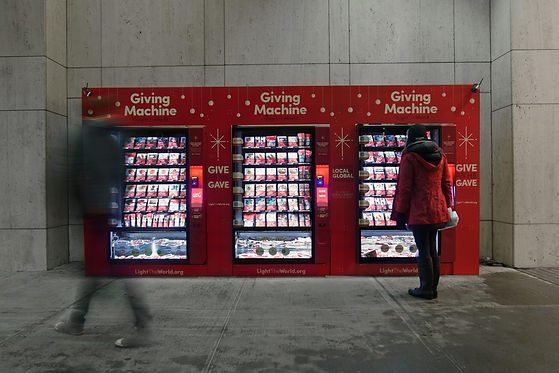
Light the World Giving Machines made their debut in 2017. Since then, they have raised more than $22 million in donations for both local and global charities. Their purpose, to make giving instant, memorable, and fun. They are set up exactly like a vending machine. You select from the listed items, swipe a credit or debit card, and a card representing your gift drops into the receiving bin, allowing you to see the donations pile up.


This year, a mobile Giving Machine will make its way through Texas, arriving in the North Texas area December fifth. The first stop will be in Fort Worth in Sundance Square. From there it will travel to Grapevine, and then McKinney. Visitors to the Giving Machines can purchase items for people in need both in Texas and around the world.


The locations and dates are:

Sundance Square, Fort Worth Dec. 5-7

Grapevine Dec. 9-17

Downtown McKinney Dec. 19– Jan. 1


Giving Machines partner with eight local charities as well as two global ones. Every penny of your donation goes to the item you select and is delivered by the participating charitable organizations. This is made possible because The Church of Jesus Christ of Latter-day Saints covers all the operating costs of each Giving Machine, including credit/debit card fees, making your donation even more impactful.


If you are not living in an area where Giving Machines will be set up, you can still donate online at GivingMachine.org. Your donations to the Giving Machines are tax deductible; you can get a receipt by text or email.


This Christmas take a moment, whether at a Giving Machine or by some other means, to bring light into someone’s life who may feel as though they are in darkness. Share the joy and love of the holiday.


For more information and to see a list of participating charities go to givingmachine.org


From all of us at Yield Financial, we hope that you and your family have a wonderful Christmas and a Happy New year.


Read More

Shop Small For a Big Impact

Posted by Wendell Brock

Nov 16, 2023 12:00:00 AM

Shop Small For a Big Impact

  • Wendell Brock
  • Nov 16, 2023
  • 3 min read

It’s that time of year again; time to start the holiday shopping. As you make your lists of who is getting what and where you’re going to shop consider checking local small businesses first. One of the most impactful ways you can support our teetering economy is to shop small and keep your dollars local.

We’ve written before about how small businesses represent over 99% of all U.S. businesses. Nearly half of American employees work for a small business, making up over 33 million businesses. Those are pretty staggering statistics, which is why it is so important to keep those businesses open and thriving.


Small businesses are not just the critical backbone of our economy, they are also the factories in which innovation and creativity are forged. Small businesses can offer unique products or services that might be harder to find in a big box national chain. Small business owners are usually experts in their field and are passionate about what they do. They also tend to offer better customer service. These places help bring character and life to the places we live.

When you shop local, you’re doing more than just helping a business grow, the money they earn supports local jobs and usually stays within the community. Their tax dollars go towards local public services. When it comes to finding donors and support for other organizations, small businesses are usually the primary contributors.

In our modern world of technology, it has become even easier to support your local businesses because most small businesses have a website and support online shopping. The majority also have some sort of social media platform, allowing them to connect with their community and customers. Oftentimes, small businesses will offer special deals or discounts via their social media pages to drive up their online connections.

Here at Yield Financial Advisors, Inc., we enjoy supporting small or locally owned businesses whenever we can. Our newsletter you’re holding is printed by a small business. Our technology service provider is another small business. We bank at local banks, which provide quick and friendly service. With each of these connections comes competitive pricing, exceptional service, and the opportunity to build relationships, and that is a very valuable thing.

Yield Financial Advisors, Inc. works to help small businesses become profitable by offering consulting services, bookkeeping, retirement planning and 401k consulting, tax planning strategies, as well as comprehensive financial planning. Our goal is to assist small businesses in becoming profitable by giving them the tools they need to establish a strong foundation to build on for long term success. By understanding the role of profits in a small business, owners can enjoy a return on their investment. Afterall, earning an income, (salary or wage) from a small business is a return on the labor provided to the business. Earning profits from a business is a return on the investment into that business. They are two completely different earnings.

There is nothing like experiencing the satisfaction of seeing small business owners’ ideas develop into a successful business that provides for their family and contributes to their community. Whether it’s a local bank, service provider, or boutique, these small businesses help make our cities unique and bring value to the places we live. It may take some planning but consider shopping your local small businesses before checking the big retailers this holiday season. And if you know a small business we can help, give us a call.


Photo by Mike Petrucci


Read More

An Amazing Experience

Posted by Wendell Brock

Nov 7, 2023 12:00:00 AM

An Amazing Experience

  • Wendell Brock
  • Nov 7, 2023
  • 2 min read

Many of you know that besides being a great financial advisor, haha, I also love photography. A friend in 9th grade suggested that I take a photo class, instead of the typical shop classes, (I’d already taken wood shop, drafting, metal shop, print shop, and horticulture class). I really liked all those classes, but I fell in love with photography. And why not, developer ran in my veins!


In 1938, at 30 years old, and after finishing a stint as a prospector, my father enrolled in Trade Tech College in Los Angeles, to study photography. I think the first thing they did was hook him up to an IV with developer, as he too fell in love with photography. He discovered his niche and supported his family as a professional photographer.

The influence of my father and the enjoyment I found in my high school photography classes led me to a lifelong love of photography; it is something that continually captivates me. Being able to capture a moment of splendor, curiosity, or beauty is a wonderful creative experience; sharing those images with people is just plain fun!

On October 14, I was able to capture the annular solar eclipse. I had planned to leave around Friday at noon and drive six hours to west Texas to a spot I had mapped out to take my photos. Taxes got in the way, and I finished my last return and client meeting at 8:00 pm. Rushing home, I packed my gear, and hit the road by 8:50 pm to drive west.

Andrews, Texas is a small town about 45 minutes north of the Midland/Odessa area. I grabbed some breakfast, looked around the town, then drove a few miles west to a place I was sure would be as close as possible to be the direct path of the eclipse.

Sometimes we make a great effort in our work, finish a tax return, answer questions, help someone in need, or just do a kind deed. At times we are immediately blessed, other times the blessings come down the road, but they always come. This was one of those times where I felt immediately blessed; and I am so grateful for the image captured, the time spent to ponder on the magnitude of the sun, moon, and my place on our home planet earth.


Thank you all for being a part of my life and allowing me to share an amazing experience with you. Total trip: 24 hours 30 minutes. And worth every second!


Read More

Get A Hobby!

Posted by Wendell Brock

Oct 24, 2023 12:00:00 AM

Get A Hobby!

  • Wendell Brock
  • Oct 24, 2023
  • 1 min read

In today’s world most people are running to and fro, here and there, and everywhere in between tackling life’s busy schedule. Few people have the luxury of free time...or do they? People tend to have more time than they realize, being caught up in the illusion of busyness. Between email, texts, social media, and many other busy distractions, there are precious moments that could be spent improving your health and quality of life. So are there better things to be doing with our unaccounted for “downtime moments?”


Having a hobby has been shown to have many benefits, especially to one’s mental and emotional health. A hobby is any activity that you do for pleasure during your leisure time. This could be anything from physical, artistic or creative, or intellectual activities.

But what if you don’t have a hobby? Find one! This in itself could be a very rewarding process in which you learn more about yourself. The process of finding a new hobby can be very rewarding. Try a multiplicity of things that make you feel happy or excited and if when you end an activity you feel fulfilled or rejuvenated add it to your “keep list”, if not, move on to the next activity.


So, unwind and enjoy those valuable moments in which you can indulge in things that make you happy and healthy! Don’t be discouraged with the effort needed to accomplish a hobby project, all good things in life take effort, stretch yourself a bit doing something new.

No hobbies yet? That’s ok, here’s some ideas to get you started:


Read More

Good, Better, Best

Posted by Wendell Brock

Oct 17, 2023 12:00:00 AM

Good, Better, Best

  • Wendell Brock
  • Oct 17, 2023
  • 2 min read

It’s good to have all your assets listed, net worth calculated, personal information, passwords, emails, etc. laid out for your surviving relatives, but this is not enough. If you don’t have an estate plan your assets will have to go through probate, where a judge will decide how to divide your estate according to your state laws. Once in the court system your will, your assets, and everything attached to your estate, including who inherits each asset, will become public information. This can be a long, expensive process. It can be frustrating and cause contention within your family. This is not a situation you want your loved ones to endure.

It’s better to have a will. In a will, you can dictate who should receive your assets and how you want your possessions distributed. Unfortunately, as previously mentioned, this will not save you from probate. The only thing that changes is the judge will divvy up your assets based on your expressed wishes. Your assets will still be locked up and inaccessible to your heirs until the legal process has run its course, again costing your family time, money, and a bucket load of frustration.

The best way to protect your assets and your loved ones is to create an estate plan that includes a revocable living trust (trust). A trust allows you to not only dictate who gets what, but also when and how, along with whatever other provisions you would like to include. A living trust avoids the lengthy, expensive, public probate process.

A living trust is a legal arrangement set up by someone (the grantor(s)) to protect their assets and their wishes for their family. A living trust designates a trustee and gives exact instructions on how things should be handled at the time of the grantor’s death. The trustee then manages the assets contained in the trust according to those directions and the beneficiaries’ best interests.

Within your trust you can decide not just what your heirs will receive, but when and how. This helps protect your heirs from themselves, irresponsible spending, unforeseen issues that may arise in the future, or from your assets going to unintended people. Some people may want to provide specific benefits to children or grandchildren, like college funding or help with buying their first home. It can also help protect assets for your adult children in the case of divorce. Having a trust is particularly important when there is a second marriage, as the state laws may not distribute assets the way you want.

A trust brings all of your assets together into one plan and provides beneficiary designations. This provides protection and privacy for your estate and loved ones. And because a trust is revocable while the grantor(s) is alive, the directions and stipulations set forth can be changed and revised at any time by the grantor.


Taking care of your family doesn't have to end at death. IF you take the time to establish the appropriate estate plan and include a living trust, your care and protection of your family and loved ones can continue long after death.


Photo by : Kevin Delvecchio


Read More