








Wendell Brock

Posts by Wendell Brock

Is Our Country Living Beyond Its Means?

· 2 min read

Is Our Country Living Beyond Its Means? Wendell Brock Oct 10, 2023 2 m...

What's Your Plan?

· 2 min read

What's Your Plan? Wendell Brock Sep 12, 2023 3 min read Big or small, ...

Give a Little, Get a Lot

· 2 min read

Give a Little, Get a Lot Wendell Brock Sep 8, 2023 2 min read Anne Fra...

Are You a 48%’er?

· 2 min read

Are You a 48%’er? Wendell Brock Sep 6, 2023 3 min read While it might ...

Introducing FedNow!

· 1 min read

Introducing FedNow! Wendell Brock Sep 5, 2023 2 min read The idea of i...

Upcoming Solar Eclipses

· 1 min read

Upcoming Solar Eclipses Wendell Brock Sep 5, 2023 2 min read Did you k...

Identity Theft Is Not a Joke!

· 1 min read

Identity Theft Is Not a Joke! Wendell Brock Sep 5, 2023 2 min read The...

It’s a Walk In the Park

· 1 min read

It’s a Walk In the Park Wendell Brock Jul 25, 2023 1 min read 424. Tha...

Let’s Get the Snowball Rolling

· 2 min read

Let’s Get the Snowball Rolling Wendell Brock Jul 18, 2023 2 min read W...

Does Drought Really Dry Up the Economy?

· 2 min read

Does Drought Really Dry Up the Economy? Wendell Brock Jul 11, 2023 3 m...

Secure Tomorrow

Wendell Brock

Recent Posts

Is Our Country Living Beyond Its Means?

Posted by Wendell Brock

Oct 10, 2023 12:00:00 AM

Is Our Country Living Beyond Its Means?

  • Wendell Brock
  • Oct 10, 2023
  • 2 min read

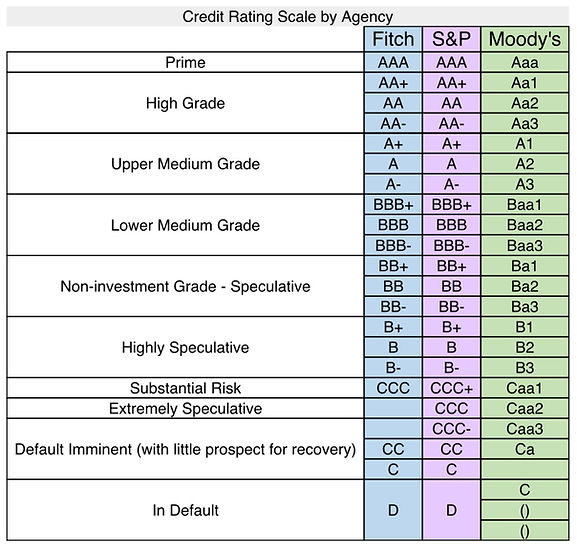
On August first of this year, Fitch Group, one of three top credit rating agencies in the United States, announced a decrease in the credit score of the United States, taking it from a AAA rating to a AA+. This credit rating expresses the forward-looking opinion of the Fitch Group as it looks at the strength of the institution’s ability to pay back its debts. Back in 2011, Standard and Poor’s downgraded the US for the first time in the U. S’s history. Both times have come after issues and debates regarding the debt ceiling.


While neither hit was a huge drop, investors use these rating systems to gauge whether certain investments are likely to default or yield a reliable return, for lending and borrowing decisions, as well as strategic planning. Most economists and investment specialists believe there won’t be too many investors bothered by the decrease, especially those that have a long-term investment strategy.

The immediate concern regarding the downgrade by Fitch was that it could potentially weaken the foundation of trust that our global financial system is built on, calling into question whether the U.S. government will be able to pay back its debts. If the investors that hold the U.S.’s debt lose that trust it could result in something similar to a bank run, in which our government would have to pay back more than what they have available. The downgrade can be seen as a red flag alerting that the U.S. government has a spending problem, which erodes confidence in their fiscal management.

Luckily, in the after-hours trading following the downgrade, the U.S. Treasuries held steady. Politicians and economists immediately assured investors and citizens alike that the downgrade was “arbitrary and of no concern”. However, global news reports expressed unease and questioned the U.S. government’s ability to manage their debt and called into question their governance system. This is a great concern, which our politicians must address, they can’t go forward piling on more and more debt.

Since 2002, the federal government has run a deficit. That means each fiscal year, spending exceeds revenue, which then is added to the national debt. It is projected that spending will continue to outpace revenue by increasing amounts each year, forcing the government to borrow more every year to fund its operations.

In order to receive an upgraded score with Fitch and restore their previous good standing, the government will have to bring down their deficits, which are currently three times the AAA rating median. (Meaning of the 10 countries with a AAA, rating our country is running a deficit 3 times higher than the median of those 10). They will also have to implement long-term fiscal solutions and will have to show that their governance is on the mend.

With our national debt over 44 trillion, the federal government is clearly living beyond its means. Addressing our national debt is critical in securing our national economic future.


Read More

What's Your Plan?

Posted by Wendell Brock

Sep 12, 2023 12:00:00 AM

What's Your Plan?

  • Wendell Brock
  • Sep 12, 2023
  • 3 min read

Big or small, everyone has an estate made up of all the things they own. So, what do you do with all that stuff when you kick the bucket? As they say, “you can’t take it with you when you go.” That’s where estate planning comes in. Like it or not, everyone has an estate plan, it’s either the one you make up with your personal instructions, or the ‘one size fits all’ estate plan that your state government has established by law. Most people would prefer the one you establish with your instructions.


A comprehensive estate plan is a set of documents made beforehand that provides directions not only if you die, but also if you become incapacitated and cannot manage your personal affairs, namely, finances, and health care. The main documents in such an estate plan include, a will, durable power of attorney, health care power of attorney, living will and a HIPPA form. Often times an estate plan will also include a revocable living trust.

Most people are familiar with a last will and testament, but it is not quite what the movies make it seem. In a will, you can specify your wishes, but if a will is all you have, your estate will not avoid probate. That means your certain assets will go through the court system and be reviewed by a probate judge (which can be a very lengthy process) before they can be distributed to your intended beneficiaries. This is made more complicated if you own property in multiple states and may result in an expensive and difficult situation for your family. Additionally, it is in the will that your executor is named, and if you have a minor child(ren), then a guardian is identified to care for the child(ren).


The durable power of attorney is used when a person is incapacitated and cannot function on their own to manage their personal/financial affairs. This gives instructions to the person or persons selected to carry that responsibility.

The health care power of attorney, is used again when a person incapacitated and cannot make health care decisions. They may need a particular surgery and not understand why or what is needed. This happened when my mother needed her appendix removed when she had Alzheimer’s.

The HIPPA Form allows for open communication between the medical professionals, and facilities, and the caregiver(s). Otherwise with healthcare privacy laws the caregiver may not be able to obtain information about their loved one.

You should also have a living will. This is where you can express your desires for medical treatment or other health care directives should you be incapacitated. It allows you to speak for yourself through your written wishes, instead of relying on what other people may want or choose. A living will may also include any end-of-life directions.

A will is only one option you can use when planning the distribution of your assets. Many people utilize a revocable living trust, giving them more control in how their wishes are carried out as well as protecting their family from having to endure the arduous and public probate process. A trust can be a very useful tool in protecting your hard-earned assets from being frivolously spent after your passing.

Estate plans can be complex. You want to make sure it’s done correctly and provides for your loved ones the way you intend. Because of some of the complex tax and legal considerations, it’s always a good idea to consider using an estate planning attorney. This is a person who specializes in that area of the law and can provide the most help.


Photo 1: Scott Graham

Photo 2: Melinda Gimpel


Read More

Give a Little, Get a Lot

Posted by Wendell Brock

Sep 8, 2023 12:00:00 AM

Give a Little, Get a Lot

  • Wendell Brock
  • Sep 8, 2023
  • 2 min read

Anne Frank once wrote, "No one has ever become poor by giving." Not only was she correct, but the data reveals that people that give get richer. Studies have shown time and time again that when people give money often, they tend to experience financial growth and abundance. It may seem hard to believe, it may even seem counterintuitive. How can giving money away get you more money?

Psychologist from the University of Oregon found that charity stimulates parts of the brain which are associated with meeting basic needs like food and shelter, suggesting that our brains know that giving is good for us. Not only that, in the 1980’s a study looked at how people’s brains reacted to the endorphins their brains released when being charitable. The psychologist showed that when people volunteer or help others, the giver got what they called, “the helper’s high.” In other words, charitable acts can give you a mild sense of euphoria and happy people are more productive. Productive people, generally, are more successful, which translates into more earning power.


That’s all good and well, but how does that make you richer? One way is when others see an individual behaving in a charitable way, they elevate those people in their minds to positions of leadership. A study from University of Kent showed that 82% of the leaders elected from the experiment group were the biggest givers. In real life this translates to those that are charitable are often more likely to receive promotions because they have already been viewed as worthy leaders.

Our nation is a generous nation. In 2022 Americans gave $499.33 billion to charity, and the largest source of giving (64% of that total) came from regular people like you and me. The amazing multiplicity of charity can be seen at a national level. Giving effects our countries GDP! What’s remarkable is U.S. government data show that GDP per person in American has risen about 150% over the last 50 years, but the donated dollar amount per person has risen by about 190%. Donating, then, may not be just an act of charity, but also one of patriotism.

Whether neurochemistry or something greater, years of studies and experiments, myriad analysts’ data, and the day-to-day evidence we see with our own eyes proves: when we give we prosper. Many successful people in the world attribute their success to investing their time and money in the people around them.

"We make a living by what we get. We make a life by what we give."- Winston Churchill

Photo by Markus Winkler


Read More

Are You a 48%’er?

Posted by Wendell Brock

Sep 6, 2023 12:00:00 AM

Are You a 48%’er?

  • Wendell Brock
  • Sep 6, 2023
  • 3 min read

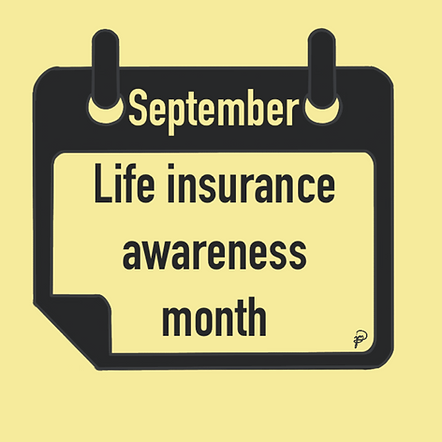
While it might not be the kind of awareness month that gets decorations, a parade, or its own special greeting card, September is Life Insurance Awareness Month, and it is definitely something our country needs more awareness of considering only 52% of Americans report having any life insurance. Of those 52% of Americans, 41% of them say they don’t think they have enough. That’s a lot of families, that will have a hard time covering, not just the cost of a funeral, but any debts or on-going expenses. Life insurance is one of the most basic financial tools available, it’s like having a hammer in your toolbox.

In the spirit of Life Insurance Awareness month, I’d like to bring to light some of the consequences of not having, or not having enough life insurance. It’s easy to push these sorts of things to the side, but I truly believe planning for and taking care of one’s family is of the utmost importance.


This may come as a shock, but when you die your paycheck stops! That means if your spouse wasn’t working, he or she will have to find work, and in the meantime, they could be incurring debts as the bills pile up.

Now, just because your income disappears doesn’t mean your debts do too. Unfortunately, debts sticks around until they are paid off. If you have any debts at the time of your passing, without life insurance it may be very difficult for your family to cover them. For example, if you were still paying on your mortgage when you passed away, and there was no life insurance to provide money for your family’s needs, it may force your family to sell and relocate during an already difficult time.

Aside from providing future income for your family there are end of life costs to consider. The average funeral costs between $7,000 and $12,000 (this excludes the cost of a burial plot). If you don’t have life insurance, that amount could sink a struggling family. Years ago when I started in this business, a friend/church leader and I had a conversation, he was a mortician by profession. He said, “Wendell the thing I hate most about my job is putting a family in debt to bury a loved one, especially a child.”

Life insurance, creates an instant estate or pot of money. According to the Lending Club, 60% of Americans live paycheck to paycheck, which means there’s little chance of a substantial savings or nest egg being left to those families. Even with retirement savings, there is most likely not enough money when the bread winner passes away. It would be better to cut back on retirement savings and have some extra life insurance, at least while children are in the home. Life insurance gives your family the ability to plan for their future; without it they may end up in a desperate situation.

So how much life insurance do you need? That will be different for each family. However, there are some guidelines that can help you establish your own family’s needs. Most experts recommend having at least ten times your annual income as a starting point. At the very minimum, your coverage should allow for funeral costs and other end of life expenses, as well as any debts you currently have. As you age the reasons for life insurance often change.

Purchasing a life insurance policy is a proactive strategy, a way to protect your loved ones. It allows your survivors freedom from debt and a solid foundation to build their finances on. It certainly blessed my mother when my father passed away when I was a sophomore in college. It’s a light to your family during one of their darkest moments.

“The protection of a man’s person is more sacred than the protection of property.”

– Thomas Paine


Read More

Introducing FedNow!

Posted by Wendell Brock

Sep 5, 2023 12:00:00 AM

Introducing FedNow!

  • Wendell Brock
  • Sep 5, 2023
  • 2 min read

The idea of instant payments isn’t new; in 2017 The Clearing House’s system, RTP (Real Time Payments), went live. Since then, it has steadily grown in demand. In response, the Federal Reserve Bank (the Fed) recently announced their new instant payment infrastructure, FedNow, is live.

The FedNow initial release will include optional features like fraud prevention tools, the ability to join initially as a receive-only participant, request for payment capability, and tools to support participants in their handling of payment inquiries. Additional features and service enhancements will be introduced over the coming years. The Federal Reserve plans to make FedNow available to all Americans as it continues to expand and develop more features and services.

In addition to functioning like and offering the same benefits as The Clearing House’s RTP, FedNow will also allow banks to connect to their master account at the Federal Reserve. There are a few other differences, mostly coming down the default transaction limit for FedNow being $100,000 with the participating financial institution having the option to request up to $500,000. With RTP, on the other hand, the transaction limit is $1 million. Right now, it is unknown if the Federal Reserve will adjust the limit to match that of RTP.

The FedNow service enables individuals and businesses to send immediate payments through their participating depository institution. FedNow is designed as a neutral platform that can support a variety of instant payments and allows the service providers something they can build on in order to offer other value-added services.

The Fed is hoping this will direct more of these instant payments back through their processing systems. Perhaps leading them to develop other forms of instant payment – like a crypto currency.

So what does this mean for you? If your bank is participating in the FedNow program you or your business will be able to send and receive money in real-time. The current cost for this service is a fee of $.045 per transaction, to be paid by it’s sender, and a fee of $.01 for a request for payment message, to be paid by the requester. The Fed has published a list of banks and credit unions that are currently using the FedNow system, which you can find on our website here: www.yieldfa.com/FedNowBanks.


Read More

Upcoming Solar Eclipses

Posted by Wendell Brock

Sep 5, 2023 12:00:00 AM

Upcoming Solar Eclipses

  • Wendell Brock
  • Sep 5, 2023
  • 2 min read

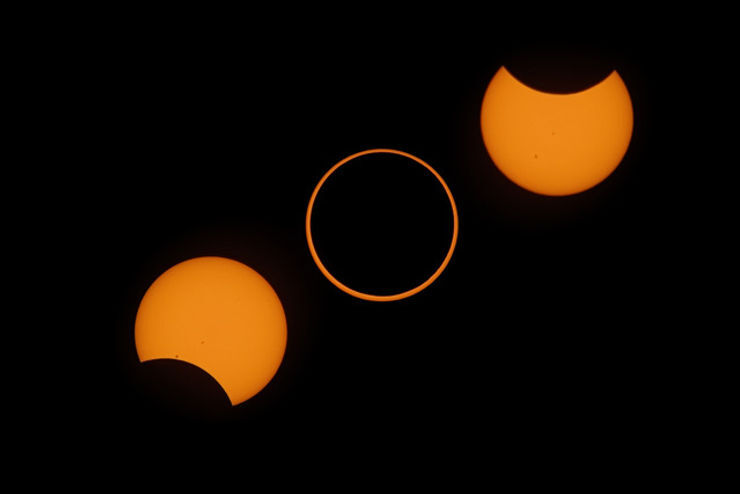
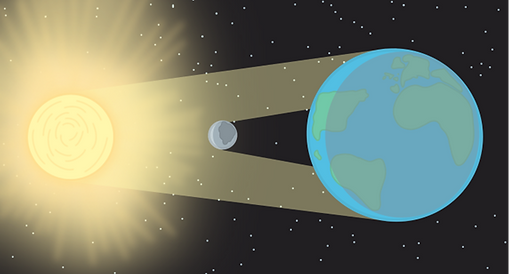
Did you know there are 2 solar eclipses every year? Often they occur over oceans or other continents. A solar eclipse occurs when the sun, moon, and earth are in alignment. This can create either a full or partial eclipse, depending on how they line up.


On October 14, 2023 an annular eclipse will pass over North America. This particular eclipse is called such because there will be a ring of the sun visible behind the moon. This occurs when the moon is at or near its farthest point from the earth, making the moon smaller to our perspective and not fully covering the sun.


The really exciting eclipse, the total solar eclipse, will occur April 8, 2024. This type of eclipse happens about every 18 months, however, what makes this one so special is here in the U.S. will actually have a chance to see it! When the eclipse happens (where visible) the sky will darken like just before down or at dusk. During this time the sun’s corona, which is normally concealed by the brightness of the sun, will be visible.


During an eclipse you may notice some unusual things happen during the moments of semi darkness. The temperatures can drop almost 20 degrees. Nature and animals tend to act a little differently; the breeze will usually stop and shadows may look different. Birds may stop chirping, and other animals may act startled or uneasy. It’s as if the earth recognizes the uniqueness of what is taking place.


The next time a total eclipse will make its way over the U.S. will be in 20 years. So make your plans now and cross your fingers for clear skies, because you won’t want to miss this rare event!


Read More

Identity Theft Is Not a Joke!

Posted by Wendell Brock

Sep 5, 2023 12:00:00 AM

Identity Theft Is Not a Joke!

  • Wendell Brock
  • Sep 5, 2023
  • 2 min read

There’s a good chance you or someone you know has experienced identity theft. Everyday people’s names, social security numbers, credit card numbers, passwords, and even medical information is stolen and used to commit fraud and other crimes. According to the FBI, over 100,000 identity theft and personal data breaches occur every year. However, identity theft goes beyond online security. In fact, many people have their identity stolen by someone they personally know. Once someone’s identity has been stolen the damage can be far reaching. It’s estimated to take up to six months and 600 hours to set things right and restore order to your name and credit. So how can you prevent this?


Many companies offer identity theft protection, sending you alerts if anything looks fishy, but that’s about where it ends. Sometimes that’s enough to nip a problem in the bud and stop it. Another option is to sign up for identity theft insurance. These types of programs are in place to help you after a problem occurs. Usually this means that an agent is assigned to handle all the issues and sorting through the fallout, meaning all those hours it takes to fix the problem, can be shared with a professional to help.

Your identity can be stolen even if you don’t use a computer. Identity criminals are getting more and more clever, always seeking for ways to scam people. Just remember, this is your personal information. In the hands of someone else, it could crumble the foundation of the life you have built for yourself. Something that important is worth protecting. Whether you choose to keep it simple and use a monitoring service or include insurance protection, protecting your information is protecting your future.

For more information you can go to:

FTC.gov/IDtheft and identitytheft.gov/


Photo by: Towfiqu barbhuiya


Read More

It’s a Walk In the Park

Posted by Wendell Brock

Jul 25, 2023 12:00:00 AM

It’s a Walk In the Park

  • Wendell Brock
  • Jul 25, 2023
  • 1 min read
 

424. That’s the number of national parks in the United States. Though most people think of the grand sprawling parks like Yellowstone, the Grand Canyon, and the Everglades, our national parks encompass far more than the 63 traditional “National Parks.” There are national preserves, monuments, memorials, historical sites, battlefields, as well as recreational areas. Beyond that, that are over 3,700 state parks in the U.S. covering more than 14 million acres. 

  S o why do we have so many designated parks? Why should we care?


State and national parks provide an array of recreational opportunities in a relatively close setting. These parks also serve as protected spaces preserving natural resources, wildlife, habitats, fresh water sources, and clean air. Having clean green spaces ensures the health of our environment and helps maintain healthy ecosystems. Whether it’s a quick getaway or an extended trip, visiting a state or national park can be an enriching and memorable experience. Those experiences help fill our gratitude bucket, deepening our appreciation for our country’s diverse landscape, resources and history.


Read More

Let’s Get the Snowball Rolling

Posted by Wendell Brock

Jul 18, 2023 12:00:00 AM

Let’s Get the Snowball Rolling

  • Wendell Brock
  • Jul 18, 2023
  • 2 min read

When money is tight most people find ways to cut back, making their money go farther, but if you have a lot of debt, the best way to create more wiggle room in your budget is to eliminate the debt. This can seem like a very overwhelming task, but if you approach it in a simple straight forward way, the task becomes very manageable.

Snowballing debt has become the go-to method for many people. So, how do you get that snowball rolling? First and foremost you have to make a commitment to STOP borrowing money!

Before beginning the snowball method it’s important to establish a budget and make sure you have enough money to cover all your minimum payments as well as the extra required for power-paying your smallest debt. It’s important to establish how much money you will be able to add to the first debt’s minimum payment. You don’t want to create more problems - you can’t rob Peter to pay Paul; you can’t pay off debt by creating more debt.


The first step is to list your debts in order of the from smallest to largest. Unlike some other methods, when using the snowball method you ignore the interest rate of the debts, you are solely looking at the overall amount still owed, and the monthly cash flow for each obligation. Each month you will put the extra money you budgeted toward the smallest debt along with its minimum payment.

Once the smallest debt is paid off, take the amount you were paying toward the smallest debt and apply it toward the next smallest debt. Now, you will be paying the minimum amount plus the previous bills minimum, plus the extra budgeted money. This is where the snowball starts rolling. The added money going towards the second debt allows you to pay it off even faster than if you were simply paying the extra budgeted money.

Pretty soon, the second debt will be paid off. Using all the money (from the first debt, the second debt, and the budget money) you will continue to pay off the debts moving upward toward the larger debts until they are all paid off. Each time you pay off a debt the money is applied to the next debt up the line, which will be larger, thus paying it off quicker.

Continue to make the minimum payments on all your debts, except the one you are currently snowballing, which will be receiving the added payments. The more money you can put towards your next payment the bigger your snowball gets and the faster your debt is eliminated!

Remember to stay up to date on all your bills. If you are behind in anything, it’s important to get things caught up before starting the snowball method. If you are struggling to bring things up to date you can contact your lenders to see if there are options for adjusting payments or due dates.

Getting out of debt can be hard, it takes, sacrifice and self-discipline, but the reward is financial freedom, giving you back the reins on your finances. Remember to focus on how awesome it feels to have paid off a debt!


Read More

Does Drought Really Dry Up the Economy?

Posted by Wendell Brock

Jul 11, 2023 12:00:00 AM

Does Drought Really Dry Up the Economy?

  • Wendell Brock
  • Jul 11, 2023
  • 3 min read

Updated: Jul 17, 2023

By July those of us in the continental U.S. are in the full swing of summer. For most, that means picnics, swimming, camping trips, family reunions…and sometimes drought conditions. For many people this means water restrictions limiting how often we can water our lawn, but when examining the broader picture, we can see that drought has far reaching consequences. Drought has the capacity to impact all people across the many facets of our economy, potentially stalling growth.


Water is a vital resource, a scarcity of it can cost some countries as much as 6% of their GDP. According to drought.gov, drought ranks third among environmental disasters, resulting in an average cost of about $9 billion per year making drought years extremely hazardous to our economy.

The most obvious and immediate effects of drought are found in our farmlands. The agriculture sector accounts for about half of all economic losses from drought. Without steady rainfall farmers will likely have a diminished harvest, creating a scarcity and increasing their costs as they are forced to use alternative methods in order to continue providing water. Through environmental and economic connections, this affects the food supply we see in our grocery stores, as well as feed for cattle and other livestock, which then increases the cost of meat and other animal products down through the supply chain. Beyond the current year’s drought, the lack of moisture damages the quality of soil, making it harder to grow healthy crops the following year, impacting future potential income of farmers.

The effect of drought on farmland doesn’t just end with food harvest or animals. Businesses that depend on farming, like tractor and farm equipment producers and sellers, also feel the pinch of losing business that a farmer can no longer afford or no longer needs due to damaged crops or lost livestock.


Farming is not the only industry that can experience the harsh impact of drought. Tourism and leisure businesses that are funded by water-based activities like boating, rafting, fishing, and even skiing suffer. When lakes, rivers, and reservoirs are low from a lack of rain or winter run-off these businesses experience decreased numbers and cancellations. Other waterfront type businesses that rely on tourism or seasonal visitors for their income like hotels, shops, and restaurants, will also experience the decline.

Where there is drought and dry wood and plants there are often wildfires. When this happens it can have an extended impact on the timber industry, which goes on to affect the cost of lumber, and ultimately the prices of the housing industry.

Droughts have an extensive reach that lie in the peripheral, all around, but not as quickly noticed. When water supplies dry up, the lack of moisture causes the ground to shrink. This contraction can damage structure foundations, roads, and water pipes, which puts added stress on personal, city, and business budgets. Power companies that rely on hydroelectric power face reduced energy production and even potential closures of facilities during extended periods of drought, resulting in higher energy costs for consumers. Water-based transportation like barges may have difficulty navigating in the low water levels of rivers and canals, which goes on to affect business that rely on those transports.

Droughts are more than just a dry period. All parts of our country are subject to droughts, not just out west in the deserts of Arizona, Nevada, Utah or California. Drought has the potential to greatly affect the economic standing of many people and businesses, making water management a key factor in economic growth and planning.


Photo 1 by Matt Palmer


Read More