



Secure Tomorrow

What's the Fed?

· 2 min read

What's the Fed? Wendell Brock Jun 13, 2023 3 min read Updated: Jun 14,...

There's a Nap For That

· 1 min read

There's a Nap For That Wendell Brock May 26, 2023 2 min read Who hasn’...

The "Just in Case" Fund

· 2 min read

The "Just in Case" Fund Wendell Brock May 19, 2023 2 min read Imagine ...

But How Do the Eggs Get to the Store?

· 2 min read

But How Do the Eggs Get to the Store? Wendell Brock May 5, 2023 2 min ...

What is GDP?

· 2 min read

What is GDP? Wendell Brock Apr 10, 2023 2 min read It’s hard to come a...

Financial Literacy Month

· 2 min read

Financial Literacy Month Wendell Brock Apr 3, 2023 3 min read In an ef...

Shake Up Your Savings Plan

· 2 min read

Shake Up Your Savings Plan Wendell Brock Mar 20, 2023 2 min read Infla...

Influential Finfluencers

· 2 min read

Influential Finfluencers Wendell Brock Mar 14, 2023 2 min read It’s a ...

The Inverted Yield Curve

· 1 min read

The Inverted Yield Curve Wendell Brock Mar 6, 2023 1 min read Increasi...

The Power of Small Business

· 1 min read

The Power of Small Business Wendell Brock Feb 20, 2023 2 min read Acco...

Secure Tomorrow

What's the Fed?

Posted by Wendell Brock

Jun 13, 2023 12:00:00 AM

What's the Fed?

  • Wendell Brock
  • Jun 13, 2023
  • 3 min read

Updated: Jun 14, 2023

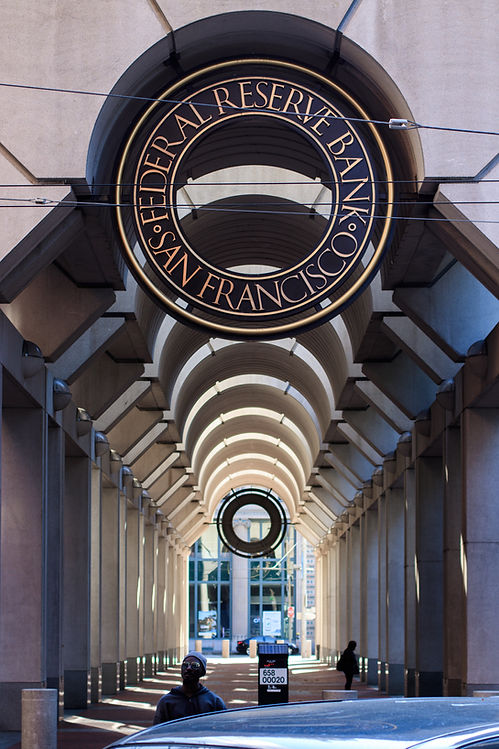
There's been a spotlight on the Federal Reserve these past many months as they toe a delicate line of managing inflation and recession. We hear about the increase in interest rates, but aside from the media update, how much do you know about the Federal Reserve?

The Federal Reserve, usually just referred to as the Fed, is the central banking system in the United States of America. As a central bank, the Fed is given privileged control of the production and distribution of money and credit. They also formulate monetary policies and regulations of member banks (not all commercial banks are member banks with the Federal Reserve). The overall mission of the Fed is to provide our country with a stable, safe, flexible financial system.

The Fed was established after several repeated financial panics, which led to severe economic disruptions due, in part, to business bankruptcies and overall bank failures. The majority of bankers felt the problem stemmed from our country's lack of a central bank. They believed having a central bank would provide more stability as well as having emergency credit for times of financial crisis. On December 23, 1913 President Woodrow Wilson signed the Federal Reserve Act into law establishing the U.S. central bank.

The Fed has undergone several modifications over the many years in order to adapt to the ever changing demands of our evolving economy. Today the Fed is made up of 3 key entities.


The Board of Governors

The Board of Governors is located in Washington, D.C. and is the governing body of the Federal Reserve System. There are seven “governors,” each nominated by the President of the United States, and then confirmed by the U.S. Senate. Each governor is appointed to serve 14 years. Their responsibilities include setting reserve requirements (the amount banks are required to hold in order to meet sudden withdrawals), setting the discount rates (the interest rate the Fed charges on loans due to financial institutions and other banks), overseeing the operations of the 12 Reserve Banks, and guiding the operation of the Federal Reserve System.

Federal Reserve Banks

There are 12 Federal Reserve Banks; each bank has its own president and district. The bank president is responsible for all the Reserve Bank activities. These banks act as the operating arms of the Federal Reserve. Each of the Reserve banks collect data and information about the businesses and needs of the local communities within its region. That information is used when making monetary and policy decisions.

The Federal Open Market Committee

The Federal Open Market Committee (FOMC) is the Fed’s principal body and sets national monetary policy. They also make all the decisions regarding the conduct of open market operations, including the buying and selling of government securities, which affect the federal funds rate. This third entity is made up of parts from the first two, seven members of the Board of Governors and the president of the Federal Reserve Bank of New York, and 4 of the remaining 11 Reserve Bank presidents, who serve one-year terms on a rotating basis. The Committee is also responsible for monetary policy decisions in three areas: Maximizing employment, stabilizing prices, and moderating long term interest rate.

The Federal Reserve plays a major role in the U.S. Economy; understanding how it operates can help you better understand our country's broader economic policies and the impact they have on you and your community.


Photo by Alex Bierwagen


Read More

There's a Nap For That

Posted by Wendell Brock

May 26, 2023 12:00:00 AM

There's a Nap For That

  • Wendell Brock
  • May 26, 2023
  • 2 min read

Who hasn’t sat at their desk and wished for a nap at least once? In today’s world most people run a fast paced life with more things to do than there is time for. It’s exhausting and can lead to a lot of fatigue during working hours. Fortunately, there’s something you can do. Take a nap.

According to the CDC both short and long naps can increase alertness. A short nap is usually 15-30 minutes, whereas a long nap is an hour to 1.5 hours. This period of actual sleep benefits our brains and our bodies, more so than just a quiet rest period.


Research has shown that people who frequently take naps tend to perform better at work, school, and athletics and make them more productive. While not feeling sleepy is its own perk, people who nap and feel well-rested tend to experience less stress and reduced tension, which can lower your blood pressure and reduce your risk of heart disease. Well-rested, nap-taking people also tend to have healthier immune systems, which means fewer sick days. A nap can also directly improve your mood and help you regulate emotions, helping you stay calm during stressful situations without getting as flustered. Do you tend to forget names or faces, or sometimes you can’t remember a specific word? Napping could help with that. According to Johns Hopkins and the Mayo Clinic naps can improve memory and recall.

A short nap, 15-20 minutes, during the day is recommended. This allows your body to rest and recharge without the groggy feeling upon awakening. Longer naps allow your body to enter a deep sleep stage and can be harder to wake from, leaving you feeling groggy, so should be taken towards the end of the day or on days when you have more time.

So, if you find yourself regularly overcome with fatigue or experiencing high levels of stress in your life, consider adding naps to your daily schedule, perhaps as part of your lunch break!


Read More

The "Just in Case" Fund

Posted by Wendell Brock

May 19, 2023 12:00:00 AM

The "Just in Case" Fund

  • Wendell Brock
  • May 19, 2023
  • 2 min read


Imagine a perfect day. The sun is shining, the birds are singing, and everything is going your way…until suddenly it’s not. We’ve all experienced unexpected turns in our lives. Perhaps you lost a job, an auto accident, developed serious health problems, or simply had an appliance break down. Things happen, and it can be costly, especially if you don’t have an emergency fund.


Having a dedicated savings account specifically for emergencies could be the difference between drowning in bills and stress or gracefully working through the difficulty. Having intentionally set money aside will allow you to navigate potential financial hardship and recover quicker.


The amount of money dedicated to an emergency fund will vary from person to person, depending on each unique situation. However, a general rule of thumb is to have enough in your fund to cover 3-6 months of your bills and expenses. Set a goal amount, then break that amount into smaller milestone amounts. Saving towards those smaller amounts is very attainable and will lead to greater savings. As you continue to save it gives you a sense of satisfaction and achievement.

The habit of saving is more important than the amount of saving! For some people, it might be a struggle to put money aside, especially those living paycheck to paycheck, but even little amounts of money set aside will add up and give you a financial cushion. There are many strategies for putting money aside, even ones as simple as putting aside your extra change will help. You could save a percentage of your income each paycheck, something as small as 1 to 3%.

There may be times when you receive a large sum of money, like a tax return, a gift, or inheritance. It may be tempting to spend that money, but this is a wonderful opportunity to grow your emergency fund. By putting a portion of that large sum in your emergency fund you are investing in yourself and your future stability.

Once you have an emergency fund established…when should you use it? Remember that this is an EMERGENCY fund. This is not a back-up fund. This is not a fund that you dip into if you don’t have enough to make a purchase. It is a good practice to establish guidelines; decide beforehand what you consider an emergency. This is important to establish because not all unexpected situations are real emergencies. We often create our own emergencies; we can justify our spending for anything.

When emergencies arise, this reserve fund can help you avoid turning to other sources like credit cards or loans, which will end up costing you more money. If you use your emergency fund remember to replenish it as soon as possible so you can be prepared for the next unexpected situation. Stay prepared and enjoy a Secure Tomorrow.


Image 1 by mosi knife

Image 2 by Simran Sood


Read More

But How Do the Eggs Get to the Store?

Posted by Wendell Brock

May 5, 2023 12:00:00 AM

But How Do the Eggs Get to the Store?

  • Wendell Brock
  • May 5, 2023
  • 2 min read

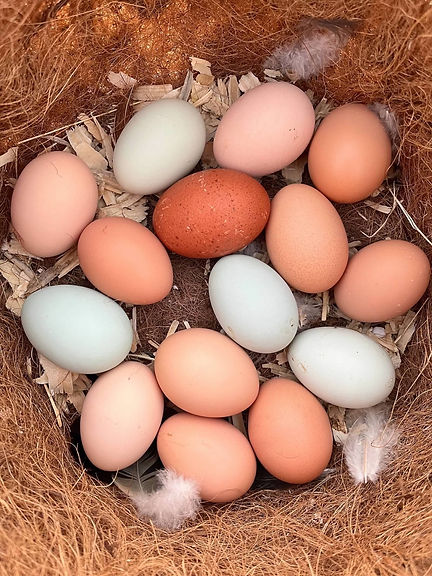
Everyday consumers go to the grocery store and purchase eggs. Gross Domestic Product (GDP) tracks that purchase, as well as all the other purchases made by consumers. In our last article we wrote on GDP and how it is used to monitor the current economy by measuring the monetary value of final goods and services purchased by a final consumer. But this leaves out a huge piece of the economic picture. How did the eggs get to the grocery store? What happened, and more importantly, how much was spent, getting them on the store shelf? There is another tool that allows us to see deeper into the economy and gives a clearer picture of what’s really going on called Gross Output (GO).


Gross Output depicts a different narrative. It generates a deeper, more encompassing view of the economy, showing the central role that businesses’ purchasing and spending plays in the national income and economic health. GO not only includes the final sale of an item (GDP), but all the purchasing that takes place in between, meaning you can measure the economy at all stages of production. You can think of it like the difference between an x-ray, which shows the general internal map and structure, and a CT scan, which shows a more detailed picture of not just bones, but organs and tissues as well. GDP shows a basic overview, just like the x-ray, but the GO shows us deeper and more complex systems and functions.

GDP ignores business to business activity and supply chains, which is more than half the spending that takes place in our economy. This makes it seem like consumer spending makes up the majority of the economy, but consumers can’t consume unless there are products being made in the first place, and those products can’t be made without spending and

purchasing on a production and manufacturing level. Leaving out the supply chain is a huge omission; this is why the GO is so important to track. Imagine only tracking the purchase of eggs to determine the health of the economy, instead of factoring in the cost of keeping and feeding the chicken, the farm, the packaging plant, and the delivery truck.

Gross domestic product (GDP) showed 2.6% growth in the fourth quarter, but gross output (GO, which measures spending during all stages of production) only grew by 1% or less. GO and GDP don’t always move in the same direction or at the same rate. GO tends to drop more but recover quicker. However, studies have shown that whenever GO grows at a slower pace than GDP, it suggests a slowdown or recession is in the future.

All this isn’t to say that GDP doesn’t have a place or doesn’t have value. As Mark Skousen, PhD. explains, “GO is the ‘top line’ in national income accounting; GDP is the bottom line. GO and GDP are complementary but tell different stories.” Gross Output is another tool in our box that can help us better understand the current economy and help us see where the growth is happening.


Read More

What is GDP?

Posted by Wendell Brock

Apr 10, 2023 12:00:00 AM

What is GDP?

  • Wendell Brock
  • Apr 10, 2023
  • 2 min read

It’s hard to come across an economic report that doesn’t mention GDP. As far as financial or economic acronyms GDP, Gross Domestic Product, is probably one of the most used and recognized. Most people have at least a superficial understanding of what GDP is, but in the spirit of Financial Literacy Month, I’d like to delve a little deeper, and perhaps shed some light as to why this is such an important and commonly used gauge.

Gross Domestic Product is a limited measure of the U.S. economy. GDP tracks the value of the final goods and services that are produced in a country in a given year (this does not include items purchased in making a final product, hence the limitation). Changes in GDP are an indicator of the nation’s overall economic health. This is important because it provides insight about the size and overall performance of the economy. Like an electric meter measures the amount of energy a building uses, GDP measures the annual money flowing through the economy. Simply put, an increase in real GDP is a sign that the economy is doing well.


The government collects and compiles data through the Bureau of Labor Statistics (BLS). The data is collected through other federal agencies, such as the Census Bureau, the Bureau of Labor Statistics, and the Treasury. A new GDP report is released 4 times a year.

Because GDP is collected at current prices, it would not be accurate to compare data from two periods without making adjustments for inflation. In order to determine “real” GDP, prices have to be adjusted to account for the change, otherwise there would be no way to tell if the value of output has gone up because more is being produced or just because prices have increased. Another statistical tool is used to eliminate the effects of inflation to give real GDP, this is the version we need to look at.


The purpose of measuring GDP is to provide data about how fast the economy is growing, to see the spending patterns on goods and services, what percent of the increase in production is a result of inflation, as well as other economic factors.

It is also important to know what GDP is not. GDP is not a measure of the overall well-being or standard of living within a country. Although it is frequently assumed that a healthy economy equates to a higher standard of living, GDP does not capture many of the things that truly indicate well-being, since those things do not involve any transactions.

GDP is a specialized tool, which can be useful when used in its proper scope. GDP can help economists to see historical trends, make projections about the economic future, and compare our economy with other nations’. Understanding GDP can help support investment decisions and provide insight to our current economy.


Read More

Financial Literacy Month

Posted by Wendell Brock

Apr 3, 2023 12:00:00 AM

Financial Literacy Month

  • Wendell Brock
  • Apr 3, 2023
  • 3 min read


In an effort to bring attention to the importance of teaching Americans, especially children, healthy financial habits, the U.S. Senate passed a resolution in 2003 designating April as Financial Literacy Month. The goal is to bring awareness to and teach the significance of financial literacy in our lives and help people understand their relationship with money. Many people grow up without being taught simple things like how to effectively budget, how to save and plan for retirement, the importance of managing debt, or how to invest in the stock market. While these concepts may seem simple, often, if one is not shown the first steps, it is difficult to take action.

Unfortunately, in spite of having endless information at our fingertips, many people, especially those belonging to and after the Millennial generations, are unprepared should they encounter a financial crisis. This month, I’d like to highlight some of the skills and components that help build financial literacy. As with most things, the earlier you start down the path of financial education, the better off you will be.

Budgeting

Budgeting might seem obvious, but knowing how to create and maintain even a simple budget is the first step to understanding your money. It helps you see how much you have and where it’s going. List your expenses, then list your income. Seeing where your money comes from and where it is going is crucial. If your outgoing money is more than your income, you need to make adjustments, otherwise you will become trapped in debt.

Saving

Saving money is a learned skill. It takes self-control, mindfulness, and practice. Understanding the importance of paying yourself first is one of the first steps to developing a good relationship with your money. Having an emergency fund that can cover three months’ expenses will protect you from debt and further money problems should something unexpected or problematic arise.

Investing

When you invest your money, you’re making your money work for you. There are many ways to invest your money. Many employers offer 401k options, but you can invest your money independently as well through mutual funds, ETFs, REITs, money market funds, etc. When investing in the stock market it is helpful to use a professional. However, often many chose to go it alone by using a digital platform. It will take research and a little experience to learn which investments are right for you and what risks your investments are exposed to.

Debt

The best way to handle debt is to never get into debt in the first place. However, that’s not always possible. Some things, usually, require debt, like purchasing a car, a house, or paying for higher education. However, when it comes to the day to day wants and needs, it’s important to set money aside. A good principle is to never go into debt for a liability. If you’re going to use credit, use it to invest in an asset. Student loans are an investment in education, which is something that you carry with you throughout your life; enhancing it and leading to greater opportunities. Therefore, it is an asset. On the other hand things like a vacation or even a box of donuts, (either will be gone within a few days) once the experience is over it no longer serves you. Those things become liabilities if purchased with credit. The goal is to keep your liabilities as close to zero as possible.

Your financial goals should include striving to develop skills and gaining knowledge that will allow you to make informed and effective decisions. This process is a lifelong journey. Education is the key to success when it comes to your money. If there is an area of finance that you don’t understand, embrace it and learn all that you can. Find trusted resources available online or a trusted financial expert to support you in your efforts.


Read More

Shake Up Your Savings Plan

Posted by Wendell Brock

Mar 20, 2023 12:00:00 AM

Shake Up Your Savings Plan

  • Wendell Brock
  • Mar 20, 2023
  • 2 min read

Inflation is high, money is tight; how can one be expected to put money away into savings? Sometimes it takes a little bit of creativity and thinking outside the box. Now is always the right time to build up your cash reserve.

We’ve all heard the go-to “how to save more money” ideas. Things like, pay off your credit cards, pay with cash, minimize spending, limit or cut down on your subscriptions, use coupons, etc. Those are all really good ideas, but how do you make all that happen? Some of the best advice is to be mindful of what you’re spending and pay more attention to what you’re putting in your shopping cart. Think about what you really need.


One idea is to schedule “no spend days” each month. These are days that, barring an emergency, you don’t spend any money. To make this work you need to be mindful of when you pay your bills. Start with 8-10 no spend days, and as you become more mindful of your spending, try increasing those to 15-20. Eventually you might want to go as far as having a “no spend month” (with the exception of regular bills).

Create a “spending board (or file).” This is where you drop pictures or links to things you want to buy. If you find yourself browsing on a no spend day, put it on your spending board for later. By tapping the breaks on spending, it gives you time to think about the purchase. As you revisit your board you may find yourself deleting things you don’t actually need or want. That’s money saved!


Try the $5 dollar saving trick. Every time you receive a five dollar bill put it into a savings envelope. This could be change from a purchase or money given to you. You’ll be amazed how quickly it all adds up. This trick can also be done with change. All those loose coins can go into a jar to be cashed out at a later time. Another version of this idea is to pull cash out when using your debit card at the store. Whatever you pull out can be put directly into your saving envelope.

Clearly, one of the best ways to have more money is to simply limit how much you’re spending. Our last idea is to start a money-saving hobby or skill. This could be learning to cook your favorite restaurant meals instead of paying to eat out or learning to sew in order to repair and maintain some of your favorite outfits. Learning how to build or fix things around the house means you don’t have to hire someone to do it for you.

As you become more mindful of your spending (and saving) you’ll find bits of money here and there, more than you may have thought.


Photo by Kenny Eliason


Read More

Influential Finfluencers

Posted by Wendell Brock

Mar 14, 2023 12:00:00 AM

Influential Finfluencers

  • Wendell Brock
  • Mar 14, 2023
  • 2 min read

It’s a pretty common practice nowadays, when searching for information, to turn to the internet for answers. Thrown into the mix of every internet search is a slurry of social media platforms, each coming with their own influencers.

There was a huge rise in the number of financial influencers during the 2020 lockdown. During this time people were stuck at home and worried about their finances. They turned to YouTube and other social media sources to learn more about how they could be financially stable during a very unstable time. Now, being called “finfluencers,” these social media influencers offer advice on investments, retirement, and many other aspects of personal finance.


It's becoming more and more common for influencers to take up the financial position, offering advice on the best ways to save money, plan your retirement, and which stocks to invest in. On the surface, the added voices of information and help seem like a good thing, many of them are truly giving beneficial advice. However, this is becoming a problematic situation.

One reason finfluencers are such a controversial topic is because the financial industry is one that is highly regulated for the safety and protection of clients and their money and interests. Online, it’s a different story. There are influencers all over the world and few global precedents to regulate finfluencers. Many popular finfluencers are not officially registered advisors, which has led to illicit practices.

On December 14, 2022 the Securities and Exchange Commission announced charges against eight people in a $100 million securities fraud in which the accused used social media platforms to manipulate exchange-traded stocks in a “pump and dump” scheme.

The North American Securities Administrators Association (NASAA) released an advisory statement August of 2022 stating, “Investors should keep in mind that finfluencers are not subject to the same regulations as licensed financial professionals and may have undisclosed conflicts of interest. Before you consider investing or acting on advice from a social media personality, make sure you understand all the ins and outs of the investment including all potential risks.”

This is not to say that all finfluencers are out to scam and steal your money. Some are licensed financial advisors providing valuable information using social media to better connect with clients and a greater population. But it is essential to remember that just because someone has a large following, multiple likes or shares, or even a verified check mark does not make them a properly licensed professional. They may not have the level of knowledge or ethical standards as a licensed financial advisor.

The final thing to remember is that finfluencers are speaking to a broad range of followers, they are not catering to your individual needs. They don’t know you personally nor have a relationship with you. To them, you’re just a follower. Finances are personal. If you want the best results, they should be handled in a way that reflects your own personal interests.

Photo by: Adem AY


Read More

The Inverted Yield Curve

Posted by Wendell Brock

Mar 6, 2023 12:00:00 AM

The Inverted Yield Curve

  • Wendell Brock
  • Mar 6, 2023
  • 1 min read

Increasing worry from investors about the financial future can lead to what is called an “inverted yield curve.” An inverted yield curve is where investors pay more for short term bonds than long term, which indicates they do not have a great deal of confidence in long-term financial conditions. Historically, the last five U.S. recessions followed an inverted yield curve.

40-year highs in inflation and Federal Reserve rate hikes played havoc on bonds throughout 2022, sending short and long terms rates to levels not seen in years. Short-term rates remained higher than long-term rates at the end of 2022, indicating a continued inverted yield curve.

The 10-year Treasury note yield started 2022 at 1.52%, peaked at 4.25% on October 24th, and closed the year at 3.88%. The three-month Treasury bill rate, thanks to the Fed’s continuous increase of short-term interest rates to alleviate inflationary pressures, started the year at 0.06% and closed the year at 4.42%.

As of February 2023, the yield for a ten-year U.S. government bond was 3.82%, while the yield for a two-year bond was 4.6%. This again shows that bonds of longer maturities bear a lower yield, reflecting investor’s expectations for a decline in long-term interest rates. This will make long-term debt holders more open to risks under the uncertainty concerning the condition of financial market in the future.


Sources: Federal Reserve, U.S. Department of the Treasury and Statista Research Department.


Read More

The Power of Small Business

Posted by Wendell Brock

Feb 20, 2023 12:00:00 AM

The Power of Small Business

  • Wendell Brock
  • Feb 20, 2023
  • 2 min read

According to the US Small Business Administration (SBA), small businesses make up 99.7% of American companies with paid employees. From 2000 to 2017 small businesses accounted for more than 65% of job creation. That’s a powerful influence on our economy.

Small businesses play a huge role in growing our economy. Even though most small businesses have fewer than 100 employees, they create millions of jobs. Of the almost 160 million employed people in the U.S., about 46% of them work for a small business. According to the US Census Bureau, an average of 4.4 million new small businesses start up each year, providing job opportunities for people all over the country; it’s clear small businesses are vital to our economy, creating a constant source of growth.


No matter the size of the small business, 1,10, or more employees, it has the power to create something where nothing existed before and boost the local economy. However, it’s well known that not all small businesses can make it past their first year. Research from the US Small Business Administrations shows that about 70% of new businesses will survive beyond their first two years, and only 25% will make it beyond 15 years. Knowing the substantial impact these small start-ups have, it becomes even more important to support our local businesses. We can do this by seeking out new brands, sharing our favorite local sites on social media, purchasing produce form local farmer’s markets, or purchasing gifts locally.

Small businesses strengthen our economy. Leslie Hassler, a small business scaling strategist, explained, “As small businesses continue to scale, their impact on the economy strengthens as they hire more people and build more connections with other small businesses and nonprofits, which knits an ecosystem of personal connections.” These businesses are the lifeblood of the U.S economy.


The AMEX 2018 Small Business Economic Impact Study found that about 67% of each dollar spent at a small business stayed within the local economy. This type of cycle is a great stimulant for the economy.


Our country is full of small businesses, and while a health economy supports both big and small businesses, part of the American Dream is having the right to create your own business and make your own success. The more we can support small businesses, the stronger our economy will be, and by supporting your local small business, you'll be supporting and boosting your own local economy. That's pretty powerful.


Photo by Tim Mossholder


Read More

About this blog

This is where you give the visitor a brief introduction to both this blog and your company. Keep the intro pithy and punchy.

Subscribe to Email Updates

Recent Posts