










Wendell Brock

Posts by Wendell Brock

The Shutdown No One Asked For

· 1 min read

The Shutdown No One Asked For Wendell Brock Dec 3, 2025 2 min read In ...

Protect What Matters Most

· 2 min read

Protect What Matters Most Wendell Brock Oct 21, 2025 2 min read You pr...

The Most Common Question

· 2 min read

The Most Common Question Wendell Brock Oct 14, 2025 2 min read When it...

Life Insurance Awareness Month

· 2 min read

Life Insurance Awareness Month Wendell Brock Oct 1, 2025 2 min read Ev...

The Hidden Wealth In Life Insurance

· 2 min read

The Hidden Wealth In Life Insurance Wendell Brock Oct 1, 2025 2 min re...

New Tax Law, Big Opportunities

· 1 min read

New Tax Law, Big Opportunities Wendell Brock Aug 4, 2025 2 min read Th...

The Big, Beautiful Tax Bill—And What It Means for Your Family’s Finances

· 2 min read

The Big, Beautiful Tax Bill—And What It Means for Your Family’s Financ...

10 Smart Tips for Planning a Secure Retirement

· 2 min read

10 Smart Tips for Planning a Secure Retirement Wendell Brock Jul 15, 2...

The Nuclear Power Renaissance

· 2 min read

The Nuclear Power Renaissance Wendell Brock Jul 14, 2025 2 min read Th...

Every Dollar a Decision

· 2 min read

Every Dollar a Decision Wendell Brock Jun 19, 2025 3 min read In today...

Secure Tomorrow

Wendell Brock

Recent Posts

The Shutdown No One Asked For

Posted by Wendell Brock

Dec 3, 2025 12:00:00 AM

The Shutdown No One Asked For

  • Wendell Brock
  • Dec 3, 2025
  • 2 min read

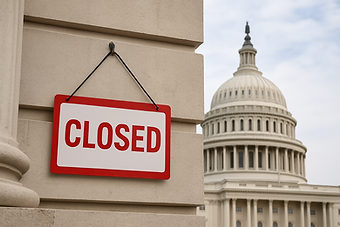
In October 2025, the United States entered the longest federal government shutdown in its history after Congress failed to pass full-year appropriations for  fiscal year 2026. The lapse began on October 1 and dragged on for 42 days, 22 hours, and 25 minutes   before lawmakers finally reached a funding deal in mid-November.

The standoff centered on spending levels, with Senate Democrats rejecting a short-term Republican funding bill. Much of the dispute revolved around health-care funding, particularly ACA tax credits. Without a continuing resolution, all non-essential federal operations ground to a halt.


The economic fallout was immediate. Goldman Sachs estimated each week of the shutdown reduced annualized GDP growth by about 0.2 percentage points and cost roughly $15 billion in lost economic activity. The Congressional Budget Office projected permanent losses of $7–14 billion even after recovery. Consumer demand weakened as hundreds of thousands of workers missed paychecks, and uncertainty spread across industries dependent on federal contracts. Key programs, from CHIPS Act initiatives to semiconductor and quantum manufacturing, faced delays, according to Democratic lawmakers.


Roughly 900,000 federal employees were furloughed, with hundreds of thousands more working without pay as “excepted” personnel. Thanks to a 2019 law, most were guaranteed retroactive pay once the government reopened. Still, delays in economic data, passport services, and other federal functions eroded public confidence.


Shutdowns also tend to worsen the deficit. Restarting agencies and catching up on delayed work often  requires extra funding, meaning the government ultimately spends more than if operations had continued uninterrupted.


Congress finally approved a funding package on November 12, ending the shutdown. The agreement extended current spending through January 30, 2026, and fully funded three of the twelve appropriations bills, Agriculture; Military Construction & Veterans Affairs; and the Legislative Branch (naturally, the branch responsible for the shutdown ensured its own funding). The deal also reversed recent workforce cuts, halted further layoffs, and formalized back pay for furloughed employees.


In practical terms, the shutdown disrupted normal economic activity and cost taxpayers more money, all while federal employees endured what amounted to a 42-day paid vacation while Congress had a paid   temper tantrum. As David Wessel of the Brookings Institution observed, shutdowns inflict real-world economic damage far beyond political theater.


The 2025 shutdown serves as a reminder of how fragile political consensus can undermine economic stability, and how essential it is for Congress to do its job.


Read More

Protect What Matters Most

Posted by Wendell Brock

Oct 21, 2025 12:00:00 AM

Protect What Matters Most

  • Wendell Brock
  • Oct 21, 2025
  • 2 min read
 

You probably don’t think about it every day, but everyone has an estate—everything you own, from your home and savings to your favorite collectibles. The question is: what happens to all of it when you’re no longer around? That’s where estate planning comes in. Think of it as a way to ensure your wishes are honored and your loved ones are cared for, without leaving them to navigate a messy legal maze.


Estate planning isn’t just about a will. It’s a set of  documents that guide what happens if you can’t manage your finances or healthcare—or when you pass away. At a minimum, a solid plan includes a will, durable power of attorney, healthcare power of attorney, living will, and HIPAA authorization. Many people also use a revocable living trust to simplify things further. A will lays out your wishes and names an executor and guardians for minor children, but it doesn’t avoid probate—the public, court-supervised process that can slow asset    distribution and add stress to your family.


A durable power of attorney lets someone you trust handle financial matters if you’re incapacitated. Similarly, a healthcare power of attorney allows someone to make medical decisions on your behalf. A living will spells out your healthcare preferences, including end-of-life wishes, while a HIPAA form gives caregivers access to your medical information so they can make informed decisions.


For those wanting privacy and to avoid probate, a revocable living trust is a game-changer. Assets in a trust pass directly to beneficiaries without court involvement, and trusts can protect heirs from unnecessary stress or financial mismanagement. Families with larger estates or complex situations might also use irrevocable trusts, spousal lifetime access trusts (SLATs), or special-needs trusts to reduce taxes, protect assets, and manage distributions carefully.


Even if your estate is modest, planning matters. Joint   accounts, payable-on-death accounts, small estate affidavits, and annual gifting strategies can simplify transfers and reduce taxes. For anyone with minor children, having a plan is critical—without it, the state decides who cares for them and how your assets are  distributed.


The bottom line? Estate planning is about more than money—it’s about protecting loved ones and making your wishes clear. Regularly reviewing and updating your plan ensures it keeps up with changes in your life, finances, and the law. A well-crafted estate plan can prevent family disagreements, reduce stress, and provide peace of mind knowing everything is taken care of exactly the way you want.


Whether your estate is big or small, now is the time to make your plan. Work with an estate planning attorney to navigate legal and tax considerations and give yourself—and your family—the clarity and security they deserve.


Obviously these explanations are very general—each document has its own purpose and details. The key is getting this part of your financial plan checked off. We’re happy to walk through the documents and help you gather the information an attorney will need to draft them. Reach out and we’ll set up a time to make it happen.


Read More

The Most Common Question

Posted by Wendell Brock

Oct 14, 2025 12:00:00 AM

The Most Common Question

  • Wendell Brock
  • Oct 14, 2025
  • 2 min read

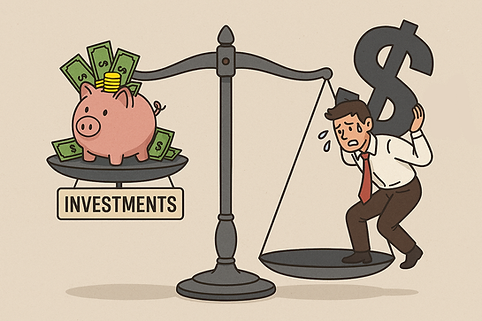
When it comes to personal finance, one of the most common questions people ask is whether they should focus on paying off debt first or start investing right away. It can be a tricky decision, and the right answer isn’t the same for everyone. Your choice depends on several factors, including interest rates, financial goals, and even your personal comfort level with carrying debt.

Many people dream of building wealth through investing, but they feel weighed down by the burden of existing loans. Common financial challenges often include not knowing where to start with investments, struggling to create a realistic retirement plan, failing to balance immediate expenses with future goals, and facing tax season without professional guidance. Unfortunately, ignoring these challenges doesn’t make them disappear — they tend to snowball, creating more stress and insecurity over time.


A helpful guideline often referred to as the “rule of 6%” can provide clarity. If your debt carries an interest rate of 6% or more, it generally makes sense to pay it off before investing extra money toward retirement. This rule assumes that you’ve already built an emergency fund. Why 6%? Because balanced investment portfolios have historically returned around 6–7% annually. If your debt is costing you more than that, the math says debt repayment comes first.


Not all debt is created equal. For example, paying down credit card balances with rates between 16–24% should be a top priority since the cost compounds quickly. On the other hand, federal student loans at around 5% or a mortgage at 3.5% may not demand aggressive repayment if you could potentially earn more by investing. In those cases, investing while maintaining minimum payments may provide a better long-term outcome.

Still, math isn’t everything. Feelings matter, too. Debt can be emotionally exhausting, and many people prefer the peace of mind that comes with becoming debt-free, even if the numbers suggest investing would generate higher returns. If debt keeps you awake at night, there’s nothing wrong with prioritizing repayment. On the other hand, if you’re comfortable carrying low-interest “good debt,” investing alongside repayment can help your money grow.


There are also foundational steps to put in place before making the debt vs. invest decision. Experts generally recommend establishing an emergency fund of three to six months’ expenses to avoid falling back into debt when unexpected costs arise. Capturing an employer 401(k) match is another must, since it’s essentially free money. With these building blocks in place, you can then focus on choosing between debt payoff and investing.


The general rule of thumb is: High-interest debt (7–8% or more): Pay it off first; low-interest debt (under 5%): Invest while keeping up with minimums. Middle-range debt (5–7%):  The decision depends on your goals and tolerance for risk.


There’s no one-size-fits-all answer. The decision comes down to both math and mindset — comparing interest rates with expected investment returns, while considering your personal comfort with debt.


Read More

Life Insurance Awareness Month

Posted by Wendell Brock

Oct 1, 2025 12:00:00 AM

Life Insurance Awareness Month

  • Wendell Brock
  • Oct 1, 2025
  • 2 min read

Every September, we recognize Life Insurance Awareness Month, an important campaign dedicated to increasing public understanding of life insurance and urging people to take action and financially protect their loved ones. Despite broad acknowledgment of its       importance, millions of Americans remain uninsured or underinsured. Life moves fast, and between work, family, and day-to-day responsibilities, it’s easy to push financial planning to the back burner. But life insurance is one of those things that the peace and security enjoyed far out weights the hassle factor of getting a policy.

You might be surprised to learn that while about half of Americans own life insurance, more than 100 million adults either don’t have any coverage or feel they don’t have enough. So why do so many families go without? A big reason is cost. Many people assume life insurance is too expensive. That begs the question, expensive compared to what? A quick evaluation of personal spending can often put things in perspective.


Another hurdle is confusion. Between terms like “whole life,” “term life,” and “universal life,” and many others, the language can feel intimidating. In fact, studies show that less than a quarter of people feel confident they fully understand their options. Without someone to break it down, it’s easy to keep putting the decision off. This is where procrastination can be extremely expensive.


And of course, nobody really likes to think about what would happen if they weren’t around anymore, it’s     human nature to avoid tough topics. After all, the sun will come up tomorrow, right?


Life insurance is really about love and responsibility. It’s a safety net for the people who count on you most. If something were to happen to you, your family wouldn’t have to struggle to cover the mortgage, keep up with bills, or figure out how to pay for education, let alone pay for the funeral expenses. Instead, life insurance gives them financial breathing room so they can grieve and heal without the added stress of money worries.


Beyond the practical side, it brings enormous emotional relief knowing your family won’t be left in a difficult spot; think of it as a gift of stability.


While many people see life insurance as just a “what if” plan, it actually comes with some surprising benefits.  Certain policies build cash value over time, which you can borrow against and use for future goals. Policies also typically provide benefits tax-free to your loved ones,  giving them the full amount when they need it most.


Life Insurance Awareness Month is more than a campaign—it’s a nudge to pause, reflect, and make sure your family is protected. Whether you’re starting a family, buying a home, or just wanting to be proactive about the future, now is the perfect time to explore your options. Even a small policy can make a big difference.


At the end of the day, life insurance isn’t just about money. It’s about love, care, and making sure that, no matter what, your family is taken care of. And that peace of mind is priceless. So, go forward and Secure Tomorrow.


Read More

The Hidden Wealth In Life Insurance

Posted by Wendell Brock

Oct 1, 2025 12:00:00 AM

The Hidden Wealth In Life Insurance

  • Wendell Brock
  • Oct 1, 2025
  • 2 min read

In the world of financial strategy, few headlines raise eyebrows quite like this one: Paul Atkins and his wife own 54 life insurance policies. At first glance, the number sounds excessive, but behind it lies a sophisticated case study in estate planning, tax efficiency, and generational wealth management.

When nominated for Chairman of the SEC, Atkins disclosed a net worth of about $327 million. Of that, $6 million is allocated across 54 life insurance policies. While most families own one or two policies at most, Atkins’s portfolio reflects an intentional approach to   leveraging insurance as an advanced wealth-building and preservation tool.


Individuals face strict contribution limits on retirement accounts like IRAs and 401(k)s. Permanent life insurance, especially whole life and indexed universal life, offers an alternative. These policies grow a tax-deferred cash value, which can be accessed tax-free through loans or withdrawals, while the death benefit passes to heirs income tax-free.

For Atkins, life insurance isn’t about basic income replacement, it’s a private, tax-efficient asset class that compounds quietly, sidestepping many restrictions of other financial tools.

Families also face the challenge of efficiently passing their estate to the next generation, minimizing income and estate taxes, and administrative costs upon death. Such policies can provide immediate liquidity, helping heirs avoid selling illiquid holdings, such as real estate or closely held businesses, during market downturns.


Atkins’s policies may be held individually, within trusts, or by separate entities, each serving a distinct purpose. Some could be earmarked for specific heirs, while others might fund charitable trusts or philanthropic commitments. In each case, the structure is efficiently designed to preserve and transfer wealth economically.


Owning dozens of policies also brings risk diversification, not only across insurance carriers, it also provides a more balanced use of financial resources. The cash  value buildup in policies tends to be a high-quality use of cash with reasonable dividends paid in the policies. This allows for potential higher risk assets on the other side of the investment spectrum. It’s a similar principle that drives investors to diversify across stocks, bonds, etc.

It’s also possible that not all of these policies insure Atkins himself. Some are likely on his wife and children.


With Atkins back in the public spotlight, this level of insurance ownership shines a light on how Americans can use life insurance in ways most households never considered.

Whether managing hundreds of millions or building a modest nest egg, Atkins’s approach underscores that life insurance can do far more than simply replace income. It can: grow wealth tax-deferred, provide income tax free estate liquidity, and diversify financial risk, transfer assets tax-free.


Fifty-four policies are beyond the needs of the average family, but the thinking behind them offers valuable lessons. For those seeking to elevate their financial  planning, it’s a compelling case for looking into life insurance not just as protection, but as a strategic part of any financial plan.


Read More

New Tax Law, Big Opportunities

Posted by Wendell Brock

Aug 4, 2025 12:00:00 AM

New Tax Law, Big Opportunities

  • Wendell Brock
  • Aug 4, 2025
  • 2 min read

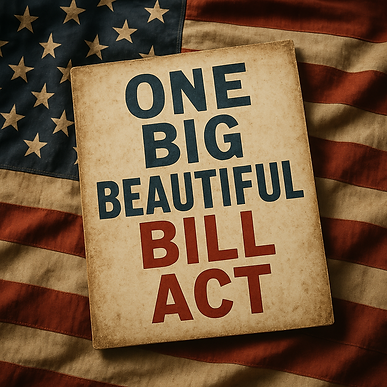
The One Big Beautiful Bill is set up to deliver major tax benefits for business owners, startups, and investors. This legislation is poised to reshape how businesses invest, grow, and pass wealth on to future generations.

 Top Tax Benefits for Businesses

Business owners stand to gain significantly under the new tax law, with enhanced deductions and expanded limits that support investment, innovation, and accelerated growth.

· 100% Bonus Depreciation is now permanent, allowing businesses to deduct the full cost of qualifying assets—like machinery or vehicles—in the year they’re purchased. For example, a $100,000 piece of equipment can now be fully deducted upfront rather than over 5–10 years.

· The Section 179 Expensing Limit has increased to $2.5 million, with a phase-out starting at $3.5 million in total purchases. This helps businesses write off more equipment and software purchases immediately.


R&D Expenses can now be fully deducted in the year incurred, offering huge benefits for innovation-focused companies and startups.


 Incentives for Growth and Community Investment

The bill also reinforces long-term growth and wealth transfer by making key investment incentives permanent and expanding estate planning opportunities for business owners and investors.

· New Markets Tax Credits (also known as Opportunity Zones) are now permanent, offering powerful tax incentives for investing in low-income or underserved  areas—whether through real estate or new businesses.


The Estate and Gift Tax Exemption has doubled to $15 million per person, up from $7.5 million. This allows owners to transfer significantly more wealth to heirs or through gifts without facing estate taxes.


The Bill presents several positive impacts on government spending by incorporating nearly $1.1 trillion in targeted spending reductions over a decade, promoting fiscal responsibility. It also enhances efficiency through tax code simplification, potentially lowering administrative and compliance costs. Additionally, by incentivizing private-sector investment over direct public subsidies, the bill encourages a more market-driven approach to economic growth. These benefits may be tempered by concerns over rising deficits and long-term debt, highlighting the importance of balancing tax relief with sustainable fiscal policy.


In light of these new provisions, business owners should act strategically to maximize their benefits. Now is the time to assess capital equipment needs for 2025 and  beyond, revisit succession and estate planning strategies, and explore potential investments in Opportunity Zones or research and development projects. Most importantly, meeting with a trusted tax advisor will ensure your plans align with the updated tax rules and position your business for long-term growth.


Read More

The Big, Beautiful Tax Bill—And What It Means for Your Family’s Finances

Posted by Wendell Brock

Jul 31, 2025 12:00:00 AM

The Big, Beautiful Tax Bill—And What It Means for Your Family’s Finances

  • Wendell Brock
  • Jul 31, 2025
  • 2 min read

On July 4th, President Trump signed the highly anticipated One Big Beautiful Bill (the Bill), a major piece of legislation designed to extend and expand the 2017 tax cuts while adjusting federal spending priorities. Whether you’re a wage earner, retiree, parent, or homeowner, this new law introduces several changes that could directly benefit your financial situation—starting this year.

While the bill’s name suggests it’s enormous, it comes in at about 870 pages—typical for a major legislative package. Packed into those pages are several important tax breaks aimed at individuals and families.


Individuals and Married Filing Joint (MFJ)

The Bill brings a range of impactful tax changes aimed at individuals and families, locking in lower tax rates and expanded deductions for the long term.

· The 2017 tax cuts are now permanent, meaning lower income tax rates and higher standard deductions will no longer expire in 2025.

· Tip income up to $25,000 and overtime pay up to $12,500 are now income tax-free, though these benefits phase out for higher earners.

· An annual $6,000 Senior Tax Bonus is available for individuals over 65, or $12,000 for MFJ.

· The Child Tax Credit is permanently increased to $2,200 per child.

· You can now deduct up to $10,000 per year in auto loan interest, as long as the car is assembled in the U.S.


For Homeowners and Property Tax Payers

Homeowners and property taxpayers may see meaningful benefits, as the new legislation locks in key deductions and raises limits that can significantly reduce taxable income.

· The mortgage interest deduction cap of $750,000 is now permanent.

· Mortgage insurance (PMI) premiums are deductible for incomes up to $100,000.

· The State and Local Tax (SALT) deduction cap is increased to $40,000 for joint filers (with phase-outs beginning at $500,000 in income).


Changes to Clean Energy Incentives

The bill signals a shift in policy by winding down several clean energy incentives that have helped drive “green” adoption in recent years. This will cause these companies to be more competitive in the free market and not be supported by taxpayers.

· The $7,500 EV tax credit ends in September 2025.

· Home energy tax credits for efficient windows, insulation, and HVAC expire in 2026.

· Solar panel and battery storage tax credits are also phasing out after 2026.


If you're considering making energy-efficient upgrades, now may be the time to act to qualify for current incentives. Or... wait and see what happens when companies have to offer their own incentives to get people to buy these items.


This sweeping legislation marks a significant shift in U.S. tax policy, offering new opportunities for savings and long-term planning. To fully benefit, individuals and families should take time to review their tax withholdings, revisit retirement and estate strategies, and consult a financial advisor to ensure they're making the most of the expanded deductions and credits.


Read More

10 Smart Tips for Planning a Secure Retirement

Posted by Wendell Brock

Jul 15, 2025 12:00:00 AM

10 Smart Tips for Planning a Secure Retirement

  • Wendell Brock
  • Jul 15, 2025
  • 2 min read

Planning for retirement can feel like a distant concern or a daunting task—but whether you’re just starting your career or preparing to leave the workforce, the earlier and more thoughtfully you plan, the more confident and comfortable your future can be. Here are ten smart, actionable tips to help you build a strong foundation for retirement.


1. Start Early—Or Start Now

Time is your greatest asset when saving for retirement. The earlier you start, the more your money can grow thanks to compound interest. But even if you're getting a late start, it’s not too late.


2. The Value of Consistency

No matter when you start or how much you invest, consistently contributing to your accounts has the greatest long-term impact. Building this habit takes effort and self-discipline, but it’s a powerful financial muscle that pays off over time.


3. Envision Your Retirement Lifestyle

Do you dream of quiet mornings at home, frequent travel, or pursuing a hobby or side project? Defining what retirement looks like for you will help determine how much income you’ll need to support it.


4. Estimate How Much You'll Need

Many experts recommend replacing 70% to 80% of your   pre-retirement income. Be sure to account for inflation, health care, taxes, and a potentially long retirement. Retirement calculators with a financial advisor can help you arrive at a personalized estimate.


5. Maximize Your Retirement Accounts

Make use of tax-advantaged accounts like 401(k)s, IRAs, and Roth IRAs. If your employer offers a match on your 401(k), contribute enough to get the full employer match—it’s essentially free money.


6. Invest for Growth—With Balance

Diversify your investments across stocks, bonds, and other assets based on your age, risk tolerance, and retirement timeline. Trying to time the market rarely pays off—what matters most is staying invested over time.


7. Reduce or Eliminate Debt

The less debt you carry into retirement, the more flexibility you’ll have. Focus on paying off high-interest debt first, such as credit cards and personal loans. If possible, aim to       reduce or eliminate larger debts like mortgages and auto loans before retiring.


8. Plan Ahead for Health Care

Health care can be one of the largest expenses in retirement. While Medicare covers many basics starting at age 65, it doesn’t cover everything. Consider supplemental insurance, and use a Health Savings Account (HSA), if available, to build tax-free savings for future medical costs.


9. Reevaluate Your Housing Situation

Your home may be one of your largest assets—and expenses. Consider whether it makes sense to stay put, downsize, relocate, or tap into home equity to support your retirement goals.


10. Create a Sustainable Withdrawal Strategy

Decumulation of retirement assets is even more critical than the accumulation phase. Plan when and how you’ll draw income from Social Security, retirement accounts, and   pensions. A strategic withdrawal plan can reduce taxes, extend savings, and protect against costly mistakes that can ruin a retirement plan.


BONUS Tip: Review and Adjust Your Plan Annually

Your life and financial situation will evolve. Revisit your retirement plan every year—or after major life changes—to stay on track and make informed adjustments.


Read More

The Nuclear Power Renaissance

Posted by Wendell Brock

Jul 14, 2025 12:00:00 AM

The Nuclear Power Renaissance

  • Wendell Brock
  • Jul 14, 2025
  • 2 min read

The rapid rise of artificial intelligence has ushered in an era of unparalleled innovation, and it seems to be permeating every industry. But while the front end of AI dazzles with machine learning, natural language processing, and autonomous capabilities, it masks an escalating crisis at the back end: power.


AI systems consume exponentially more electricity than traditional computing tasks. A single AI query may require 10 times the energy of a standard Google search. With the explosive growth of data centers and generative AI models, energy consumption is expected to triple by 2027. Already, AI infrastructure uses as much energy as some small countries—a burden that current energy grids, especially those dependent on fossil fuels or intermittent renewables, are ill-equipped to handle.

Enter nuclear power. Often overlooked in past decades, nuclear energy is now re-emerging as the only scalable, carbon-free solution capable of sustaining AI’s relentless energy appetite. A single uranium fuel pellet—no bigger than an AA battery—can produce as much energy as three barrels of oil, 17,000 cubic feet of natural gas, or a ton of coal. And all for just $5, with almost no carbon emissions. Operating at a 92% capacity factor, nuclear is the most reliable energy source on Earth—perfectly suited for the 24/7 demands of artificial intelligence.


Major technology firms are already acting. Microsoft is restarting operations at the famed Three Mile Island facility. Amazon is developing data center campuses adjacent to nuclear plants. Google is securing energy from next-generation reactors, while Meta plans to draw 4 gigawatts of nuclear power by 2030. Tesla, Nvidia, and Apple are also integrating nuclear energy into their operations. Advancements in nuclear technology are enabling companies to develop smaller, more efficient plants that offer enhanced safety and greater energy output.


But the relationship is mutual. AI isn’t just consuming nuclear power—it’s helping to enhance it. At California’s Diablo Canyon nuclear facility, AI tools are already being used to optimize reactor efficiency and improve safety protocols. The U.S. Department of Energy is supporting efforts to digitize and streamline the regulatory process using AI, potentially cutting the time it takes to approve and deploy new reactors.


On a global scale, countries like China, India, France, and Canada are accelerating nuclear investments, with China alone committing $440 billion. The International Energy Agency forecasts that nuclear investments will triple to $125 billion annually by the late 2020s.

This convergence of AI and nuclear power also presents a unique investment opportunity. One U.S.-based uranium company—valued at $1 billion, trading under $10 a share, with $150 million in cash and no debt—is positioned to ride the wave of demand. In previous nuclear booms (no pun intended), similar companies saw gains of over 1,000%.


As the world races toward an AI-driven future, the demand for clean, consistent, and scalable energy will define who leads and who lags. Nuclear power isn’t just a fallback—it’s becoming the foundation. The AI revolution may be digital at its core, but its lifeblood is electricity—and nuclear is poised to be the fuel that powers it all.


Read More

Every Dollar a Decision

Posted by Wendell Brock

Jun 19, 2025 12:00:00 AM

Every Dollar a Decision

  • Wendell Brock
  • Jun 19, 2025
  • 3 min read

In today’s fast-paced, hyper-consumer society, one of the most powerful yet overlooked truths about money is this: you can only spend a dollar once. It may sound simple, but this principle has deep implications for how we manage our finances—and ultimately, our lives.

Every time you make a purchase, you're not just choosing what to buy, you're choosing what to give up. This is the essence of opportunity cost: by spending money on one thing, you sacrifice the chance to spend it on something else—whether that’s saving for a future goal, investing in your education, or simply building financial security.

Spending wisely, therefore, isn’t just about frugality. It’s about intentional decision-making. It takes self-discipline, planning, and a willingness to delay gratification—traits that run counter to today’s culture of "immediately- now, now,now, now!." We're bombarded by ads, frictionless payment systems, and same-day delivery, all of which make it easier than ever to spend mindlessly.


But money is emotional, just like food. Many of us grow up without financial education, and conversations about money can be awkward or even taboo. Yet, we deal with it daily—whether we’re earning, spending, saving, or worrying about it.


One eye-opening realization for many people is that earning more doesn’t solve poor spending habits. No matter how much you make, each dollar still only gets to be used once. Recognizing this can transform how you view money. It shifts your focus from “how much can I earn?” to “how wisely can I spend?”


To start changing your relationship with money, try keeping a money journal. Record every expense, no matter how small. When one person did this, they discovered their daily $4.30 latte was costing them $1,570 a year. That single habit—repeated daily—was silently consuming a significant portion of their budget.


Ask yourself: Are you happy with where your dollars are going? How could the money be spent more wisely what could it be doing for you instead? In that brief moment, the latte might make you feel good bring joy in the moment, but would you be happier in the long run if that money helped pay off debt or funded a vacation? This doesn’t mean that you can’t have the latte, maybe just not daily.


Also consider this: a dollar saved is worth more than a dollar earned. Earnings are taxed—sometimes heavily—while saving money incurs no tax. In higher tax brackets, saving a dollar could be equivalent to earning two. And yet, we spend decades in education and careers to earn money, while often investing little energy in learning how to manage it wisely.


To spend more deliberately, start by building a budget:

· Track all income and expenses for a few months.

· Categorize spending into needs and wants.

· Choose a budgeting method like the 50/30/20 rule or zero-based budgeting.

· Set specific goals—whether paying off credit cards, saving for a home, or building an emergency fund.


Monitor your progress regularly and adjust when needed. Good financial habits, like automating savings, avoiding impulse buys, cooking at home, and comparison shopping, can add up to major gains over time.


Ultimately, managing money well isn’t about restriction—it’s about freedom. When you remember that each dollar can only be spent once, you begin to treat it with the respect it deserves. And that’s the first step toward financial peace of mind.


Photo by geralt


Read More