




Wendell Brock

Posts by Wendell Brock

Russia: Oil Crisis

· 2 min read

Russia: Oil Crisis Wendell Brock Apr 20, 2022 2 min read Global geopol...

Alzheimer's in the United States

· 2 min read

Alzheimer's in the United States Wendell Brock Mar 15, 2022 2 min read...

The Insidious Tax: Inflation

· 2 min read

The Insidious Tax: Inflation Wendell Brock Mar 8, 2022 3 min read Some...

Does Bigger Government Equal a Weaker Economy?

· 2 min read

Does Bigger Government Equal a Weaker Economy? Wendell Brock Mar 3, 20...

The Yestion Mark™

· 2 min read

The Yestion Mark™ Wendell Brock Mar 2, 2022 2 min read Most of you kno...

Ugh, Taxes!

· 2 min read

Ugh, Taxes! Wendell Brock Jul 23, 2021 2 min read Nobody likes to pay ...

Got Insurance?

· 2 min read

Got Insurance? Wendell Brock Jul 16, 2021 2 min read Previously, we di...

What Is Risk Managment?

· 2 min read

What Is Risk Managment? Wendell Brock Jul 9, 2021 2 min read Life is i...

Why Is Estate Planning Important?

· 2 min read

Why Is Estate Planning Important? Wendell Brock May 1, 2021 3 min read...

How On Earth Do I Plan For Retirement?

· 2 min read

How On Earth Do I Plan For Retirement? Wendell Brock Apr 25, 2021 2 mi...

Secure Tomorrow

Wendell Brock

Recent Posts

Russia: Oil Crisis

Posted by Wendell Brock

Apr 20, 2022 12:00:00 AM

Russia: Oil Crisis

  • Wendell Brock
  • Apr 20, 2022
  • 2 min read

Global geopolitical events have historically affected oil and gasoline prices worldwide as production and supply issues evolve. As the largest oil producer in the world, the Unites States accounts for roughly 20% of total world production. Saudi Arabia accounts for 12% and Russia accounts for 11% of total world production. Even though Russia only produces 11% of total production, it accounts for over 10% of total world oil exports, making it one of the largest exporters of oil and a key global provider.

After their invasion of Ukraine, the imposed sanctions on Russia affects these markets since essential payment methods have been restricted, thus not allowing Russia to fulfill ongoing transactions. The result is a butterfly effect, affecting the rest of the world. The International Energy Agency noted that global oil markets were already tight before the Russian invasion, and commercial inventories have been at their lowest levels since 2014, thus compounding global supply constraints.


According to Eurostat, European countries import about 30% of their petroleum products and about 40% of its natural gas from Russia. The major gas/oil pipelines make their way across Ukraine from Russia to European countries in the western part of Europe. Ukraine has been charging Russia billions to use these pipelines since Ukraine broke free of Russia in the early 1990’s. It’s not just Europe that is feeling the ramifications of current events, we’re experiencing it here in the United States as well.

Even though the U.S. has curbed much of its appetite for oil and gasoline over the past few years, demand among emerging economies has increased. Fossil fuels, including natural gas, petroleum, crude oil, and gasoline still account for roughly 80% of energy consumption worldwide according to the International

Energy Agency. Since oil is a primary energy source, rising oil prices can quickly translate into higher prices in different parts of the economy.

Inflation, as measured by the Consumer Price Index (CPI), is made up of various components, including energy, food, and transportation. These three components represent about 20% of the CPI, all of which are directly affected by oil prices. As a larger portion of consumers’ budgets is spent on these three, the less disposable funds consumers will have to spend on other items.

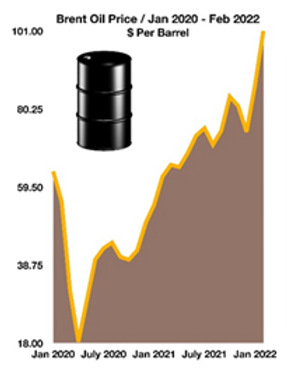
Crude oil is priced in two primary markets, international Brent and as domestic West Texas Intermediate (WTI). Both are priced per barrel and determined by multiple factors, including production, supply, demand, economic growth, weather, and geo-political issues. Unfortunately, Brent and WTI prices had already been rising due to supply constraint issues and increasing demand. The emergence of the Ukrainian conflict has propelled prices even higher, eclipsing $100 per barrel for Brent in February, a level not reached since 2014.


Read More

Alzheimer's in the United States

Posted by Wendell Brock

Mar 15, 2022 12:00:00 AM

Alzheimer's in the United States

  • Wendell Brock
  • Mar 15, 2022
  • 2 min read

Alzheimer’s disease, the most common cause of dementia, is a brain disorder that slowly destroys memory, thinking, and behavior. It is named after Dr. Alois Alzheimer because he discovered abnormalities in the brain of a 50 year old woman he had been observing. Her symptoms had included memory loss, language problems, and unpredictable behavior. After she died, he examined her brain and noted distinctive plaques and neurofibrillary tangles. Dr. Alzheimer called it "a peculiar, severe disease process of the cerebral cortex".

These plaques and tangles in the brain are still considered the predominant markers of Alzheimer’s disease. Another notable characteristic is the loss of connections between nerve cells (neurons) in the brain. Neurons transmit messages between different parts of the brain to the rest of the body. These initial changes and resulting damage takes place in areas of the brain involved in memory, resulting in the early symptoms most people associate with the disease, including difficulty remembering, poor judgment, repeating questions, wandering or getting lost, or losing or misplacing items in odd places.


As the disease progresses it begins to affect areas in the cerebral cortex, resulting in the change of language, reasoning, and social behavior. Eventually, many other areas of the brain are damaged. This tends to be when caregivers notice additional symptoms like excessive worrying or aggression.

Because Alzheimer’s is a progressive disease the early stages of memory loss are mild, but in time individuals lose the ability to carry a conversation, respond to their environment, complete simple tasks, and are no longer able to meet their own personal needs. On average, once a person is diagnosed with Alzheimer’s they will live between 4 to 8 years, but could continue to live for as long as 20 years. Alzheimer's disease accounts for 60-80% of dementia cases in the United States.


Recent research has shown that people with Type 2 diabetes have a higher risk of Alzheimer’s. The correlation between Type 2 diabetes and the brain’s inability to respond to insulin, negatively impacting memory and learning, has led researchers to call Alzheimer’s Type 3 diabetes.


• 1-in-9 Americans over 65 have Alzheimer’s disease.

• One-third of Americans over age 85 are afflicted with the illness.

• Caring for a victim of Alzheimer's Disease at home can cost a family up to $22,000 per year.

• In 2014, more than 15 million Americans provided more than 17.9 billion hours of unpaid care for people with Alzheimer’s disease and other dementias.

• In 2014, Alzheimer’s and dementia caregivers had $9.7 billion in additional health care costs of their own.

• People with Alzheimer’s disease are hospitalized three times more often than seniors without Alzheimer’s.


Read More

The Insidious Tax: Inflation

Posted by Wendell Brock

Mar 8, 2022 12:00:00 AM

The Insidious Tax: Inflation

  • Wendell Brock
  • Mar 8, 2022
  • 3 min read

Someone once said, “Inflation means that your money won’t buy as much today as it did when you didn’t have any.” We may chuckle at this, but inflation is no laughing matter. Some people even think that a small amount of inflation is good, showing that demand is slightly higher than supply, indicating that the economy is growing.


By definition inflation is an increase in the price of a good or service without any corresponding increase in the quality of the good or service. In other words, you pay more money for the exact same item. I’m sure everyone has noticed the jump in prices at the grocery store and the gas pump, as well as in housing, cars, and even utilities, with electricity prices surging 4.2 percent in January alone. Inflation has risen 7.5 percent in the last year, which is the biggest spike since 1982.


As a teenager/young adult, I remember well the inflation of the 1970’s and early 1980’s. At that time housing was going through the roof in Los Angeles, where I was raised. Proposition 13 was put on the ballot to roll back property taxes and limit their increases, because property taxes had inflated so much due to the massive increase in home values.

During this same time period gas went up from about $0.36 per gallon in 1972 to over a dollar, around $1.19 per gallon in 1980. I did a lot of homework for my high school classes while sitting in gas lines on the odd numbered days of the month. Now we have a return to the highest inflation in the last 40 years.


Inflation is a regressive tax, meaning it is applied uniformly, taking a larger percentage from low-income earners than from high-income earners. This results in a heavier impact on people with lower-incomes or that are higher-consumers. This recent, steady rise in prices has left many Americans less able to afford food, gas, and other necessities.

It’s a bit like high blood pressure, known as the silent killer. It usually increases in such small amounts that a person doesn’t notice it, not until they look back and see how much it has increased over 20 or 30 years. Twenty years at two percent is a forty percent increase (not including compounding). It’s the large increases within a year that catches the attention. We all know what it does at the gas pump, here is how it works with investments.


Let’s say that your rate of return on an investment is 10 percent, and you are in a 24 percent tax bracket-how much of your 10 percent return vaporizes into taxes? Twenty-four percent of it. That leaves you with a 7.6 percent return. Now let’s say we have a five percent inflation rate. Your 7.6 percent return now becomes a 2.6 percent return, because five percent of it vanishes due to inflation. Do you see what just happened? You lost 74 percent of your anticipated return to taxes and inflation. In other words, if you are in a 24 percent tax bracket and inflation is at five percent, it’s like being in a 74 percent tax bracket. Your real return-after taxes, after inflation-is 74 percent less. Five percent inflation destroyed as much of your return as a 50 percent tax rate.


In spite of the dark shadow cast by inflation, there are ways to plan and protect your finances. You can establish a plan to overcome many obstacles created by inflation. Minimizing personal spending and creating a budget (and sticking to it) can create a cushion of security. Reducing housing costs by trading in a large home for a smaller one can reduce monthly outflow for items most subject to inflation: property taxes, utilities, insurance, and maintenance. Another tactic could be to add investments to your portfolio that are more likely to increase in value as inflation rises, while at the same time, balancing stock investments with conservative options to maintain stable returns. Above all, remember it’s how much you keep that matters most.


Read More

Does Bigger Government Equal a Weaker Economy?

Posted by Wendell Brock

Mar 3, 2022 12:00:00 AM

Does Bigger Government Equal a Weaker Economy?

  • Wendell Brock
  • Mar 3, 2022
  • 3 min read

Since the pandemic erupted onto the scene back in 2020 government spending has again been on the rise, and so has their role in our day to day lives. The Federal Reserve (the Fed) is starting to reduce its holding of mortgages and Treasury securities. The Fed grew the money supply in 2020 by 26 percent, in 2021 they grew it by five percent. We are starting to experience the effects of this inflation.

With mounting regulatory burdens, higher taxes, out of control government spending, and all the new mandates, the government seems to have become the leading lady in our own individual stories. There are those that are determined to push Washington back to its pre-pandemic role. “Government, to me, should be in a supporting role, not a leading role; a watchdog, not a cow to be milked,” said Sen. John Barrasso (R-Wyo.). “The goal is to help people get back on their feet but not to make this the new normal.”

A survey done by Gallup in 2021 found that more and more Americans have shifted back to favoring a less-interfering approach when the government is addressing the nation’s problems.

In another survey Gallup found that at least half of Americans since 2005 have said that the government has too much power, peaking at 60% in 2013 and 2015.

So what does this all mean for our economy? There have been many academic studies which have shown an inverse relationship between the size of government and economic growth. For example, the economy of the U.S. used to grow at an annual rate of 3%, but the average rate has dropped to 2% in the last two decades, while government’s spending has increased. Since the terrorist attacks in 2001 big government got even bigger and has continued to enlarge its role ever since.

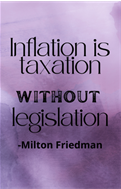
Government spending has increased from 35 percent to nearly 44 percent of the GDP over the last 25 years. While the National Debt has grown to 128.1 percent of GDP. Milton Friedman once said, “The thing you should keep your eye on is what government spends, because that’s the true tax.”

In other words, if the government is spending half of what our country is producing, that’s half the money out of our pockets, which leaves us only half free. In the big picture, it's not always the deficit that is the critical variable, the key thing to note is how the government is financed. The government is clearly taking on more debt than is logical in any circumstance.

A healthy economy does need some government to enforce appropriate regulations, but where is the line? How much is too much? Most economists would agree that there are always circumstances when higher levels of government spending would have a positive impact. More often than not, real economic growth happens with less government interference, and more freedom to the people, and business owners.


There is always a price to be paid when government spending gets out of control. That price is paid out of the pockets of the citizens and the economy slows down. According to The Heritage Foundation, there is overwhelming evidence that shows when government spending is too high, America’s economy slows.

Growth happens when we the people, and businesses, keep more of our income. That is why tax planning is so important. The more you are able to keep, save, invest, and spend yourself, the more the economy grows!

For example, in a business sense, if a business saves 10 percent in taxes, on $1.0 million in profit, that extra $100,000 could be used to pay for additional growth opportunities, hiring employees or increasing wages, new machinery, or other opportunities to help the business thrive.


A healthy economy, generally grows north of three percent, less than that and it is more of an anemic economy. Our current economy is anemic! We need less government, so we can grow and prosper. How we achieve this, I am not sure, as it seems most of our elected officials continue to vote against the people. With all that is happening, perhaps the best thing we can do is hold our elected servants responsible for the job they are doing, and remember to save first and spend what is left over!


Read More

The Yestion Mark™

Posted by Wendell Brock

Mar 2, 2022 12:00:00 AM

The Yestion Mark™

  • Wendell Brock
  • Mar 2, 2022
  • 2 min read


Most of you know me, as I have either worked with you for many years, or a few months, I have been in some aspect of the financial industry since 1987. Though based in McKinney, Texas, I am able to help clients all over the country.


Years ago, I was meeting with an easy-going couple. They asked me a question that could have been answered with either a “yes” or a “no.” Being a little silly, I answered, “Yes, you can’t.” We got a chuckle from my oxymoronic answer, as we addressed their needs. Explaining my answer helped them understand that depending on their choices and overall goals, they could choose either strategy. They could proceed with the “yes” strategy, but it would take them down a road that wasn’t advisable. The “no” answer would give them a more positive solution.


Since that conversation I have given that answer, or one similar, to thousands of different questions people have asked. “Yes, you could proceed, but it may lead to an unsound position and might not have the best results.” Or perhaps, “yes, you could make that choice, but there could be something better.” It seems we always have choices.


Some time later I was meeting with a good friend of mine to discuss some marketing ideas. I was trying to come up with a logo that would represent the foundational ideals of my business. One important thing that I have always believed in is the ability to act, do something, or make progress towards a goal.


Being that I am, what I would say, a realistically positive person, I really do like to tell people, “Yes you can do this!” Why not develop a mark or symbol that represents a “YES” answer? Our discussion led to creating something similar to the


exclamation point, hence the Y with a dot under it. It was during this brainstorming session we developed what we named a Yestion Mark™.


The dot represents each of us on a path, and just like in the Y, our path will diverge with choices we encounter on a daily basis. Some of those choices can seem small and insignificant, while others may seem big. It’s times like these that we all need more encouragement and support. The Yestion Mark means, “YES! You can do this; YES! You can accomplish your goals!”


Part of my mission as a financial advisor has always been to help people make choices that will solidify their future in an uncertain world. To do that I advise my clients to make choices that Yield a Secure Tomorrow.


It's not always easy to Secure Tomorrow. Thankfully, we as people are able to do hard things, it's in our nature. That’s how we grow. I love assisting people with this growth process. At the start of a new year, as we all look to improve our current circumstances, when questions arise, remember I am here to help!


Read More

Ugh, Taxes!

Posted by Wendell Brock

Jul 23, 2021 12:00:00 AM

Ugh, Taxes!

  • Wendell Brock
  • Jul 23, 2021
  • 2 min read

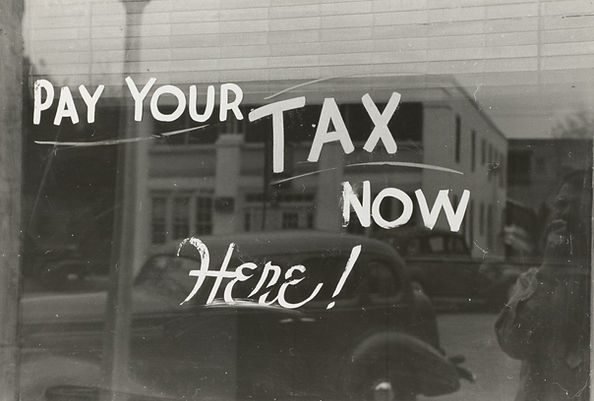
Nobody likes to pay taxes. For a lot of us when taxes are mentioned we picture something like the rotten Sheriff of Nottingham collecting taxes from the poor people and whistling happily as he does. We may not have some grabby tax collector knocking down our doors, but the ease of modern online filing and auto withholdings doesn’t remove the sting out of paying taxes. In fact, the burden of paying taxes has been felt since at least 3000 B.C. Taxes have been a part of economies from the beginning.


In 1913 the sixteenth amendment was passed in the United States allowing the U.S. government the power to tax our income. That being said, income taxes are a huge part of our current economy. Our tax dollars fund things like government operations, public services, public spaces and roads, the military, providing assistance for low-income families, and help with national disasters.


Income taxes in the United States are determined by how much an individual earns, the more you make the higher percentage of taxes you will pay. This encompasses all of an individual's earnings including capital gains. For federal income taxes, the percentage is based on which “bracket” you fall into. This also changes based on how you are filing- single, married: filing separately, married: filing jointly, and head of household.


2020 Tax Brackets


By law, taxpayers must file an annual tax return to make sure all tax obligations have been met. Most employers withhold the appropriate taxes from your paycheck and send them off to their proper places- either the State or Federal government. When you first start with an employer you fill out a W-4 form. This form determines how much of your earnings are withheld. However, this amount is not always perfectly accurate. You may owe more or less. When you file your tax return you get an accurate sum of your income and the taxes due. Often tax liability can be reduced by claiming certain tax deductions. This could result in the government owing you and sending you a refund - this is usually the part people do like.


There are three ways of filing your taxes. You can mail in a form 1040, you can file electronically via tax software. Many people prefer to hire a tax professional that knows the tax laws and can find places to reduce tax obligation.


Working with a financial planner can help you make sense of not just your taxes, but all other aspects of your finances. If you have questions send them our way - questions@yieldfa.com


“There is nothing sinister in so arranging one’s affairs as to keep taxes as low as possible.”

-Judge Learned Hand pg. 134 The Maxims of Wall Street by Mark Skousen


45 views
0 comments
Read More

Got Insurance?

Posted by Wendell Brock

Jul 16, 2021 12:00:00 AM

Got Insurance?

  • Wendell Brock
  • Jul 16, 2021
  • 2 min read

Previously, we discussed risk management and how insurance is a tool we can use to minimize our financial risks. When thinking about your financial plan insurance might not be the first thing you think of, but it is an important element.


Insurance is a contract, represented by a policy, that safeguards you against loss. By collecting small amounts of money (in the form of premiums) from all their policyholders each month, an insurance company creates a large pool of money that can cover the steep costs associated with covered losses. Insurance companies analyze the risk potentials by using mathematics, statistics, and other financial theories. This allows them to price their policies based on how likely it is people will make a claim.


Like many things in the financial world, there are many details and options connected with insurance, so it can feel overwhelming. There are multiple types of insurance ranging from the usual home and auto to the less common wedding or alien abduction insurance. Essentially, if it has value you can find an insurance policy to cover it.


You obviously don’t need to have every type of insurance that’s available, but it is important to have appropriate insurance coverage. If you own a car you will need to have auto insurance, and if you own a home or are renting you should definitely have either homeowner’s or renter’s insurance. We’ve written about life insurance before on our blog and how important it is to cover your family in case something happens to you.


There is also umbrella insurance, which covers personal liability beyond what a homeowner or auto policy would cover. It's designed to cover any injury or damage you may have caused to someone else or something outside the coverage of your other insurance coverage. Umbrella policies create another level of risk management. If you are a part of anything that increases your risk of liability, umbrella coverage may be a smart choice.


We all know that life can be unpredictable. Would anyone have guessed how these last couple of years were going to turn out? Life will always throw the unpredictable at you, but if you are prepared and plan for some of those uncertainties you will have a much better chance of weathering financial storms and protecting your assets. Having the right insurance plan in place can help make sure you don’t drain your emergency or saving funds when life gets stormy.


What financial question keeps you up at night? Reach out at questions@yieldfa.com.


“I don’t believe in taking foolish chances, but nothing can be accomplished without taking any chance at all.”

-Charles Lindbergh p.49 The Maxims of Wall Street by Mark Skousen


Read More

Topics: Insurance

What Is Risk Managment?

Posted by Wendell Brock

Jul 9, 2021 12:00:00 AM

What Is Risk Managment?

  • Wendell Brock
  • Jul 9, 2021
  • 2 min read

Life is inherently risky. We run the risk of something going wrong daily. Most of the time we can avoid risks by the good choices we make or by planning ahead. When it comes to our finances we can apply the same thinking. Many financial risks can be avoided by doing research and making wise decisions. However, some unpredictable things fall outside of our control. This is where risk management really comes into play. There is no way to eliminate all risks, but we can minimize and even circumvent many risks that could affect our financial security.


It’s all about your choices:


If you’re the kind of person that likes to take a little more risk in your life you may feel comfortable taking a walk during a thunderstorm, acknowledging that there is a chance of getting struck by lightning. But if you tend to avoid the riskier paths, you would probably stay inside during the storm where you know you will be safe. This same principle applies to our finances. There are some things we know will carry more risk than others, and depending on how well we tolerate risk we can either embrace that risk or avoid it. (You can read more about risk tolerance here).


There are different ways that we can approach risk:


When we assume risk we are not doing anything to minimize a potential loss. For example, if you don’t have car insurance and you get into a wreck, you will have to cover the full cost of damages yourself.


Sometimes we can share risk (also known as risk distribution) so that we don’t carry the full weight of potential financial burdens. If something bad happens, sharing the risk helps spread the effects and reduces the impact you may feel. This works well when you have a financial partner backing you.


We can transfer risk to others- like insurance companies- and they assume the responsibility (as long as you are paying your premiums). Insurance companies use the Law of Large Numbers and mathematical and statistical formulas (actuarial science) to assess risks they are taking on. We’ll talk more about insurance in our next article.


If we make efforts to avoid risks we can circumvent some problems altogether. Avoiding risk means you steer clear of choices that could lead you to potential problems. This can be a great way to prevent large losses, however, while avoiding riskier possibilities you might also miss out on other options and opportunities.


The whole idea behind risk management is to limit potential damage and protect your assets. If you have questions about risk management or any other financial concerns you can send them to qestions@yieldfa.com and we’ll write up a response!


“Think risk first, then reward.”

-Anthony M. Gallea

Pg.51 The Maxims of Wall Street by Mark Skousen


Read More

Why Is Estate Planning Important?

Posted by Wendell Brock

May 1, 2021 12:00:00 AM

Why Is Estate Planning Important?

  • Wendell Brock
  • May 1, 2021
  • 3 min read

We all know someone who, as the old saying goes, is now pushing up daisies! Nobody likes facing their own mortality. A friend, and a good estate planning attorney, titled his book, Why Should I Care, I’ll Be Dead, (available on Amazon). The reality is estate planning is an integral part of your life. Why leave what you have built your whole life, to be wasted. If you care what happens to your assets now while living, why not care about them after you die?


While not as fun as planning a vacation or the fun things you’ll do during retirement, having your estate planned will spare your loved ones a lot of frustration and protect them from potentially angry or hurt feelings with other family members. These family soap opera dramas are all too often real. They happen when dividing up a deceased loved one’s possessions and assets. Having an estate plan in place means you get to designate who gets what and save your family from potential fights over who should have your favorite collections. If you don’t make the decisions now you won't have any control over how your estate is divided up once you are gone.


Don’t make the mistake of thinking that estate planning is just for old people. Every adult should have at least a will. If you have a young family, it's very critical to have a will in place to protect your little ones just in case the unthinkable happens and there is no longer a surviving parent to take care of them. No one I know was given a guarantee on their length of life. You can make sure your children are raised in the manner you want by naming their guardian. If this isn’t done the state government where you live will make guardian decisions for you. Many times, it’s someone you would most likely never have chosen!


Reducing the tax and financial burden for your loved ones is a common goal for many people. At times, many assume that because they don’t have mass amounts of wealth they don’t need an estate plan, but if things aren’t properly arranged beforehand it can leave your heirs with some hefty tax or legal issues. Not only could your heirs have to deal with estate taxes, there could also be income tax ramifications, both federal and state.

If you don’t create an estate plan, and the distribution of your earthly possessions, don’t worry the probate judge will publicly announce how he or she will distribute your assets. Oh and your heirs will have to pay the bill. Remember, it’s easy to divide up a dollar between your heirs; the one and only, cherished family photograph, or piece of art, not so easy!


In the end, literally, if you want your loved ones and assets protected, take the time to set up an estate plan to ensure it happens according to your wishes.

Certain aspects of planning can be harder than others. Don’t be that person in school that’s too afraid to raise their hand. If you have a financial question(s) we’d love to hear it. Send your questions to questions@yieldfa.com and we will respectfully answer it in a post!

“You must devote some time every day to the subject of investment.” - Gerald Loeb p116 The Maxims of Wall Street by Mark Skousen


Read More

How On Earth Do I Plan For Retirement?

Posted by Wendell Brock

Apr 25, 2021 12:00:00 AM

How On Earth Do I Plan For Retirement?

  • Wendell Brock
  • Apr 25, 2021
  • 2 min read

Updated: Apr 27, 2021

It’s easy to put off thinking about retirement when you’re young and life is good, but like most things, the sooner you start the better off you will be. There are many different aspects of retirement, because of emotions and lifestyle choices, no two plans will be the same. Every individual will have different needs and wants for their retirement years. You will need to determine your retirement goals, and then structure your plan around those using different financial strategies for saving, investing, and (once you retire) distributing your money.


You will need to identify sources of future income and start transferring money to those accounts. One of the easiest ways to kick start your retirement plan is to participate in any employer sponsored retirement programs like a 401k.


The timeline for retirement planning starts as early as your first job or your first saved or invested dollar. Young adults at the beginning of their careers typically don’t have as much money to invest, but with time on their side, they only need to invest a small amount to amass a large amount of money. When compared to someone even ten years older, that person would need to invest nearly three times the amount. This is where compounding shines.


By your mid thirties you may have more money coming in, but there's usually more money going out as well as families and responsibilities grow. This is a pivotal time to be a little more aggressive in putting money into your retirement accounts. Again, the interest and growth on these assets will begin to provide more security once you retire.

By your fifties you should be trying to max out your contributions to your 401k or IRA. Towards the end of your career you will want to focus on being more conservative with your investments. You should also assess what your Social Security benefits will be, and begin learning about those benefits, including how and when to access them.

Retirement planning is an ongoing effort. As life changes, flexibility is key, pivoting when needed. Remember that these retirement years are the “golden years.” Plan accordingly so you can enjoy them.

We’d love to answer your financial questions, I know what y’all are thinking- its just a silly or dumb question. We’ve all said that before, right? I really cannot remember the last time someone asked a truly “dumb question,” even though that is what they said just before asking their question! . Send your question(s) anyway here: questions@yieldfa.com and we’ll respectfully answer them in a post!

“There is only one success - to be able to spend your life in your own way.”

-Christopher Morely pg.129 The Maxims of Wall Street by Mark Skousen


Read More