Outside Economics

Questioning the Investment Market

Posted by Wendell Brock, MBA, ChFC on Fri, Jan 30, 2015

With 2014 wrapped up a new year started many people are inclined to ask questions – it sort of reminds me of the old game “20 Questions”. All sorts of questions get asked at this time of year – often I wish I had all the answers; but when looking forward I soon realize that no matter how much experience anyone has in the market or investing professions no one has the answers to how a particular investment portfolio or market will behave – we just don’t know the future!Questions

Sometimes people may think they have right answers, only to realize that they answered the wrong question. I remember once in college, sitting in the testing center, taking a timed exam getting to the bottom of the Scantron answer sheet (where you fill in the bubbles with pencil and the machine grades the test in seconds) and realizing I had miss placed one answer, thus making all the subsequent answers wrong. That would have been an epic failure!

Fast forward thirty years and I still am amazed at the answers people give to questions asked. Maybe we really need to look at the questions better. I have learned that asking questions helps to crystallize your thinking or another person’s thinking.

“The art and science of asking questions is the source of all knowledge” Thomas Berger

“A focus on questions recognized the ambiguity associated with economics, markets and investing – there are rarely “specifically” right answers, but more commonly, there are “generally” right answers. Investment answers may materialize abruptly, but often answers occur on a timeframe independent of consensus. Thoughtful questions point us generally in the right investment direction. In our view, “generally right” is a worthy, sustainable, long-term objective. On the other hand, “specifically right” investing is rarely repeatable and too often leads an investor onto unrealistic and unattainable market paths. We also recognize that sometimes we don’t know what we don’t know, so the “right” questions may not even be on our radar.”[1]

Recently we have seen Germany’s central bank lower rates on its 10 year bonds to 50 basis points and Japan has lowered their rates to 25 basis points, while the US is around 2.0 percent. This begs the question how long can these governments keep rates so low? At some point won’t Germany and Japan have to raise rates somewhat closer to the US? Or will we have to lower our rates? After all, we could theoretically, borrow money from Japan and loan it out in the US and make 1.75 percent.

In the past six months oil prices have been cut in half. I was in a meeting listening to an oil analyst during the summer where he expected oil to hit $140+ per barrel before the end of the year. Perhaps he was not asking the right questions? Are the geopolitical assumptions we have been using the past five to ten years going to hold out for the next five years? What could cause a shift in the geopolitical environment that would cause a drop in the price of oil? Will the current oil prices remain low? What impact does a stronger dollar have on current commodity prices? Are derivatives going to be impacted by the low oil prices? Will the U.S. be able to continue producing oil from shale as prices continue to fall?

With all that is going on in the world the United States looks pretty good, but how long will that last? China is boasting that their economy is now larger than that of the U.S. Is the U.S. economy really picking up steam or are we still sputtering along? While our political leaders battle things out in Washington, leaving us in a solid gridlock (thank goodness), is the market advancing because of real value or because of central bank manipulation? The gridlock in many ways has kept lots of laws from being passed, thus creating new regulations, which have given us a bit of a break from the constant barrage of endless new regulations we must follow. I believe this has been a blessing to the economy and businesses in general.

Human nature can always make the markets rise and fall by how we react to news and information and mostly by our own emotions. We are susceptible to irrational behavior and emotional responses to “what just happened.”

All of these things can impact investments, markets and returns. However successful investing requires that we not only question what is going on in the markets, but also ask ourselves in an effort to seek greater understanding. Have we selected an investment approach that makes sense, is disciplined, and sustainable? Next – am I willing to follow this approach over the long term? Giving up is a challenge we all struggle with in the face of up or down markets or account values. Up, because we should have more of the return, we think “the strategy just isn’t working right”; down, “because the account should never go down, where is the downside protection!”

This is why long term investing is so difficult, sometimes it is better to just forget about it and let someone else worry about it. “Investment success is most likely to be achieved when finding the appropriate combination of diversified market risk and tactical strategy risk.”[2]

As an advisory firm, we worry plenty about our clients’ investment portfolio; we appreciate working with you and remain devoted to your overall long-term success. We are happy to answer questions about what is important to you. We wish y’all the greatest success in 2015.

If you want some basic questions to ask yourself about how you invest, check out our short investor profile - click the button below to get a copy.


Investor Profile Questions


[1] John Lunt, Lunt Capital Management, Inc.

[2] John Lunt, Lunt Capital Management, Inc.

Topics: Investment, Market

Basic Facts of Critical Illness Insurance Riders

Posted by Wendell Brock, MBA, ChFC on Thu, Jan 22, 2015

In an effort to make life insurance policies more appealing and fit more of a family’s financial needs, measuring the risk, insurance companies have included insurance riders that cover terminal illness, critical illness, and chronic illness. The idea being, that the insured may develop an illness that causes great financial stress on a family, which could be covered by their life insurance. Should the person eventually pass away, why not accelerate the benefit a few years and pay something now? The policy rider may or may not be a great benefit.critical-illness

These accelerated benefits, also known as “living benefits” are defined as follows:

— Chronic Illness: an insured is unable to perform two out of six activities of daily living, such as bathing or toileting, walking or transferring to or from a bed or chair.

— Critical Illness: an insured is diagnosed with a major illness such as cancer, heart attack or stroke.

— Terminal Illness: meaning a life expectancy of less than 12-24 months, depending on state limitations.

Acceleration of Benefits and Policy Maximums

These riders give you the option to access your policy benefits prior to death in the event of terminal or other life changing illnesses, when the need for additional funds may be crucial. This can be done either as a partial acceleration, meaning a part of your death benefit may remain in force, or a full acceleration. If you elect full acceleration, your policy will be terminated.

Generally there are limits on these policies, the maximum death benefit available for someone under age 65 is $2,000,000 and the maximum death benefit for those over age 66 is $1,000,000. The living benefit is based on the insurance amount; should you use the living benefit, you will not be paid the total amount of the death benefit.

How it works

If a 45 year old insured male becomes ill, for example with prostate cancer (common cancer for men), this person is insured with a ten year term policy for $1,000,000. The insurance company will look at how long the policy has been in force, age of the insured, type of illness, chance of recovery, policy death benefit, etc., they will look at everything related to this person and their current situation, then the actuaries will perform an analysis and make the insured an offer. This offer may be only a fraction of the total death benefit – maybe only $100,000 or less; or it could be more. Each person and their illness, stage in life, and how long the policy has been on the books are all considered when making the offer to the insured. In the end, it may or may not be worth it to give up the insurance policy for a living benefit.

Some policies state that they will pay up to 60% of the death benefit, some more, but the bottom line is that it all comes down to what the insurance company will offer considering all factors.

Typically, in the case of a terminal illness, the insured will get a higher pay out because it may be a matter of months until the insurance company will have to pay the full death benefit. The great advantage to this type of rider is for someone in business they can use the living benefit to help settle their affairs with their business partner(s) before death, leaving their heir(s) free of such complicated burdens. They may also choose to use some of the funds to travel or engage in other activities before they become too incapacitated by their illness.

While these benefits may be valuable for many people, they do not solve all the problems, nor replace the need for good medical insurance, long-term care insurance, life insurance or disability insurance. If the rider is used, the policy may be terminated and may end the possibility for a person to obtain additional life insurance in the future. The rider is an important extra benefit hopefully not in a position of last resort.

There are "stand alone" critical illness policies, which may be better for you for more information on the limits of thes policies, click below.

Free No Obligation Consultation

Topics: life insurance, Critical Illness, Insurance Riders

Personal CFO for Small Business Owners

Posted by Wendell Brock, MBA, ChFC on Wed, Jan 14, 2015

A small business owner typically has a relationship with a banker, a lawyer, insurance agents, and an accountant or tax adviser. But what about a wealth manager or what I call a Personal CFO? Further, what is a wealth manager and why would a small business owner want to have one working on his behalf?

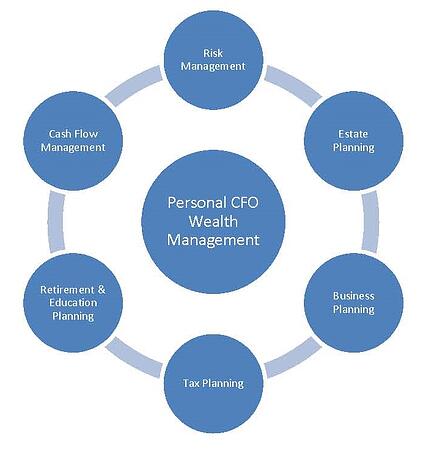
In a business a CFO manages the finance side of the business; he will pull the banker, lawyer, accountant, insurance agents, and investment advisor, together on behalf of the business owners and make sure they are all working toward the same goals. A good wealth manager will save the business owner time as well as help him address issues that will create the most value. This is different than a typical investment manager who manages assets such as stocks, bonds, cash and mutual funds towards a specific future goal such as retirement or college funding.Personal_CFO_WM

Some areas of focus a wealth manager would address would be a privately-held business, personal residence, vacation property, insurance, loans, taxes, employee benefits, estate planning, investment advisory, cash flow, debt elimination, the needs of beneficiaries and so on; basically anything that impacts an individual's net worth.

A good wealth manager will pay attention to the estate planning, a critical part of a business owner’s conservation strategy; because he knows that the owner’s family is a part of the overall picture and they need to be provided for. If these crucial elements are avoided or ignored, the end results can be devastating to the business as well as the family members.

A case in point that hits home for me, happened with my oldest brother who was an architect. He along with his two business partners owned an architecture firm for over thirty years. When the business was initially set up they put a stipulation in place that would be activated upon the death of any of the partners. It was modified and updated about 35 years into it, however, the modifications were short-sighted and not set up well. Two years ago my brother passed away suddenly, activating the stipulations. Unfortunately, what they had thought was a wise plan ended up not providing for the business or the two remaining partners in a way that would enable the doors to remain open.

A personal CFO could have foreseen the fall-out of the short-sighted stipulations and made the proper provisions. He would have factored in the legal considerations, taxes, accounting and insurance considerations, and any other assets or special conditions that would be impacted with the death of a partner and ensured that the family heirs, business, and remaining partners would be provided for when faced with such a loss.

There are many details that come into play when one considers net worth and the best way to manage it. Business owners often do not have the time nor the expertise to handle all the details well. If a business owner is working 80-hour weeks, how much time can they really spend considering how assets are titled, or whether there are methods of shifting tax burdens to family members in lower tax brackets, or whether there's too much risk in an investment portfolio?

The needs of a business will vary significantly from one business to another. For example, a family farm can utilize a family limited partnership, where a publicly traded tech firm cannot. On the other hand, the shareholder of a publicly traded firm can sometimes gift stock options to an irrevocable trust. There are hundreds of income and estate tax strategies. The job of a wealth manager is to assist in the decision making process so the right approach may be selected for each individual situation.

Besides the varying needs of a business, business owners each have very different wants. Wants, such as what does the owner want to do with his business? What is important to them? Do they want it handed down within the family or do they want the business to go public? How do they create lasting value in the business, so it can be sold in the future? These answers are more about the individuals owning/running the business rather than the economics of the business.

A wealth management strategy cannot be implemented all at once. There are a number of gradual steps that must take place because it is a process, not an event. It takes years for a business owner to build a company, as the company gains wealth, strategies are implemented. By the same token, it may take years to properly enhance and protect that wealth. A good wealth manager will take the time to evaluate all the issues, then he will start with those things that are easy for the client to do. At the same time, a wealth manager should emphasize the strategies that are most critical for the client whether they are easy to accomplish or not.

A Personal CFO needs high levels of expertise and an ability to work alongside other professionals who are currently serving business owner's legal and financial needs. He needs to understand the cash flow of the business, their tax bracket, cash-flow projections, and the risk involved in the business as well as other assets. Business owners will come to value a Personal CFO's advice as they see details of the business resolved and the wealth and sustainability of the business protected.

Topics: Wealth Manager, Wealth Management, Personal CFO

What's Up With the 5% Bump in the Economy in the Third Quarter

Posted by Wendell Brock, MBA, ChFC on Fri, Jan 09, 2015

During the final days of 2014, the government issued a report stating that the GDP had grown by 5% in the third quarter of the year. Many are cheering the news, but there are also many who are calling slight of hand! I have three articles that I will reference to dissect this report, one supports the government's claim, and two oppose.

By John HendrixThe first article is called “Why Aren't We Thanking 'Gridlock' For Saving The Economy?” written by David Harsanyi. His reasoning for the 5% jump is that for the first time in the Obama administration, no one was 'tinkering' with the economy. To be fair, he doesn't give credit to Obama for turning it around, nor does he give congress the credit. Rather he says that because of gridlock in D.C., no one was able to accomplish anything, and just the mere fact of letting the economy maneuver for itself, allowed it to begin to pull out of this long recession.

By John Hendrix

From Harsyani, ““People often don’t realize that a political system is sometimes effective when it does not do certain things.” Pietro Nivola, a senior fellow in governance studies at the Brookings Institution, argued in 2013. “You can’t just measure the things it does, the actions it takes; you also have to measure the actions it does not take.” Nivola’s study was impressed by how gridlock has the ability to stop the Republican House from cutting spending too abruptly for the economy.

“And perhaps he’s right. Gridlock has caused an odd, but pervasive, stability in Washington. Spending has been static. No jarring reforms have passed — no cap-and-trade, which would have artificially spiked energy prices and undercut the growth we’re now experiencing. The inadvertent, but reigning, policy over the past four years has been, do no harm.”

I have always thought that if congress could only pass one new tax law, (one that raised revenue to the Federal Government in any way), every seven years, the economy would be much better off. This would give the public time to absorb the law before a whole new set of rules and regulations come out to hit us again.

Harsanyi also mentions that the congress has issued fewer laws during the last few years. While there may have been fewer laws passed, he overlooks the fact that the ones that have passed have been so large that the congressmen don't have time to read them before they come up for a vote. To quote Senetor Pelosi, “We won't know what is in the law until after it has passed.” A foolish way to govern and far from the do no harm policy Harsanyi claims.

Further, while the number of laws issued may be less than in other years, the amount of regulations pouring out of D.C. have been more than most people can keep track of. There were over 3,000 that were ready for take-off the week of Thanksgiving alone! There were just as many issued back in the spring. While congress can't take credit or blame for these, they certainly do impact the economy in big ways.

For example, the energy sector is being regulated out of their current system into a coal-free one. We can debate all day what is the most earth-friendly method of creating a stable energy network that will serve our population needs in the most cost effective and efficient manner. However, in the past, the free-market and innovation led us to new advances, not regulations and red tape.

As a matter of course, it used to be that laws were presented by congress, to be enforced by the executive branch and appealed to through the judicial branch. Regulations by-pass our entire system of checks and balances, leaving us with a penal system that is deaf to any appeals. I submit that regulations are more damaging to a free economy than a president's policies or legally enacted law.

The next article, “Q3 GDP Jumps 5%; Ha! The Crap Behind the Numbers” written by Tony Sagami of Mauldin Economics. In this article he doesn't necessarily cry foul, but he raises some doubts about the integrity of the 5% claim because of other numbers in the economy that don't add up to a jump. He outlines four points:

“Fun with Numbers #1: The biggest improvement was in the Net Exports category, which increased by 112 basis points. How did they manage that? There was a downturn in Imports.

“Fun with Numbers #2: Of the 5% GDP growth, 0.80% was from government spending, most of which was on national defense. I’m a big believer in a strong national defense, but building bombs, tanks, and jet fighters is not as productive to our economy as bridges, roads, and schools.

“Fun with Numbers #3: Almost half of the gain came from Personal Consumption Expenditures (PCE) and deserves extra scrutiny. Of that 221 bps of PCE spending:

Services spending accounts for 115 bps. Of that 115, 15 bps was from nonprofits such as religious groups and charities. The other 100 bps was for household spending on “services.”
Of that 100 bps, the two largest categories were Healthcare spending (52 bps) and Financial Services/Insurance (35 bps).

“The end result is that 85% of the contribution to GDP from Household Spending on Services came from healthcare and insurance! In short… those are code words for Obamacare!

“While the experts on Pennsylvania Avenue and Wall Street were overjoyed, I see just another pile of white-collar manure and nothing to shout about.

“Fun with Numbers #4: Lastly, the spending on Goods—the backbone of a health, growing economy—declined by 27 bps.”

With this in mind, let's move on to the third article posted on December 26, 2014 by John Hinderaker in Economy, Obamacare, & PowerLine called, “About that 5% GDP Growth Rate…”. Citing another economist, Tyler Durden at Zero Hedge, Hinderaker helps uncover the sleight of hand being played out and points the finger assuredly on Obamacare spending as the main reason for the jump in the economy.

“Back in June, when we were looking at the final Q1 GDP print, we discovered something very surprising: after the BEA had first reported that absent for Obamacare, Q1 GDP would have been negative in its first Q1 GDP report, subsequent GDP prints imploded as a result of what is now believed to be the polar vortex. But the real surprise was that the Obamacare boost was, in the final print, revised massively lower to actually reduce GDP!

Of course, even back then we knew what this means: payback is coming, and all the BEA is looking for is the right quarter in which to insert the “GDP boost”.

Don’t worry though: this is actually great news! Because the brilliant propaganda minds at the Department of Commerce figured out something banks also realized with the sub “kitchen sink” quarter in November 2008. Namely, since Q1 is a total loss in GDP terms, let’s just remove Obamacare spending as a contributor to Q1 GDP and just shove it in Q2.

Stated otherwise, some $40 billion in PCE that was supposed to boost Q1 GDP will now be added to Q2-Q4.

And now, we all await as the US department of truth says, with a straight face, that in Q2 the US GDP “grew” by over 5% (no really: you’ll see).”

While the exact quarter predicted was incorrect, the overall scheme was called out back in June with 'Obamacare' spending accounting for two-thirds of consumer spending. We can only hope that increasing Obamacare costs don’t drive “personal consumption” any higher in future quarters, and also that integrity can somehow return to our public servants.

So we come to the final question: what really happened to the numbers? Anyone want to guess – let me know what you think?

Topics: Economy

No Time: Out With the Old Excuses

Posted by Wendell Brock, MBA, ChFC on Thu, Jan 01, 2015

As this year is opens, now is a good time to reflect on some of the things that worked and didn't work in your financial life. What may be holding you back from living on a budget? What would it take to finally be serious about getting out of debt (renting money is very expensive)? Or when will you finally get around to setting up an estate plan that will ensure your family will be provided for if something happens to you? And remember procrastination is a very bad and expensive habit.

Here are the Top 10 – Out With the Old Excuses, to kick for 2015:

Don't have time

This is the big one! While many Americans are stretched to the limit when it comes to their time, making sure your financial life is in order is more about priorities than it is about time. We make time for things that are important to us, like watching TV or our favorite game. Getting your financial house in order means that with all your efforts to provide for your families, we are also ensuring that long-term their needs will be met.iStock_000000081999Medium

Here is one I like:

We are all busy people and perhaps busy is the number one reason people don’t take the time. This is typically how it goes: “Its tax season and once I can get past April 15th then I will have more time!”

What’s next after tax season: “It’s the end of the school year and my kids are in all the different activities and between that and sports, we are just too busy, maybe during summer?”

Summer yes the kids will be out of school and we will have more time…how does this go: “We are so busy getting ready for summer vacation with the family, we just need to get past the vacation then we will work on our finances!”

After summer then what? “We are getting ready to get the kids back in school – after the kids are in school things will settle down and we will have time.”

The kids are settled in school and doing well, but then: “It’s the holidays and we are swamped with family coming and going and work end of year things to finish, I am sure we will be able to have the time after the holidays!” Right!!

And after the holidays: “Its tax season again and life is just too crazy right now!”

Don't have money

It is far cheaper to live on less now, and ensure that our financial life is sound, than it is to continue on a frivolous path and reap the consequences later. The old adage of “living on less than you earn” really is the wisest path. Either way there will be a day of reckoning. Consider ways that you can do more with less, and cut back in wasteful spending in order to make room for a sounder future. It is amazing what people do with a just a little money.

My spouse isn't on board

There are many reasons spouses may not be united in a family budget. It is your job to initiate the conversations that are required to become one in this area of your marriage. It will take patience, time, and probably a change of behavior from both spouses as well as some negotiations in order for both spouses to be united on the budget. While it might seem like an uphill battle now, many couples have accomplished the trek and have found greater peace in their marriage and power in their financial life. It is well worth the effort! This is a place where spouses need to be unified.

I don't know how, I was never taught

This may be true, but it is never too late to learn! Start now, make the commitment to learn how to manage your finances. Find a good financial advisor whom you trust and ask them to mentor you. Don’t let your ego get in the way – there is no shame in getting help! Everyone needs help now and then.

That is for other people, not me

This is a true case of denial. It doesn't matter how rich or how poor you are, your financial life affects you. Consider the truth in the statement that your choices will determine your destiny.

I don't care

Unless you are a welfare recipient, than perhaps you do care, but don't want to admit it. If you care enough to get up and go to work each day, then you ought to care enough to see that your hard work is not squandered.

I'm too lazy

This is probably at the heart of most of our excuses as to why we don't do the things we ought to do- whether in finances, diet & exercise, or any other should or ought to's in our life. It is probably the most honest excuse as well. People rarely change until they get sick and tired of being sick and tired. Short of that, it often takes some type of severe wake-up call before meaningful change ever happens.

I have more than I need so I don't worry about it

If this is you then congratulations on being financially comfortable! While this is a nice place to be, it is a short-sighted response in a world that is ever changing. Beware of being too comfortable for your own good!

The Bible says money is at the root of all evil, so I ignore anything that has to do with money

Yes, I have actually heard this excuse in others before! It is folly and a sheer refusal toward any type of financial maturity. If this is you or your spouse, some therapy might be in order to help you through your issues. We also have a responsibility to use our talents wisely.

Money, what's that?! I use the barter system for all my needs

While the barter system may be useful to you in some regards, it can only go so far. While the current world we live in may allow for some bartering, it also requires money. Both skills are likely necessary in order to get along in it. Consider enhancing your financial skills this year- perhaps you can barter for a good financial mentor!

They say that “insanity is doing the same thing over and over and expecting a different result!” If you want to really make some changes then you have to reprioritize your time and make the time to get it done. You may also have to reprioritize your spending too as well as other things you like in life, but it all starts with “time!

J. Pierpont Morgan said, “A man generally has two reasons for doing a thing; one that sounds good, and the real one.” What other reasons regarding your financial life keep you from success? I'd like to hear about them! Leave a comment and let's discuss it! In the meantime, Happy New Year and best wishes for 2015!

Topics: budgets

Merry Christmas

Posted by Wendell Brock, MBA, ChFC on Wed, Dec 24, 2014

At this time of the year I hope we all take time to pause and reflect on our many blessings. There are two things I would like to point out this Christmas season. 1. Is the Gifts and 2. Is gratitude for the blessings we have been given.SLC_Temple_Nativity_BWSLC_Temple_Nativity_BW

We all try to surprise people in our circles with gifts, family members, some from work, and other friends, all hoping that we have provided the perfect surprise gifts. I happened to watch a short video this year titled He Is The Gift you can watch it here. It is just less than 3 minutes. It is one of the most powerful examples of gift giving there is. And it sums up the reason for Christmas in the first place. It sets things in priority.

On to gratitude for blessings. All gifts are blessings and therefore deserve our most humble gratitude to the giver of the gifts. This year is a bit different for me. My oldest son returned home from his mission to Brazil for two years, my next oldest daughter is currently serving a mission in Brazil and should return home in May, 2015. As a parent of great children, I am profoundly grateful for them and particularly their mother – my wife, she is amazing.

Here is a different twist. My son decided that one way to pay for his college was to join the military, a decision I did not expect him to make. I suggested the Air Force because you get to fly planes and he, like me, has always liked airplanes. He had something else in mind – the Marine Corps. I said son those are the tough guys and the first ones sent in! He said yes but they are also the best trained. He did a bunch of his own studying and homework and felt that that is where he should be, so he joined up.

This is the gratitude part, being in the military with the chance that he could get shot does not excite me one bit. But knowing that he may get shot fills me with humble gratitude that he would put his life on the line for his country and thereby his parents. He is that kind of son. The Savior Jesus Christ said, “Greater love hath no man than this, that a man lay down his life for his friends.” John 15:13. I pray for his protection.

We are all blessed with so much in this great country, before you and your family unwrap presents tomorrow morning get in your knees and thank your Heavenly Father, the God of heaven and earth, for your many blessings. It will change your Christmas. I know because it continues to change and improve the Spirit of our Christmas’. May God bless you and keep you.

Topics: Gratitude

John Smith the First Economist in America

Posted by Wendell Brock, MBA, ChFC on Wed, Nov 26, 2014

As this week is Thanksgiving, I thought I would write aboutone of our first settlers in America, whose influence on America has been profound. John Smith's impact has been felt both in the American spirit as well as in the American economy. We are all familiar with the story of John Smith being saved by Pocahontas, but this is just one of many examples of his narrow escapes and the influence these experiences gave him in becoming a great leader.

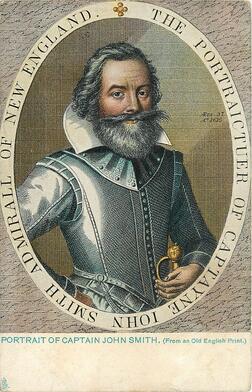
john-smith-portraitJohn Smith was born in 1580, near the bottom of the social scale in Willoughby, England. His father was a farmer, which was one level above being a peasant. He was able to attend grammar school in his youth. He had no desire to remain a farmer and even tried to run away when he was 13. His father eventually made him an apprentice to a merchant. He was miserable, and could see little way to break free of the feudal institutions so strongly in place in those days.

After a year or two of being an apprentice, his father died. This bittersweet event allowed John Smith to leave the merchant and pursue the one door open to his ambitious, adventure-craving spirit: the military. During his time in the military, he rose quickly to rank and earned the respect of the men he fought with and for. After a few years, he went home and studied military arts and eventually returned to fight again.

By the time he was in his early twenties, he had fought in many battles, rising to the rank of a captain, and honored by princes and kings for incredible acts of bravery; he had been robbed and beaten and left for dead in the forests of France; he had been thrown overboard a ship, Jonah-like, only to be rescued later by another ship whose captain happened to have friends in common with John Smith and therefore treated him well; he had toured Rome and met the Pope; he had been captured in battle and sold as a slave, and eventually regained his freedom and made it back to England just in time to sail to America.

Clearly John Smith had not only lived a life of adventure, but he had experienced every economic situation that is possible to experience! These experiences laid the foundation for him to be the right man, at the right time, in the right place to give success to the Jamestown settlement.

The bylaws of the Jamestown settlement were set by the financiers of the trip. They put in place a system, not unlike communism, whereby everyone was rationed the same, whether they worked or not. The environment was harsh and untamed. The provisions were meager. Many settlements had tried and failed in the hundred plus years between Columbus and Smith. If Jamestown had maintained these practices, it is probable it would have met with the same fate as so many settlements had previously. But there was something in John Smith that became the catalyst for success in Jamestown!

The settlement was in constant need of replenishing men and supplies from England. The first year saw a 60% casualty rate! The provisions were never enough, which led to a perpetual need to trade with the Indians, which had its own inherent risks!

As John Smith later reflected on those early days, he observed, “Glad was he (who) could slip from his labour, or slumber over his taske he cared not how, nay, the most honest among them would hardly take so much true paines in a weeke, as now for themselves they will do in a day.” He had keen insight into human nature and knew that, even though in theory equal pay sounded good, in practice it was leading to disaster! John Smith finally decided it was time to abandon the bylaws that had been instituted by the financiers of Jamestown. With a musket in hand, John Smith boldly declared that anyone who did not work, would not eat! This basic fundamental economic principle is why I call him the first Economist in America.

The financiers eventually realized the flaw in their bylaws and officially abandoned communism. In its place they allowed the settlers private property rights as well as the ability to live by their own initiative. Something amazing began to happen in Jamestown! All those who eagerly embraced these new laws began to flourish and prosper. They improved their situation so well that word spread back to England and America began to be settled!

When John Smith came to America, he realized the two profound opportunities this land had to offer: Freedom of economic movement and the ideal of liberty! These two principles were the basis for what made America great and were cannonized in the Declaration of Independence and the US Constitution.

“Here (in New England) every man may be master and owner of his owne labour and land; or the greatest part in a small time. If he have nothing but his hands, he may set up his trade; and by industrie quickly grow rich...

“Therefore let all men have as much freedome in reason as may be, and true dealing, for it is the greatest comfort you can give them, where the very name of servitude will breed much ill bloud, and become odious to God and man.”

This vision of what America could become for mankind was indeed the catalyst that allowed America to grow, flourish and prosper! At this Thanksgiving time, let us remember the ideals and visions of those who came before and as we give gratitude for the many blessings we have, let us also promise in our hearts to do our part to maintain their inspired ideals! Happy Thanksgiving!


Sources:
Love and Hate in Jamestown by David A. Price
The Majesty of God's Law by Cleon Skousen
Quotes from:
Description of New England by John Smith
Generall Historie by John Smith

Topics: Economists, America, Thanksgiving

Correlation of Commodities

Posted by Wendell Brock, MBA, ChFC on Thu, Nov 20, 2014

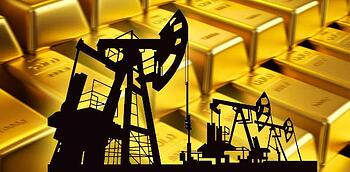
Commodities, such as oil or gold, typically follow an inverse, or negative relationship with the value of the dollar. A stronger dollar makes oil a less attractive commodity on dollar-denominated exchanges, especially in the eyes of investors holding other currencies. When the value of the dollar weakens against other major currencies, the prices of commodities generally move higher.

This inverse relationship also happens when countries devalue their currencies through inflation. This is one argument for the gold standard, it is said to keep monitary policies honest.

oil_and_gold-111

There are many reasons why the value of the dollar has an impact on commodity prices worldwide, namely commodities are typically priced in dollars. When the value of the dollar drops, it will take more dollars to buy the same amount of commodities. Commodities are traded in dollars because currently the dollar serves as the world’s reserve currency. Some countries, like the BRIC’s (Brazil, Russia, India and China are trying to change that and use the Chinese Yuan as a reserve currency or a basket of currencies from other countries rather than simply the US dollar.

Another reason is that commodities are traded around the world; foreign buyers purchase our commodities: corn, soybeans, rice, wheat, oil, etc., with dollars they have received in trade as we have purchased products they have manufactured. When the value of the dollar drops, they have more buying power and simple economics tells us that demand typically increases as prices drop.

Commodity traders often keep a close eye on the value of the dollar. An easy way to monitor the dollar is to watch the price quotes on the Dollar Index on the ICE Futures Exchange. It is an index of how the dollar is valued against a group of other major currencies around the world. The price of the index is traded like any other futures contract and you can get quotes throughout the day.

Commodity prices don’t necessarily tick higher for every tick lower in the Dollar Index, but there is a strong inverse relationship over time. Individual commodities can also buck the trend if other over whelming forces are causing the price to move along with the dollar.

Lately the dollar has gained strength against a backdrop of many countries whose currencies are weakening. This has been a factor in the lower prices we have seen at the pump. This strengthening has also had an impact on other commodities, precious metals, gold, silver, platinum, etc.

Typically, gold is seen by investors as a backup for the dollar. As the dollar weakens, the price of gold increases. As the dollar gains strength, gold prices drop. It is similar to the relationship between the dollar and oil. Which begs the question, is there a correlation between oil and gold?

There are a couple ideas that try to explain the correlation between gold and oil. One is that prices of crude oil partly account for inflation. Increases in the price of oil result in increased prices of gasoline at the pump. If fuels (gasoline, diesel oil, and aviation fuel) are more expensive, then it’s more costly to transport goods and those prices go up. The final result is increased prices – in other words, inflation.

The second thought on the oil-gold link is the fact that precious metals tend to appreciate when inflation is rising (especially in the current fiat monetary environment). So, an increase in the price of crude oil can, eventually, translate into higher precious metals prices resulting in oil becoming a new economic bench mark similar to gold.

While it usually takes some time for higher commodity prices to materialize as higher prices in goods and services, however for precious metals they trade daily in your portfolio and may trade in line with oil immediately. One explanation can be that, once oil appreciates, precious metals investors correlate the expected future higher prices of goods in the price of gold and it generally goes up.

However, even though the general price level of gold moves in a similar direction to oil, the relationship may not be trade-able based on data for the long term. While the correlation is positive, over longer periods of time and on average, this relationship does not always translate the same for gold and oil returns.

In 2000 oil was trading around $32 per barrel and gold was around $292. Currently oil is trading around $75 and gold at $1,183. Which translates for oil a 134 percent gain over the past 14 years and 305 percent gain for gold. (Obviously, these are low compared to recent highs in the past few years when oil hit around $140 per barrel and Gold was up around $1,800 per ounce.) By comparison, in January 2000 the CPI was at 168.800 and January 2014 the CPI was 233.916 or an increase of 38.6 percent. The low inflation rate compared to the increase cost of oil and gold can partially be explained by the number of times the Government has revised the method of calculating the CPI.

Having said that, it’s still possible for short-term patterns to emerge occasionally. So, even though there seems to be no relationship between gold and oil returns over the long term, it may happen that a relationship unveils itself in a short period of time offering trading opportunities.

In summary, while oil prices do not drive gold prices and gold does not drive oil prices, the main reason the two markets have similar long-term trends, as well as other commodities, is that they have one important long-term driver in common: monetary inflation.

Topics: Gold, Oil, Precious Metals, Commodities,

Unproductive Rock or Real Value - The Gold Standard

Posted by Wendell Brock, MBA, ChFC on Wed, Nov 12, 2014

Authorities – monetary authorities, political authorities, economists – seem to know less about money than our forebears did. We’re approaching the centennial of the beginning of the First World War. From the late 18th century through the First World War we had the greatest increase in human wealth in history; in that one and a quarter centuries we created more wealth than all the previous centuries put together! And from about the First World War until now, the economy has been tinkered and toyed with so much that it is on the verge of a world-wide collapse!

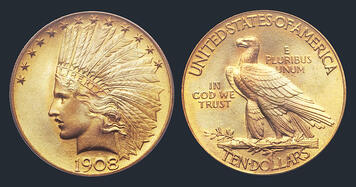
1908_indian_head_10_Gold_Coin

A key element to the success of those 125 years was stable money, starting with the British pound. Before that you had the Dutch, but they didn’t have quite the global influence that the Brits ended up having, especially with the industrial revolution. The United States under Alexander Hamilton put in a very sound money regime that made the United States standout, especially in relation to the Latin American republics which achieved their independence in the following decades, but have been troubled ever since by chronic monetary instability.

Yes, the US had boom and bust cycles during those years, but most were related to normal business cycles and speculation, not due to the collapse of our currency – of gold and silver – the currency was always stable.

Money is a simple subject – however, the money authorities want to surround it with a lot of jargons and equations. They want to make it appear that even if you master brain surgery or nuclear science, you are incapable of understanding money, which is ridiculous. People instinctively understand that stable money is good and that a weak dollar is not good for the United States. Great countries don’t have a weak currency. Overall, people understand the stabilizing effect of a gold standard.

The last hundred years have seen a gradual withdrawal from the gold standard until in the early 70's, America went off it completely. This allowed for an expansion in the economy since money was no longer tied to anything and could simply be printed at will. Although the 70's were distinctively marked by the Misery Index, we had a decent time of it in the 1980s and ’90s when we had a semi-stable monetary policy, but we still haven’t recovered from the early 2000s.

Crises often leads to reform. Well, we did not return to a gold standard in the 1980s. Neither have we returned to a gold standard today. This nation is beginning to recognize that the Fed is floundering and that the central banks cannot manage economies.

Enter China.

China recently created the new Shanghai gold exchange. One of the purposes behind this new gold exchange is to eventually take global price controls for monetary metal away from the Comex, and then force a global currency reset by raising the price of gold to its true or actual value.

China plans to re-price gold to near or above twice the current price. This will have a devastating effect on derivatives and ongoing use of the Comex futures market to suppress gold prices, and protect the dollar.
Based upon supply details for the Comex over the past two years, America's primary gold exchange no longer settles their contracts through the delivery of physical gold, but instead settles in cash payments or through the hedging of gold using derivatives. Subsequently, once this failure to deliver takes place, then China, through the Shanghai gold exchange, will become the default market for price discovery. At that point they will re-adjust gold to its true value, instantly causing massive chaos in the fiat currency markets and leaving the world little alternative but to implement a complete currency reset.

Since the middle of 2012 or so, the Comex has been forcing gold contracts to settle not in metal, but in cash. If you don't like it, they will ban you from the Comex. There's been very little if any settlement of gold futures contracts for two years in gold metal. They're not a gold market anymore, they're a derivative market for gold instruments. And since late September, Shanghai has been offering a gold and futures contract, and they're settling in metal.

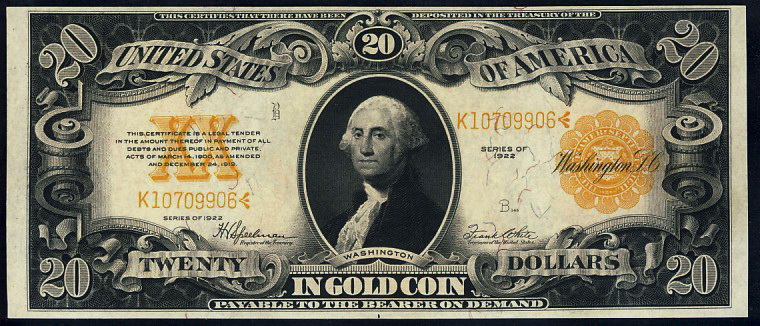
Several economic analysts, including John Williams, Peter Schiff, Dr. Paul Craig Roberts, and Gerald Celente all gave predictions earlier this year that a global currency reset event would take place in 2014, with most believing it would come before the end of summer. However, the U.S. is not on board with the rest of the world, preferring instead to seek military conflicts in order to delay the end of the petro-dollar system. Meanwhile, both Russia and China have accelerated their efforts to create infrastructures that will allow a more fluid transition for global trade once a currency reset actually takes place.US_Gold_Certificate

1922 US $20 Gold Certificate

Over the past several weeks, the dollar has grown in strength while the rest of the world's currencies have been collapsing. Because of this, global accumulation of physical gold at depressed levels is running near historic highs in an attempt to hedge sovereign currencies that have depreciated from years of low interest rates and slow money velocities.

As several global financial indicators are more intertwined and threaten to bring the world into an economic crisis, China has recognized that physical gold is the ultimate catalyst to force an end to the domination of purely fiat finance, and that revaluing gold to its rightful price will have the effect of both protecting their own currency, and wresting financial control away from the West and the system of dollar hegemony.

Alan Greenspan, who served at the helm of the Federal Reserve for nearly two decades, recently wrote an op-ed for the Council on Foreign Relations discussing gold and its possible role in China, the world’s second-largest economy. He notes that if China converted only a “relatively modest part of its $4 trillion foreign exchange reserves into gold, the country’s currency could take on unexpected strength in today’s international financial system.”

In a world filled with fiat currencies, how important is gold’s role in the financial system? Proponents often view the precious metal as a hedge against economic chaos, while critics typically claim gold is hardly more than an unproductive rock. Interestingly, some countries appear to believe gold is quite important.

On November 30th the Swiss people will vote to return their currency to a gold standard, making their currency the first to be partially backed by gold since the US went off the gold standard in 1971. Maybe other countries will soon follow or they may be forced to by China.

Do you think the US should return to a gold standard? Is gold and/or silver a part of your Security Plan? 

Free Information about including Precious Metals as part of your Security Plan,  Click Here.

Topics: Gold, Precious Metals, Gold Standard, Security Plan

Lasting Effects of the Great Recession

Posted by Wendell Brock, MBA, ChFC on Wed, Nov 05, 2014

It is an interesting time that we live in. Consider some of the current economic themes in households, businesses and markets throughout America:

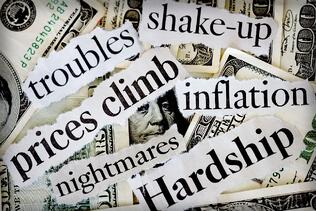
In October 2007, U.S. stocks were hitting an all-time high, jobs were plentiful and homes were expensive. Two months later, the Great Recession began to eviscerate the economy, ultimately sucking $10 trillion out of U.S. stocks, collapsing a housing bubble and pushing the unemployment rate over 10 percent.

Seven years later, most Americans have tried to put their finances in order, many are reducing their debt and working to save more. But Americans are making a lot less money and own fewer assets, even as stocks reach new highs, according to the Federal Reserve Bank.

Great_RecessionHousing prices are still 13 percent below 2007 levels. Fewer Americans own houses - sending rents up 16 percent, to an average of $1,100 per apartment in metro areas.

Educational loans are up, by $2,500 for the median family paying off student loans. That is prompted by tuition increases and a surge of people going back to school. Post-secondary enrollment jumped 15 percent, or 2.8 million, from 2007 to 2010, according to the U.S. Department of Education.

Jobs may be coming back, but good jobs are still scarce. More than 7 million people are working part-time jobs when they'd prefer a full-time position, 57 percent more than in 2007. And more than 3 percent of adults have left the workforce entirely since 2007, according to the U.S. labor force participation rate.

Increased government regulations have made it increasingly difficult for small businesses to grow, let alone stay in business. The uncertainty of new regulations and the differing political winds have all but removed the stability of our Republic. It was with this political stability that ideas and businesses thrived over the past 238 years. Instability causes uncertainty, hence in October we saw huge swings on Wall Street.

The Financial Select Sector SPDR (XLF), an exchange-traded fund targeting banks and investment firms, had the biggest withdrawal last week since 2009 amid concern that low interest rates and market swings will hurt profits.

Investors pulled $913.4 million from the $17.5 billion ETF, whose top holdings include Berkshire Hathaway Inc., Wells Fargo & Co. and JP Morgan Chase, a shift that turned its flow of funds negative for the year. The SPDR fund tracking financials is the largest and most-traded among the 40 U.S. listed ETFs focusing on that industry. Its shares outstanding decreased 5 percent, the biggest weekly decline in more than year.

Commercial Banks have waited for years for higher rates and more robust trading to b

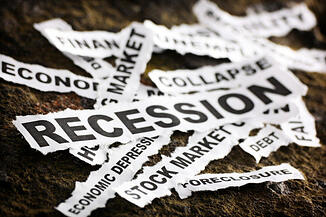
recession10

oost revenue from lending and market-making. “Weaker-than-expected global growth could prompt the U.S. central bank to slow the pace of eventual interest-rate increases,” Federal Reserve Vice Chairman Stanley Fischer said. The severity of market swings last month also boosts the risk that some investment banks will incur losses while facilitating client bets, and it may slow mergers and acquisitions.

All this combined makes me wonder if we are indeed out of The Great Recession, as some say we are. Are the strategies proposed by the central banks as well as politicians designed to keep our economy down or to help it grow as they insist?

The outcomes of the elections this week will be very telling as to how Americans are feeling about the realities of what they are experiencing, day in and day out.

Topics: Great Recession

120514_WWBrock_1

Wendell W. Brock, MBA, ChFC

Subscribe by Email

Follow Me

Most Popular Posts

Other Sites I Follow, hobbies, fun and info:

gold-vs-silver-1.jpg  Nauvoo Mint brokerage services for precious metals


john Mauldin chair

Note:

Outside Economics is not a registered investment advisory firm (RIA) and does not act as an RIA. Outside Economics does not provide any specific investment advice. Any information obtained from this website or through one of  Outside Economics' representatives should be reviewed by a professional.

Subscribers Note: We do not sell our email list. Period. Thank you for subscribing.

Recent Posts