Outside Economics

Macro Overview of 3rd Quarter 2015

Posted by Wendell Brock, MBA, ChFC on Wed, Nov 04, 2015

International growth concerns and uncertainty surrounding the Fed’s decision as to when to finally start raising rates continued to roil markets in the 3rd quarter.

The Fed held interest rates steady during a critical meeting in September, signaling that it intended to raise rates towards the end of the year. The economy’s apparent return to normalcy will be tested when a rate hike does eventually take effect.

The Department of Labor released data for the 3rd quarter showing that there were improvements for low-income workers across the country, which tends to accelerate when the economy is close to full output. Historically, the Fed has considered full output to be a catalyst for rising rates in order to stem inflationary pressures driven by increasing wages. Consequently, employment data continues to weigh on the Fed’s decision to raise rates.

Markets reacted to mixed signals from the Fed regarding the timing of its anticipated interest rate hike while economic conditions were still questionable. The Bureau of Labor Statistics may have been contributing to the Fed’s uncertainty as it revised 2nd quarter GDP estimates to a growth rate of 3.9%, up from 3.7%. Such revisions signal a strengthening economy, thus swaying the Fed to a rate rise sooner rather than later. Many economists view a decisive rate increase, a confident attainment of some economic progress.

Many analysts believe that Federal Reserve members have become extremely sensitive to the occurrences in China and the emerging markets, which have been adversely affected by the dollar’s strength. Some propose that the Fed is trying to indirectly minimize the dollar’s strength by keeping interest rates from rising too soon.

Since a stronger dollar has historically been a negative factor for the emerging markets, developing countries such as Brazil and Mexico are taking restrictive actions in order to slow the decline in emerging market currencies.  Brazil implemented sharp interest rate hikes in September while Mexico intervened to sell dollars in order to boost a record low peso. Traditionally, emerging market countries are inclined to raise interest rates in order to stem the decline of their currencies against the U.S. dollar.

It was 7 years ago this September that the financial crisis reached its most critical point when industry behemoths, including Lehman Brothers and Merrill Lynch, were acquired by other institutions.

Commerce Department data released identified construction as the strongest evolving sector of economic growth in September, with construction spending up over 13% for the past 12 months. Construction expenditures have been led by private sector nonresidential building, which includes manufacturing spending that is up considerably over the past year.

Reis, reported in its research that, office space throughout the country became scarcer as the vacancy rate fell to 16.5% in the 3rd quarter. Department of Labor data showing an increase in higher paying professional positions coincides with the increase in demand for office space.

Sources: Fed, Bloomberg, Dept. of Labor, Commerce Dept.


To Remember:

When things go wrong, don't go with them!  - sign on a church
 

Topics: Interest Rates, Fed, Department of Labor, Macroeconomics

Fixed Income - Bond Markets

Posted by Wendell Brock, MBA, ChFC on Thu, Oct 29, 2015

Anticipation is building as the Fed nears a decisive move to raise interest rates before year end. Some believe that the Fed may have missed its chance to raise rates, which would have conveyed a sense of confidence about the nation’s economy.

As rates have settled at 50-year lows for sometime now, pension plans are a distinctive few that have not benefited from the low, single-digit rates. This is so because pension funding and growth projections are primarily based on the interest earned. So when rates are low for an extended period of time, growth estimates decline and shortfalls evolve. The concern is that most fiscally strapped municipalities are struggling to meet shortfalls in pensions, thus increasing liabilities and hindering cash reserves.

Credit spreads continued to widen between U.S. government bonds and corporate high-yield bonds, somewhat of an indicator of the credit market’s health.  Questionable corporate earnings tend to pull corporate bonds down, feeding into higher stock volatility and price uncertainty.
Various fixed income analysts are closely following the $1.5 trillion of corporate bonds maturing in 2016 & 2017, representing nearly 20% of the entire $7.8 trillion corporate bond market. Questions arise as to how capable companies will be to pay that debt off, and where will rates be should additional debt be needed to fund maturing bonds.

If the Fed raises rates before year end, the riskier bonds (junk bonds), which have had the highest yields in the past few years, their yields will push higher and prices will fall. Investors should monitor how much they have in riskier paper; they may want to reduce their exposure some in the coming months.

Another area of bond risk is the global high-yield bonds from emerging markets. These have become popular as their yields have been much better than the treasuries. However if rates begin to rise, it is likely they will rise too, as they are in constant competition for investment money. This is one reason why a well-diversified portfolio is helpful. It will limit exposure in any one area and should provide proper cross correlation of investments.

Alternative investments can be a terrific option to add to an income based portfolio, some providing yields of as much as 7.5% or more, with relatively low risk. Because they are hard/real asset backed, the price should not change when rates move. Alternative investments can be a part of well diversified portfolio and provide a base that is typically not subject to market volatility.


Sources: Bloomberg, Moody’s, Reuters, Market Watch


To Remember 

"God gets to judge; I get to serve." - personal motto of Dell Loy Hansen  

Topics: Bonds, Fixed Income, Federal Reserve, Bond Market

China, Currency and the World Market

Posted by Wendell Brock, MBA, ChFC on Fri, Oct 23, 2015

International trade in the world market is conducted around the world using the U.S. dollar as the reserve currency. Trade is critical to nearly all countries the world over. Here in the U.S. there are some products that we produce far more than we can consume and we have to sell our goods overseas. It is the same for other countries; China as a manufacturing center, produces anything they want to in any amount. The main ingredient in manufacturing is labor and they have a lot of very cheap labor; therefore, they need to export their goods and U.S. is their biggest customer.

As countries produce and market their goods, the natural tendency is for their currency to appreciate, making the products they produce more expensive for other countries to buy. Small increases can produce stable growth, large increases can setup a financial bubble.

Since the financial crash in 2007 the yuan appreciated, in real trade-weighted terms a whopping 40% through May 2015. This partly reflected nominal appreciation against the U.S. dollar, with effective appreciation against the euro, yen, Korean won, and other currencies.[i] During this time period the U.S. dollar gained strength mostly because we were the best option compared to the other world currencies.

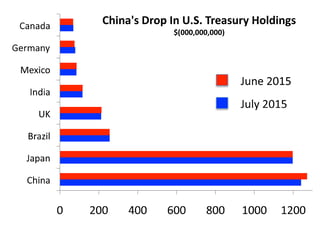
China’s biggest drop in its currency valuation in over 20 years occurred last month due to export concerns and China’s economic growth. The decline of foreign reserves illustrates the cost to China as it tries to prop its economy and alleviate the outflow of capital from the country, which has now threatened the nation’s economic position. The shrinkage in foreign reserves means less money flowing into China’s financial system. Many economists believe that it is inevitable China will see continuous capital outflows and continued depreciation of its currency in the ensuing months.Chinas-Drop-In-Tsys

Federal Reserve data released in September showed that China started to liquidate U.S. government Treasuries as early as July. During the same period, several nations maintained their holdings in U.S. Treasuries. China actively reduced its position in Treasuries by over 2.5 percent in less than one month, amounting to a $30 billion reduction. China has been and continues to be the single largest foreign holder of U.S. government Treasuries worldwide, amounting to nearly $1.25 trillion in value. U.S. Treasuries are the single most liquid securities held by foreign entities worldwide.

One cause of volatility in our markets in part due to the actions of governments. Allowing their currency to rise and then suddenly devaluing it that can cause such volatility in our markets. Changes in currency valuation cause uncertainty in the markets and investors react by converting their investments to cash. In time, investors regain the previous confidence and put their money back in the market. Bidding it back up. China’s devaluation of their currency caused our markets to head south. This reflects two questions: 1. With China now as an economic powerhouse, how does the U.S. make room for two at the top? and 2. Think of what the rest of the world goes through when the U.S. market has a cold or our government does something unpredictable; how do we, as the U.S. population, now cope with a more unstable government? Our government stability is so very important in the world. Perhaps you may have other questions to ask? please ask in the comments below.

Economic growth is important to all countries, it is their life blood. Trading with other countries is a critical part of that growth. China is certainly a market to be watched closely, considering their size, the amount of U.S. Treasuries they own, and the products they produce. There economy now is almost the size of the United States – any day now, they will be the largest economy in the world.

[i] Is China in danger of falling into the trap that killed Japan? 10/16/2015 By Jeffrey D. Sachs

Source: Federal Reserve

To Remember:

"Bull markets are born in pessimism, grow in skkepticism, mature in optimism and die in euphoria, I don't see any signs of euphoria." Sir John Templeton

Year End Income Tax Planning

Posted by Wendell Brock, MBA, ChFC on Fri, Oct 16, 2015

As year end approaches, another income tax season is just over the horizon. The importance of gathering necessary tax items is essential. Starting in early autumn gives you time to act; you can implement any additional tax planning strategies to help lower your bill. Some strategies may take a few weeks to properly implement. Even though not much may have changed since 2014, it is always clever to have accurate estimates and tax items prepared for 2015.

IMAGE_INCOME_TAX_2

Federal Tax Rates

For the most part, federal tax rates for 2015 remain the same as they did last year. Federal tax rates start at 10% and increase to a top rate of 39.6%. Keep in mind that the beginning and end points are increased slightly to account for inflation. Higher income individuals may also be susceptible to an additional Medicare tax on wages and self-employment income, as well as the 3.8% net investment income tax which can result in a higher marginal federal tax rate for 2015.


Employer Qualified Retirement Plans

Whether you are a self-employed individual or a W-2 employee, it is important to tally up any contributions that may have been made to your retirement accounts over the year. Most employer retirement accounts allow for year end contributions until December 31st. So any additional contributions that you can make to a company qualified plan such as a 401(k) or a 403(b) should be made before the end of the year. It’s a good idea to estimate how much more you can contribute then spread out the additional contributions between now and year end.


Charitable Contributions

Now is a good time to line out your charitable contributions for the year. If you are not pleased with the way the federal government spends your tax dollars, then the best method to combat that is to donate money to charities that do support causes you are interested in. The tax deduction may produce a significant reduction in your income tax bill; sometimes providing just enough of an additional tax deduction to lower your tax marginal rate. These contributions need to be made by year end in order to qualify.


Investment Portfolios

For investors that hold securities as various types of positions, it is important to identify any investments that may have either significant losses or significant gains, which should be realized before the end of the year. With the market being as volatile as it has been, it is also important to identify any investment positions that may yield some type of tax benefit before year end.


Alternative Minimum Tax (AMT)

Affecting more and more people every year, Alternative Minimum Tax (AMT) should be carefully considered when implementing tax planning strategies going into the New Year. Originally enacted in 1969, AMT was never indexed for inflation, thus it continues to affect more and more taxpayers each and every year. AMT is essentially an additional tax on top of the standard tax tables. There’s a good chance that taxpayers taking significant deductions at the state and local levels (such as state tax free municipal bond income), claiming multiple dependents, exercising stock options, or recognizing a large capital gain for the year, may eventually be affected by AMT.


Income tax planning throughout the year pays off, those who pay attention to it often pay fewer taxes for the year. Those who do no planning and just report the numbers on the form pay the most. There is no law that says that you have to pay the maximum. Year end planning save you money, the challenge is will you make the time to do it. After all it’s your money; you are the one who earned it! Tell us about your favorite tax planning strategy; what strategy(ies) do you use to save income taxes?  If you would like to learn more, click on the link below:

Tell Us About Your Favorite Savings Tip

To Remember:

Success is getting what you want; Happiness is wanting what you get!  Warren Buffet

Sources: Tax Foundation, IRS

Market Report

Posted by Wendell Brock, MBA, ChFC on Mon, Aug 10, 2015

The Economy 

abstract-market-report-macchine-agricole-russia2015-ita-1-638

There was a series of bad news in the past couple weeks, which have driven markets lower over the past seven days. The pounding may not be over. Some of the economic news that challenges the markets are as follows:

Internationally the dollar has remained strong and the best option of all the poor options. So the US debt is a problem, but it is perceived to be less of a problem than the debt of other countries, making the US the best option.

Sales of new homes in June came in below expectations, and the median new home price fell from a year ago. That news was a U-turn from recent data indicating strength in the housing market.

Two major economic indicators are air freight and shipping, both have been down this year. Air freight has dropped to levels not seen since 2009 and the number of idle ships (ships sitting in harbors with no shipping containers to move) has increased 31% from 82 to 108 ships. The transportation sector is a very key indicator, as it is responsible for moving raw material and goods to market. If no one is ordering commodities/materials or finished products then shipping slows, on sea, land, and air.
 
China’s wild ride continues as the country deals with its own economic problems. This week it was announced that the Chinese economy has grown to become the largest economy in the world making it larger than the US economy. The Purchasing Managers’ Index, a private measure of Chinese manufacturing, came in below expectations at 48.2, according to BloombergBusiness. Results below 50 indicate the sector is contracting. That doesn’t bode well for growth in China, which is the biggest global consumer of metals, grains, and energy, or the rest of the world.
   
With this week’s jobs report and employment holding steady, it is more likely that the Fed will raise interest rates next month. When interest rates are 0%-.25% basis points any movement is likely to result in as much as a 100% increase over the current the rates, a .35% rate would be 100% or more of any rates below .175% and a 40% rise over the top end of .25%. That is still a big move, which will be costly to businesses who need to borrow. But hey, we all knew the day would come when rates would start heading back up, Right?

Experts cited by Barron’s cautioned, “…it’s not the first rate hike that’s important. It is what comes after that.” Stay tuned.

A Few Good Tips:

1. Make sure you update your estate plan regularly – if you don’t have one, GET ONE NOW! The problems you leave behind can be as devastating as your passing.

2. Successful investing is found by focusing on sound investment strategies and goals, not focusing on the markets.

3. Review risk management and levels of insurance, have adequate life, disability and property & casualty coverage; someday you may end up being the “other guy” that something happens to.

4. Stay out of debt – get your debts paid off ASAP. This is the ball and chain to your financial success.

To Remember:

“The best way to predict the future is to create it.” Abraham Lincoln

How To Stay In The Black During The Last Quarter

Posted by Wendell Brock, MBA, ChFC on Fri, Jul 31, 2015

Back to School sales are already upon us – the kids are heading back to classrooms all across the country. Next, coming up fast, will be Halloween, and the holidays with the Christmas season and the wonderful spirit that brings to families and children. While RED is the typical Christmas color, it is not the favorite financial color! Certainly not the color of choice on how you want to end the year financially! For many people Christmas is a budget buster, they spend through their savings, only to end up putting the balance on credit cards; thinking “this will be easy to pay off during the next few months.”saving-tips_2245371b

Here is a suggestion: Begin now creating your gift list, pricing each item, then shop around for the extremes – highest and lowest prices for each item (the MSRP: Manufacturer’s Suggested Retail Price vs. sale price). Save/budget for the highest price and make the purchase at the lowest price, then actually put the difference into savings. You will discover two things, as you exercise the discipline of putting the difference into savings: 1. You will enjoy shopping for deals more, instead of paying the regular retail price. 2. You can make this a game with your children – teaching the value of saving and how to shop. They will become more savvy consumers and they will enjoy growing their new saving plan.

When you make the transfer to savings you can set up some simple rules to keep working right: make a daily transfer or a weekly transfer and simply keep track of purchases and the savings on a pad of paper. I like using something like PayPal where they simply draft the money from my checking account and forget about it. You can also make a limit that you don’t make transfers of less than $25.00 so at least weekly you are moving something to savings.

Successful savings is found strictly on the principle of self-discipline. Nobody makes you save money, you have to do it all on your own. Its 100% you! So make a weekly transfer of something to the account, develop the discipline and commitment to follow through, even if the amount is small. Frequent small deposits add up! This simple tip will help your finances stay in the black!

Everyone loves a good sale and sharing with their friends their great fortune, “I bought this pair of shoes for half off, saving $100.” Now you can really take control of your spending by putting that $100 in savings. With a Black Christmas (and other holiday shopping) – you will feel more security and peace of mind as you end the year in the Black!

Topics: savings account

Social Security

Posted by Wendell Brock, MBA, ChFC on Fri, Jul 24, 2015

Little did we know that this week is “National My Social Security Week”! WeeHa! It’s a week where the Social Security Administration (SSA) is encouraging people to sign up for an online account. Much like many other financial institutions we have the ability to manage our account, the SSA wants people to do the same. There are a few other interesting thoughts and statistics I thought might be interesting to the average American who at some point will be drawing income from this massive bureaucratic government agency. For example average benefits paid out by the SSA to recipients; and the age old question, will there be any money left when I am ready to receive my benefits?myssaweek-top

As a Personal CFO, this is one thing I think folks should do – go online and create/open your own account on the SSA website. This provides quick easy access to info which will help in your planning your future finances. While Social Security Income (SSI) may not be a large portion of your overall retirement plan or your income, it is still important to review it periodically, if nothing else to make sure they are recording contributions properly.

From the Social Security website at www.ssa.gov:

Get your free personal online my Social Security account today!

You probably plan to receive Social Security benefits someday. Maybe you already do. Either way, you’ll want a my Social Security account to:

•    Keep track of your earnings and verify them every year;
•    Get an estimate of your future benefits if you are still working;
•    Get a letter with proof of your benefits if you currently receive them; and
•    Manage your benefits:
o    Change your address;
o    Start or change your direct deposit;
o    Get a replacement Medicare card; and
o    Get a replacement SSA-1099 or SSA-1042S for tax season.

Setting up an account is quick, secure, and easy. Join the millions and create an account now!

*With instant access to your Social Security Statement at any time, you will no longer receive one periodically in the mail, saving money and the environment.  Thank you for Going Green!

If you would like to receive your Social Security Statement by mail, please follow these instructions.

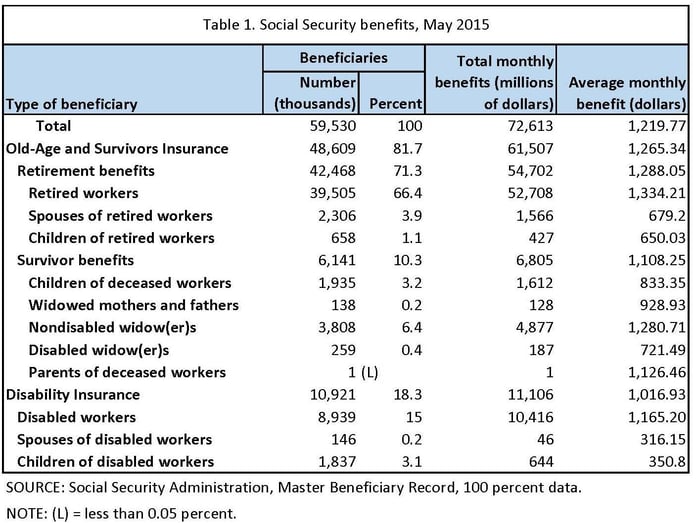
Current Paid benefits from SSA

It is interesting to see what the current benefits are that the SSA pays and to whom, see Table 1 below. As with many government agencies, over the years they have felt the need to grow and expand – and grow they did! It started out in 1935 as an Old-Age and Survivors Insurance fund to help pay some benefits to folks in their old age and the widows of workers. It was supposed to be a safety net, it is just that that safety net continued to grow to include many different conditions, without collecting specific premiums for those new conditions. This expansion has welded the SSA into the foundational grid-work of our country.

Additionally, the premiums are not voluntary, so for example many people have their own private disability insurance, and yet part of the tax collected covers disability benefits that they would never need because of their own insurance.

Social_Security.
 
How Social Security Is Financed

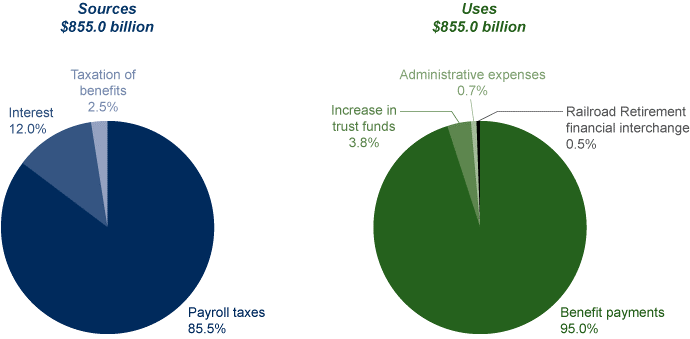
Social Security is largely a pay-as-you-go program. Most of the payroll taxes collected from today's workers are used to pay benefits to today's recipients. In 2013, the Old-Age and Survivors Insurance and Disability Insurance Trust Funds collected $855.0 billion in revenues. Of that amount, 85.5% was from payroll tax contributions and reimbursements from the General Fund of the Treasury and 2.5% was from income taxes on Social Security benefits. Interest earned on the government bonds held by the trust funds provided the remaining 12.0% of income. Assets increased in 2013 because total income exceeded expenditures for benefit payments and administrative expenses.

Sources and uses of Social Security revenues in 2013

Social_Security_Graphs
 
SOURCE: 2014 Annual Report of the Board of Trustees of the Federal Old-Age and Survivors Insurance and Disability Insurance Trust Funds, Table II.B1.


Will Social Security ever go away?

I am often asked; “Will Social Security every go away?” We can’t keep funding this social program… Well let’s take a look at the program from a different perspective and see if it will go way or not.  According to the SSA there are 161,673,000 (2012) people in the United State who earn income taxable by the SSA.

Of those employed people there are 2,711,000 employed by the Federal Government (Nov. 2014). Of the 2.7 million Federal employees 60,771 are employed by the SSA (2013). In my lifetime I don’t know of a time when the Federal Government has closed an agency and told the employees to go find a job someplace else.

Now to dig a little deeper on this according to the SSA, 0.7% of the annual tax revenue is used to fund the SSA administrative expenses.  The SSA takes in $855.0 billion in revenue (including: payroll taxes, interest, and taxation of benefits) and the administrative expenses are $5.985 billion, for an average cost per employee of $98,484.

Again, I do not think the Federal Government will shutter this program. The government will continue to tweak it in one form or another, so it will be for a long time to come. Which means I would expect three things to happen: 1) taxes will go up. 2) Amount of SSA benefits to be taxed will increase, and 3) future benefits will be reduced.

Another challenge is that we have so many people receiving benefits; the worker to beneficiary ration keeps dropping. As mentioned above that the system is based on a pay as you go model, we have fewer worker paying into the system than people who are taking income. Post WWII in the mid 1950’s there were just over eight employees paying into the fund for every person receiving benefits. That has dropped over the years to a mere 2.8 employees in 2013 paying into the system for each person receiving benefits.

The problems of this agency are difficult and challenging, clearly it will not be going away, and this year, being its 80th anniversary year, while its future does not look bright, it will be around another 20 years to celebrate its 100th anniversary!

Topics: Social Security, Social Security Benefits, Social Security Administration

Chiropractic Leadership

Posted by Wendell Brock, MBA, ChFC on Tue, Feb 24, 2015

Last week I wrote about Leadership and Self Reliance with the idea that this week I am following up with how this works with a particular professional business. First let me explain a little about self-reliance. The idea is for people to become self-reliant or to rely on themselves, their own powers, resources, etc. This does not mean that a person does not use the services of other people, but it means that they have prepared their lives in such a way that those services add value to what they are doing on their own. The concept is the opposite of the entitlement mentality wherein people believe that they deserve something without any effort on their part.

It should be part of everyone’s vision to become self-reliant in this world. I love my children, and I am thrilled at their successes, and I love helping them succeed, I am most proud when they accomplish their goals on their own. Each one is a great person in their own right, some are more self-reliant that others (they are all at different and stages in life where we would expect this). The vision is to help them become self-reliant in their own family unit. That does not mean they won’t need help now and then, it means they are figuring things out for themselves and then seeking help with their own plan.

As a Personal CFO, using the composite leadership principles, over the years I have worked with clients who are chiropractic physicians, (while this works with all businesses in this article I am going to reference chiropractors). I like working with them because, as part of their medical training, they are taught that the body has incredible healing powers on its own, it needs a little adjusting now and then to keep it going. They also realize that other complications arise and a person may need medical care beyond their specialty. The chiropractors I have had the pleasure of working with have a sincere desire to make people’s lives better. They are, for the most part, self-reliant.0215_Composite_Leadership_Page_1

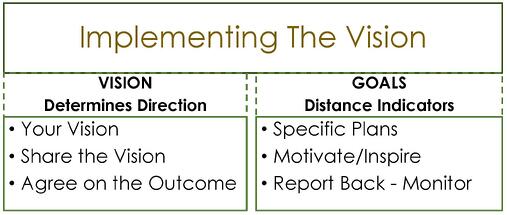
In my work as a strategist, helping chiropractors fulfill their vision, often starts with defining what their long-term vision is, (the direction they want to go), complete with all their ideas, which generally goes beyond ten years or more. This may include building a self-sustaining practice that helps patients improve their health. A practice with all the right policies and procedures in place, so if a team member is missing for a few days or out on maternity leave, others know how to fill in. Implementation and monitoring can provide a more profitable stress free practice. After all only when a business is profitable can it continue to provide the services necessary to the public. The vision also includes the most important benefit of all, a quality family life with time for the spouse and children. Remember that ALL businesses are family businesses.

What makes the vision, come about is setting and accomplishing specific measurable goals. These goals are more mid-term in nature answering the question: what specific things can we do to accomplish the vision? The change agent is active in this role, defining these goals and designing measurable ways to accomplish them. Implementing certain strategies to bring about greater success in the practice. In the case with a chiropractor, it may involve additional marketing, to see more people at certain times of the day. Writing the policies that employees need to follow to make that patients receive the level of service and care they are seeking. Establishing an office budget to better manage the office’s financial resources. Designing strategies to minimize taxes. Risk management and how to protect against exposed risks. Many of these goals can be implemented in as little as a few months to a year.

As items are implemented in a manner of priority to the chiropractor, the practice begins to change in the practice and home life. Stresses are reduced as items on the “to-do list” are accomplished. The Manager (in this case the Chiropractor) sees the things that are necessary to accomplish day in and day out to accomplish the goals set. This direction provides a charted course that ultimately makes the practice easier to manage. Employees know what to do in their areas of responsibility as well as understand the responsibilities of others, thereby creating a cohesive team effort.

A challenge that has always occurred is the monitoring of what is happening. Through constant outside monitoring, small lapses are able to be caught and corrected. As financial issues arise they are dealt with right then. Providing counsel at that time is easier than trying to fix a problem months later. We can’t predict the future but we can be prepared for what may come. Monitoring the practice allows the chiropractor to focus more on patient care, which helps the practice become more profitable.

0215_Composite_Leadership_Page_2

In all of these areas the chiropractor and Personal CFO work closely together to accomplish the vision. It is through long-term goals, mid-term implementation, day to day work and continuous monitoring that accomplishes the goals. Together we are able to review progress, maintain the course, and accomplish the vision. This is how the chiropractor shows leadership in their practice. These principles can be applied to any business that wants to get ahead.

Topics: Personal CFO, Leadership, self-reliance, Chiropractic

Leadership and Financial Self-reliance

Posted by Wendell Brock, MBA, ChFC on Tue, Feb 17, 2015

A couple weeks ago I went to a dinner meeting where Dean Lee Perry spoke, he serves as the dean of the Marriott School of Management at Brigham Young University. Moral and Ethical Leadership was his message, specifically, issues around a composite view of leadership. This message was of particular interest to me because assisting business owners and professionals to become financially self-reliant, is what I enjoy most about my work.

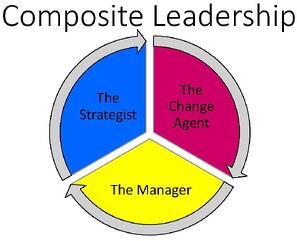
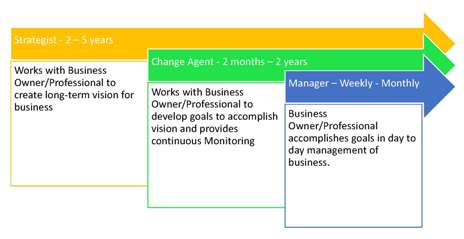
The composite view of leadership breaks the rolls down into three separate, but equally important types of leaders: the strategist, the change agent, and the manager. This applies directly to my business of helping small business owners/professionals get more out of their businesses and secure their future happiness by engaging sound financial principles that lead to self-reliance. As a Personal CFO to business owners/professionals I help them find and address the right questions and answers to financial issues they face.Composit_View_of_Leadership5

The Strategist

The strategist has a long term view with a vision, typically two to five years out. Some financial issue extend well beyond five years. The strategist works closely with the owner/professional to develop a vision for their business. This is where, for many clients, questions about business planning strategies, income tax strategies, retirement planning or estate planning come into play. These events are usually off in the distance, sometimes so far off that we cannot see them over the horizon, but the date will come sooner than we may think.

What strategies should be employed to make this season of life well prepared for, planned, and most of all enjoyed. The abundant life is possible for each of us; long term planning is necessary to obtain the fruits of our efforts. An apple tree must be planted before we can harvest apples years later.

The Change Agent

The change agent works on more immediate mid-term goals, which are necessary to put the proper habits, tools and mental attitude in place to make the vision a reality. Goals that support the vision in a plan may have a dozen or so recommendations. Together the change agent and the owner/professional work through implementation and continuous monitoring of a comprehensive financial plan. Many goals can be accomplished in a few weeks to two years, each supporting the long-term vision.

Within two to six months most all recommendations of a financial plan are implemented, then the plan is monitored long term. An example of implementation may be setting up a particular retirement plan, or implementing an income tax strategy to help save tax dollars. The change agent’s work may finish in a few months only to start work again the next year as life events, business conditions, the economy, may require alterations.

The goals are best reached with regular monitoring, which keeps the whole plan moving forward instead of operating from financial one crisis to another. Bumps in the road happent, but they are often smoothed out with continuous monitoring and interaction with the business owner/professional and myself the personal CFO. Many issues are easily solved when dealt with immediately rather than trying to fix them after the fact, thus keeping the goals on target.

The Manager

The manager is critically important to the whole process of successfully completing goals and making the vision a reality. (Note: in this case the manager is not the typical middle manager in a company, the manager is the owner/professional.) The manager works the plan minute by minute, hour by hour, and day by day. The position of building profitable efficiencies into the operations of the business, is where the “rubber hits the road”! Particularly in small businesses where the owner may work closely with the employees, or often the case in professional practices, where they may do most all the work.

In a small business the owner/professional is often the manager, change agent, and strategist. The work of doing all three positions affectively is often overwhelming. My practice is centered on assisting the owner/professional with the strategist and change agent positions so they can spend more time focusing on what they are good at: growing their business, providing their customers the best service from the day to day operations of their business, and spending more quality family time.

Working closely with the owner/professional on creating a vision and the goals to accomplish that vision, we are able to make progress towards a life of financial self-reliance. Look for my article next week where I will look at how this works with a particular profession.

Topics: business owners, Personal CFO, professionals, Leadership, slef reliance, Moral and Ethical Leadership

Investment Portfolio Performance

Posted by Wendell Brock, MBA, ChFC on Thu, Feb 05, 2015

Everyone envisions great performance within their investment portfolio. Performance is one of the most sought after characteristics of any portfolio. However, evaluating the return only ignores risk and several other factors that affect performance.

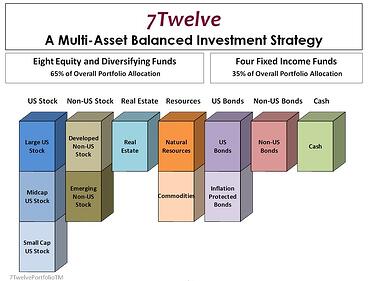
Achieving a balance between the risk and performance or return is what a balanced investment portfolio is all about. In a balanced portfolio the stocks generally provide the greater return and the bonds are there to help minimize the overall risk; risk management techniques are important to consider, providing a balance between two distinct asset classes, stocks and bonds.

These two major asset classes are often broken down between many other asset classes. For example, bonds may be divided between US Treasuries, US corporate bonds, international bonds, inflation protected bonds, junk bonds, municipal bonds, etc. Stocks are likewise divided; there are the large cap, mid cap and small cap, international stocks, real estate stocks, retail stocks, commodity stocks, natural resource stocks, utilities, etc.

Risk is also broken down, as there are several types of risk that each stock and asset class are subject to. There are four major types of risk: technical risk, fundamental risk, interest-rate risk and inflation risk. Each of these risks can play a significant role in a stock or bond’s performance. All publicly traded stocks are subject to technical risk (a.k.a. macro or market risk). Many simply rise and fall with the market as a whole. While fundamental risk, (business or default risk) deals primarily with the company itself; is the management team running things right? Default risk can come into play if the company gets in such a spot that it needs to file bankruptcy; such is the recent case for Radio Shack.

So here are a few things to watch when evaluating performance…

Don’t forecast.

Many folks have a wonderful year in the market and then think all the succeeding years will be the same and they expect the same. They figure that they will hit a jackpot in 10 or 20 years based on what their account did last year after all it should continue to perform at the same level in the future, right? Just like farming, farmers have seldom perfect farming weather year after year. Some years there is a drought and others flooding!

Don’t work off averages

An average return only tells us if the fund has been positive or negative over a period of time is all. Each year is a story to itself; long-term averages don’t always tell the whole story, the average will hide down years. If a portfolio goes up from $10,000 to $11,000 great we had a 10 percent gain. However, if the account goes down by 20% it will take 25% to get back to break even. This is the math of losses, which often plays a major role in the emotional choices to sell at the bottom or get out when things are not looking “great”.7Twelve_1

Keep a multi-year perspective

“Maintaining a multi-year perspective is vital to the mental and emotional health of an investor. Year-to-year returns are ‘noisy’ whereas 3-year rolling returns are more indicative of general performance patterns.”[1] One year’s return may not provide an accurate image of an entire portfolio model and may limit the investor’s vision.

While this may sound counter to the previous paragraph; it is not. The previous paragraph about averages is meant to keep the average return in perspective with the annual return. This section provides the reasoning to keep a long-term investment perspective; stick with the game plan for the long-term giving it time to work on your behalf. One year is not a sufficient amount of time to let a long-term portfolio model strategy work.

Expect Losses

According to Dalbar investors earned less than ½ the rate of return over the past 30 years that the market earned. Again, money is emotional, it is not math. This lack of return is due in part to investors pulling money out at inopportune times; the market is down, need college funds, down payment for a house, and other major unexpected expenses. The biggest looser is fear when the market tanks.

Yes it is wise to minimize losses, hence a properly balanced portfolio, but the best thing to do is have a game plan for when the market reverses. Ask that question now and make a plan. Are you going to hold on? Sell when the market is down by X% and get back in when? What if the market drops to your target sell level, we sell, and then it does not continue down, but reverses the next day and shoots back up! These bounces are devastating to portfolios; create a logical plan and agree on the plan with your advisor. The old adage of: “Buy low and sell high” might be part of your plan, when the market drops, should you buy more instead of selling?

Two Parts to Climbing a Mountain

If a person is not retired, then they ought to keep adding to their investment/retirement accounts, this will help immensely. (Many folks switch jobs and rollover their 401K to an IRA and let it sit never adding another nickel! To the extent possible keep adding.) This part of mountain climbing referred to as ascending, and when referring to investing, it is accumulating. Going up the mountain is typically easier, and less stressful on the body. Be an accumulator of assets and shares.

On the other hand, if a person is retired, then they are heading back down the mountain, descending or de-accumulating. It is always more trick getting down the mountain than up, for one it is much harder on the knees! There are far more accidents going down a mountain than up. It uses different tools and techniques; in this phase having some market exposure is good, but a person will want to develop greater security in their payouts too. Similar to having a sure footing with every step down.

Check emotions, make a plan for when the market does go down, and manage risk in a balanced portfolio and things should go alright. Most important keep a positive outlook, ask questions, do not be mean and nasty with advisors – they really do want to see investment accounts go up and up! Most advisors I know stress and lose sleep over client’s accounts and their performance.


[1] Craig L. Israelson, PhD. Architect of the 7Twelve Portfolio Model, Professor of Financial Planning at Utah Valley University (UVU).

Topics: retirement, Investment Portfolio, Investment, Risk Management

120514_WWBrock_1

Wendell W. Brock, MBA, ChFC

Subscribe by Email

Follow Me

Most Popular Posts

Other Sites I Follow, hobbies, fun and info:

gold-vs-silver-1.jpg  Nauvoo Mint brokerage services for precious metals


john Mauldin chair

Note:

Outside Economics is not a registered investment advisory firm (RIA) and does not act as an RIA. Outside Economics does not provide any specific investment advice. Any information obtained from this website or through one of  Outside Economics' representatives should be reviewed by a professional.

Subscribers Note: We do not sell our email list. Period. Thank you for subscribing.

Recent Posts