Outside Economics

Military Lessons for the Entrepreneur

Posted by Wendell Brock, MBA, ChFC on Tue, Oct 21, 2014

What do military generals and entrepreneurs have in common? Are there parallels that can be drawn from military science and building a business? What do warfare strategies and creating a new product have to do with one another? There are many parallels between military science and business. Are there any lessons about entrepreneurship that Sun Tzu's “The Art of War” can teach us? Yes.
sun-tzu-art-of-war-book

At times building a business can feel like outright war. Business by nature is competitive. Many business leaders have studied military strategy in order to enhance their business acumen. One of the foremost texts being Sun Tzu's ancient manuscript, “The Art of War”, written over 2500 years ago. Sun Tzu's thesis is to “win all without fighting,” or to capture the market without falling into a financial blood bath against your competition. Teachings from this book are applicable to an entrepreneurs' wins and losses on the business battlefield – the marketplace.

Sun Tzu says, “If you know the enemy and you know yourself, you need not fear the result of a hundred battles.”

Sun Tzu admonishes us to study our competition in order to ascertain what gaps they are leaving in the marketplace. This is primarily intended to avoid engaging the established competition head-on, which will ultimately lead to a financial blood bath. By keeping a finger on the pulse of technologies and consumer/social changes and shifts, a good business leader can know his competition's weaknesses as well as his own. This can also allow him to focus on his strengths in order to attack the opportunities in the marketplace that are under-served by his competition.

Sun Tzu says, “Victorious warriors win first and then go to war, while defeated warriors go to war and then seek to win it.”

Sun Tzu's words underscore the importance of the lean product development methodology. This methodology focuses on creating a minimal version of the product with core features, test launching that product and the incrementally improving it from early user feedback. This proposed capital- efficient exercise conserves resources and focuses the team's attention on the product itself. Once the product is fine-tuned to a version with features guided by user feedback, then it will be ready for a larger scaled launch. In essence, this is a “win” before going to war.

Sun Tzu says, “Defeated warriors go to war first and then seek to win.” This can be demonstrated with product failures. There are many product failures, but one that comes to mind was the “New Coke” soft drink. Clearly something went drastically wrong with this product.

Sun Tzu says, “Confront them with annihilation, and they will then survive; plunge them into a deadly situation and they will then live. When people fall into danger, they are then able to strive for victory.”

This phrase speaks of intensity and commitment as well as creativity. Small, passionate teams that are dedicated and focused on a common mission are extremely effective and can achieve anything, especially when they are given the lee-way they need to creatively overcome challenges and set-backs. When everyone on the team has bought into an all-or-nothing mentality and given the freedom to create, each is capable of achievement far beyond what they ever thought possible.

Sun Tzu's ideas are timeless principles that entrepreneurs and business leaders can implement in order to have clarity of their mission, their purpose, and their commitment to the success of their team's objectives. While it may feel a bit silly for business owners to liken themselves to ancient warfare generals, Sun Tzu's teachings apply and they are implemented in some manner by today's successful entrepreneurs. What rules do you use in your business to bring about success?

Topics: entrepreneur, Building a Business

The Sour Fruits of Regulations

Posted by Wendell Brock, MBA, ChFC on Fri, Oct 10, 2014

At times you come across an article that really makes sense. I have over the years discussed the issues of how we have too many regulations in many areas of our lives. In deed a book has been written about how every day we are breaking the laws of the land simply because there are so many we don’t know that we are breaking the law.
obamacare-jobs

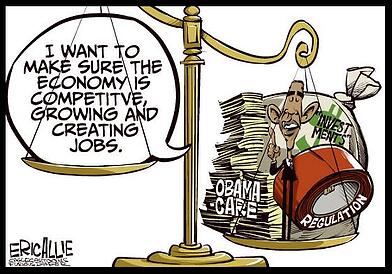
Many of these regulations/laws have unintended consequences that in the long run cost us as a nation far more than we thought. It seems that Congress is always in a mode of trying to fix things. And their fixes often make things worse, thus requiring another fix! It would be nice if congress only meet for a year every four years, that way the dust could settle and people could have time to learn about the laws that were passed and the economy could have the time to absorb the laws.

The current situation of you have to pass the law in order to read what is in the law, in reference to ObamaCare, is not healthy for anyone. That is like buying a plane ticket without knowing what the destination is going to be or if they will return you to the city where you started! The lack of really understanding the law and what is in it for America, is now coming to haunt us with its many unintended consequences. Stomachs are turning, like what happens after eating sour fruit!

Recently I read an article on the Wall Street Journal’s website Market Watch, by Scott W. Atlas, MD, a professor at Stanford University, he was kind enough to let me share it with you my readers. I know it is a bit long for what I normally publish, but this is worth the read, because in the end it truly affects all of us.

The US Treasury Department is currently working on new regulations to keep companies from leaving the United States, so they pay taxes here instead of other countries where taxes are lower. This is very Stalinistic or you could say, “so much for the land of the free!” Communist countries don’t let their people or companies leave their countries freely, and now it appears that we are following suit, pretty scary if you ask me.

This is simply a free market move, just as you purchase products from other countries because they can manufacture or produce some good or service less expensive, taxes are a business expense and there comes a point that businesses can’t afford to keep passing these expenses on to their customers, something has to give.

It seems to me that if we lowered taxes and competed with other countries we would get more companies that wanted to locate here in the United States, which in return would raise more taxes. But forcing companies to stay here is removing our rights as a people to participate in the free market system. Read on and please offer your opinions in the comments section.


ObamaCare's Anti-Innovation Effect

Socked by new taxes, U.S. health-care technology companies are moving R&D centers and jobs overseas.

Of the many unintended consequences of the Affordable Care Act, perhaps the least noticed is its threat to innovation. Although most discussions center on the law's more immediate effects on hiring, insurance rates and access to doctors and care, attention should also be paid to its impact on U.S. research and development and health-care technology.

The overwhelming majority of the world's health-care innovation occurs in the U.S. This includes ground-breaking drug treatments, surgical procedures, medical devices, patents, diagnostics and much more. Most of the funding for that innovation—about 71% of U.S. R&D investment—comes from private industry. A recent R&D Magazine survey of industry leaders in 63 countries ranked the U.S. No. 1 in the world for health-care innovation.

But that environment is changing. According to R&D Magazine and the research firm Battelle, growth of R&D spending in the U.S. from 2012 to 2014 averaged just 2.1%, down from an average of 6% over the previous 15 years. In that same 15-year period, Malaysia, Thailand, Singapore, South Korea, India and the European Union saw faster R&D spending growth than the U.S. China's grew on average 22% per year.

The recent slowdown in R&D spending in the U.S. is in part caused by weak economic growth since the 2008 financial crisis. But the economy's weakness itself has been exacerbated by the negative impact of new taxes and regulations under ObamaCare. According to Congressional Budget Office estimates, the new health-care law will levy more than $500 billion in new taxes over its first 10 years to help pay for insurance subsidies and Medicaid expansion. These new taxes include significant levies on key health-care industries, such as manufacturers of medical devices and drugs, and their investors.

As a result, small and large U.S. health-care technology companies are moving R&D centers and jobs overseas. The CEO of one of the largest health-care companies in America recently told me that the device tax his company paid last year exceeded his company's entire R&D budget. Already a long list of companies—including Boston Scientific , Stryker and Cook Medical—have announced job cuts and plans to open new centers for R&D, manufacturing and clinical trials overseas.

The bureaucrats at the Food and Drug Administration are also hindering medical-technology and drug development. According to a 2010 survey of more than 200 medical-device companies by medical professor and entrepreneur Josh Makower and his colleagues at Stanford University, delays of approvals for new medical devices are now far longer in the U.S. than in many other developed countries. In the European Union—not exactly known for cutting through red tape—it takes on average seven months to gain approval for low- to moderate-risk devices. In the U.S., FDA approval for similar devices takes on average 31 months.

The 2011 PricewaterhouseCoopers Medical Technology Innovation Scorecard found that "the gap between innovation leaders and emerging economies is rapidly narrowing." And that "although the United States will hold its lead, the country will continue to lose ground during the next decade." It goes on to say that "China, India, and Brazil will experience the strongest gains during the next 10 years."
Since the signing of the Affordable Care Act in 2010, private-equity investment in new U.S. health-care startups has also diminished. Annual capital investment has decreased to $41 billion in 2013 from $61 billion in 2011, according to quarterly reports by the accounting and audit firm McGladrey LLP. Similarly, the Silicon Valley-based law firm Wilson Sonsini Goodrich & Rosati reported in its semiannual Life Sciences Reports decreases from the first half of 2010 through the second half of 2013 in deal closings and capital raised for startups in biopharmaceuticals, medical devices and equipment, and diagnostics, with only a slight uptick in health-information systems investment.

Meanwhile, many of the best and brightest who come to the U.S. to study science, technology, engineering and math—the STEM subjects that are so crucial to innovation—are choosing to return to their home countries upon graduation. In 2008, a survey conducted by Vivek Wadhwa and his team of researchers at Duke, Harvard and the University of California found that only 6% of Indian, 10% of Chinese and 15% of European students expected to make America their permanent home. Much of this is Congress's fault. Lawmakers have been slow to increase limits on H-1B visas for high-skill foreign workers. Pressure has been brought to bear on Congress to take action, but it may be too late for an increase in the visas to have much effect in health care, given the decline in R&D spending that would make use of their talents.
What can be done to reverse these damaging trends? First, strip back the heavy tax burdens that currently inhibit innovation, starting with repealing the Affordable Care Act's $29 billion medical-device excise tax and the $80 billion tax on brand-name drugs. Change the tax code to add incentives for investment in early-stage medical technology and life-science companies, as well as for philanthropic gifts to academic institutions that promote tech entrepreneurs.

And finally, simplify processes for new device and drug approvals, so that the FDA becomes a favorable rather than an obstructionist environment for these life-saving and cost-saving discoveries. It's a tall order, especially in today's Washington. But America's health—and wealth—depend on it.

Dr. Atlas, a physician, is a senior fellow at Stanford University's Hoover Institution.

Topics: Regulations, Health Care

Entrepreneurs, The Life Blood of Freedom

Posted by Wendell Brock, MBA, ChFC on Tue, Oct 07, 2014

The word “entrepreneur” originates from a thirteenth-century French verb, entreprendre, meaning “to do something” or “to undertake.” By the sixteenth century, the noun form, entrepreneur, was being used to refer to someone who undertakes a business venture. The first academic use of the word by an economist was likely in 1730 by Richard Cantillon, who identified the willingness to bear the personal financial risk of a business venture as the defining characteristic of an entrepreneur.entrepreneur-definition-620x300

In the early 1800s, economists Jean-Baptiste Say and John Stuart Mill further popularized the academic usage of the word “entrepreneur.” Say stressed the role of the entrepreneur in creating value by moving resources out of less productive areas and into more productive ones. Mill used the term “entrepreneur” in his popular 1848 book, Principles of Political Economy, to refer to a person who assumes both the risk and the management of a business. In this manner, Mill provided a clearer distinction than Cantillon between an entrepreneur and other business owners (such as shareholders of a corporation) who assume financial risk but do not actively participate in the day-to-day operations or management of the firm.

Successful entrepreneurs expand the size of the economic pie for everyone. Bill Gates, who, as an undergraduate at Harvard developed BASIC for the first microcomputer, went on to help found Microsoft in 1975. During the 1980s, IBM contracted with Gates to provide the operating system for its computers, a system now known as MS-DOS. Gates procured the software from another firm, essentially turning his invention into a multibillion-dollar product. Microsoft’s Office and Windows operating software now run on about 90 percent of the world’s computers. By making software that increases human productivity, Gates expanded our ability to generate output (and income), resulting in a higher standard of living for all.

Sam Walton, the founder of Wal-Mart, was another entrepreneur who touched millions of lives in a positive way. His innovations in distribution warehouse centers and inventory control allowed Wal-Mart to grow, in less than thirty years, from a single store in Arkansas to the nation’s largest retail chain. Shoppers benefit from the low prices and convenient locations that Walton’s Wal-Marts provide. Along with other entrepreneurs such as Ted Turner (CNN), Henry Ford (Ford automobiles), Ray Kroc (McDonald’s franchising), and Fred Smith (FedEx), Walton significantly improved the everyday life of billions of people all over the world.

Economists William Baumol and Peter Boettke popularized the idea that free market capitalism is significantly more productive than alternative forms of economic organization because, under capitalism, entrepreneurial effort is channeled into activities that produce wealth rather than into activities that forcibly take other people’s wealth.

Baumol and Boettke insist that entrepreneurs are present in all societies. In government-controlled societies, entrepreneurial people go into government or lobby government, and much of the government action that results — tariffs, subsidies, and regulations, for example — destroys wealth. In economies with limited governments and rule of law, entrepreneurs produce wealth.

Some entrepreneurs have some serious challenges with their businesses. While I don't condone certain businesses that are legal in our country, that does not mean they don't have specific challenges. The new cannabis  businesses in Colorado for example are having difficulty establishing banking relationships, primarily due to banking regulations. Which many would argue limits an entrepreneur's freedom.

Baumol’s and Boettke’s idea is consistent with the data and research linking economic freedom, which is a measure of the presence of good institutions to both entrepreneurship and economic growth. The recent academic research on entrepreneurship shows that, to promote entrepreneurship, government policy should focus on reforming basic institutions to create an environment in which creative individuals can flourish. That environment is one of well-defined and enforced property rights, low taxes and regulations, sound legal and monetary systems, proper contract enforcement, and limited government intervention.

Research is showing that the public policy that best fosters entrepreneurship is economic freedom. It focuses on the reasons why government programs are likely to fail, and on how improved “rules of the game” (lower and less complex taxes and regulations, more secure property rights, an unbiased judicial system, etc.) promote entrepreneurial activity. Steven Kreft and Russell Sobel (2003) showed entrepreneurial activity to be highly correlated with the “Economic Freedom Index,” a measure of the existence of such pro-market institutions.

Economists find that infusions of venture capital funding do not necessarily foster entrepreneurship. Capital is more mobile than labor, and funding naturally flows to those areas where creative and potentially profitable ideas are being generated. This means that promoting individual entrepreneurs is more important for economic development policy than is attracting venture capital at the initial stages. While funding can increase the odds of new business survival, it does not create new ideas. Funding follows ideas, not vice versa.

There are many entrepreneurship quotes that are relevant and important to every entrepreneur’s journey. Here are a few favorites:

It’s fine to celebrate success but it’s more important to heed the lessons of failure.– Bill Gates

I have not failed. I’ve just found 10,000 ways that won’t work.– Thomas Edison

Success is walking from failure to failure with no loss of enthusiasm.– Winston Churchill

It’s not about the ideas. It’s about making the ideas happen.– Scott Belsky

Ideas are easy. Implementation is hard.– Guy Kawasaki

Timing, perseverance, and 10 years of trying will eventually make you look like an overnight success. — Biz Stone

No more romanticizing about how cool it is to be an entrepreneur. It’s a struggle to save your company’s life – and your own skin – every day of the week.– Spencer Fry

See things in the present, even if they are in the future.– Larry Ellison

All our dreams can come true, if we have the courage to pursue them.– Walt Disney

Failure is simply the opportunity to begin again, this time more intelligently.– Henry Ford

If you want to succeed you should strike out on new paths, rather than travel the worn paths of accepted success. — John D. Rockefeller

Go as far as you can see; when you get there, you’ll be able to see further. — JP Morgan

It is critical that we as a country support the principals of free enterprise and entrepreneurship, the largest breaks on the system is the government and all the regulation it has created. Regulations are typically there to help “protect the people”; but all too often these same regulations impede progress and development of new products which can help people even more. How do regulations slow the progress of your business?

Topics: entrepreneur

Final Regulations for Qualifying Longevity Annuity Contracts (QLACs)

Posted by Wendell Brock, MBA, ChFC on Thu, Sep 25, 2014

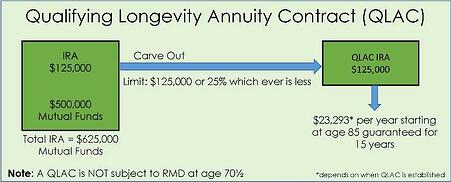
The Treasury Department released the final regulations for Qualifying Longevity Annuity Contracts (QLACs). QLACs, are a brand new type of fixed longevity annuity that is held in a retirement account that has special tax attributes. These new annuities offer a unique tool to help make sure you don't outlive your money. The QLAC rules, however, are a complicated mix of IRA rules and annuity rules, and you may need help in understanding their key provisions.

QLAC Slide Small

Typically, the age in which the required minimum distributions (RMDs) begin is age 70 ½. The new regulations have now made it easier to invest a portion of your retirement savings in annuities that won't pay benefits until age 85. Obviously this reduces the number of years for which you’ll likely receive an income stream, but it also helps to maximize the amount of income you can receive in later years for a given premium.

The Summary of Comments and Explanation of Revisions that was released with the Final Regulations offered the following: "For example, if at age 70 an employee used $100,000 of his or her account balance to purchase an annuity that will commence at age 85, the annuity could provide an annual income that is estimated to range between $26,000 and $42,000."

Here are some of the highlights of the QLAC Final Regulations:

  • You will be able to exclude the value of a QLAC from your RMD calculations, allowing you to keep a greater portion of your IRA (or other retirement account) intact longer.
  • Payments from QLACs will have to begin no later than the first day of the month after you turn 85.
  • You will be limited as to how much of your retirement savings you can invest in a QLAC. The limit will be the lesser of $125,000 or 25% of your applicable retirement account assets. The 25% limit will apply on an individual plan basis, except for IRAs, BUT the $125,000 is a cumulative limit for all QLACs in all retirement accounts. For IRAs, the 25% limit will apply to the prior year-end total of all IRAs (not including Roth IRAs).
  • The limits will apply separately to each spouse when each spouse has their own retirement accounts.
  • QLACs cannot be variable or equity-indexed annuity contracts, though insurance may offer contracts with cost-of-living adjustments.
  • QLACs cannot offer any cash surrender value. So if you buy one, just be sure you won’t be needing that lump-sum of money anytime soon!

At this point you may be wondering why the Treasury Department created QLACs. Prior to the establishment of QLACs, there were significant challenges to purchasing longevity annuities with your IRA money. The rules required that unless an annuity held within your IRA had been annuitized, its fair market value needed to be included in your prior year-end balance when calculating your IRA RMD. So, if you had non-annuitized IRA annuities in your IRA, this left you with an inconvenient choice to make after reaching the age at which RMDs begin. At that time, you needed to either:

  1. Begin taking distributions from your non-annuitized IRA annuities – reducing their potential future benefit, or
  2. Annuitize your annuities – which would obviously produce a lower income stream than if they were annuitized at a more advanced age, or
  3. “Make-up” the non-annuitized annuity’s RMD from your other IRA assets – drawing down those assets at an accelerated rate.

None of these options were particularly attractive and now, thanks to QLACs, you will no longer have to make such decisions – at least with respect to a portion of your retirement savings.

The final regulations limit the amount of money you can invest in a QLAC in two separate ways, a percentage limit and an overall limit. First, you may not invest more than 25% of your retirement account funds in a QLAC. For IRAs, the 25% limit is based on the total fair market of all your non-Roth IRAs, including SEP and SIMPLE IRAs, as of December 31 of the year prior to the year the QLAC is purchased. The fair market value of any QLAC held in an IRA will also be included in that total, even though it won’t be for RMD purposes.

The 25% limit is applied in a slightly different manner to 401(k)s and similar plans, so if you’re thinking about using plan money to purchase a QLAC, be sure to check on those specific rules.
In addition to the 25% limit described above, there is also a $125,000 overall limit on total QLAC purchases. When looked at in concert with the 25% limit, the $125,000 overall limit becomes a “lesser of” rule. In other words, you can invest no more than the lesser of 25% of your retirement funds or $125,000 in QLACs.

Perhaps the biggest difference between the proposed regulations of 2012 and the final regulations relate to the potential death benefit options. Initially, the only QLAC death benefit option was going to be an income stream paid out over the life of the beneficiary (the size and start date of the payments were to vary depending on whether the beneficiary was a spouse or non-spouse designated beneficiary). That’s still an option under the final regulations, but an additional return-of-premium option is also now possible.

These, of course, are the death benefit options allowed to be offered by a QLAC under the final regulations, but that doesn’t mean that every QLAC will do so. It’s likely that insurance companies will begin to introduce annuity products that meet QLAC specifications in the near future. If it sounds like a strategy that may make sense for you, give us a call we can provide you with a FREE evaluatation of your options.

Topics: treasury department, QLACs, Qualifying Longevity Annuity Contracts, RMDs

Swiss Gold Opportunity

Posted by Wendell Brock, MBA, ChFC on Thu, Sep 11, 2014

One of the very few remaining proper democracies in the world will vote on bringing the Swiss Gold back to Switzerland on November 30. In order to have a national referendum on an issue in Switzerland, 100,000 supporting signatures are required. The ‘Swiss Gold Iniative" already achieved this requirement in early 2013.

Swiss Franc gold coins1

Luzi Stamm, who is an influential member of parliament, representing the biggest Swiss party SVP (Swiss People’s Party) started this initiative with two other parliamentarians. A growing number of Swiss citizens have joined in the attempt to force the Swiss central bank to halt all sales of current gold reserves, repatriate all gold back home, and to back any further money printing with 20% of gold purchases- the three major points of the Swiss Gold Initiative. 

Of course, the politicians and bankers of Switzerland are squarely against this initiative as it greatly diminishes their hold on power and restricts their ability to continue to debase the Franc by freely printing money and manipulate the markets.

Most governments and central banks officially dislike gold because it reveals the decline in the value of paper money. Since 1913 when the Fed in the USA was founded, all major currencies, including the Swiss Franc, have lost between 97% and 99% of their value against gold.

Voltaire said in 1729: “Paper money eventually returns to its intrinsic value – ZERO.”

Swiss monetary policy used to be the soundest in the world, but in recent years Switzerland has joined other countries in abandoning a policy of sound money. Switzerland had 2,600 tons of gold in 1999 which was a significant amount in relation to the size of the country. At that time it was decided by the Swiss National Bank- not the people or parliament- to sell 50% of the holding. Most of this was sold at the low of the market just like in the UK.

A major result of this initiative against the central banks would be if they insist on printing massive amounts of money, as the Fed in America does, as the central bank of Europe does, then they are at the same time forced to buy a certain percentage of gold.

Of course we don’t know what the outcome will be, but Luzi believes that if Switzerland passes this initiative and takes the lead in backing their currency this will lead to a chain reaction in the central banks of other European nations, like Germany and Austria, to do the same. Perhaps the populations of those countries would also start to complain, “Why isn't our money backed with gold like Switzerland?” Perhaps this trend may eventually reach our shores here in America...

In some circles this is a real heated debate, should we or should we not use a gold standard to help stabilize our currency and control inflation. And yet at times our current system seems so easy to use, why complicate things? It’s what we grew up with. A gold standard is so long ago it is ancient history. Perhaps a gold standard would help us take our country back from the politicians and put the power back in the hands of the people? What do you think? Gold or no gold?

Topics: Gold, Switzerland, Gold Standard

The New Cold War

Posted by Wendell Brock, MBA, ChFC on Wed, Sep 03, 2014

Economic WarfareThe Economic Cold War or Financial Cold War has begun slowly over the past several years and the current administration has added fuel to the fire. China and Russia both know it would be extremely difficult to win a ground war against the United States, but a financial war? Maybe not so hard, with our excessive national debt and endless printing of money by the Federal Reserve, they have a real shot at giving the US a serious black eye and maybe even a few broken bones. How will they do this? By knocking out the dollar as the world’s reserve currency. Here is a sharp hit:
Beginning Last week, Russia’s started selling oil in both Rubles and Yuan, which have great ramifications to the United States. In a new announcement from the Russian business media source, Kommersant, Gazprom has conducted the first sale of oil in a currency other than the dollar, and will henceforth open their purchase window to accept both Rubles and Yuan for the exchange of oil and gas products.

Although this is not the first real transaction for oil done outside the petro-dollar, as this occurred covertly by Iran for gold during the days of economic sanctions, it is the first official global offering by a major oil producer and will likely bring an end to the solitary system of nations being forced to buy dollars first before buying oil from producers such as OPEC and Russia. According to the Kommersant,

“The Russian government and several of the country’s largest exporters have widely discussed the possibility of accepting payments in rubles for oil exports. Last week, Russia began to ship oil from the Novoportovskoye field to Europe by sea. Two oil tankers are expected to arrive in Europe in September. The payment for these shipments will be received in rubles.

Gazprom Neft will not only accept payments in rubles; subsequent transfers via the ESPO may be paid for in yuan, the newspaper reported. The change in currency was made because of the Western sanctions against Russia. As a protective measure, Russia decided to avoid making its payments in US dollars, which can be tracked and controlled by the United States government. - Ria Novosti”

Russia and China had already long been in the works to supply one another with oil, energy, and other trade goods outside the dollar through a historic energy agreement made in late May of this year. However, the irony in all of this is that the move to enlarge this method of payment for oil to accommodate global transactions was only accelerated because of U.S. imposed sanctions, which were done in an attempt to isolate Russia, and tear down their economy.

There is over $17 trillion in U.S. dollars afloat and in nations outside the U.S. kept on reserve for the primary purpose of buying oil and natural gas. As more and more countries migrate to the East and find it far more inexpensive and efficient to no longer use the dollar and SWIFT systems to supply their energy needs, then these dollars will soon come crashing back to American shores, and the inflation America has exported offshore for decades will come rudely back and suddenly hit U.S. consumers and our financial system.

Money manager Peter Schiff has foreseen the day when the US dollar no longer is the world's reserve currency. On this subject he has said, “I am already prepared, and what I am trying to prepare…for is the day when the dollar is no longer the reserve currency. . . . From an investor’s perspective, we are engaging Russia, not in another hot war, but in a financial cold war. That simply accelerates this process because I think that we are really unarmed to have this battle. America depends on countries like Russia hoarding dollars, accumulating dollar reserves, invoicing their customers in dollars and supplying products that we pay for with the dollars that we print. When we anger countries like Russia or other countries that may be sympathetic with Russia...(then we are) accelerating this day of reckoning.”

Schiff's insights on gold are worth contemplating. He contends that the main reason the price of gold is not much higher is not because the price is being suppressed, and maybe it is to some extent, but that it has more to do with financial ignorance. The vast majority of people who should be buying gold don’t understand that they need to be buying it now. 

“There is not a lot of understanding among the big players who manage trillions of dollars, and they are making foolish investments based on a lack of understanding of what’s happening. I think when it dawns on more investors exactly the predicament the Fed is in, that this recovery in the U.S. is a mirage. It is not real, and rather than the Fed ending QE and raising rates, it will be launching a whole new round of QE. It will be even bigger than the last one. When investors get their arms around that, they will be buying gold and they will be paying much higher prices. Then, nobody will be talking about manipulation because the price is going to be skyrocketing.”

The move made by Russia last week will have significant effects in the long term. The cold war we are now engaged in will not be easy to overcome, given the flawed financial policies the Fed has engaged in as well as the astronomical debt our government has laden us with. It is quickly becoming the perfect storm. What are you doing to prepare yourself for the times to come?

Topics: Gold, Economic Cold War, Financial Cold War, Oil

The Man Who Killed the Bank

Posted by Wendell Brock, MBA, ChFC on Tue, Aug 26, 2014

Long before we had the Federal Reserve Bank or the FDIC to insure the deposits of the general population, banks had to manage their deposits and losses on their own. In the early days of our Republic there was not branch banking or mega large banks run by powerful people. It wasn’t until the latter-half of the 1800’s that banking started to become really big business.

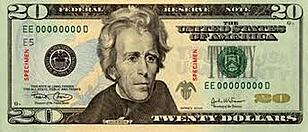
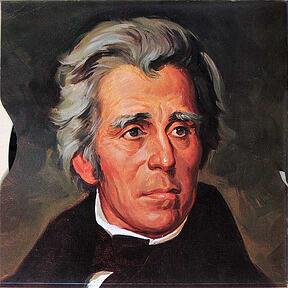
In the moral relativism of today's society, principles are sold out for pragmatism, making courageous stories like Andrew Jackson's as rare as gold-backed currency. Much could be learned by the study of Andrew Jackson's stand against the "moneyed-interest" drive to re-charter the Second National Bank. The following is a shortened account of this historic battle between the President Andrew Jackson of the United States of America versus President Nicholas Biddle of the Second National Bank.president07 Andrew Jackson 8x8 72

Jackson lived in the thriving American West, witnessing first hand the dire effects of inflationary banking policies in the western land prices. Jackson learned the salutary lesson of hard money (gold and silver coins) versus the prevalent paper based inflationary policies loved by bankers and wealthy merchants. Inflationary methods allowed banks to print paper, pretending the paper had value, even thought it wasn't backed by gold or silver. Without a check on the banks, like requiring banks to submit gold for paper dollars when requested, one can easily see how banks would fall into the trap of printing more paper than could possibly be redeemed on demand.

When Andrew Jackson was elected President of the United States, one of his missions was to end the syndicate of control over America's money supply by three power hungry groups: foreign interests, big business, and big politicians. Jackson believed that banks ought to run like any other businesses, having to sink or swim based upon their own business acumen, and needing reserves to secure their loans provided.

Nicholas Biddle was the president of the Second National Bank. The Second National Bank received the deposits of America, ensuring its solvency, and providing a special deal for the bank and its investors at the expense of other banks as well as the customers. When Jackson was elected president, Biddle was not alarmed with his rhetoric, having heard many politicians boast of drastic changes when entering office, only to conform into the system when elected. But Jackson's character was different; his campaign promises aligned with his actions after his election, necessitating a showdown between the President and the money interests behind the Bank.

Jackson shared his disdain for the Bank in his first Presidential message proclaiming, "Both the constitutionality and the expediency of the law creating this bank are well questioned by a large portion of our fellow citizens, and it must be admitted by all that it has failed in the great end of establishing an uniform and sound currency."

Biddle seemed unconcerned initially and responded to Jackson's message with cool indifference. He wrote of Jackson, "They should be treated as the honest though erroneous notions of one who intends well." Clearly, Biddle did not believe Jackson had the courage or fortitude to fight against the entrenched money-interests feeding off of America's body politic. However, once Biddle realized Jackson's earnest intentions to end the Bank's charter he quickly rallied his political supporters to his cause.

Using smear campaign practices similar to those used by today's politicians, as well as threats of calling all the loans currently out on the American people, Biddle ramped up intimidation against Jackson in the attempt to thwart his policies. Jackson was unmoved. And when a recharter bill for the bank that had passed in both houses was placed on his desk for approval right before his re-election, he courageously vetoed it, knowing that he couldn't go against his principles that a truly free society must be based on a sound monetary system.

Following through on the threat he had hoped would sway the President, Biddle launched a campaign of loan closures across America, causing financial panic among the state banks and business community. They were forced to either pay back their loans or collapse into insolvency. State banks and businesses screamed for relief, appealing to Jackson to end the war and submit to the Bank's recharter.

Jackson denounced the Bank's action to his cabinet. The numerous bank and business closings only steeled Jackson's resolve to end Biddle's undue influence in the American economy. Many state leaders, awakened by the inordinate power that the Bank held over the economy, began to recognize the truth of Jackson's veto claims. In truth, the President believed that any power capable of causing a panic of this magnitude was not healthy for the freedoms of the American people.

Biddle truly believed, that by causing harm and suffering in America, he could control the political leaders of our country. In hindsight, had it been any other President besides Jackson at this time, he would have been right. Jackson, however, stood his ground and eventually won the Bank war, despite receiving many battle scars along the way.

Jackson did not use his veto pen to get re-elected, he simply believed that fiat money was wrong for our country. The election result: he won by a landslide! He proved that a person with conviction and character can stand his ground and win, no matter the size of the forces aligned against him. Boldly, at one point in the battle, Jackson told his Vice-President Martin Van Buren, “The Bank is trying to kill me. But I will kill it." Jackson's example demonstrates a leader's powerful effect upon others. When a person has the courage to stand strong, he strengthens the spine of others who recognize the truthfulness of his fight between right and wrong.

Andrew Jackson was a man of strong convictions. He stood by his love of liberty even when it hurt him politically to do so. It takes courage to stand by one's convictions, especially when a person is offered peace and financial rewards to surrender them. Courage isn't the absence of fear; rather, it's the acknowledgment that one's principles are bigger than one's fears, regardless of the consequences.

$20 Bill

Courage, just like lack of courage, is contagious. Character is courage and integrity combined. Integrity is identifying what is right and courage is the ability to stand for truth even when it hurts. Jackson accomplished many things in his life, both militarily and politically. However, I believe his finest hours were in his courageous stand against the Second National Bank. May today's leaders learn similar courage in today's fight against tyranny.

Topics: Bank, Federal Reserve Bank, FDIC

Offensive Taxes

Posted by Wendell Brock, MBA, ChFC on Thu, Aug 14, 2014

Hardly anyone likes taxes, but some are more offensive than others. Here are three that are pretty big offenders. I don’t think folks mind paying some taxes, but it’s when it takes nearly five months of work to hit tax freedom day that it becomes a greater burden. Not to mention the waste that is found in government, so these three taxes can and ought to be fixed.

Alternative Minimum Tax - AMT

Once upon a time, Congress dreamed up the alternative minimum tax (AMT), which is an add-on to the “regular” federal income tax. The stated reason for the AMT was essentially to make sure that the rich who benefit from multiple federal income-tax breaks still have to pay at least something to the Treasury. Oddly enough, the rules for this tax were poorly crafted, thereby allowing for creative math to come into play, of course, erring on the side of the IRS.TaxReady

One can consider the AMT as a separate tax system. The AMT will affect certain types of income that are tax-free under the regular tax system, while not allowing some regular tax deductions. Also, the maximum AMT rate is “only” 28%, versus 39.6% under the regular tax system.

The most likely AMT victims are upper-middle-income individuals who pay relatively high state and local income and property taxes and have spouses and kids. The truly rich ($750,000+) are rarely affected, and this is for two reasons.

First: Their marginal regular federal income rate is 39.6%, while the maximum AMT rate is 28%. So the regular tax bill for a person with really high income will usually exceed the AMT bill. On the other hand, folks in the upper-middle-income zone may have enough regular tax deductions that they pay an average regular tax rate lower than the AMT rate. If so, they will get hit with the AMT.

Second: Many tax breaks for really high-income folks are already cut back under regular tax rules before they even get to the AMT calculation. For instance, the passive activity loss rules restrict tax benefits from traditional tax-shelter investments like rental real estate and limited partnerships. And if your income exceeds certain limits, you’ll run into phase-out rules that chip away or eliminate your personal and dependent exemption deductions, your biggest itemized deductions, and your tax credits. So you may have little or nothing left to lose under the AMT rules. In contrast, folks in the upper-middle-income zone often have lots to lose, such as significant deductions that are allowed for regular tax but disallowed under the AMT rules. As a result, they wind up owing the AMT.

You are allowed a relatively generous AMT exemption, which would be the equivalent to a deduction when calculating your AMT bill. But unfortunately, the exemption is phased out at higher income levels. If your AMT bill exceeds your regular tax bill, then of course you will owe the higher AMT amount.

Varying factors make it difficult to figure out who will be affected by the AMT and who won’t. But here are some general guidelines:

  • Your income is high enough ($250,000 or more) that a good part or all of your AMT exemption is phased out.
  • You have relatively hefty deductions for state and local income and property taxes under the regular tax rules (say, $20,000 or more). These deductions are not allowed under the AMT rules.
  • You have a spouse and several kids, which translates into four or more personal and dependent exemption deductions under regular tax rules. These deductions are not allowed under the AMT rules.
  • You exercised an in-the-money incentive stock option (ISO). The so-called bargain element (the difference between the market value of the shares on the exercise date and the ISO exercise price) does not count as income under the regular tax rules, but it counts as income under the AMT rules.
    • You have a significant deduction for home equity mortgage interest. Under the regular tax rules, you can deduct interest on up to $100,000 of home-equity loans. But under the AMT rules you can only deduct interest on loan balances of up to $100,000 that are used to acquire or improve a first or second residence.
    • You have write-offs for miscellaneous itemized deduction items (such as investment expenses and fees for tax advice and preparation) under regular tax rules. These deductions are disallowed under the AMT rules.

Social Security or FICA Tax

The second tax that has some serious flaws is the Social Security tax. It can be just as expensive as the federal income tax for many folks, especially self-employed individuals.

If you are an employee, your wages will be reduced by the 12.4% Social Security tax up to the annual wage ceiling. Half the Social Security tax bill (6.2%) is withheld from your paychecks. The other half (also 6.2%) is paid by your employer.

Unless you closely examine your pay stubs, you may be completely unaware of how much the Social Security tax is actually costing you. Potentially, a lot! The Social Security tax wage ceiling for 2014 is $117,000, and it will be even higher next year. If your wages meet or exceed the $117,000 ceiling for this year, the 2014 Social Security tax hit will be a whopping $14,508 (12.4% x $117,000).

If you are self-employed as a sole proprietor, partner, or limited liability corporation (LLC) member, you know the full cost of the Social Security tax all too well. That’s because you must pay the entire 12.4% rate out of your own pocket, via the self-employment tax.

But there is a disconnect between the Social Security tax and the benefits. While the Social Security tax ceiling increased by 2.9% from 2013 to 2014 (from $113,700 to $117,000), Social Security benefits only increased by 1.5%. This scenario has occurred routinely in the past few years, and they aren't stopping now! According to Social Security Administration projections, the Social Security tax ceiling in 2022 will be $165,600, which equates to a $20,534 Social Security tax bill (12.4% x $165,600). That is a hefty tax, especially considering it is in addition to regular income tax as well as all the other taxes!

Social Security Benefits Tax

And this leads us to the third unfair tax. When you start receiving Social Security benefits, you may be surprised to discover that between 50% and 85% of your payments get hit with federal income tax (the taxable percentage goes up with your income). Incredible, right?

As I just explained, you already paid Social Security tax years ago in the form of withholding from your wages or the self-employment tax. Plus, you already paid federal income tax on those Social Security taxes years ago, because they were included as part of your taxable salary or self-employment income. Now you are paying tax on the benefits too. That amounts to double taxation, or maybe even triple taxation depending on how you look at it. While retirees with very low income, less than $32,000 per year, won’t get taxed on their Social Security benefits, everybody else will take a hit.

Tell us what you think about these taxes are they a burden on your family? How would you solve the problem of these taxes?

Topics: Social Security, Alternative Minimum Tax, AMT, Social Security Benefits, income tax

Economic Bubbles and What to Do

Posted by Wendell Brock, MBA, ChFC on Fri, Aug 08, 2014

Is there any doubt that we are living in a bubble economy? At this moment in the United States we are simultaneously experiencing a stock market bubble, a government debt bubble, a corporate bond bubble, a bubble in San Francisco real estate, a farmland bubble, a derivatives bubble and a student loan debt bubble.

carbon bubble

Another very troubling bubble that is brewing is the massive bubble of consumer credit in the United States. According to the Wall Street Journal, consumer credit in the United States increased at a 7.4 percent annual rate in May. That might be okay if our paychecks were increasing at a 7.4% annual rate, but that is not the case at all. Instead, median household income in America has gone down for five years in a row.

This pattern of bubbles is not isolated to the United States alone. In fact, the total amount of government debt around the world has risen by about 40% just since the last recession. It is never sustainable when asset prices and debt levels increase much faster than the overall level of economic growth. At some point a massive correction will happen. History has shown us that all financial bubbles eventually burst.

You know that things are serious when even the New York Times starts pointing out financial bubbles everywhere. Their definition of a bubble is “when the price of everything blasts upwards, obliterating the previous ceilings of historical benchmarks, it's a pretty good indication that you're in a bubble.”

The bubbles in the financial markets have become so glaring that even the central bankers are starting to warn us about them. For example, just consider what the Bank for International Settlements is saying:

“There is a common element in all this. In no small measure, the causes of the post- crisis malaise are those of the crisis itself – they lie in a collective failure to get to grips with the financial cycle. Addressing this failure calls for adjustments to policy frameworks – fiscal, monetary and prudential – to ensure a more symmetrical response across booms and busts. And it calls for moving away from debt as the main engine of growth. Otherwise, the risk is that instability will entrench itself in the global economy and room for policy maneuver will run out.”

This is quite a harbinger coming from the BIS. As for the “room for policy measures running out,” according to Jim Rickards, author of Currency Wars and The Death of Money, the Fed has two options at this point, they can continue to taper off the mass printing of money, which he says will lead to another recession within this depression. Or if they don't continue to taper, perhaps have a pause in printing and they increase their asset purchases, then that will signal to the market that the Fed must keep on printing and it will trigger hyper-inflation. This will cause the dollar to collapse and gold prices to increase.

According to the minutes from the Fed's June 17-18 meeting, the Federal Reserve is leaning towards ending the economic stimulus in October. Fed policymakers have been tapering their government bond purchases in $10 billion increments at each meeting since December, cutting them to $35 billion a month from $85 billion. At that pace, the Fed would be buying $15 billion in Treasury bonds and mortgage-backed securities by its October meeting.

Yet while Fed officials are planning on halting the bond buying, closing out the program will have another side-effect. The bond purchases have held down long-term interest rates for several years, spurring purchases of homes and factory equipment. The Fed has been planning on increasing the interest rates sometime in 2015, after all, they can't stay suppressed forever.

With all the bubbles that are out there, what will happen once the interest rates increase?

Is this sustainable?

Of course not.

None of these financial bubbles are.

So, what to do?

Now is a good time to be considering other options such as precious metals. Precious metals have always been an important part of a well-rounded portfolio. But with all the economic uncertainty out there, many people are beginning to insist on having some sort of precious metal not just in their portfolio, but in their hands. There are even a few states who have recently voted to accept gold and silver as legal tender. There is a reason why these precious metals have been the currency standard since Biblical times. In short, they don't lose their value.gold vs silver

There are many naysayers out there arguing that buying gold and silver is a foolish investment. Perhaps as an investment, they are right. But as a type of insurance against the consequences of the monetary manipulations and bubbles that are within our economy, maybe having some gold or silver in your hands becomes wisdom. How much to have dependes on your personal situation, 

We really don't know what the economy will look like in the next few years. We can look at history to see what typically happens when this type of mix of bubbles and monetary manipulation come in to play. We would be foolish to think that the results that happened then could never happen to us. Common sense tells us to be prepared. What does being prepared look like for you? I believe it is far easier to be prepared than to try and predict the future.

Topics: Economy, Gold, Precious Metals, Silver, Economic Bubbles

Social Security; The Qualitative Dimension

Posted by Wendell Brock, MBA, ChFC on Fri, Aug 01, 2014

Last week I discussed some of the factors that go into the decision about when to take Social Security. The discussion was primarily based on working the numbers and coming to the basic conclusion that it is an entirely individual choice based on one's financial situation. This week I want to add to this discussion some of the qualitative aspects of life that should not be neglected when making such a decision.

To give an example of what I have in mind for this discussion, consider some of these questions: Will I be better able to do some of the things I have always wanted to do if I take Social Security earlier rather than later? If I wait on taking Social Security will I have the stamina, interest and motivation to do the things I want to do now, later in life?

Last week I showed that the payout is often larger by waiting a few years to take Social Security, however, will waiting enhance the quality of your life? Would you be wiser to take it at a younger age and use the lesser amount to fund some of the life experiences (travel, toys, etc.) that you may not have the stamina or interest to pursue later in life?

The US Travel Association reports that the average age of leisure travelers is 47.5 years old. Mature travelers comprise 36 percent of leisure travel volume (18% are 65+, 18% are 55-64). Nearly two in ten (19%) are 45-55, 17% are 35-44, 20% are 25-34 and 8% are 18-24 years old. I give this statistic because many people dream of traveling once they retire. The majority of travelers- 36%- are over age 55. Will you have the money and the stamina to fulfill your travel dreams? Would the decision to take Social Security earlier help you reach that goal?

The American Psychological Association reports that a number of physical changes occur as adults reach age 65. The most common are listed below.

  • Hearing impairment among older adults is often moderate or mild, yet it is widespread; 48 percent of men and 37 percent of women over age 75 experience hearing difficulties.
  • Visual changes among aging adults include problems with reading speed, seeing in dim light, reading small print, and locating objects.
  • The amount of time it takes to respond to features in the environment once they are detected is typically slower among older adults.
  • The proportion of older adults needing assistance with everyday activities increases with age. Nine percent of those between ages 65 and 69 need personal assistance, while up to 50 percent of older Americans over 85 need assistance with everyday activities.
  • The top five causes of death among older adults are heart disease, cancer, cerebrovascular disease (relating to the blood vessels that supply the brain), pneumonia and flu, and chronic obstructive pulmonary disease. In spite of a decline in physical health, two-thirds of older adults who are not living in institutions (such as nursing homes) report their health to be good, very good, or excellent compared with others their age. What's important to remember about people over age 65 is that while many begin to experience some physical limitations, they learn to live with them and lead happy and productive lives.

These statistics can help us factor in the very real changes in health that we experience as we age. Not that everyone will experience some or all of these health challenges, but to simply acknowledge that the older we get, the more physical limitations we can expect. What do you want to do with your life before physical limitations set in that would thwart your dreams?

The point is that there is a qualitative dimension to this choice that is often overlooked or ambiguously lumped in the statement of 'individual choice'. People often forget to take into consideration the aging process with its diminished energy and somewhat constricted abilities, and therefore run the risk of not achieving their dreams and dying with a pot full of money. Abraham Maslow once commented that you can pay too much for money.

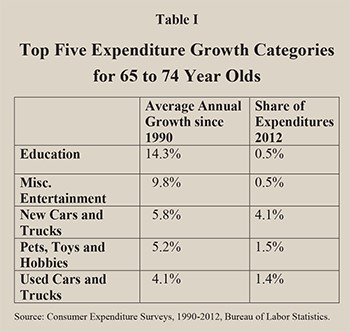
In researching for this article, I wondered, how are seniors spending their money? Below is a chart showing the top five areas that seniors are spending their money. It may surprise you to see education listed. This is typically due to either contributions to a grandchild’s college fund or else paying off college loans that were co-signed by the seniors.

Age Stats 1

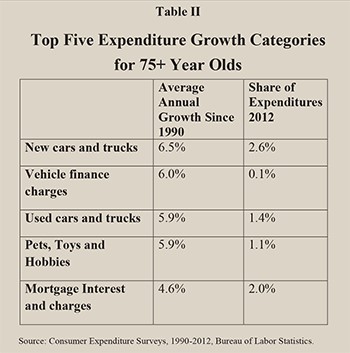
Now see how those expenditures change as seniors age past 75.

Age Stats 2

Seniors spending reflects their hobbies. For 65 to 74 year-olds, for instance, notice that two of the top five fastest-growing expenditure categories are miscellaneous entertainment, which includes exercise equipment, photography equipment, campers, boats and other motorized recreational vehicles, and electronics; and pets and hobbies, which not only includes expenses for pets and pet supplies, but also toys, games, tricycles and playground equipment.

The Baby Boomers are far more active than their parents were. They have traveled more places, participated in more sports, and likely climbed more mountains. All resulting in an active lifestyle, that will be interesting to watch as they continue to age; how and when will they start to slow down?

According to the Bureau of Labor Statistics, the number of seniors age 75 and older are around 12,147,000 with a mean after-tax income of about $34,245 and a mean expenditure of $34,395.

One more thing that is noteworthy to mention is that 25 years ago, the credit card debt of seniors was negligible, and now it is around $5000 for seniors aged 75 years or older. I hope these statistics give you an idea of how to plan for your senior years. It isn't just about the numbers, but it is very much about the quality of life you want to maintain during those years.

I would like to share the story of a dying 85 year old man imagining how he would've lived his life differently if given the chance. It is found in the book Living, Loving & Learning by Leo Buscaglia, who discovered it in a journal of humanistic psychology.

He says, "If I had my life to live over again, I'd try to make more mistakes next time. I wouldn't try to be so perfect. I would relax more. I'd limber up. I'd be sillier than I've been on this trip. In fact, I know very few things that I would take so seriously, I'd be crazier. I'd be less hygienic. I'd take more chances, I'd take more trips, I'd climb more mountains, I'd swim more rivers, I'd watch more sunsets, I'd go more places I've never been to. I'd eat more ice cream and fewer beans. I'd have more actual troubles and fewer imaginary ones.

You see I was one of those people who lived prophylactically and sensibly and sanely hour after hour and day after day. Oh, I've had my moments, and if I had it to do all over again, I'd have more of those moments. In fact, I'd try to have nothing but beautiful moments- moment by moment by moment.

I've been one of those people who never went anywhere without a thermometer, a hot water bottle, a gargle, a raincoat, and a parachute. If I had to do it all over again, I'd travel lighter next time. If I had to do it all over again, I'd start barefoot earlier in the spring and stay that way later in the fall. I'd ride more merry-go-rounds, I'd watch more sunrises, and I'd play with more children, if I had my life to live over again. But you see, I don't."

The bottom line is that as we age, we may not want to travel as much, go out to the movies as much, or visit great grand-children who may be graduating from Kindergarten (as important as that may be). We may simply choose to stay closer to home and do less, simply because our perceived needs are changing and we discover that we want less. While this may be the case, and it is hard to predict, exactly how we will live at that age, choose to be happy with what you have. Manage your affairs so that when you do take Social Security it works for you and your life style, not just by the numbers. 

Topics: retirement, Social Security, Baby Boomers

120514_WWBrock_1

Wendell W. Brock, MBA, ChFC

Subscribe by Email

Follow Me

Most Popular Posts

Other Sites I Follow, hobbies, fun and info:

gold-vs-silver-1.jpg  Nauvoo Mint brokerage services for precious metals


john Mauldin chair

Note:

Outside Economics is not a registered investment advisory firm (RIA) and does not act as an RIA. Outside Economics does not provide any specific investment advice. Any information obtained from this website or through one of  Outside Economics' representatives should be reviewed by a professional.

Subscribers Note: We do not sell our email list. Period. Thank you for subscribing.

Recent Posts