Outside Economics

Must Read for People Who Have Bank Accounts

Posted by Wendell Brock, MBA, ChFC on Fri, Apr 15, 2016

The great recession has left its mark on many of us in so many ways it is hard to understand them all - perhaps similar for generations before with the Great Depression. One major mark is in banking. The Great Depression produced the FDIC which insured customer deposits and help provide a level of financial security to the banking system. Now Europe and the E.U. has lead the way with a “bail-in” concept where depositor bank accounts are used to shore up the troubled bank, thus taking the tax payers off the hook for failed banks. 

This week Austria put this to the test. Hypo Alpe Adria (HETA) collapsed under the weight of bad loans. The bank is located in the Province of Cimages.jpgarinthia, which has mostly controlled the bank for the past year, when it first started having problems. In taking on the obligation of this bank Carinthia is worried that it may cause the Province to file for bankruptcy as well.
The Austrian Financial Market Authority (FMA) in its role as the resolution authority for failed banks has issued the key features for the steps to resolution. The Bank Recovery and Resolution Act (BaSAG) outlines how the issues surrounding failed banks are to be resolved. The most significant are:

  • A 100% bail-in for all subordinated liabilities,
  • A 53.98% bail-in, resulting in a 46.02% quota for all eligible preferential liabilities,
  • The cancellation of all interest payments from 1 March 2015, when HETA was placed into resolution pursuant to BaSAG
  • As well as a harmonization of the maturities of all eligible liabilities to 31 December 2023.

Subordinated liabilities is simply another term for depositor’s money in the bank. In the typical banking arrangement the bank’s assets are the loans on the books, while their creditors are all the depositors. The exact opposite of personal or business finance, where loans are liabilities and cash deposits are part of their assets. 

This sort of “bail-in” can cause a lot of panic in finance world, simply because people losing their deposits can demonstrate some serious concerns about how well a bank is operated. Clearly an uncharted path. Some concerns exist over the legal as well as the practical aspects of the “bail-in” concept. This makes the creditors of the bank more responsible for how the bank is run. If there appears to be any problems creditors simply will not lend money to a bank or if they do they will demand a much higher risk premium. This will of course raise interest rates for everyone.

Corinthia attempted to remove the guarantees by purchasing the bonds at a discount from the bond holders, primarily Commerzbank, AG and Pacific Investment Management Co., (PIMCO), who rejected this offer last month. The creditors are demanding that Austria pay up if Carinthia cannot pay. In either case the depositor’s monies are gone.

This rule was put into place after the Great Recession to help relieve the burden on the tax payers for bailing out banks. The results are yet to be determined, but like every regulation there are unintended consequences. Some of those consequences maybe, higher interest rates, depositors being extra cautious where they deposit their paychecks, fewer loans made to small or medium size businesses, bankers will be unwilling to take risks with business owners on such loans. 


In The United States

You maybe asking yourself why does this bank in Austria matter to me? Here is the short answer; the United States banking regulators have adopted a similar rule. When a bank fails the regulators can force a bail-in of depositors monies to right the ship. Many people do not realize or understand that this can and most likely will wash up on the shores of America as soon as we have another major financial melt-down. Watching how this precedent action plays out may be an example of how it will work here in the States. 

I am clearly not suggesting that you take your money out of the banking system and hide it under your mattress, that would be foolish. Also I think that U.S. banks operate with safety and soundness regulations that help protect depositors money. This maybe one reason why gold and silver has shot up in price this past week. People still perceive precious metals as a safe haven for currency problems. 
Sources: Bloomberg, Financial Times, Superstation95
 
Remember:
People should be more concerned with the return of their principal than the return on their principal.
-- Will Rogers
 

Topics: Precious Metals, banks, failed banks, Currency, Gold and Silver

What's Up - Quarterly Economic Update

Posted by Wendell Brock, MBA, ChFC on Fri, Apr 08, 2016

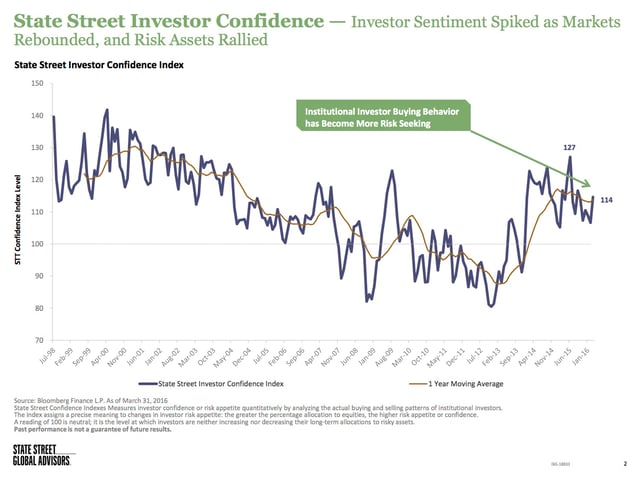
Equity markets rebounded in March as rate hike fears eased and healthy domestic economic data revealed consistent conditions, resulting in a resounding turnaround from the market lows experienced in February. Market volatility appears to be mellowing compared to a year ago (except for oil). “With Volatility trending lower assets further out on the risk spectrum, such as Emerging Markets, Small Caps, and High Yield rallied.”SSGA-SPDR-ETFs--April-2016.jpg

This first quarter has seen a healthy run up in the prices of gold and silver, however the returns are fading as profit takers sell off. Some of the reason for the price moves, poor stock market return, fears about interest rate hikes, on going inflation worries and currency weakness. Some analysts believe that gold will drop back to support level of about $1,150 per ounce by third quarter; while Credit Suisse has increased its forecast for first quarter 2017 to $1,313 per ounce and Silver to $16.50 per ounce. Whom ever you believe it appears that at current prices gold and silly er are still pretty good buys. 

The concern of a rapid rate increase by the Federal Reserve subsided towards the end of the 1st quarter, as Fed Chairperson Janet Yellen helped tame prior remarks made by fellow Federal Reserve members. Subdued inflation and economic growth expectations led the Fed to curtail its stance on predetermined rate hikes. The Fed identified “global economic and financial developments continue to pose risks”.

Labor Department data released for the first week in March showed that merely 253,000 Americans filed for unemployment, the fewest number since 1973. Economists view the lessening amount of unemployment applicants as a validation that the labor market continues to steadily strengthen.

Additionally, the Labor Department’s monthly employment report for March showed a 215,000 increase in jobs, with an increase in the unemployment rate to 5% from 4.9%, signaling that more people have entered the labor force.

Some analysts believe that oil may have found a bottom around $26 per barrel in the first quarter, alleviating fears of a further oil price drop. Oil prices recovered in March from persistent lows earlier in the year. This recovery will help strengthen the economy - a fair balance in oil prices will only help keep things moving.

Easing rate hike concerns led to the dollar’s derailment from its uptrend during the quarter, creating opportunities for additional exports, as American made products become less expensive for international buyers.

A new acronym arose from international central banks lowering rates to negative territories, NIPR (Negative Interest Rate Policy). The Bank of Japan adopted negative interest rates in January and lowered key lending rates to below 0%, nearly a year and a half after the European Central Bank became the first major institution of its kind to venture below zero. Other countries meandering into the negative arena include Switzerland, Denmark and Sweden.

The ECB ramped up its economic stimulus efforts in Europe by increasing its bond purchases from 60 billion euros to 80 billion euros per month. In addition, the central bank will be buying both government bonds and investment grade corporate bonds. Markets welcomed the strategy of venturing into the corporate realm, sending bond prices higher due to a limited supply of the debt.

The economy continues to worry many people, I see many people who have just been laid off from their job, which is a very big concern. This gives rise to worries about a future recession - some analysts talk that we are long over due, others say that we have not fully recovered from the last "Great Recession". Personally, I think while the technical definition of a recession ended in 2009, we have not fully recovered. For many people it certainly does not feel like it has ended, as they are not any better off. They feel like they are still treading water. However I don't see the U.S. slipping into a recession until after the presidential election this fall, so maybe in the first half of 2017.

Sources: Fed, Dept. of Labor, Eurostat, ECB, Dept. of Energy, State Street Global Advisors

 
REMEMBER:
 
"The three "R's" of choice: the Right of choice; the Responsibility of choice; and the Results of choice." - Thomas S. Monson

Topics: Economy, Oil, Gold and Silver, Equity Markets

Unintended Consequenses of Negative Interest Rates

Posted by Wendell Brock, MBA, ChFC on Thu, Mar 31, 2016

Europe & Japan

With interest rates plunging throughout the European Union and in Japan, demand for large denominated bills has risen over the past few months, as investors and individuals are finding storing wealth in stable currencies is better than paying central banks (or receiving a negative yield) to hold those same assets.

EU.jpgThe negative yields orchestrated by the ECB in Europe and the Bank of Japan have both caused unintended consequences. Many believe that rather than seeing an increase in lending by financial institutions and spending by consumers because of lower rates, less money is actually exchanging hands resulting in less economic activity. World trade shrank 13.8% in 2015, as tracked by the Netherlands Bureau of Economic Policy Analysis World Trade Monitor.
Government bond yields in Europe and Japan dropped into negative territory in February, with the German 2-year bond at -0.53%, and the Swiss 10-year bond at 0.4%. Japan sold 10-year bonds with a negative yield for the first time ever on February 29th. The $19.5 billion worth of bonds were priced with a yield of -0.024%.

In particular demand were U.S. 100 dollar bills, which are plentiful worldwide and easily traded. See What Raising the Fed Funds Rate Really Means for info about interest rates in the United States.  Demand for Bank of Japan notes ranging from 1,000 yen to 10,000 yen denominations each increased as rates fell below zero in Japan. Swiss 100 to 1,000 franc bills also experienced an increase in demand as yields throughout Europe fell.

At odds with the rest of Europe is Britain, whose consideration of exiting the EU has led to an increase in British government bonds.

Britain

The possibility of Britain’s exit from the European Union (EU) has sent the British pound lower, making it the worst performing currency of a developed nation versus the dollar year to date. The pound fell below 1.40 versus the dollar in February, raising fears of inflation as British consumers buy plenty of imported goods, subject to higher prices as the pound is able to buy less because its devaluation. Britain has been an integral component of the 28 nation EU for four decades.

Economists and analysts are closely watching the direction of the pound as it could possibly affect surrounding European countries and pose a risk to further fragmentation of the European Union.

Moody’s rating agency expressed concern that Britain’s exit from the EU might hinder its credit rating, thus increasing the country’s cost to borrow money.

The yield on the gilt, Britain’s 10-year government bond, rose to 1.45% in late February, as bonds were sold in anticipation of higher rates should an exit of the EU occur.

Considering that Britain has been part of the EU for so long – does anyone really think they will leave? Their fight may not necessarily be economic as it is the laws that the EU passes that have implications with their British businesses and their citizens that go against the grain in Britain. I think they are finding it hard to be a state, as we are in the U.S., and have a federal government/judiciary pass laws that don’t make sense and tell you what you have to do, chipping away at their rights!

Sources: ECB, BOJ, Fed, Netherlands Bureau of Economic Policy, EuroStat, Bloomberg, Reuters, Moody’s

REMEMBER

"Shaping your role in an organization is at the source of taking control of your career." - Make It Work, Joe Frodsham and Bill Gargiulo


Topics: European Union, currencies, Britain, Japan

Around the Economics World in One Page

Posted by Wendell Brock, MBA, ChFC on Fri, Mar 25, 2016

The old saying, "its a small world", has become a reality in the world of economics. The economies of the the many nations around the globe have really become so intertwined, its like your kid bringing home the flu from school to share with the rest of the family. When one economy has difficulty or success the rest of the world follow right along. Here is a brief update on some of the larger players around the globe. Global_Economic-1.jpg

Japan’s inflation rate is essentially zero as the country’s Ministry of Internal Affairs & Communications reported in late February. Over the past year, Japan has seen its prices barely move up by 0.1%, reflecting sluggish consumer demand and lack of confidence among Japanese. 

The International Monetary Fund (IMF) reported that the world economy is highly vulnerable due to a weakening global economy, depressed oil prices, and geopolitical conflicts. The IMF also released a report detailing its projections for growth, identifying India as the new growth engine of the emerging markets. China’s slowdown over the past two years has been a concern.

India’s growth has been terrific, however it poses the concern is it following in the path of China with rapid growth for several years then a long lasting slow down. Currently their GDP is up 1.7 percent and their unemployment rate is 4.9 percent with a healthy 5.18 percent inflation. 

Dropping government bond yields in Europe are being seen as deflationary as the European Central Bank (ECB) strives to stimulate economic growth, but with minimal benefits thus far. Britain’s consideration to exit the European Union (EU) has brought about uncertainty in Europe until a vote in June.

In recent days the dollar has climbed higher against other international currencies as comments have emerged from the Fed about a possible rate hike in April. Even though there is some weakness in the U.S. economy a small rate hike would certainly bring more money into the U.S. as other nations are seeing, in some cases, negative rates.

This month the U.S. Unemployment Rate dropped to 4.9 percent and the inflation rate leveled at 1.0 percent, with interest rates at 0.5 percent. The concern is how much the 1.4 percent GDP would be hurt if rates were increased.

Brazil’s economy is still struggling, the jobless rate has hit a 7-Year high at 7.9 percent, with projections for higher unemployment the rest of the year. While their inflation rate has slowed to a 10.4 percent, their GDP has continued to contract for the past four quarters. 

Each of these economies impact what happens here in the United States. It is amazing how inter-connected we have become over the past 200+ years. What we do also greatly impacts the other countries of the world. Our national debt for example is a huge concern, but that will have to wait for another article. 

Gladly Keeping you up to date,

Wendell Brock

Sources: ECB, EuroStat, Market Watch, Bank of Japan, IMF


Remember:

"Socialism is a philosophy of failure, the creed of ignorance, and the gospel of envy. Its inherent virtue is equal sharing of misery." - Winston Churchill

Here’s the Bounce – Is Oil At The Bottom?

Posted by Wendell Brock, MBA, ChFC on Fri, Mar 18, 2016

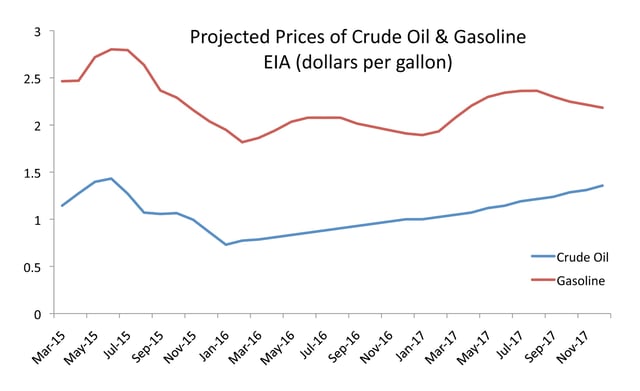
Each month, the Energy Information Agency (EIA) tracks the price of gasoline nationwide as well as how much households (consumers) are buying overall.

The EIA expects gasoline prices to start rising this year, while continuing to head higher into 2017 as demand picks up and supply levels drop. Gasoline prices had been falling because of lower crude oil prices, which account for about two-thirds of the price U.S. drivers pay for a gallon of gasoline.Oil-Gas-Projections.jpg

Increases in fuel economy are also contributing to lower fuel expenditures, as cars and trucks are more efficient and travel farther on a gallon of gasoline. According to the Environmental Protection Agency, the production-weighted fuel economy of cars has increased from 23.1 miles per gallon for 2005 cars to almost 28 mpg for 2014 cars, an increase of over 20%. Similarly, the fuel economy for trucks has increased 19%, from 16.9 mpg to 20.1 mpg in the same timeframe.

The Consumer Price Index (CPI), a statistical measure of inflation, has gasoline accounting for 5.1% of consumer spending as of October 2014. Reductions in gasoline prices ultimately impact the relative weight of gasoline compared to other expenditures such as shelter, clothing, food, and entertainment in price indices compiled by the Bureau of Labor Statistics (BLS) and the Bureau of Economic Analysis.

The demand for gasoline is very price inelastic over short time periods, meaning changes in price have little impact on the number of gallons used. Falling gasoline prices allow households to spend their income on other goods and services, pay down debt, and/or increase savings. However, the longer prices remain low, the more time households have to plan for driving vacations and decide on where to spend their excess money.

Sources: EIA, Commerce Dept., BLS, EPA


Remember:

"If you can't make them see the light, make them feel the heat." - Ronald Reagan


Topics: Economy, Oil, Households, Consumers

Wait if You Can - Savings Coming

Posted by Wendell Brock, MBA, ChFC on Thu, Mar 10, 2016

Two weeks ago I went and purchased a bunch of stamps and commented to the lady serving me at the counter, that postage prices just went up in January and I missed buying some stamps at the lower price… She explained that the price increase was just for packages, not stamps and that the price of stamps was staying the same!  Well hold on, now we have this announcement from the Post Office:

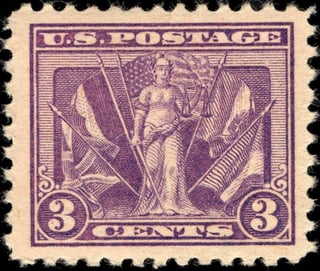
For the first time in 97 years, the U.S. Postal Service is lowering the price on first class postage. Effective April 10th, a first class stamp will cost 47 cents, down from 49 cents. The last postal price drop was in 1919 when a first class stamp dropped from 3 cents to 2 cents. (Image at right is the World War I Victory Stamp printed in 1919.)Victory_and_flags_1919_U.S._stamp.1.jpg

The price reduction is part of a prearranged agreement with Congress when the USPS was allowed to increase the price of stamps by three cents in 2014 in order to stem a dramatic loss in revenue. The price hike was set to last for only two years, allowing the USPS to raise over $4.6 billion in revenue. Stamp prices may still increase as inflation picks up, since postage is pegged to inflation.

Optimistically for the USPS, the advent of internet sales has spurred a growth in package shipments over the past few years. Standard mail, such as first class letters and postcards, represent 76% of postal revenue.

Other postage dropping in price on April 10th includes postcards, from 35 cents to 34 cents, and international stamps from $1.20 to $1.15.

By the above numbers the average American uses nearly 350 stamps per year or a savings of only $7. For the typical consumer that uses a few stamps here and there its not a big deal, but for the small to large businesses that relies on the mail service and uses thousands of stamps a month this will add up. The savings can be quite large for these businesses.

Unfortunately for those who so far have purchased countless types of Forever stamps with an array of pricing, colors and themes, new purchases at the new “Forever” price will have to be made while putting aside all others priced above until the (not-so) Forever stamp is again at least 49 cents.

This will most likely be a temporary price reduction as the Post Office is always in need of funds, I would expect by the end of the year they are back in front of Congress looking for a price increase. (Now the Post Office won’t have the $4.6 billion they raised from the last price increase.) If you can wait to buy your next order of stamps do so, saving a little money and stock up!

Sources: USPS


Remember:

"The quality of a person's life is in direct proportion to their commitment to excellence, regardless of their chosen field of endeavor."  -- Vince Lombardi


Topics: Savings, Postage

Act Now to Maximize Your Social Security Benefits - Changes Made

Posted by Wendell Brock, MBA, ChFC on Fri, Mar 04, 2016

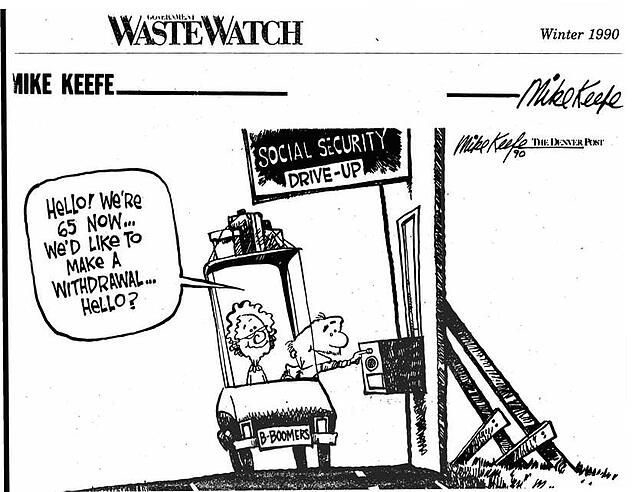
Deciding when to start taking Social Security benefits can have a tremendous impact on the amount of lifetime benefits you may receive.  Furthermore, the Bipartisan Budget Act of 2015 recently signed into law may impact your Social Security income and increase your retirement health care expenses. 

Fortunately, the software we use has been adjusted to reflect the changes made with the law and can help you assess its impact on your projected retirement budget.

Aside from providing no 2016 Cost Of Living Adjustments (COLAs), Social Security will also significantly limit the benefits from one claiming option (File and Suspend) and eliminate another (File Restricted).   

Social_Security_Cartoon_25A.jpg


Under the new legislation, those who file and then suspend benefits will no longer be able to allow a spouse or dependent(s) to collect a percentage of their Social Security benefits.  But, qualifying Americans can still employ this strategy until April 30, 2016.

The File Restricted option, which allows an individual to earn income based on the spouse’s record – then later file for benefits with accrued income credits, will be eliminated for anyone who has not reached 62 by the end of 2015.

There are also changes coming to Medicare, including new annual premium surcharges and a 14.4% increase to Medicare premiums for individuals who earn over $85,000 per year (and couples who earn over $170,000). 

These are complex issues.  Let me help simplify them.

As your financial professional, I am looking forward to working with you as you take control of your income, focus on managing your health care expenses, and strive to improve your financial stability in retirement.

Schedule your no cost or obligation analysis today and when we meet, you will receive a comprehensive Social Security report detailing a claiming strategy designed specifically for you.

I shared this with a client recently and she was amazed at the clarity it provided her in making the important decision on when to take her Social Security benefits and how much more she would receive - for her it was a great blessing. Your time will be well spent in learning about these changes and receiving the FREE Analysis Package.


REMEMBER:

"If you have enemies? Good. That means you have stood up for something, sometime in your life."  - Winston Churchill

Topics: Social Security, Social Security Benefits

What's-up with Iran?

Posted by Wendell Brock, MBA, ChFC on Fri, Feb 26, 2016

A few interesting facts about Iran will help put some perspective on the current status of the world economy. Iran is a country that is rich in other natural resources besides oil and they have a history of being an economic powerhouse in the Middle East region.  It will be interesting to watch how they play their new part on the world stage.

Sanctions imposed on Iran years ago were lifted in January thus allowing Iran to once again export and compete in the global economy. At the height of the sanctions, Iran saw their currency, the rial, collapse by over 80%, sending food and basic product prices to hyperinflation levels.Iran-flagmap.png

Iran has an abundance of natural resources it plans to export, including zinc, copper, iron ore, and oil. Iran’s announcement that it will begin adding another 500,000 daily barrels of oil to world oil markets helped sink oil prices further in January as an oversupply issue was magnified by Iran’s new production.

Iran is already the world’s third largest exporter of steel. Iran also has about 18% of the world’s natural gas reserves. Iran was also the first country in the Middle East to discover oil in 1902. It is estimated that Iran has proven oil reserves of 157 billion barrels, representing about 9% of the world’s proven reserves. This is a sore fact for Saudi Arabia, which is a vehement rival to Iran, both financially and religiously.

Demographically, Iran has a young and highly educated population, adding to its vitality and stockpile of a talented labor force. Some economists have identified Iran with Germany, calling it the “Germany of the Middle East”. If this is true then Iran can rise from the ashes and become a real economic powerhouse like Germany has post WWII. However because Iran still lacks the God given human rights, as many nations in the free world have, similar to our Bill of Rights, that are part of the U.S. Constitution, they will never mature to the same status as Germany has, never mind their oil.

Sources: CIA Factbook, IEA, Eurostat


Remember

"Vision with out work is daydreaming. Work without vision is drudgery. Vision, coupled with work, will ensure your success." - Thomas S. Monson


Topics: Oil, Iran, Natural Resources

6 Things You Must Know About Long-term Care Insurance

Posted by Wendell Brock, MBA, ChFC on Wed, Feb 17, 2016

Long-term care (LTC) insurance allows people to pay a known premium to help protect against the risk of much larger out-of-pocket expenses down the road. This article will help you understand some of the things to consider when purchasing an LTC polciy.

Taxation

When considering policy taxation, there are two general types of long term care policies, they are:

long term care insurance1
  • Tax qualified (TQ) policies which are the most common policies offered. As per HIPPA, a TQ policy requires that a person 1) be expected to require care for at least 90 days, and be unable to perform 2 or more activities of daily living (eating, dressing, bathing, transferring, toileting, maintaining continence) without substantial assistance (hands on or standby); or 2) for at least 90 days, need substantial assistance due to a severe cognitive impairment. In either case a doctor must provide a plan of care. Benefits from a TQ policy are non-taxable.
  • Non-tax qualified (NTQ) which was formerly called traditional long term care insurance. It often includes a "trigger" called a "medical necessity" trigger. This means that the patient's own doctor, or that doctor in conjunction with someone from the insurance company, can state that the patient needs care for any medical reason and the policy will pay. NTQ policies may include walking as an activity of daily living and usually only require the inability to perform 1 or more activity of daily living. The Treasury Department has not clarified the status of benefits received under a non-qualified long-term care insurance plan. Therefore, the taxation of these benefits is open to further interpretation. This means that it is possible that individuals who receive benefits under a non-qualified long-term care insurance policy may risk facing a large tax bill for these benefits.

Fewer non-tax qualified policies are available for sale. One reason is that consumers want to be eligible for the tax deductions available when buying a tax-qualified policy. The tax issues can be more complex than the issue of deductions alone, and it is advisable to seek good counsel on all the pros and cons of a tax-qualified policy versus a non-tax-qualified policy, since the benefit triggers on a good non-tax-qualified policy are better.

Most benefits are paid on a reimbursement basis and a few companies offer per-diem benefits at a higher rate. Most policies cover care only in the continental United States. Policies that cover care in select foreign countries usually only cover nursing care and do so at a rated benefit.

Partnership Plans and Medicaid

The Deficit Reduction Act of 2005 makes Partnership plans available to all states, although not all states participate in this program. Partnership plans provide “lifetime asset protection" from the Medicaid spend-down requirement.

In return for purchasing partnership policies, a portion of a policyholders’ assets will be disregarded when determining their eligibility for Medicaid long-term care services, if and when they apply for such services. Traditionally, to be eligible for Medicaid, applicants’ assets cannot exceed certain financial eligibility thresholds.

When applying for Medicaid long-term care benefits, the Partnership program allows individuals who purchase qualifying insurance policies to retain one dollar in assets for each dollar of long-term care insurance benefits paid by the policy. For example, the typical asset limit for an individual applying for Medicaid nursing home services is $2,000. If an applicant received $100,000 in benefits through a partnership program insurance policy, they may retain up to $102,000 in assets.

Deductibles

Most policies have an elimination period or waiting period similar to a deductible. This is the period of time that you pay for care before your benefits are paid. Elimination days may be from 20 to 120 days. The longer the elimination period the lower the premium.  Some policies require that the policy for long-term care be paid up to one year before becoming eligible to collect benefits.

What About Inflation

Because the daily or monthly benefit amount you buy today may not be enough to cover higher costs years from now, most policies give you the option of adding an inflation protection feature, for an additional premium cost. With automatic inflation protection, the initial benefit amount increases automatically each year at a specified rate, such as 3%.

Another form of inflation protection is the guaranteed purchase option. This gives you the option of increasing your benefit amount and your premium every few years. Policies without inflation protection cost less, but their benefit amounts do not increase and may be inadequate if you need long-term care many years from now.

Nonforfeiture Option

Some people feel that if they pay premiums on an insurance policy for years but later drop the policy, they should receive some payment. A policy with nonforfeiture provision does this. Most companies offer nonforfeiture options on long-term care policies. However, that can add from 20% - 100% to the cost of the premium.

Asset Based Policies

Other LTC policies are “asset based” meaning that they are based on an annuity, or a cash value life insurance policy. The benefit of these types of policies are the favorable underwriting, which is a blend of LTC and life insurance underwriting, giving people who may not qualify for one specific type of policy, be able to get a policy this way. Or LTC and annuity underwriting again may provide a benefit to the insured.

An example is a person who for one health reason, like diabetes who was turned down for regular LTC insurance, may be able to obtain a policy via an asset based policy.

This can also provide additional stability for other investments. A fixed annuity provides a solid fixed rate of return, even at three percent, it is much higher than zero! Also with the right annuity you may be able to withdraw money income tax free when those funds are used for qualified long-term care expenses.

A problem with long-term care insurance is that statistically 30 percent of people don’t end up using it and they feel like they have wasted all those expensive premiums. So the asset based policy solves this problem, it is not a “use it or lose it” policy. If you use it for long-term care great, if not then it is left to your heirs as part of your estate plan, either way the policy is preserving your estate. If the policy holder decides to cash it in then they can do that also, in some cases getting more than what they put in the policy.

Because long-term care policies are purchased by more people at or near retirement in preparation for what may happen in near the end of life. The question is this; is your retirement plan complete without some sort of long-term care plan in place? For most Americans, 93% of them, older than 60 years old, the answer is NO. And then for those who are younger than 60 what about your parents? What do they have in place? If they have nothing, will they be moving in with you? If you have questions about who needs long-term care insurance read Who Needs Long-Term Care Insurance.

Remember:

It's been said, "It isn't happy people who are grateful, it is grateful people who are happy!"

Topics: retirement, Long term care, LTC, LTC insurance, retirement planning

Now What’s Floating to the Top: Oil, Gold, Equities, or Bonds

Posted by Wendell Brock, MBA, ChFC on Thu, Feb 11, 2016

Talk is, that one of the reasons the market is falling right now is because it was overpriced, which may be the case, however another part of the problem has been that when considering options, where else can you put your money?

Banks aren’t much of an option – at the continuously low rates it makes it pretty painful to leave money there. At least when rates were higher and a depositor could get 4%-6% at a bank you had a fairly good risk free option. Too much cash on the sidelines will certainly cause the market to be bid up. Maybe it’s an issue of supply and demand – there aren’t enough shares to go around, so the prices get bid up.Oil_gold.jpg

Insurance companies, which are very long-term investors, are currently running about 2-4X or more the rate banks are offering. These rates are certainly going to help folks get better returns, with little to no risk. But when chasing performance even those stable rates don’t appeal to everyone. So this week I thought we would look at one reason why the market has tanked over the past several weeks, and consider the option of putting more money in the market – after many of the stocks and bonds are clearly on sale!

Below is a look at why the markets are falling, what is up with bonds, and a check on precious metals.

Why Stocks Went Down When Oil Went Down – Domestic Equities

Equity markets descended in January alongside oil prices, while testing new lows with a visible increase in volatility. Oil’s dramatic price drop has been a catalyst for stock prices heading lower, a so-called correlation that has actually existed for years.

There are various theories as to how oil and stock prices might be correlated, yet one of the most accepted revolves around macro economic global dynamics.

Oil is the most traded and actively utilized commodity in the world whose consumption represents the economic activity worldwide. So when oil supplies grow and demand drops, markets interpret that as an economic slowdown. Such a slowdown thus migrates into the equity markets, where economic activity and growth is essential for expansion and higher equity prices.

Lower oil prices can also be beneficial for certain sectors, such as consumers, transportation and airlines, whose primary expenses are fuel. Economists expect a possible lag effect with recent low oil prices, which may eventually appear on corporate income statements. Obviously, lower oil prices are not conducive to oil industry sector companies, whose margins shrink as oil prices drop.

Some fixed income investors now view U.S. energy stocks as opportunities to earn higher yields on dividends compared to where they were months ago. Lower valuations on energy stocks have led to higher stock dividend yields as prices have fallen.

Does this mean that the markets won’t recover until oil prices go up? For that answer only time will tell…

Fixed Income – Global Bond Markets

The Fed is now at odds with nearly every other developed country central bank as others employ a rate decrease and stimulus strategies.

In its latest FOMC meeting in January, the Fed decided to leave its rate hike plans intact, disappointing markets and lifting U.S. rates slightly. The Fed did acknowledge slightly lower economic growth and volatile equity market conditions as variables to monitor.

International rates fell in January as central banks moved forward with stimulus efforts aided by lower borrowing rates. The ECB and Japan both reduced their key lending rates enough to drive markets in both regions towards risk assets. Japan’s central bank surprised markets by lowering one of its main lending rates into negative territory for the first time in order to stimulate its sagging economy.

Gold and Silver - What's Up?

Considering the markets and the downward trend, it seems that Gold and Silver (precious metals) have come off the winner over the past couple months. Both gold and silver are up, about 14% and 10% respectively. It makes sense to own some precious metals, but as with any investment how much higher will it go? Typically, people own precious metals as a balance to inflation but it can be a stabilizer to an investment portfolio.

With that news, it looks like for the time being, Gold is floating to the TOP! So does this mean we are at the bottom of the current sell off? No, perhaps but not likely. Does it mean its time to put more money in the market and buy while things are on sale? Maybe. Many of these answers are particularly personal to your current situtation that is why a good comprehensive evaluation is valuable.

Sources: Federal Reserve, Bloomberg, Economic Premise #150 World Bank, IMF Research Bulletin, Federal Reserve System Perspective

Remember:

"The hardest thing in the world to understand is income tax." - Albert Einstein


Topics: Gold, Oil, Silver, Bonds, equities, banks, Insurance Companies

120514_WWBrock_1

Wendell W. Brock, MBA, ChFC

Subscribe by Email

Follow Me

Most Popular Posts

Other Sites I Follow, hobbies, fun and info:

gold-vs-silver-1.jpg  Nauvoo Mint brokerage services for precious metals


john Mauldin chair

Note:

Outside Economics is not a registered investment advisory firm (RIA) and does not act as an RIA. Outside Economics does not provide any specific investment advice. Any information obtained from this website or through one of  Outside Economics' representatives should be reviewed by a professional.

Subscribers Note: We do not sell our email list. Period. Thank you for subscribing.

Recent Posts