
The Nuclear Power Renaissance
-
Wendell Brock
- Jul 14, 2025
- 2 min read
The rapid rise of artificial intelligence has ushered in an era of unparalleled innovation, and it seems to be permeating every industry. But while the front end of AI dazzles with machine learning, natural language processing, and autonomous capabilities, it masks an escalating crisis at the back end: power.
AI systems consume exponentially more electricity than traditional computing tasks. A single AI query may require 10 times the energy of a standard Google search. With the explosive growth of data centers and generative AI models, energy consumption is expected to triple by 2027. Already, AI infrastructure uses as much energy as some small countries—a burden that current energy grids, especially those dependent on fossil fuels or intermittent renewables, are ill-equipped to handle.
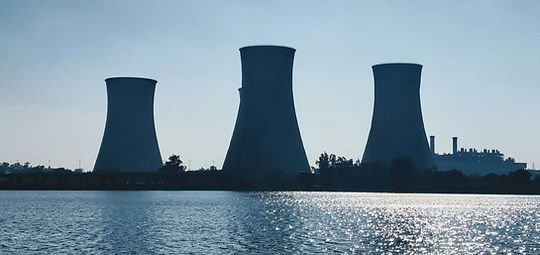
Enter nuclear power. Often overlooked in past decades, nuclear energy is now re-emerging as the only scalable, carbon-free solution capable of sustaining AI’s relentless energy appetite. A single uranium fuel pellet—no bigger than an AA battery—can produce as much energy as three barrels of oil, 17,000 cubic feet of natural gas, or a ton of coal. And all for just $5, with almost no carbon emissions. Operating at a 92% capacity factor, nuclear is the most reliable energy source on Earth—perfectly suited for the 24/7 demands of artificial intelligence.
Major technology firms are already acting. Microsoft is restarting operations at the famed Three Mile Island facility. Amazon is developing data center campuses adjacent to nuclear plants. Google is securing energy from next-generation reactors, while Meta plans to draw 4 gigawatts of nuclear power by 2030. Tesla, Nvidia, and Apple are also integrating nuclear energy into their operations. Advancements in nuclear technology are enabling companies to develop smaller, more efficient plants that offer enhanced safety and greater energy output.
But the relationship is mutual. AI isn’t just consuming nuclear power—it’s helping to enhance it. At California’s Diablo Canyon nuclear facility, AI tools are already being used to optimize reactor efficiency and improve safety protocols. The U.S. Department of Energy is supporting efforts to digitize and streamline the regulatory process using AI, potentially cutting the time it takes to approve and deploy new reactors.
On a global scale, countries like China, India, France, and Canada are accelerating nuclear investments, with China alone committing $440 billion. The International Energy Agency forecasts that nuclear investments will triple to $125 billion annually by the late 2020s.
This convergence of AI and nuclear power also presents a unique investment opportunity. One U.S.-based uranium company—valued at $1 billion, trading under $10 a share, with $150 million in cash and no debt—is positioned to ride the wave of demand. In previous nuclear booms (no pun intended), similar companies saw gains of over 1,000%.
As the world races toward an AI-driven future, the demand for clean, consistent, and scalable energy will define who leads and who lags. Nuclear power isn’t just a fallback—it’s becoming the foundation. The AI revolution may be digital at its core, but its lifeblood is electricity—and nuclear is poised to be the fuel that powers it all.
Photo by: Ajay Pal Singh Atwal