Outside Economics

Age, Spending Plan, and Life Insurance

Posted by Wendell Brock, MBA, ChFC on Fri, Sep 30, 2016

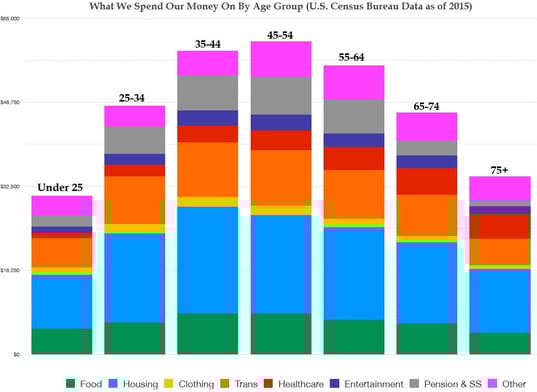
Demographics play a significant role in how much we spend and how we spend it.  Spending is primarily dictated by age where different needs and life essentials change and evolve as consumers grow older. For many families some financial obligations never go away.

Housing, transportation and food are the three largest expenses incurred by all age groups. These basic expenses often fit into the typical needs that many families have for life insurance. When looking at how much insurance to get people should consider an amount that will cover these expenses long into their future. People, even afterchart.jpg retirement will still have these expenses.

These long lasting expenses should be covered with a permanent insurance policy, like whole life. Where the premium will remain level for your entire life. For example a base policy might be something in the area of $250,000 to $500,000 in coverage. Such a policy is much less expensive in a person’s younger years, making them very cost effective over the long term. 

As consumers move from their late 20s into their 30s, we earn more money and families start to grow. Expenditures on transportation, health care and entertainment become prevalent as households grow with children. These more temporary expenses would typically be covered by term insurance. When the financial need or obligation is completed the insurance can be dropped. This allows a family to be covered for the extra needs for vary little money, while at the same time maintaining their base whole life policy, which will provide the needed protection long after retirement.

As we earn more, we also tend to save more in our 30s, 40s, and 50s by contributing to 401k plans and retirement savings. At 75 years of age and older, our retirement savings start to reduce as withdrawals increase to replace lost earned income. Retirement savings is critical to your financial success. The life insurance is what secures the retirement savings. However, even with a large retirement account or pension, the basic need for insurance may not ever go away. How have you determined your needs for life insurance? With September being National Life Insurance Month - now is a great time to review your coverage.

There is the simple acronym: DIME with the meaning: D: Debts; How much do you have in outstanding debt obligations (excluding your mortgage)? I: Income; What amount of your income do you want to replace and for how long? Mortgage: How much would it take to pay off your mortgage? E: Education; What do you want to leave for your children and/or grandchildren for education expenses?

Now add these DIME numbers up and get the total. Subtract from the total how much life insurance you currently have in place and that is your current need. Typically, your current needs may range from 10-20 times your annual income, with up to about three to seven times your annual income as a base amount. Review the second paragraph up top to determine your very long term needs and see how this matches up.

 Sources: Social Security Administration, U.S. Census Bureau

 
Remember:

Whatever excuses you may have for not buying life insurance now will only sound ridiculous to your widow!

 - Unknown Author

Topics: life insurance, retirement plan

How Banks Make Money

Posted by Wendell Brock, MBA, ChFC on Fri, Sep 23, 2016

Over the years, banks experienced a metamorphosis from simple corner branches offering savings, checking, and basic bank loans, to mega financial entities offering investment products, mortgages, specialized lines of credit, investment banking, and private banking. All of these additional services along with the regular “fees” banks charge is how they earn money.

The dismantling of the depression era regulation, the Glass-Steagall Act, also known as the Banking Act of 1933, allowed banks, insurance companies, and investment banks the ability to enter into multiple business functions. Some economists believe that the loosening of these regulations, along with the tightening of the Community Reinvestment Act (CRA) that started in the mid 1990s may have led to the financial crisis of September 2008.

For years banks basically made money from the interest earned on their loans and mortgages. This interest earned by banks is known as net interest margin, thus greater interest rates essentially earned larger net interest margins. This formula was fine for years until rates started to drop. As rates dropped, banks were able to earn less of a margin. That margin is the difference between what banks pay the depositors and federal reserve bank to borrow funds versus what they lend it out for to both retail and institutional customers. 

Bank_1.jpg

And yes, when you are a depositor to a bank you are lending your money to the bank, so they can re-lend it out at a higher rate. The difficult part of banking is to get enough people to “lend the bank money” through deposits. Having your deposits at the bank is their life blood. Incidentally, that is one way for a bank to fail - if most customers withdrew all their money at a time when the bank could not call in enough loans to meet the needs of the depositors. Historically this is known as a “run on the bank,” which is what happened in the early 1930’s, causing thousands of banks to fail.

Credit Card Debt On The Rise

An example of how banks make moneys the use of credit cards. U.S. banks have ramped up lending to consumers through credit cards at the fastest pace since 2007. The industry has accumulated an additional $18 billion of credit card loans and other types of revolving credit in the past three months.

Data released by the Federal Reserve shows that the U.S. banking industry has seen credit card and other revolving loans rise at a annual rate of 7.6% in the second quarter of 2016, to $685 billion. The credit card business remains among the most profitable in banking as banks can charge much higher interest rates than other loan types, with average credit card rates between 12% and 14%. 

Taking the lower rate of 12% with the typical CD rate of 1.0%, that gives the bank a net interest margin of 11.0% on that book of business. However for most banks, (small community banks) credit cards are a very small percentage of their business. To the larger banks, like Capital One and many others, credit cards lending is a much larger part of their business model. Along with credit card lending the default rate is much higher too, which lowers profits. 

As credit card debt levels have risen, so have reserves for losses as banks anticipate delinquencies to rise. According to Federal Reserve data, within the past year U.S. banks have piled on about $54 billion worth of loans to consumers through credit cards,. Financially savvy consumers that pay their balances down each month avoid hefty interest charges, but those that don’t, known as “revolvers,” pay average rates of between 12% to 14% and significantly more, as much as 30%, if they are considered higher risk borrowers. 

Seven years since the recession ended, consumers who were hit hard during the financial crisis have found their credit scores improving.  Bankers attribute a rise in credit card issuance to rising home prices and low unemployment. Banks are also lending more since one of the most important drivers of their profits are net interest margins, the difference between returns on assets and the cost of funds, which remain near their lowest levels in decades. The average credit limit per card for a subprime borrower is about $2,300, compared with about $11,500 for the safest customers. 

How does this affect you personally? I would suggest monitoring your banking relationships regularly. Review the fees you pay, what rates you pay on credit cards, etc. Look for the low cost solutions. And above all GET OUT and STAY OUT OF DEBT! Don’t get sucked into the emotional feeling that you “need” something so badly that you will borrow for it (home excluded). The credit card offers are so enticing with all the points they give you back, etc.; these are bank promotions and marketing games.  Just get out and stay out of debt. Period. Your real financial strength is not from your credit score - it is from your ability to stay out of debt.


Sources: Federal Reserve, FDIC, Office of the Comptroller of the Currency


REMEMBER:

"Gold is money, anything else is credit." - J.P. Morgan


Topics: credit score, debt free, bank loans, financial strength

The Only Good Life Insurance Policy

Posted by Wendell Brock, MBA, ChFC on Fri, Sep 16, 2016

September is National Life Insurance month - let me guess, you did not know that we had a national life insurance month, few people do. Now is the time to make the public more aware of life insurance and its uses and benefits. There are two main questions people ask when talking about life insurance: How much do I need? and What type of life insurance should I have?

While those two questions are important, they are often answered like this: buy approximately five to ten times your annual income, and buy the cheapest term insurance you can get. In reality there is much more to those questions than that! After all, life insurance is a major part of your personal financial foundation, it is there to protect your greatest asset: You, Your Life!bigstock-Life-Insurance-Protection-Bene-134100164.jpg

When building a financial strength, a solid foundation is needed, a person starts with risk management and estate planning. These two elements never go away. For as long as you live you will need to manage the risks you and your assets are exposed to and plan for the disposition of those assets upon your death - when ever that is. 

Your assets consist of all the things you own: investments, bank accounts, home, vacation home, retirement accounts, automobiles, business assets, heirlooms, art, etc. The disposition of these assets becomes vitally important because if you don’t take the time to plan for their distribution, by law the state government, where ever you live, will tell your heirs how your assets will be divided.

Most people have all of their assets insured, certainly their home and its contents, bank accounts, and automobiles. Those are very important assets, and improper use of automobiles can cause serious injury to another person if an accident were to occur. So the amount of life insurance may fall into an easy answer of five to ten times your annual income, sometimes a proper needs analysis should be done to determine the right amount. So what about the type life insurance…

Many financial advisors and drive-by financial planners (the ones on the radio) often simply tell folks all they need is cheap term life insurance. They say never get whole life or any other type of cash value life insurance, because “its too expensive.” Or if you want to “invest” your money put it in the market. Another classic one is, the goal is to accumulate enough money so you can “self-insure your life” so you don’t need any life insurance.

Now don’t get me wrong I am a firm believer in term insurance and I think it is a tool to use in the right circumstances, in addition to their base or foundation policy, that being a solid cash value policy. Term insurance was never meant to be the bedrock foundation of a person’s financial structure. A foundation should last more than 10 or 20 years. How would that work if your contractor who built you a new house put in a term foundation, telling you the concrete in the foundation is only good for 20 years then it will expire and the house will fall down! Or in order to keep the house standing you will need to replace the foundation in 20 years.

That would be an expensive foundation. Replacing and/or buying a new foundation for a 20 year old house would be really expensive! A term policy is more like the roof - you know that will wear out and need to be replaced at some point in time. Yes, it protects the house but it is not the foundation.

As a practicing professional, I have visited with many people over the years who had purchased a cheap term policy when they were younger believing that it would serve their needs. That was it - no other insurance. Fast forward to when the term policy is close to the end of its life and the person still needs insurance. For what ever reason they did not accumulate enough to, as the drive-by’s would say, “self-insure”. Only now to get the same amount of term insurance is cost prohibitive, and they certainly cannot afford the same amount of coverage with whole life.  So they look at a reduced amount of death benefit. But now at their advanced age even a reduced amount is expensive. So that brings me to a question, that can be asked at any age: What is too expensive?  

Obviously expensive means different things to each person and in relation to life insurance that is all over the board. But what is “too expensive”? They say that term insurance is cheap - then what defines cheap? Maybe we should start with the purpose of life insurance. Life insurance first and foremost is for your family, to protect your loved ones or others from the economic hardship that will occur upon your death. It is not for the insured person, it is for the people they leave behind. 

This means that a person has an economic value. Typically that economic value is determined by the income a person produces, the debts they carry, and their estimated final expenses. At a minimum a person should leave the world debt free. A question is then asked: Do people have an economic value clear into retirement and even into their 80’s or 90’s? Yes they do. Remember the economic value is not for the insured who may be 85 or 90 years old; it is to help the people that person may leave behind. And those values can change and the people left behind may change over time too. But value is still there. And because there is value, there is a need for life insurance.

Now about the type of coverage, obviously the only good policy is one that pays a death benefit when a person dies. All other policies are not relevant. The premium to buy the policy may not be relevant. Only if the policy is in force and pays a death benefit is the policy of any value. 

Understanding that key element, a term policy may or may not be in force when the insured dies. It all depends if the insured happened to die within the term period and if the premiums were paid. The saddest thing is when a person dies shortly after their term policy expired or lapsed, leaving nothing for their heirs. There is a reason term insurance is so “cheap”, most policies never pay a death benefit. If more term insurance paid a death benefit, the premiums would be more expensive. 

In reality the most expensive policy is one in which a person paid on for years and years and then lapses before death and heirs never received a penny. Even the policies that cost only $50 per month, over a year that is $600 and over 20 years that is $12,000!

What about a whole life policy, it is more expensive? For the same policy that may cost someone $50 per month may cost $250 per month or $3000 per year. Yes that is true, however this policy will likely still be in force when the person dies and will actually pay the death benefit. Giving the heirs much needed thousands of dollars. Yes initially it costs more $50 vs. $250 but if the policy actually pays a death benefit and the other does not, which one cost more?

The amount of insurance you carry and the type of insurance you have are important particularly when you look out twenty, thirty, or even 50 years from now. I still have my first whole life policy I bought when I was 18 years old. It has served me very well and I have used it (the cash value) on several occasions, such as to purchase an automobile. It has been a solid part of my financial foundation and protected my family well. I bought that policy long before I ever knew that I would spend most of my professional life serving people in the financial sector and I am so grateful I did!


REMEMBER: 

"The only good life insurance policy is one that pays on death." Wendell Brock


Topics: life insurance, Whole Life Insurance, Estate Planning, Financial Foundation

New Neighbors: Bankers Help Foreigners Buy U.S. Real Estate

Posted by Wendell Brock, MBA, ChFC on Fri, Sep 02, 2016

A growing number of foreigners have been actively buying real estate here in the U.S. Buyers from other countries such as China, India, Canada, and Mexico have been acquiring both residential homes and commercial properties in selective areas. Foreign buyers purchased $102.6 billion of residential property from April 2015 to March 2016, made up of 214,885 in residential properties.

Bankers Involved

Foreigners and/or undocumented aliens obtaining bank loans has been something the Federal Reserve Bank started pushing ten plus years ago. In 2006 I attended a meeting for bankers where the Fed was teaching bankers how to underwrite home loans for undocumented people here in the U.S.sold_sign.jpg

Making these bank loans is a major stimulus to economic growth. Homeowners buy things for their new homes, make home repairs, and banks make money which goes back out into the economy. Homeownership in general is a good thing; it creates a store of value where people can save more money, put down some roots, and contribute to society. 

Treasury Monitoring 

The U.S. Treasury Department closely monitors these transactions as it tries to identify any irregular buyers that may be filtering illicit funds into U.S. assets. Data revealed that the bulk of acquisitions by foreigners are occurring in particularly higher-end markets including Manhattan, Miami, various New York boroughs, San Diego, Los Angeles, San Francisco, and areas of Texas.

Of suspicious nature are those properties that are bought as straight cash purchases and priced at the top 10% of their respective market. The original initiative began in March of this year and has thus far helped Federal authorities identify various criminal activities.

Data reveals that foreign buyers typically purchase more expensive properties, purchasing those valued at $277,380 compared to the median price of $223,058 of all U.S existing home sales.  Forty-five percent of foreign buyers who purchased residential property came from China, Canada, India, the United Kingdom, and Mexico.

Although foreigners purchased property nationwide, five states accounted for 51 percent of total residential property purchases:  Florida, California, Texas, Arizona, and New York.

Seventy-two percent of non-resident foreign buyers purchased property as a vacation and/or residential rental property for investment, while 21 percent of resident foreign buyers purchased property for vacation and/or rental use.

Issues

These new homeowners that use the property for rentals can be a problem - as many landlords from other countries may not know our laws. Owning rental property in the United States is much different than in other countries - here the tenants have rights! In an effort to save money these new landlords may expect the tenant to pay for repairs that are the landlord’s responsibility.

One friend of mine had such an experience - he and his wife rented a property from someone who was clearly new to the country and new to being a landlord. The landlord tried to get them to make all the repairs to the property whenever anything broke, for example fixing the AC unit when it went out. They were so fed up that they finally had to threaten the landlord with legal action to get him to fix things. The problem was that every time something went wrong they had to make a threat via certified mail to get the problem repaired. The landlord simply wanted them to pay to fix everything! 

Needless to say they did not renew their lease. So a word to the wise if you are going to be a tenant of a foreigner, know your rights, as you may need to help them learn the responsibilities of being a landlord, otherwise you maybe paying for repairs.  

Sources: U.S. Treasury Department, National Association of Realtors


REMEMBER:

 You make a living by what you get, but you make a life by what you give. - Thomas S. Monson

Topics: real estate, save money, bankers

Oil Prices Head Higher and Higher

Posted by Wendell Brock, MBA, ChFC on Fri, Aug 19, 2016

With the last summer holiday a couple weeks away oil prices have certainly started to climb as usual. But are the prices going to stick. It certainly seems that over the summer the $40/bbl support level held. That being said now it looks like we may have higher prices heading into the fall.

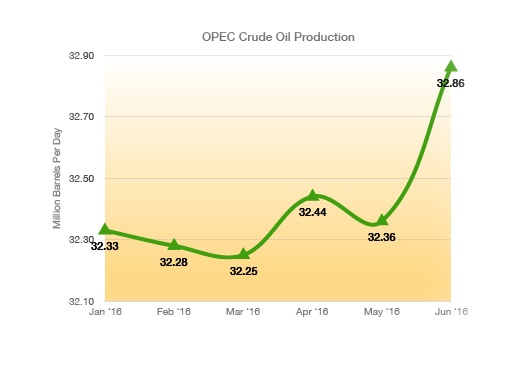
As oil prices rebounded throughout May and June, drillers restarted idle rigs in hopes of catching higher prices as they evolved. Unfortunately, the upswing in production and drilling was accompanied by growing supplies and less consumption, thus resulting in a supply glut. OPEC-Production-1.jpg

As a group, OPEC represents the world’s largest producer of oil, with Saudi Arabia being the single largest producer at over 10 million barrels per day, roughly a third of total OPEC production.

The dramatic decline in prices in July alone are a testament to the commodity’s volatility, subject to supply and demand dynamics worldwide. Yet even with such an efficient market, as claimed by Saudi Arabia, producers tend to get it wrong as to what the actual demand might be. Some oil analysts believe that OPEC leaders, specifically Saudi Arabia, may have increased production knowing that additional demand was not yet there. 

Crude oil prices traded as high as $107 per barrel as recently as June 2014, and now pulling back to near $40 as of the end of July. As with any drop in commodity prices they eventually go back up, and oil is no different, see The Bounce.

What does this mean for you? Investment wise, it maybe a good time to pick up some oil stocks. Many of these stocks have been trading at less than half their highs from two years ago, so even a small increase in the price of oil can result in a nice return on your investment.

Additionally this will mean higher gas prices at the pump - so budget accordingly. Don’t get caught by surprise when gas soon hits $2.50 to $3.00 or more per gallon. Make other financial adjustments now, so you can handle the higher energy prices to come.

Sources: OPEC Monthly Production Report, OPEC Secretariat, Energy Prospectus Group


REMEMBER:

"One of the most important ways to manifest integrity is to be loyal to those who are not present." - Stephen R. Covey


Topics: Oil, oil prices

Interest Rates Dance the Limbo

Posted by Wendell Brock, MBA, ChFC on Fri, Aug 12, 2016

The yield on the 10-year U.S. Treasury fell to a record low of 1.318 percent in early July, sending bond prices higher throughout the fixed income markets. Bonds have continued their rally since the beginning of the year as the Fed has held off on raising rates, while central banks in Japan and Europe have maintained unprecedented low rates.

Repercussions from Brexit channeled money towards the perceived safety of German government bonds in July, as Germany became the first country in the EU to sell 10-year government bonds with a negative yield at auction. A negative yield means that investors are willing to essentially pay Germany in exchange for holding funds in German bonds. Germany sold  €4.8 billion ($5.3 billion) of 10-year notes at an auction, with a yield of -0.05 %. 

limbo-tropicale-small.jpg

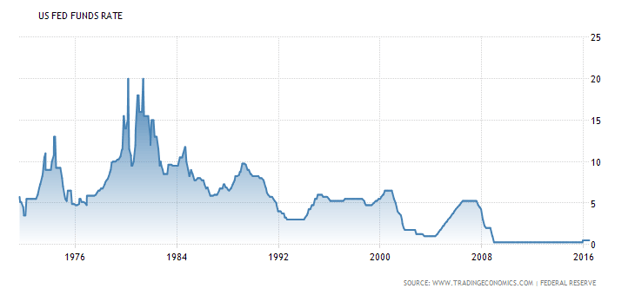
As of this past month there has been a continuous decline in long-term interest rates for 25 years, spanning from 8.3% in 1991 to 1.36% in July for the 10-year U.S. Treasury. Some bond analysts estimate that any continued decline in yields has become much less probable. But we all know, never say never!

With the Fed and its monetary stimulus efforts at capacity, many economists believe that this leaves ample room for fiscal stimulus in the form of lower tax rates. The presidential campaign has brought about the topic of lowering taxes and perhaps at a timely juncture that would help stimulate economic growth where the Fed may not be able to any longer.

A chellenge with this thought, is that this comes at a time when the federal government needs all the money it can get its hands on. (see the article: How Interest Rates Feed the Pig.) Its a fact that lower taxes has proven to increase the the total tax revenue, however to many people lowering taxes is unfair.  

This news on the heals of all the economy has been through since the Great Recession is a clear indicator that the economy has not completely recovered. With intermediate interest rates way below the historical average of 5.5%, this becomes a very serious concern for retirees who depend on their fixed income securities to help pay for their living expenses.

What to Do

Understanding this, the rate at which a person withdraws money from their retirement accounts will have a huge impact on the longevity of that account. People will need to simply save more for retirement and or live on less than originally expected. Both are unpleasant challenges. Getting out of debt will help with both of those challenges, as it frees up cash flow for additional savings and with little to no debt, it requires much less to live on. 

One strategy would be to take out much less during the earlier years of retirement and allow your savings to continue to grow, even for an additional five to seven years. This extra seasoning of your portfolio would make a world of difference.  Those who are preretirees may want to consider to start winding down their spending and try living on much less income, this will allow you to put more in savings and or get more debt paid off. It will also start you on a road of more discipline in your finances.


Sources: Federal Reserve, Bloomberg


Remember:

Training is everything. The peach was once a bitter almond, and the cauliflower is nothing but a cabbage with a college education.  - Mark Twain

Topics: Economy, retirement, debt, Interest Rates, Fed

The Argues of the Super Macro Economic View

Posted by Wendell Brock, MBA, ChFC on Fri, Aug 05, 2016

In the United States we have enjoyed the largest economy in the world for so long that we often don't think of how events around the globe affect us. Maybe we just don't want to admit that we are suceptable to the economic occurances that take place twelve thousand miles away in some small country! But those things do affect us now that we really operate in a global economy and the macro view is not just a look at the United States any more - it is a look at the world. Maybe we will have to reference Macro as the Super Macro View for the world economy, vs. the Macro View for the U.S. Economy. Luckly we have not sneezed this year so the rest of the world has not caught a cold, but there are events that have occured that are affecting us. Maybe what we have is a case of "the argues" as old Festus from Gunsmoke use to describe his aches or pains in his body - it was when one part of the body was arguing with the other! (Wow that really dates me!)festus.jpg

Macro Overview

Macro risks are still prevalent throughout the world as the effects of Brexit and terrorism continue to be ongoing concerns. U.S. markets have been resilient to the uncertainties, as major U.S. stock indices reached new highs in July.

Some believe that the outcome of the EU vote, as well as the sentiment in Britain shortly before the vote to leave the EU, has many similarities to the U.S. presidential race. Key election issues and how they may affect the economy include: NAFTA, immigration, terrorism, and banking regulations such as Glass-Steagall and Dodd-Frank.

The presidential campaign has brought about the suggestion of reforming existing regulations, which are adversely affecting the banking and financial services industry. Some candidates argue for the repeal of Dodd-Frank, regulations put in place during the current administration to regulate banking activity.

The problem has been that the costs of the new regulations have inhibited smaller banks and credit unions. Some candidates lobbied to bring back legislation known as Glass-Steagall, put in place during the depression in order to prevent banks from combining financial services and lending simultaneously with the more risky business of investment banking.

In the last eight years since the “Great Recession” there have only been four community banks started in all 50 states, down from about 160 in 2007. Community banks are often a major economic engine for the local economies.

Economic growth, measured as GDP, was reported by the U.S. Department of Commerce to have increased at an annual rate of 1.2 % in the second quarter of 2016, below analyst’s expectations of 2.5%. The dismal GDP report was accompanied by a drop in oil prices of over 15% in July and a record low for the 10-year Treasury yield hitting 1.37%.

Upcoming economic data for the U.S. may influence the Federal Reserve to act on raising rates rather than waiting any longer. Analysts believe that a rate increase by the Fed before the end of 2016 based on U.S. economic data may be a mistake. Rates in Europe and Japan remain in negative territory due to the uncertainty of growth within the EU and the expected derogatory effects of Brexit on global business transactions. Fed members decided to leave interest rates unchanged during their July meeting, stating that it was prudent to wait for more data following the consequences of Britain leaving the EU.

Banks in Italy have become the latest of concerns in Europe as souring loans are being recognized throughout the Italian banking sector. As the third largest economy in the EU, Italy’s banking sector is prone to a crisis that could have dire consequences for the country and neighboring trading partners.


Stagflation On The Horizon – Monetary Policy

Former Fed Chairman Alan Greenspan said that the U.S. may be heading toward stagflation, a slow-growth economy coupled with rising inflationary pressures. Greenspan also said that there seems to be pockets of inflation even though low productivity is prevalent in the economy.

Stagflation is an economic phenomenon when there is slow or stagnant economic growth at the same time as rising inflationary pressures. The 70’s were a period when rapidly rising fuel prices coupled with dismal economic growth, led to stagflation. This same scenario occurred in the first two years of the 80’s, until both monetary and fiscal policies were enacted that halted destructive inflationary pressures and curtailed taxes to boost economic activity.

Inflation is measured by the CPI (Consumer Price Index) and economic growth is gauged by GDP (Gross Domestic Product), which are both released by the Department of Commerce each month. As a barometer of general prices throughout the country as well as current economic activity, both indices help identify any possible stagflation scenarios.

Managing your way through this current economic time can be challenging. It would seem that rates will remain low for the near future, certainly into 2017. The Fed may make minor adjustments, but I don’t think we will see any drastic increases. Wall Street needs better earnings to keep it going, I think they have had their fill of low rates. It’s a good time to review where you are at, and how your plans are shaping up for the year. Additionally, now is the time to start the final work for income tax reduction strategies, as we finish the third quarter. It much better to do this now rather than starting in December!

The current low rate environment, is no longer an effort to keep fueling Wall Street, but in an effort to keep the Federal Government afloat (they are the largest borrower in the world). If rates increase for the government, then ALL TAXES must go up to pay for the increases in interest payments. Don’t get me wrong, lower rates do help the Market, but the Market has adpted to lower rates for some time.  Now the Federal Government needs to get its borrowing under control for the rest of the economy to move forward. (See Feed the Pig Article)

Sources: EuroStat, Dept. of Commerce, BEA, Federal Reserve, ECB

Remember:

"So that the record of history is absolutely crystal clear. That there is no alternative way, so far discovered, of improving the lot of the ordinary people that can hold a candle to the productive activities that are unleashed by a free enterprise system."  Milton Friedman

Topics: Economy, Interest Rates, Great Recession, Brexit, Stagflation

11 Million Wave, Landlords Watchout

Posted by Wendell Brock, MBA, ChFC on Fri, Jul 29, 2016

Market forces in the economy help determine the rental rates in every community. Each landlord worries whether the ad they ran to attract a renter, will actually bring one in who will not only pay the rent on time, but take care of the property. And hopefully not burn the place down as one of my tenants did 20 years ago! In any event, I certainly understand the other side too - people want to live the American Dream and own their own property/house/castle! It is hard to make the leap and buy a home, when we are surrounded with economic turbulence and uncertainty. Home ownership requires a higher level of economic stability.for_rent.jpg

As banks and financial institutions have been mandated to increase their loan qualifications for home mortgages due to government regulations, more and more families are being forced to rent rather than own. As the demand for rentals has been increasing, the level of home ownership has been falling. Some attribute this dynamic to a low inventory of homes on the market, while others blame excessive government requirements imposed on mortgage lenders.

A lack of available rentals along with the increased demand for rentals has propelled rental costs upward. The number of individuals dedicating at least half of their income towards rent hit a record high of 11 million people in 2014, according to the annual State of the Nation’s Housing Report from the Joint Center for Housing Studies.

As rental prices have been rising faster than wages, losing such a large portion of a paycheck to cover housing, means cutting back on essentials such as food, clothing, and health care. This can be draining on young families trying to save for a down payment on a home and then not knowing if they would be able to get approved or not.

Last year saw the biggest surge in new renters in history, according to the report on Housing Studies, bringing the number of people living in rental units to around 110 million people, accounting for about 36% of households. Middle-aged renters made up a substantial portion of the new demand with 40% of renters aged 30-49.

More affluent renters are staying in the rental market longer and driving up the demand for housing.  Traditionally, the wealthy move on to become homeowners, but tight inventory in the housing market is keeping them in rentals longer.

The median rent on a new apartment was $1,381 in 2015, according to the report, which means that a renter would have to make at least $55,000 a year before taxes in order to be able to afford the rent.

It is important to remember also that many people rent for various reasons, they are in work transition, divorce, personal choice, students, newly immigrated. The fact that so many poeple rent is not such an issue as the percent of their income going to pay for rent - that is where the government gets all bent out of shape. According to their model, housing should not cost more than 30% of household income.

When 11 million people pay upwards of 50% of their income for rent, this is going to add fuel to the fire for raising the minimum wage or some sort of rent controls. Either way there will be those in government that think they need to "solve this problem". Landlords: Watch Out!

Owning a home or renting requires effort to budget your income properly. Any time housing costs reaches close to 50% of income things get really tight. As one of my old financial planning professors use to say, “There are only two things you can do, help people cut expenses or help increase cash flow.” In life there are only so many expenses you can cut, and for many people you can only pound so many nails in a day. But generally increasing income provides the greatest opportunity. It is wonderful to see people transition from barely making ends meet to an abundance!  

Sources: Joint Center For Housing Studies


Remember:

At the beginning of the day its all about possibilities. At the end of the day, it’s all about results.  - Bob Proson

Topics: Economy, Landlords, Rentals, Rental Property

How Interest Rates Feed the Pig

Posted by Wendell Brock, MBA, ChFC on Fri, Jul 22, 2016

Interest rates are the economic rain to the world economy. Like rain, when there is too much, it causes flooding and will swamp growth; not enough and a drought ensues then economies don’t thrive. The Fed controls the spicket. Current rates are hurting savers and the retired. While at the same time allowing the government to borrow trillions to grow at dirt cheap rates.

This causes a dilemma: the government needs the cheap interest rates; the retires and savers need higher rates to maintain a shrinking standard of living. This conflict is a problem the world over: what to do about low stagnant interest rates?  

The events in Europe along with the International Monetary Fund (IMF) report released in June indicating that U.S. economic growth would fall short of expectations. This is one reason that prompted the Federal Reserve to subdue its pursuit of any additional rate increases this summer.

Britain’s vote on the EU exit sent U.S. government bond yields to new multi-year lows as well as dimmed trade growth prospects between Europe and the U.S. The dollar’s recent rise is also a headwind for the U.S. since a rise in the dollar’s value drags on U.S. exports; putting downward pressure on U.S. inflation, which is well below the Fed’s 2% target for inflation.united-states-interest-rate.png

The problem here is, as other countries have economic “occurrences” they send money to the U.S. to buy our treasuries, which are perceived to be a safe haven for storing cash. When a flood of money comes in, it lowers the interest rates people are willing to take just to park money. After all, getting something is far better than getting nothing or losing money all together. 

As more flows in - it strengthens the dollar, which also makes it harder for us to export our goods and services to other countries. It does make it cheaper for us to buy stuff from other countries and to travel, but that may not be the current objective.

Concurrently, the IMF report released in June suggested that the U.S. faces economic “headwinds” and “pernicious” trends including a shrinking middle class that could slow growth in the long term. 

Labor’s share of U.S. income is about 5% lower today than it was 15 years ago, while the middle class has shrunk to its smallest size in the past 30 years. Demographic changes are slowing potential growth and that in turn, is affecting business investment and leading to a less dynamic labor force. The IMF is estimating that U.S. GDP will grow 2.2% this year, which is down from 2.4% in 2015. This may seem like a small percent, but it works out to be $36.0 billion out of an $18 trillion economy. This much money could employ 720,000 people at $50,000 per year. That is a lot of money and a lot of middle class jobs!

Economists believe that both of these occurrences will foster an elongated low interest rate environment throughout the domestic and international fixed income markets. When factoring in the need for the federal government to keep borrowing such large amounts of money for both the annual deficit, and the rolling over of previous year’s debt obligations low interest rates help “feed the pig” so to say, causing income pain to the retirees and savers!

So how does this affect you and your investment or retirement portfolio? Low rates are generally good for the stock market, companies are able to borrow more to expand and grow. Now would be a good time to refinance any debt that may have higher rates or better yet, get it paid off. When debt is paid off early it is like earning that same interest rate. So for example you pay off a credit card that charges 18 percent then you have just earned that 18 percent on the balance by removing that future interest payment obligation. This is not to say go borrow a bunch of money at a high rate and then work to pay it off.

Rearranging your portfolio to a more balanced strategy may help with market upsets and continued low rates. Participating in several asset classes will properly diversify your portfolio. For more information click here.  

Tot the extent you can get your own house in order you will be greatly strengthened when the headwinds really hit hard. As the old saying goes, it is nice to “sleep when the wind blows”.

Sources: IMF, Bloomberg, Federal Reserve


Remember:

 Those who don't understand interest, pay it; those who do, earn it. - Anonymous

Topics: Interest Rates, Fed, Federal Government, IMF

Where Did The Economy Go 2nd Quarter?

Posted by Wendell Brock, MBA, ChFC on Fri, Jul 15, 2016

The economy this past quarter has been a great improvement over the first quarter. I am expecting some market stability as we head into the convention season and through this years election cycle. Who is elected will determine much of what happens next. We are however due for a recession soon, depending on which economist you follow. I fully expect we will see something in the next 12 to 24 months. 

Macro Overview 

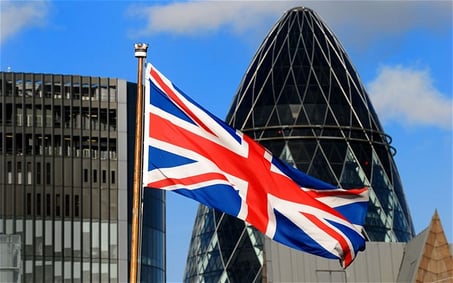
The British vote to exit the EU (Brexit) was essentially a validation that a disintegration process of the EU is possibly underway, causing destabilization for countries throughout the EU. Britain’s vote may lead to other similar referendums, particularly with the Netherlands and France where populist sentiment is growing.
economy-flag-2_2042549b.jpg

The British pound fell to a 30-year low versus the U.S. dollar following the outcome of the referendum. Conversely, the fall in value for the British pound can be beneficial for the country as Britain’s exports become cheaper worldwide and tourism increases as stronger foreign currencies come into the country.

The unraveling of Britain from the EU is not expected to be automatic or immediate and may take years for it to finalize. Britain would need to execute a divorce clause titled Article 50 of the EU agreement in order to move forward with the separation from the EU. Several member EU countries, including the IMF, are eager to have Britain expedite the exit in order to minimize uncertainty.

In the wake of the referendum’s outcome, international equity markets tumbled as uncertainty led the course. U.S. financial markets were incredibly resilient following the days after the British EU vote, with U.S. equity and bond prices all propelling to higher levels. 

The Fed’s plan to further increase rates this year took a different course as the repercussions from Britain’s EU vote are expected to lead to slowing economic growth and a sustained low interest rate environment. Some Fed watchers believe that the Fed may ramp up its stimulus efforts again with lowering rates should the EU and Europe’s economy falter.

Overshadowed by the Brexit news, the U.S. Census Bureau reported data that may help solidify the Fed’s wait to raise rates. Durable goods orders fell 2.2% in May, worse than anticipated. Such data is an indicator of whether inflationary pressures are present and if inconsistent expansion exists in the economy due to less capital spending.

In the midst of the Brexit turmoil, the Federal Reserve announced that 33 selected U.S. banks passed an imposed stress test to see how well they would perform under severe circumstances, such as high unemployment, recession, and falling asset prices. The stress test revealed that the 33 banks tested had nearly twice the amount of required capital needed, up significantly from the last stress test conducted.

Equity Update – Domestic & Global Stock Markets

U.S. stocks fared better than international stocks following Britain’s announcement on leaving the EU. U.S. equity markets were resilient once the surprise of Brexit unfolded, with the S&P 500 Index and the Dow Jones Industrial Index both positive for the year.

Domestic equities are more insulated from global developments and any other major equity markets since American companies generate 70% of the revenues from the United States. Japanese companies generate 50% from within their economy only and European companies generating a mere 49% from Europe only.

U.S. equities are considered attractive relative to negative yielding government bonds in Asia and parts of Europe, even as the U.S. 10-year note finished below 1.5% in June. The S&P 500 index currently carries 60% of its stocks with a dividend yield higher than the 10-year treasury bond yield.

The primary British equity index, the FTSE 100, tumbled in June following the Brexit vote. Companies within the index generate about 75% of their revenues outside the U.K., with many maintaining contracts and arrangements with other companies based in other EU countries. Since the actual extraction of Britain from the EU may take years, decisions for capital spending and expansion by European companies may be hindered.

Certain equity sectors are becoming increasingly sensitive to what the presidential candidates are proposing.  Concerns lie with those sectors where newly enacted regulatory policy can inhibit growth and profits. Other sectors are being adversely affected by low rates, such as banks whose earnings are hindered by low rates, which limits the amount of profits they can earn as deposits fall and loan rates drop.

Precious Metals, Oil & Gas, and Wages

Precious metals have increased dramatically this past quarter. Economist, Mark Skousen, said, “I think they (Federal Reserve officials) are working overtime to bring inflation back. Gold, which is finally moving, is the best indicator of future inflation. So we may see a return of inflation here if the gold market continues to rise. So that's what I'm looking at more than the bond market.”

Silver has rallied this year increasing nearly about $6.30 per ounce over the $13.83 at the start of the year. That is a 45.55 percent increase in price. For the past several days it has reacted independently of gold as gold prices have come down a bit; Silver has continued to go up. It seems there may be some hedging going on due to Silver’s expanded use in industrial applications. These are the highest prices for silver since the summer of 2014.  

Oil and Natural Gas are also on the rise. According to Dan Steffens, President of Energy Prospectus Group, (EPG) of Houston, TX, “The combination of rising demand and falling production has pushed the natural gas prices up from $1.70/mmbtu in February to near $3.00 at the end of June. My prediction is now we will see gas trading for more than $4.00/mmbtu by December.” If that is the case, lets hope all the global warming kicks in so we have a mild winter or we will be paying more than double for heat.  

With U.S. oil production down from last year, we are back to importing about 50% of our oil. Other countries are having production issues too, which may cause an increase up to about $70/bbl by the end of the year. Third quarter typically sees an increase in oil demand due to summer travel, which could easily eat up the surplus that has been keeping oil prices low. Some analyst think that oil will remain fairly steady around $50/bbl for the near future.

The Department of Labor reported that average hourly earnings grew by 2.5% over the past year, thus placing pressure on corporate earnings as wages move up. Many analysts believe that wages will continue to increase as unemployment rates remain below 5%, enticing companies to keep performing workers and paying them more.

After a market run up as we have seen this past quarter, I would not be surprised to see some profit taking in the next couple months, particularly if this earnings season does not produce any great results. If inflation takes off  then expect oil, precious metals, wages and other commodities to increase, which will certainly put pressure on corporate profits, and will also stress the markets. Now is a good time to continue to get out of debt and put a little extra away for a rainy day. 

Kind Regards,

Your Arm-Chair Economist


Sources: Eurostat, Department of Labor, S&P, Bloomberg, Federal Reserve, U.S. Census Bureau, EPG

 
Remember: 
"Education is what remains after one has forgotten what one has learned in school."  - Albert Einstein

 

Topics: Economy, Oil, Precious Metals, Interest Rates, Stock Market, Brexit

120514_WWBrock_1

Wendell W. Brock, MBA, ChFC

Subscribe by Email

Follow Me

Most Popular Posts

Other Sites I Follow, hobbies, fun and info:

gold-vs-silver-1.jpg  Nauvoo Mint brokerage services for precious metals


john Mauldin chair

Note:

Outside Economics is not a registered investment advisory firm (RIA) and does not act as an RIA. Outside Economics does not provide any specific investment advice. Any information obtained from this website or through one of  Outside Economics' representatives should be reviewed by a professional.

Subscribers Note: We do not sell our email list. Period. Thank you for subscribing.

Recent Posts