Outside Economics

How Well Do You Know Your 401(k)?

Posted by Wendell Brock on Sat, Feb 27, 2021

How Well Do You Know Your 401(k)?

  • Wendell Brock
  • Feb 27, 2021
  • 3 min read


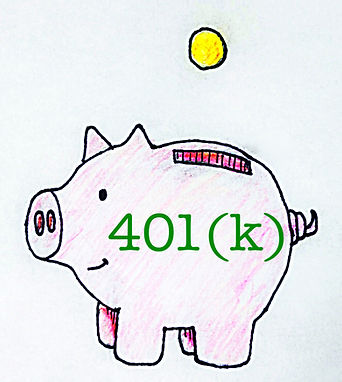
“401(k)” is one of those terms that frequently gets tossed around in regular finance or work conversations, but how well do you understand it?


A 401(k) is an employer-sponsored savings account with perks. Money is automatically deducted from your paycheck, goes into an account, and is invested on your behalf. Once there, you have the responsibility to invest it into different investments, most often mutual funds, which may hold stocks, bonds, or REITS (Real Estate Investment Trusts).


Because money is withheld from your paycheck, and deposited regularly into your account, you are using an investment method called dollar cost averaging. This occurs when every deposit purchases shares at different prices, because of the market fluctuations. Some deposits are made when the market is low, and others are made when the market is higher, giving an average cost for all shares owned.


Early on in your career it may be a good idea to invest in some higher risk/return securities like stocks. This gives you time to ride the fluctuations of the stock market. Later on in your career you might want to shift those investments to more stable choices like bonds.


The name 401(k) comes from a section of the Internal Revenue Code that authorizes profit-sharing plans. This term is now used to describe these employer-sponsored retirement plans that specifically use this code.


There are two types of 401(k)s. There is the traditional 401(k) that takes money from your paycheck PRE TAX. This means that your money that you invest in your account is not taxed at the time it is earned, and your investments grow tax deferred.


The second type is a Roth 401(k). This takes money from your paycheck after it has been taxed.


These differences really come into play when you begin taking money out of your 401(k) during retirement. If you have gone with the traditional, the contributions and earnings will be taxed when they are withdrawn. With a Roth 401(k) your withdrawals will not be taxed, because you already paid taxes on that money before it was put into the account.


Some employers offer to match your contributions to a certain percentage. If this is an option take it. It’s a good idea to, at the very least, take advantage of matching benefits. In these situations the employer is taking money from corporate profits and assisting you in planning for your retirement. (This is why 401(k) plans are often referred to as profit sharing plans.)


There are two key ages that come into play with a 401(k) - 59 ½ and 72. If you take money out of your 401(k) before the age of 59 ½ you will get hit with a 10% early withdrawal penalty tax.


At 72 you must begin taking Required Minimum Distributions (RMDs). The RMD age was increased from age 701/2 to 72 last year as part of the COVID funding laws.


Additionally, you can continue to contribute to your 401(k) for as long as you are working. If you are still working at the age of 72, as a participant you do not have to take RMDs from that 401(k).


If your employer offers a 401(k) it may be a good idea to jump on board. When you reach retirement, all that will be there is what you have sent on ahead. Save and invest lots! At retirement, you are replacing your physical work with your dollars working for you, and you want as many dollars working for you as possible. That is how you Secure Tomorrow!


“Good investing is simple: buy a good asset at a good price and hold it for a good long time.”

-Adrian Day

The Maxims of Wall Street by Mark Skousen



What are Exchange Traded Funds (EFTs)?

Posted by Wendell Brock on Sat, Feb 20, 2021

What are Exchange Traded Funds (EFTs)?

  • Wendell Brock
  • Feb 20, 2021
  • 2 min read

Have you ever had a craving for pizza, but couldn’t decide on which kind to get? What if you could only get one? Wouldn’t it be great if you could have a couple slices of lots of different flavors, or different types of crust, maybe even a bread stick or two all in one pizza? This is pretty much how an exchange traded fund or ETF works. Here are some basics about ETFs:


An ETF compiles lots of different stocks into one group or basket- kind of like a pizza made from lots of different styles, toppings, and flavors, but sold as one pizza.


Exchange Traded Funds get their name because they are traded on an exchange just like a stock. This means they can be bought and sold throughout the day, unlike their cousin the mutual fund, which we learned about last week.

At first glance ETFs can look a lot like mutual funds; they are both collections of stocks, bonds, or securities, but there are a few key differences.


  • Mutual funds are actively managed so that assets within the fund are bought and sold to gain the most profit. ETFs are more passively managed and typically track or mirror specific indexes.


  • Mutual funds typically have a minimum investment requirement, whereas ETFs typically do not have a minimum. In some cases may even be purchased in fractional shares


  • ETFs are more tax efficient than mutual funds.


  • ETFs allow you to keep more of the profits compared to mutual funds because they typically have a lower management expense.


ETFs can hold hundreds of different stocks across myriad industries, or it can be focused on a single sector or industry. This allows the investor to create a balanced portfolio between risk and potential returns.


If we go back to our pizza analogy, we could say that you are an adventurous eater and like trying new things. It would be nice to be able to order just one slice with crazy flavors, rather than the whole pizza, and still get some tried and true flavors, because what if you end up not liking the new one? With an ETF, you can have a lot of diversification, meaning if one company’s stock (or slice) doesn't do well, there's plenty of other really great tasting stocks to make up the difference. This means you don’t feel the loss as greatly as you would if the whole pizza had been made up of the new adventurous but not-so-great-flavor.


There are some negatives to ETFs. At times they can be a little more complex than traditional mutual funds, this can be overcome with the help of a knowledgeable advisor. Another downside is they pay lower dividend yields-because ETFs track a broader market the yield is averaged out and will end up being slightly lower. There is no one perfect type of investment, and the bottom line always comes down to knowing and understanding what you're investing in, both the good and the bad.


"An investment in knowledge pays the best interest."

-- Benjamin Franklin


Do You Really Want a Mutual Fund?

Posted by Wendell Brock on Sat, Feb 13, 2021

Do You Really Want a Mutual Fund?

  • Wendell Brock
  • Feb 13, 2021
  • 2 min read


A mutual fund is both an investment as well as a company. It allows you to pool your money with other investors which is then used to invest in a portfolio of different things like stocks, bonds, money market instruments, properties, etc.


Mutual funds are operated by money managers who decide how to invest the money in an attempt to produce growth or income for the fund’s investors. A mutual fund’s portfolio is structured and maintained to match a particular investment strategy. In other words, the money managers pick investments that they believe will meet the stated goal of the fund.


When you buy into a mutual fund you are actually buying a portion of the portfolio’s value. The value of the mutual fund doesn’t fluctuate during the day like an individual stock, rather its value is settled at the end of the trading day.


The positives:

  • Mutual funds are an easy way for beginner investors to get started.

  • Mutual funds give you diversification allowing you to invest in many different things. The more diverse the fund the fewer risks you take on.

  • Mutual funds are managed by a professional that makes investment decisions based on the goals of the fund. Typically you don’t have to babysit your investment.

  • Mutual funds allow you to reinvest the interest, dividends, and capital gains into additional mutual fund shares.


The negatives:

  • Mutual funds may have high fees. Be aware of the expense ratio before buying.

  • Mutual fund prices are only calculated at the end of the day, compared to stock, which fluctuates throughout the day.

  • You can only sell your shares at the end of the day after the market closes. This limits your ability to react to the market swings, up or down.

  • You don’t have control over the portfolio, that lies with the fund manager.

  • Mutual funds can sell profitable investments to create capital gain, even if the fund has performed poorly, which means you could lose money on an investment, but still pay taxes on it.


Overall, a mutual fund creates an opportunity for new and experienced investors to diversify their investment dollars in one place, helping you as an investor control some investment risks. Today, mutual funds are used mostly in 401(k) type retirement plans. Very few investors still use mutual funds outside of retirement plans.


Next week I will explain Exchange Traded Funds, (ETF’s). Informal Survey: What is your favorite Mutual Fund? Post in the comments!


“Better to buy part of a company than the whole thing.” - Warren Buffet


You're paying how much?!

Posted by Wendell Brock on Sat, Feb 06, 2021

You're paying how much?!

  • Wendell Brock
  • Feb 6, 2021
  • 2 min read

People often want to know how to calculate their living expenses to create a workable budget. There are plenty of formulas out there for allocating income. There are many factors that go into your cost of living that need to be taken into account - things like where you live and how much you make, or if you live on a variable income (commission) or a fixed income (salary or hourly type wages).


Often, what ‘you make’ is far different from the paycheck brought home. Taxes can eat a large amount of those wages, as well as other benefit deductions, health care, retirement, etc.


Budgeting is a personal process, unique to you and your circumstances, it is very emotionally driven. What is important to one family, may not be to another family. Considering identical income, neighborhood, etc. no one budget or plan will be identical.


Often the fewer categories to keep track of the easier it will be to follow through and keep within a budget. At times drilling down into a broad category to see the actual details will be helpful when changes need to be made.


For this reason, use a budget formula as a springboard or template to get started. Once you have an understanding of your expenses you can tweak the numbers to fit your personal needs and goals.

A budget formula can be as simple as 50/30/20


  • 50% of your income going to all general or basic needs. This is easier than itemizing your separate bills and expenses. These are things like mortgage, utilities, groceries, transportation, medical, etc.

  • 30% of your income going to creature comforts and fun things. These would be things like entertainment, eating out, hobbies, gym memberships, etc.

  • 20% of your income going towards savings and an emergency fund.


You can use this as a guideline, ultimately you should aim to to live on much less than you take home.


If you really want to create financial security, switch the last two numbers, the 30% and the 20%. Save 30% and spend the 20% on the fun things. With this formula, your savings and investing will skyrocket. Your financial security will truly materialize much faster.


You will be blessed with the results of financial self discipline, which in today’s world, with so many places to spend money, you may create real wealth!


Once you map out where your money is going you can make decisions that allow you to save more. Saving should always be a priority - “pay yourself first” has become the leading advice for sound financial planning. Remember that financial success is directly related to the effort you put into it.


“Do not save what is left after spending; instead spend what is left after saving.”

- Warren Buffet


Do You Have a Bucket List?

Posted by Wendell Brock on Sat, Jan 30, 2021

Do You Have a Bucket List?

  • Wendell Brock
  • Jan 30, 2021
  • 2 min read

Updated: Jun 30, 2021


Saving money can be a challenge for even the most financially savvy. It takes willpower, sacrifice, determination...and a plan. A lot of people have a savings account, but is that really enough to meet your needs and make your future secure?

Often when sitting down with people to discuss savings we make a “bucket list.” This is a list of 5-6 savings buckets. Each bucket serves a different purpose, and allows families to plan - and save - more effectively.


The buckets are:


Save-to-Spend

Emergency Fund

Long Term Savings

Retirement

Health Savings Account

College Fund*


Bucket 1 - Save-to-Spend: This bucket is for the money you know you're going to need in the near future, for things like Christmas, birthdays, vacations, repairs/replacements, and small emergencies. $1,000-$5,000 may accomplish these immediate needs.


Bucket 2 - Emergency Fund: This bucket is for all those unexpected accidents or disasters. Aim for three to six months income - at a minimum. Depending on your income $30,000-$60,000 might work.


Bucket 3 - Long Term Savings: This bucket is for collecting money for some of the bigger projects you plan for, things like remodeling a bathroom, new HVAC system, or replacing a car. Paying cash for these large ticket items is the way to go. Aim for $10,000-$40,000.


Bucket 4 - Retirement: This bucket is for the next biggest change in your life - retirement, not working again. Actually, retirement may have a few different stages: there are the go-go years, the slow-go years, and the no-go years. Each of these time periods may consume different amounts of your retirement resources.

Bucket 5 - Health Savings Account: Save as much as you can for future healthcare expenses. This account is very valuable, due to the tax advantages.


*Bucket 6 - College Fund: Not everyone needs to have this bucket, but if this is something you want to save for, then certainly it should be included in your list.


If the worst happens and you need money now, if you have properly filled your buckets, you have multiple reserves to pull from. You would start by using the money from your 2nd bucket - your emergency fund. Then, if you needed more you would pull from your 3rd bucket - your long term savings fund, followed by your 1st bucket - your save-to-spend bucket. If things are still uncertain you could then pull from your 5th bucket - your HSA. Only under the worst scenario should you pull from your 4th bucket - your retirement fund.


It's important to know that each bucket is actually a separate account. Don’t think that compiling the funds will accomplish the same thing as each bucket would. When spending it’s often emotional and if the money is there, without a clear demarcation it will get spent on the wrong things. Remember it takes mountains of self-discipline to save money, but not much at all to spend it!!


This plan keeps your future secure while still allowing you to meet your current needs.


“If we command our wealth, we shall be rich and free. If our wealth commands us, we are poor indeed.” - Edmund Burke


28 views
0 comments

What if I'm not ready yet?

Posted by Wendell Brock on Mon, Jan 18, 2021

What if I'm not ready yet?

  • Wendell Brock
  • Jan 18, 2021
  • 2 min read

Updated: Apr 12, 2021

People inherently want to be prepared before they tackle something new or difficult. We want to get ourselves ready and organized. Throughout my career in guiding people with their finances I’ve heard many people say things like, “we’d love to get a financial plan, but we’re not ready yet,” “it will take me a few weeks to get ready”, or “I don’t even have a job, how can I make a financial plan?”


The two biggest killers to personal finance are ego and procrastination. Both may be involved when we say or feel that “we’re not ready.”


It’s often our ego that gets in the way of us wanting to open up and talk to someone about something so personal as our finances. I don’t know what everyone’s idea of what “ready” looks like, but in my experience people don’t want to reveal mistakes, a lack of knowledge, or bad planning choices that were made in the past. People may have fear of being judged or embarrassed. This puts them in a conundrum-struggling with their current financial situation, wanting help, but fearful of revealing their current situation. Hiding something out of sight will never fix the problem.


Often, this also tends to be a procrastination issue. Unfortunately, procrastination has a real financial cost. Securing tomorrow starts with planning today. Your financial future is not something that can be put off. The sooner you begin the more money you can save, and the easier the process can be.


Sometimes, life throws a curveball and there’s just no getting ready. Your Boss wouldn’t come into your office Monday morning and say, “Hey, I’m going to fire you Friday, make sure you’re ready.” Instead, it’s usually abrupt - “there’s the door” and you exit the workplace. It’s always better to tackle it head on, as soon as possible. You can do this!

It is the process of doing that actually gets us ready. Planning your secure tomorrow is never a cookie cutter blueprint. Everyone starts at a different point, which means it doesn’t matter where you are at right now. What matters is you take that first step.


“You can’t pick cherries with your back to the tree.” -J.P. Morgan


Where do I start?

Posted by Wendell Brock on Thu, Jan 07, 2021

Where do I start?

  • Wendell Brock
  • Jan 7, 2021
  • 1 min read

It’s the start of a new year, a time when people make resolutions and set goals. 2020 was chaotic and created difficulties, especially financially, for many people. This has prompted many to reevaluate their finances and attempt to gain a little more financial security, some for the first time. This has forced many to ask, “Where do I start?”


The short answer- at the bottom. When building anything, be it a physical structure, a business, or a financial platform you need a strong foundation.


Your number one task is to get organized. Build a personal balance sheet containing a summary of your assets and your liabilities. Subtract your liabilities from your assets to determine your net worth.


Your net worth is the bottom line-foundation number. This is the number you want to grow. It’s that simple.


Next you want to protect yourself, your family, and your assets. This includes proper insurance and an estate plan.


Now that you have a base you can work on developing your cash reserves. You should be putting money into a savings account every month. He who saves early saves the most. The bigger your savings grow the more you can invest and build a sound financial future.


“Compound interest is the eighth wonder of the world. He who understands it, earns it...He who doesn’t...pays it.” -Albert Einstein


If You're Breathing, You NEED This

Posted by Admin on Tue, May 07, 2019

If You're Breathing, You NEED This

  • May 7, 2019
  • 3 min read


On April 21, 2016, Prince, the rockstar died. While I must admit I have never been much of a fan of his work, or some genres of most modern musicians, he was amazingly talented. And I am sad for his family's loss. He was young - only 57 years old - young by society’s standards where we routinely expect people to live active lives into their 80's and maybe into their 90's. 


Prince is estimated to have amassed a large estate between $300 to $500 million. This was news to me as I had no idea how large his estate was. I think this is fantastic. For those who know me I thrill at learning of people's successes in life, however they define their success. That is one reason I love what I do - helping people achieve success with their financial goals, whatever they may be.


Back to Prince. I was surprised to learn that he died with no personal estate plan. He chose to use the one the State of Minnesota had planned in their estate laws instead - he died “intestate” (without a will). Now this is simply crazy! This is the example of why everyone needs at least a will, and should have a personal estate plan prepared by a real estate planning attorney.


Now it is estimated that approximately 55% (40% federal and 15% state) of his estate will go off in estate taxes. Think about this, he worked from a young age (teenager) practicing the guitar to become a world famous musician, amass a large estate because of his successful use of his talent, only to pay huge income taxes all his life and then the final rub to pay another 55% when he passes away. That works out to be $165,000,000 to $275,000,000 paid to the government (state and federal)! 

Not to mention that his estate maybe tied up in probate court for years to come. What a nightmare for his family!


Here is a person who could easily afford the best advice possible from the sharpest legal minds in our country, but chose not to do so. Clearly he had attorneys who helped review his contracts and other investment advisors who helped him manage his money. It saddens me to think not one of them sat him down and said someday you will die, you should be prepared. Perhaps they tried to do this and he ignored them, like many young people who think they will live forever.


Those of you who are young - or better yet those of you who are still breathing, young or old - need a valid estate plan. Not one referenced by the drive by financial planners, self-prepared on some internet website for $29.99. Don't create problems for those you leave behind - go see a real attorney who specializes in estate planning and get it done right.

Now you may be saying I am not wealthy like Prince; that is not the point everyone needs an estate plan if you own a home, cars, business, or any other assets, you need a plan. Besides a will or trust a proper estate plan also includes certain documents needed while you are still living, like a Medical Power of Attorney, a Living Will,  and other documents. 


If you are part of a second marriage, you need an estate plan. I have personally seen a father disinherit his children and grandchildren and everything went to the second wife, completely different from his wishes. These things happen all too often. If you don’t know of a good estate planning attorney you can I can provide you with more information I know several. I wish you all the best in the proper planning for the future disposition of your hard earned assets. 


REMEMBER:

"Death is not the end. There remains the litigation over the estate" ~ Ambrose Bierce


"But it's hard to save money..."

Posted by Admin on Tue, Apr 30, 2019

"But it's hard to save money..."

  • Apr 30, 2019
  • 3 min read


Providing financial counseling for many years, a question like this often comes up: Why is it hard to start saving? Money is a very emotional thing and we all have our own thoughts and opinions about it’s use, which can be very personal. We can always justify our wants into needs - its a matter of developing the strongest argument as to why this or that is a need not a want, thus eating up our entire pay check on the mixture of real needs and perceived needs (real wants). 

Here are some reasons why it is hard to start saving money:

1. Saving money requires self discipline - lots and lots of self discipline. There is no one around “forcing” us to save money, like the government forces us to pay taxes. Saving is 100% on us personally. With each and every paycheck that comes in we have to make the choice to save. Establishing a habit of saving comes after months and perhaps years of successful saving.


2. The money we want to save is competing with the money we want to spend - there are so many wants and perceived needs that we look at and say, “I can afford this” and so we spend the money before saving. When in reality we might not be able to afford it, but because we want it we buy it.


3. People tend to spend first and save what is left over, when they should save first and spend what is left over. These priorities are mixed up. When we spend first and try to save what is left over there is never enough to save. We can always spend what we earn and our spending/perceived needs increases with our income.


4. Successful savers save first. They pay themselves first and pay others last. They sacrifice their short-term wants for long-term goals. They understand the difference between needs and wants and they focus on their self-discipline in other areas of their life so saving becomes a more natural extension of their disciplined life. In our society of instant gratification, which is filled with stuff, we focus on the things we don’t have. With some justification we make those things into needs, and exchange our future savings for wants, thinking they will bring us happiness, ignoring our future.


Keeping a budget in line is a very key element to saving money. Our spending can and often does expand with our earnings, making every purchase important! One key to being a successful saver is to have an emergency fund established. And ONLY use if for emergencies! 


How do you go about saving?


Many people simply save through their work via payroll deduction. They may contribute to the company 401(k) plan or other savings vehicles and call it good. Real savers do save through work and save more on their own. They simply move some money to an old fashion savings account, then when that gets to a significant size they invest it in some manner. Savings can be built several different ways. 


Saving money can become a priority. Developing the self discipline to save will be an attribute that will bless you for years to come. Struggling with it is natural, have faith that it can be done! Go do it!! Please let us know how you go about saving money. What are your challenges with saving money - outside of your company retirement plan?

REMEMBER: “The Power to make and keep commitments to ourselves is the essence of developing the basic habits of effectiveness.” Stephen R. Covey


Personal Finances and the Distractions of Life

Posted by Admin on Thu, Apr 11, 2019

Personal Finances and the Distractions of Life

  • Apr 11, 2019
  • 4 min read


Years ago I use to teach seminars about personal finances and one thing we use to talk about was what I will call the distractions of life. We all live busy lives, some extremely busy, and so we end up living by the rule “if it ain’t broken don’t fix it”. Often we all create our own busyness and the level of “busy” is largely up to us. Yes we have work and family obligations, but we are in control of many of those obligations.


Yesterday I was visiting with a client, we belong to the same social club and he asked about the annual picnic being canceled, since I attend the board meetings he figured I would have some insight. I told him that there simply was not a Saturday in May that worked; too many other functions were already planned. After all May starts graduation season for college and high school, it has the Memorial Day Holiday, and you could also throw in the beginning of the wedding season. Who does not know of someone getting married during the months of May or June?


As a result of our busy lives our personal finances get left to what ever benefits our employer offers and then we simply hope for the best with everything else. It has been said that the average family spends more time planning their annual vacation than their family finances.

The distractions of life seem to come in waves and they are timed just like the waves at the beach, some are larger than others, but they come regularly and timely. Here are some examples:


We start every new year working to get caught up from the holidays, then it is Valentines Day, the world tells us we have to do something really special for our sweetheart and we respond. If we know what's good for us we'd better!


Next is Easter and Tax season, so we say to ourselves and others “I will attend to my personal finances after I finish my taxes.” So lets meet after tax season is over. Tax season ends and…


It is graduation/wedding season and my child is graduating from high school and my nieces best friend is getting married, so out goes May and June - just too busy. Lets meet in July…

Well July comes and we have again the wonderful holiday we call the 4th, Independence Day! (Wouldn’t it be wonderful to be truly financially independent on Independence Day?) And it is also vacation season, with August on its tail. Things will settle down after we return from vacation and we will have time to work on our finances…


Here we are at the end of August and into September back from vacation, but life is so crazy with trying to get the kids settled back in school and the Labor Day holiday, we just can’t find time to visit…


Then October starts and it is the beginning of the fourth quarter, work gets demanding simply because we have to make a strong push for the end of the year, the hours at work are so crazy, maybe it will slow down next month…

Next month is the beginning of the holiday season, with Thanksgiving (my personal favorite). Then Christmas and New Years and we all know how busy the holiday season is so we simply can’t meet then…


Soon enough we are right back where we started at the new year with little to no progress on our personal finances. The waves keep coming. At some point we have to stop and take control of our lives and our finances. It is all a matter of priorities. If we wait until its broke, then often we can’t fix it. If all we do is take what is offered to us as benefits from work, then what happens if we are unlucky and get the dreaded pink slip? Poof, just like that, our benefits are gone.


I have a client in that very situation who was hit by a storm. During his last job, he developed an illness that prevents him from obtaining life insurance. He lost his job and benefits, he always thought that he would have enough wealth so he could as the drive-by’s say “self insure his life”. With the large amount of money he has, he still has two young children, he still needs some life insurance. A little time and planning would have helped a lot.

Don’t put things off, get things organized, see a professional financial advisor, make sure they at least have a professional designation, that requires them to have some level of financial education and a code of ethics, the best are: ChFC, CFP, and CPA. As a ChFC (Chartered Financial Consultant) I understand the education, rigorous exams, and practical experience necessary to obtain such a designation, my clients have benefited from this additional training.


Get started today, after all the waves will always come regardless, and so will the storms. Don’t let the waves get in the way of preparing for the storms!


REMEMBER:

"Opportunity abounds in alleged bad times."

"True optimism includes realistically looking for opportunities among bad developments"

~ Howard Ruff


120514_WWBrock_1

Wendell W. Brock, MBA, ChFC

Subscribe by Email

Follow Me

Most Popular Posts

Other Sites I Follow, hobbies, fun and info:

gold-vs-silver-1.jpg  Nauvoo Mint brokerage services for precious metals


john Mauldin chair

Note:

Outside Economics is not a registered investment advisory firm (RIA) and does not act as an RIA. Outside Economics does not provide any specific investment advice. Any information obtained from this website or through one of  Outside Economics' representatives should be reviewed by a professional.

Subscribers Note: We do not sell our email list. Period. Thank you for subscribing.

Recent Posts