
Outside Economics

Ugh, Taxes!

Posted by Wendell Brock on Fri, Jul 23, 2021

Ugh, Taxes!

  • Wendell Brock
  • Jul 23, 2021
  • 2 min read

Nobody likes to pay taxes. For a lot of us when taxes are mentioned we picture something like the rotten Sheriff of Nottingham collecting taxes from the poor people and whistling happily as he does. We may not have some grabby tax collector knocking down our doors, but the ease of modern online filing and auto withholdings doesn’t remove the sting out of paying taxes. In fact, the burden of paying taxes has been felt since at least 3000 B.C. Taxes have been a part of economies from the beginning.


In 1913 the sixteenth amendment was passed in the United States allowing the U.S. government the power to tax our income. That being said, income taxes are a huge part of our current economy. Our tax dollars fund things like government operations, public services, public spaces and roads, the military, providing assistance for low-income families, and help with national disasters.
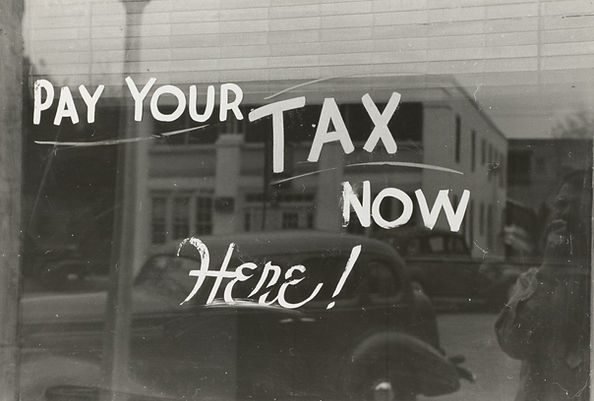


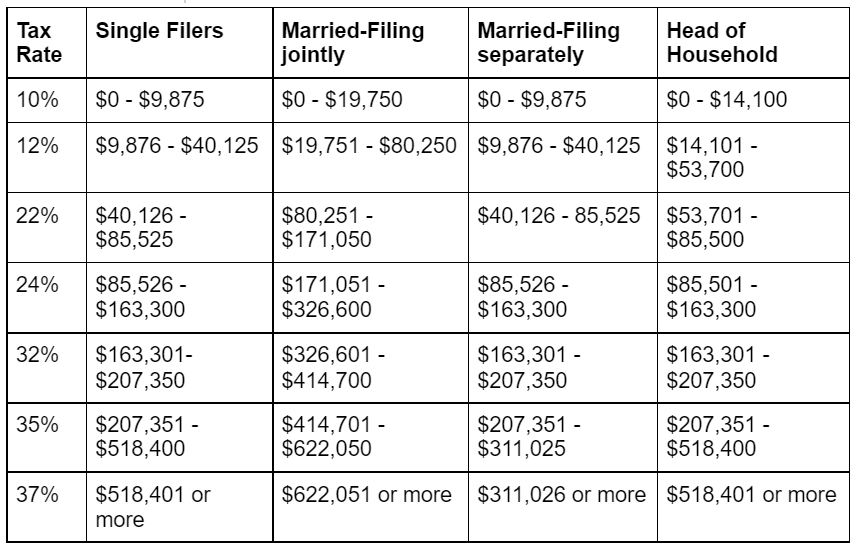
Income taxes in the United States are determined by how much an individual earns, the more you make the higher percentage of taxes you will pay. This encompasses all of an individual's earnings including capital gains. For federal income taxes, the percentage is based on which “bracket” you fall into. This also changes based on how you are filing- single, married: filing separately, married: filing jointly, and head of household.


2020 Tax Brackets

By law, taxpayers must file an annual tax return to make sure all tax obligations have been met. Most employers withhold the appropriate taxes from your paycheck and send them off to their proper places- either the State or Federal government. When you first start with an employer you fill out a W-4 form. This form determines how much of your earnings are withheld. However, this amount is not always perfectly accurate. You may owe more or less. When you file your tax return you get an accurate sum of your income and the taxes due. Often tax liability can be reduced by claiming certain tax deductions. This could result in the government owing you and sending you a refund - this is usually the part people do like.


There are three ways of filing your taxes. You can mail in a form 1040, you can file electronically via tax software. Many people prefer to hire a tax professional that knows the tax laws and can find places to reduce tax obligation.


Working with a financial planner can help you make sense of not just your taxes, but all other aspects of your finances. If you have questions send them our way - questions@yieldfa.com


“There is nothing sinister in so arranging one’s affairs as to keep taxes as low as possible.”

-Judge Learned Hand pg. 134 The Maxims of Wall Street by Mark Skousen


45 views
0 comments

Got Insurance?

Posted by Wendell Brock on Fri, Jul 16, 2021

Got Insurance?

  • Wendell Brock
  • Jul 16, 2021
  • 2 min read

Previously, we discussed risk management and how insurance is a tool we can use to minimize our financial risks. When thinking about your financial plan insurance might not be the first thing you think of, but it is an important element.


Insurance is a contract, represented by a policy, that safeguards you against loss. By collecting small amounts of money (in the form of premiums) from all their policyholders each month, an insurance company creates a large pool of money that can cover the steep costs associated with covered losses. Insurance companies analyze the risk potentials by using mathematics, statistics, and other financial theories. This allows them to price their policies based on how likely it is people will make a claim.


Like many things in the financial world, there are many details and options connected with insurance, so it can feel overwhelming. There are multiple types of insurance ranging from the usual home and auto to the less common wedding or alien abduction insurance. Essentially, if it has value you can find an insurance policy to cover it.


You obviously don’t need to have every type of insurance that’s available, but it is important to have appropriate insurance coverage. If you own a car you will need to have auto insurance, and if you own a home or are renting you should definitely have either homeowner’s or renter’s insurance. We’ve written about life insurance before on our blog and how important it is to cover your family in case something happens to you.


There is also umbrella insurance, which covers personal liability beyond what a homeowner or auto policy would cover. It's designed to cover any injury or damage you may have caused to someone else or something outside the coverage of your other insurance coverage. Umbrella policies create another level of risk management. If you are a part of anything that increases your risk of liability, umbrella coverage may be a smart choice.


We all know that life can be unpredictable. Would anyone have guessed how these last couple of years were going to turn out? Life will always throw the unpredictable at you, but if you are prepared and plan for some of those uncertainties you will have a much better chance of weathering financial storms and protecting your assets. Having the right insurance plan in place can help make sure you don’t drain your emergency or saving funds when life gets stormy.


What financial question keeps you up at night? Reach out at questions@yieldfa.com.


“I don’t believe in taking foolish chances, but nothing can be accomplished without taking any chance at all.”

-Charles Lindbergh p.49 The Maxims of Wall Street by Mark Skousen



What Is Risk Managment?

Posted by Wendell Brock on Fri, Jul 09, 2021

What Is Risk Managment?

  • Wendell Brock
  • Jul 9, 2021
  • 2 min read

Life is inherently risky. We run the risk of something going wrong daily. Most of the time we can avoid risks by the good choices we make or by planning ahead. When it comes to our finances we can apply the same thinking. Many financial risks can be avoided by doing research and making wise decisions. However, some unpredictable things fall outside of our control. This is where risk management really comes into play. There is no way to eliminate all risks, but we can minimize and even circumvent many risks that could affect our financial security.


It’s all about your choices:


If you’re the kind of person that likes to take a little more risk in your life you may feel comfortable taking a walk during a thunderstorm, acknowledging that there is a chance of getting struck by lightning. But if you tend to avoid the riskier paths, you would probably stay inside during the storm where you know you will be safe. This same principle applies to our finances. There are some things we know will carry more risk than others, and depending on how well we tolerate risk we can either embrace that risk or avoid it. (You can read more about risk tolerance here).


There are different ways that we can approach risk:


When we assume risk we are not doing anything to minimize a potential loss. For example, if you don’t have car insurance and you get into a wreck, you will have to cover the full cost of damages yourself.


Sometimes we can share risk (also known as risk distribution) so that we don’t carry the full weight of potential financial burdens. If something bad happens, sharing the risk helps spread the effects and reduces the impact you may feel. This works well when you have a financial partner backing you.


We can transfer risk to others- like insurance companies- and they assume the responsibility (as long as you are paying your premiums). Insurance companies use the Law of Large Numbers and mathematical and statistical formulas (actuarial science) to assess risks they are taking on. We’ll talk more about insurance in our next article.


If we make efforts to avoid risks we can circumvent some problems altogether. Avoiding risk means you steer clear of choices that could lead you to potential problems. This can be a great way to prevent large losses, however, while avoiding riskier possibilities you might also miss out on other options and opportunities.


The whole idea behind risk management is to limit potential damage and protect your assets. If you have questions about risk management or any other financial concerns you can send them to qestions@yieldfa.com and we’ll write up a response!


“Think risk first, then reward.”

-Anthony M. Gallea

Pg.51 The Maxims of Wall Street by Mark Skousen



Why Is Estate Planning Important?

Posted by Wendell Brock on Sat, May 01, 2021

Why Is Estate Planning Important?

  • Wendell Brock
  • May 1, 2021
  • 3 min read

We all know someone who, as the old saying goes, is now pushing up daisies! Nobody likes facing their own mortality. A friend, and a good estate planning attorney, titled his book, Why Should I Care, I’ll Be Dead, (available on Amazon). The reality is estate planning is an integral part of your life. Why leave what you have built your whole life, to be wasted. If you care what happens to your assets now while living, why not care about them after you die?


While not as fun as planning a vacation or the fun things you’ll do during retirement, having your estate planned will spare your loved ones a lot of frustration and protect them from potentially angry or hurt feelings with other family members. These family soap opera dramas are all too often real. They happen when dividing up a deceased loved one’s possessions and assets. Having an estate plan in place means you get to designate who gets what and save your family from potential fights over who should have your favorite collections. If you don’t make the decisions now you won't have any control over how your estate is divided up once you are gone.


Don’t make the mistake of thinking that estate planning is just for old people. Every adult should have at least a will. If you have a young family, it's very critical to have a will in place to protect your little ones just in case the unthinkable happens and there is no longer a surviving parent to take care of them. No one I know was given a guarantee on their length of life. You can make sure your children are raised in the manner you want by naming their guardian. If this isn’t done the state government where you live will make guardian decisions for you. Many times, it’s someone you would most likely never have chosen!


Reducing the tax and financial burden for your loved ones is a common goal for many people. At times, many assume that because they don’t have mass amounts of wealth they don’t need an estate plan, but if things aren’t properly arranged beforehand it can leave your heirs with some hefty tax or legal issues. Not only could your heirs have to deal with estate taxes, there could also be income tax ramifications, both federal and state.

If you don’t create an estate plan, and the distribution of your earthly possessions, don’t worry the probate judge will publicly announce how he or she will distribute your assets. Oh and your heirs will have to pay the bill. Remember, it’s easy to divide up a dollar between your heirs; the one and only, cherished family photograph, or piece of art, not so easy!


In the end, literally, if you want your loved ones and assets protected, take the time to set up an estate plan to ensure it happens according to your wishes.

Certain aspects of planning can be harder than others. Don’t be that person in school that’s too afraid to raise their hand. If you have a financial question(s) we’d love to hear it. Send your questions to questions@yieldfa.com and we will respectfully answer it in a post!

“You must devote some time every day to the subject of investment.” - Gerald Loeb p116 The Maxims of Wall Street by Mark Skousen



How On Earth Do I Plan For Retirement?

Posted by Wendell Brock on Sun, Apr 25, 2021

How On Earth Do I Plan For Retirement?

  • Wendell Brock
  • Apr 25, 2021
  • 2 min read

Updated: Apr 27, 2021

It’s easy to put off thinking about retirement when you’re young and life is good, but like most things, the sooner you start the better off you will be. There are many different aspects of retirement, because of emotions and lifestyle choices, no two plans will be the same. Every individual will have different needs and wants for their retirement years. You will need to determine your retirement goals, and then structure your plan around those using different financial strategies for saving, investing, and (once you retire) distributing your money.


You will need to identify sources of future income and start transferring money to those accounts. One of the easiest ways to kick start your retirement plan is to participate in any employer sponsored retirement programs like a 401k.


The timeline for retirement planning starts as early as your first job or your first saved or invested dollar. Young adults at the beginning of their careers typically don’t have as much money to invest, but with time on their side, they only need to invest a small amount to amass a large amount of money. When compared to someone even ten years older, that person would need to invest nearly three times the amount. This is where compounding shines.


By your mid thirties you may have more money coming in, but there's usually more money going out as well as families and responsibilities grow. This is a pivotal time to be a little more aggressive in putting money into your retirement accounts. Again, the interest and growth on these assets will begin to provide more security once you retire.

By your fifties you should be trying to max out your contributions to your 401k or IRA. Towards the end of your career you will want to focus on being more conservative with your investments. You should also assess what your Social Security benefits will be, and begin learning about those benefits, including how and when to access them.

Retirement planning is an ongoing effort. As life changes, flexibility is key, pivoting when needed. Remember that these retirement years are the “golden years.” Plan accordingly so you can enjoy them.

We’d love to answer your financial questions, I know what y’all are thinking- its just a silly or dumb question. We’ve all said that before, right? I really cannot remember the last time someone asked a truly “dumb question,” even though that is what they said just before asking their question! . Send your question(s) anyway here: questions@yieldfa.com and we’ll respectfully answer them in a post!

“There is only one success - to be able to spend your life in your own way.”

-Christopher Morely pg.129 The Maxims of Wall Street by Mark Skousen



Can a Budget Help Me Get Out of Debt?

Posted by Wendell Brock on Sun, Apr 18, 2021

Can a Budget Help Me Get Out of Debt?

  • Wendell Brock
  • Apr 18, 2021
  • 3 min read

Have you ever gotten to the end of the month and wondered where all your money has gone?


One of the primary steps to becoming financially secure is to gain an understanding of your cash flow and set yourself a budget. To begin you should understand where you stand now and visualize where you want to be financially in the future. There’s no point in setting out on a journey if you don’t know where you're going. Creating a cash flow budget is not always easy, it can take some time, but if you take it step by step you’ll be able to create a functional budget and use it as a road map to your financial goals.


The first step you need to take is to calculate all your money coming in. Then tally up all the money that you spend. These two numbers will give you your net cash flow.


Total Income - Total Expenses = Net Cash Flow


Ideally, you need to have a positive cash flow. This means there is money left over to be saved, invested, or can even be used to treat yourself. If you end up with a negative cash flow, it’s an indication that you are living beyond your means and are incurring debt. This is a dangerous place to be, and can be difficult to free yourself from if the negative cash flow continues. The only way to get out is to assess your spending habits and make proper adjustments.


Cash flow management really comes down to understanding the different components that make up your financial picture and acting accordingly. Once your cash flow has been established you can turn that information into a budget. This next part is easiest if you categorize your spending. Start by identifying your components of income-things like your paycheck or investment sources.

Then list the components of your spending; there are different categories of spending that will help you to determine all of your expenses.

  • Fixed and periodic expenses are things you must pay each month like your rent/mortgage, loan payments, recurring bills, and payments like utilities, cell phones, or memberships.

  • Variable, or discretionary expenses are the things we have more control over like groceries, eating out, retail/online shopping, vacations, etc.


The final component of your budget is savings. The better you are at managing the other categories, the more money you will have to save. Money saved and invested allows you to grow your money, which results in more financial security.

Designate the amount needed to cover each category, and stick to it. By cutting back on discretionary spending you can turn your financial course around. If you have a negative cash flow this is where you will really start to see a difference.


Maintaining a budget will help you when making financial decisions and gives you set parameters to live within. It’s a good idea to revisit and assess your budget at least quarterly. This allows you to stay on track and make course corrections when needed. Remember, budgeting is an ongoing, active process.


When in doubt don’t hesitate to ask for help with your finances. It’s always better to be certain that you understand than to have a mistake snowball into a larger problem. If you have financial questions we’d love to hear them. Send your questions to questions@yieldfa.com and we will write up a post to answer them!

“It’s not what you buy. It’s how much you pay for it.”

-Carl Icahn pg.36 The Maxims of Wall Street by Mark Skousen



Life Insurance- Do You Have the Whole Picture?

Posted by Wendell Brock on Mon, Mar 29, 2021

Life Insurance- Do You Have the Whole Picture?

  • Wendell Brock
  • Mar 29, 2021
  • 3 min read

As we become adults we take on the expected responsibilities like getting a job, paying our bills, and providing for ourselves. Many people go on to start families and provide for them. But what if that provider died? This has been a concern since the beginning of time.

Life insurance has been around for a long time, longer than some people realize. Dating back to ancient Rome, there were societies dedicated to cover burial expenses for their fellow comrades. Flash forward a few centuries and life insurance starts to look a little more familiar. In the mid 1700’s life insurance was developed in America, and by the 1830’s some of the insurance companies we are familiar with took shape. From here it was refined and became what is known today.

Life insurance, in essence, is pretty simple. You pay a premium every month, and in return the insurance company agrees to pay out your coverage in the event of your death. It can feel a bit macabre or depressing, but it is an important issue to address; as the old adage goes “the only two certainties in life are death and taxes.”


Life insurance is not really for the person receiving the coverage. It’s for the individual’s loved ones-their family. When a provider passes away it leaves not only a hole in the hearts and lives of a family, it can also leave a deficit in their finances. Funeral costs can range anywhere from $5,000 to $10,000. Then there are debts and bills to be paid as well as the everyday living expenses. Having proper life insurance can provide coverage for those costs and bring peace of mind, not only to you now, but to your loved ones as well.


Back in the mid 1970’s 72% of adults in the United States carried some form of life insurance. However, today only 57% of Americans have life insurance. And more than half of those insured don’t have enough coverage to meet their financial needs.

What changed? Why are fewer people getting life insurance?


Most insurance companies will have you do a physical and answer medical and family history questions in order gauge your health. This is one of the reasons getting life insurance when you're younger is a good idea. Typically when we are young we are at our physical peak, which allows for a lower premium- the better your health, the lower your premiums. All that being said, reports show that 4 out of 10 Americans don’t qualify for life insurance. There are a few different reasons why someone might not qualify, but the top reasons usually have to do with poor health that is associated with obesity, high blood pressure, or some form of metabolic disease. The good news is these are factors that are within your control and can be overcome with lifestyle changes and healthy habits.


Acquiring life insurance earlier in life is better than waiting. It's important to consider that the time to get life insurance is before you need it. If you wait until you have been diagnosed with an illness you will likely not qualify for a new policy.


Most people are familiar with the concept of life insurance. The two most recognized are “term” and “whole.” Both policies are designed to pay your beneficiaries in the event of your death. However, there are significant differences between them.


Initially, term life insurance can have lower premiums to start with, which makes it a popular choice. But those premiums go up over time because as you get older your chances of dying increase. The name “term” indicates that the insurance coverage lasts only for a set amount of time. Once the set term of your policy has expired, all the money you paid into it is gone.


Whole life insurance typically has higher premiums, but they don’t go up as you age or if you become ill. The earlier you start a whole life policy the better deal you can get. Whole life also differs from term in that it offers additional perks in the form of “cash value.” When you pay your premium a portion goes into a tax-deferred savings account where it can build up and grow interest, which can help provide more stability in your retirement years.


The goal of whole life insurance is to provide coverage for your whole life.


If you have a financial question we would love to hear it. You can email your questions to questions@yieldfa.com


“Buy on mystery, sell on history.”

-Old Wall Street Saw;

The Maxims of Wall Street, by Mark Skousen p.41


Are You a Risk Taker?

Posted by Wendell Brock on Fri, Mar 19, 2021

Are You a Risk Taker?

  • Wendell Brock
  • Mar 19, 2021
  • 3 min read

Years ago I heard Steve Forbes, the publisher of Forbes Magazine, say “everyone is a disciplined, long-term investor until the market goes down.”


When it comes to investing there are definitely some investments that are riskier than others. How do you know which investments to jump on and which ones to give a pass? It’s common for investors to make the mistake of not matching their investments with their overall objectives. It can be hard to gauge if the risk is worth the potential payout, or if you should use something with little less risk.


Financial planners use different methods to help clients understand the types of investments they should be looking into. A risk profile is one tool that gives insight into your ability and disposition towards taking on financial risks. It aids in determining the proper investments or portfolios to invest in; it can align investors with the appropriate level of risk associated with their personal goals. For example, some investments come with a much higher risk, which can produce fantastic returns, but also come with potential for financial loss. On the other hand, there are investments that carry a much lower risk, but produce a much lower return as well.


When we look at risk we can see it as a balanced scale. If you place higher risk on one side, the other side is typically balanced out with a higher payout. If you place lower risk on the scale, the other side will have a lower payout to keep it balanced. There are several types of investment risks, and some can be managed, but perhaps that is an article for a different day.


The most common way to discover your risk profile is through a Risk Profile Questionnaire. It’s like a financial personality quiz that reveals a person's ability or willingness to take risks. It consists of questions that measure your attitude and understanding of financial markets. It also helps gauge how you might react to certain investment scenarios. Your responses are calculated to determine your risk level. The results are used to develop a portfolio.


Once you know your risk profile, it’s helpful to revisit these questionnaires regularly because a person’s risk profile changes over time. This is helpful in maintaining an alignment with your investment goals.


Typically there are five types of investors. The score you receive from the Risk Profile Questionnaire will determine which type of investor you are.


Conservative

A conservative investor’s focus is on protecting principal instead of seeking higher returns. They are comfortable accepting lower returns for a higher level of security and more liquidity of their investments. Overall, a conservative investor minimizes risk of loss.


Moderate-Conservative

A moderate-conservative investor’s objective is principal preservation, but is comfortable accepting a small degree of risk to seek some degree of appreciation. This investor is willing to accept lower returns, and is willing to accept minimal losses.


Moderate

A moderate investor permits some risks in order to enhance returns.

They are prepared to accept modest risks to seek higher long-term returns. A moderate investor can endure a short-term loss for the trade-off of long-term appreciation.


Moderate-Aggressive

A moderate-aggressive investor places a higher value on long-term returns and is willing to accept significant risk. This investor believes higher long-term returns are more important than protecting principal. A Moderately-Aggressive investor may endure large losses in favor of potentially higher long-term returns.


Aggressive

An aggressive investor prizes profitability and is willing to accept substantial risk. This investor believes maximizing long-term returns is more important than protecting principal. An Aggressive investor may endure extensive volatility and significant losses.


Knowing your personal risk tolerance gives you an understanding of what’s important to you, as an investor, and will guide you to make decisions that reflect your overall goals. It is hard to classify as a moderate risk investor, and expect to “beat the market”, and then be upset at times when your account goes in a negative direction. Investors can’t have it both ways.


If you want to complete a risk profile questionnaire, you can do so here, it takes about five minutes and you will receive your score in your email.


“The only people who never get criticized are those who never do anything.”

-Linda Prevatt

Pg. 132 The Maxims of Wall Street by Mark Skousen



What’s the big deal about Annuities?

Posted by Wendell Brock on Mon, Mar 15, 2021

What’s the big deal about Annuities?

  • Wendell Brock
  • Mar 15, 2021
  • 4 min read

If you’ve started planning for retirement you may have heard of annuities. Doing a quick online search will result in a lot of information, as well as some misinformation. The reason for this is because there are a wide variety of annuities, each with their own specialized options. While this can seem overwhelming and complicated at first glance, it's what allows annuities to be customizable.


So what exactly is an annuity? Basically, an annuity is a retirement income contract offered by insurance companies. They are a long-term agreement that allows you to accumulate funds on a tax-deferred basis, which are then paid out in regular instalments, guaranteeing income during your retirement years. Annuities are structured to give your retirement plan a reliable foundation to build on. Because of this, annuities are not primarily an investment, rather they are a disbursement vehicle. In this way, they work much like corporate pension or Social Security. The payments you receive may last for a predetermined length of time, such as 20 years, or they can be ongoing for your lifetime, and/or the lifetime of your spouse.


So why would you want to consider an annuity?

The main reason people look at annuities is because they provide guaranteed income that you may not outlive. Annuities generate a consistent income stream. Some other benefits are:


  • You may get back the money you put into it; you won't lose the money you started with.

  • Annuities aren’t subject to an annual contribution limit, if you have more to contribute to your retirement after you’ve reached your 401(k) and IRA limits you can put it into an annuity.

  • You can design annuities to fit your needs and lifestyle. You can manage how much income and how much risk, and using riders, you can add on, and customize your annuity to meet your specific needs.

  • They can also provide for your loved ones when you are gone.


As mentioned before, there are different types of annuities. This is where people tend to get confused. There are fixed, variable, and indexed annuities. Each of these come with their own level of risk and payout potential. You can also choose between immediate or deferred annuities.


  • A fixed annuity guarantees a set interest rate for a length of time, which may be adjusted on the annuity’s anniversary. The distributions may also be a fixed amount for the term established. With this option you are guaranteed your initial investment and it earns interest at a fixed rate.

  • A variable annuity fluctuates depending on the returns of the subaccount(s) (similar to a mutual fund(s)) you have selected, making its value go up or down, which in turn could affect the payment amount you receive.

  • An indexed annuity is a type of fixed annuity that has features from both the fixed and variable annuities. With indexed annuities your investment is protected when the market is down, but still has the possibility of growing your investment more when the market is up.


  • An immediate annuity begins issuing payments after a lump-sum has been deposited. Once you give the insurance company a lump sum of money you start receiving payments. This option is great if you have acquired a large amount of money like an inheritance.

  • A deferred annuity starts payments on a future date determined by the owner. You can purchase a deferred annuity with a lump sum, a series of periodic contributions, or a combination of the two.


Think about making a salad- Salads start with a base of leafy greens, but there are a few different choices out there, you’ll pick the one you like best. Once you’ve picked your base you can start adding on the toppings and extra things.


There are some downsides to going with an annuity. Some annuities have fees (generally variable annuities) associated with annuities, which may reduce the value of your annuity. And, like many retirement accounts, if you withdraw money before age 59 ½ you are subject to a 10% penalty penalty tax. You could also get hit with a surrender fee. However, depending on how your annuity is structured,you may be allowed to take out a certain percentage each year without paying a surrender fee, which decreases each year.


While annuities provide a lot of flexibility and options, you pay for all those extras. Those riders mentioned earlier, they can add up quickly. The more riders you add, the more expensive your annuity will be. You will have to weigh the advantages against the costs, and decide if those are really worth it.


Often an annuity works well to fill the gap between desired income, and what Social Security, and/or what a pension is paying. For example: if your planned retirement income is $6,000 per month and you are receiving $2,400 from a pension, and $1,800 from Social Security, totalling $4,200, then you can use an annuity to fill in the gap that would provide a guaranteed income of $1,800.


The word annuity comes from an ancient Roman term annaus - meaning payment, which was a gift to soldiers and their families.


“If you take care of the pennies, the dollars will take care of themselves.”

~ Russell Sage, The Maxims of Wall Street, p. 62


What Is the Emotional State of Money?

Posted by Wendell Brock on Fri, Mar 05, 2021

What Is the Emotional State of Money?

  • Wendell Brock
  • Mar 5, 2021
  • 2 min read

Money has a strong connection to our emotions. There are many aspects of money, including how we use money, that cause us to experience different emotions.


How do you feel when you’ve saved money on a purchase? How does it feel when you spend your hard earned money on something you’ve eagerly been waiting for? On the other hand, how does it feel when you have to borrow money to pay for something you need? How do you feel when you look at your bank account, knowing your finances are tight?


If money were not emotional, simply having more would make people happy, secure, and there would be no negativity associated with having more or less money. We see movies (as well as real life stories), about miserable rich people.


Researchers have identified that the most common emotions associated with money are:

embarrassment, fear, depression, guilt, shame, anger, panic, hate, jealousy, and anxiety.

Why are so many of the emotions we associate with money negative?


One factor might be that our perception of money is linked to our childhood. How did our parents or caretakers handle money? How did they feel about it, manage it, etc? If their relationship with money was negative, unknowingly that could very well bleed over into your own perception.


Too often, people find their finances in a self-destructive cycle. They tend to have money problems, which then causes them to think negatively about money. And thinking negatively about money tends to cause more money problems. If we allow our negative emotions to override our critical thinking, it will negatively influence the decisions we make with our money. This could lead to a negative money cycle.


Can we break these negative cycles, and feelings by changing our perception of money? Absolutely! People who think positively about money and believe it is something they can control tend to be more successful with their money. Experiencing success with money leads them to feel more positive about money, and thus creates a positive money cycle.


Money really isn’t the problem, it's all in how we approach it and how we feel about it. Money can also make us feel happy, excited, satisfied, and mostly, secure. Money should enhance our lives, not ruin them.


We need to be careful with money. It's far better for us to control our money, than allowing it to control us. We can learn to control it through practicing self discipline in the way we manage our resources. By being aware of the role our emotions play in our finances we can have more control over our money.


“I can calculate the motion of heavenly bodies, but not the madness of people.”

~Sir Isaac Newton; The Maxims of Wall Street, p.89


120514_WWBrock_1

Wendell W. Brock, MBA, ChFC

Subscribe by Email

Follow Me

Most Popular Posts

Other Sites I Follow, hobbies, fun and info:

gold-vs-silver-1.jpg  Nauvoo Mint brokerage services for precious metals


john Mauldin chair

Note:

Outside Economics is not a registered investment advisory firm (RIA) and does not act as an RIA. Outside Economics does not provide any specific investment advice. Any information obtained from this website or through one of  Outside Economics' representatives should be reviewed by a professional.

Subscribers Note: We do not sell our email list. Period. Thank you for subscribing.

Recent Posts