Outside Economics

You may not budget like this!

Posted by Admin on Thu, Apr 04, 2019

You may not budget like this!

  • Apr 4, 2019
  • 5 min read


We typically know how much we spend each month, but do we really know the details? Budgeting is the process of creating a physical plan for the uses of our monthly/annual cash flow. A budget therefore is a spending plan, it is the document that tells you and others how and where the money will go. While that is the basic concept there are several aspects of putting together and implementing a budget, namely finding the data, drafting a budget, agreeing to the budget, and using a budget. Budgeting is an essential building block to effective personal finance. I hope to bring about a positive mindset about using budget, so lets explore these items:


Finding the Data

Right off the top this can be a task of self examination! I ask clients to go back through four months of check book statements and list and total where money was spent. Where people spend money tells a lot about what is important to them. The reason I ask for three months, some quarters may have a funny month of spending, it may require some extra data mining from another month or two in order to get enough accurate information.

Don’t forget to list all the sources of income. Often the focus is solely on the spending, but listing income is important too. List bonuses, or second jobs, etc., an accurate income figure is especially important if it varies monthly due to commissions, overtime, or other factors.

When assembling this information determine the level of detail to categorize the spending. For example there are several items that I buy at a grocery store that are not actually “food”, but since I bought them there, I put them in the grocery category. I try to keep it simple, otherwise I could end up separating items on one receipt, calculate the proper tax, and then put them in their proper category.

Next arrange where the spending has been based on “Needs” vs “Wants”. This is really important as it helps to prioritize our spending. Maybe you value your entertainment budget, but most likely it’s not more important than your mortgage.


Drafting the Budget

Once the data is organized, it is easy to see where and how much money has been spent. This becomes our basis for drafting the budget. Make sure at the top of the budget is the line “Pay Myself First”. Successful budgeters realize that they don’t save what is left over, they save first and spend what is left over.

Add a bottom line figure of approximately ten percent of the spending part of the budget for “TIF” - Things I Forgot. We all forget items or things pop-up which need some attention. This is where those items go.

After subtracting the savings, spending, and TIF, from the income, the bottom line should equal a “0” - zero! This is called Zero Based Budgeting. If the figure is positive put more into savings, if it is negative, then look to the wants section for items which may be easier to live without.

This is where each person needs to come to grips with the “needs vs. wants” in the family finances. Focus on the needs then prioritize the wants and make things stretch as far as possible. However, do not eliminate or cut into savings. Savings is not the float figure in the budget!


Agreeing to the Budget

Now that the budget is drafted, it has to be agreed upon. It is critical that spouses agree to the budget, particularly if this process is to be successful and effective. Both spouses must be “All In”; one can’t simply dip a toe, while the other dives in. I cannot emphasize this enough. It does not work well if one spouse works within the budget and the other spends what ever they want, after all they should be on the same team.

Because things change, spouses should have a monthly meeting about their budget items to review what was done the past month and what the plan is for the next month. This little meeting should be taken seriously, by calendaring and keeping the meeting time sacred - do everything possible to make it happen. Needed changes should be noted and agreed upon and then move forward.


Using the Budget

The budget is a financial tool, a spending plan - where dollars are told what their job is and sent off to do that task, in an effort to accomplish certain goals. What a budget is not, is a form of punishment! A budget should free us from many financial decisions that may be thrown at us on a daily basis through various forms of media. A budget is a way of disciplining ourselves by keeping our needs and wants in check.

We all have wants, a new TV, automobile, vacation, etc.. A budget helps us get these items by structuring how and when we get them. It keeps us from impulse buying, by predetermining how and where we are going to spend our hard earned money. This means that all these wants, can be had in their proper time, when the money is saved to make such purchases. This is a category I call “save to spend”. My mother use to remind me as a young boy, “You can only spend it once!”

Let the budget work for you by developing the habit of using it. Make your monthly meetings effective, at times they may take only a few minutes to simply review and say, “no changes needed”. Good, move on and have fun. Other times the meeting may take a little more time due to larger up-coming changes as to where money needs to go. Once this begins to happen regularly, recognizable progress will come.

Don't let the on-going meetings be the weakness that kills the process. Remember the meeting may only need to be ten minutes to review and discuss the next month. The habit and discipline of monthly meetings will be what greatly increases your success of sticking to your spending plan. Steven R. Covey said, “The power to make and keep commitments to ourselves is the essence of developing the basic habits of effectiveness.” Keep it simple, but make it happen. With a new mindset about the use of a budget, your financial effectiveness will increase by keeping the commitment to properly manage your cash flow. Effective money management buys you financial freedom.

You can download my simple effective budget spreadsheet here.


Effective Budget Instructions:

Start with the Budget Data Worksheet:

The categories on the left side can be changed to match your income sources, savings buckets, needs and wants, and where you spend your money. As you change the category titles, place them in order of priority, what is most important to your family to least important.Enter your income and expenses from your bank statements and earnings statementsThe information should flow to the next worksheet titled Budget.

Next go to the Projected Budget worksheet and create your budget going forward based on your needs from the historical data. You can make changes as needed the same way as you did in the budget data worksheet. As the months go by update the budget as needed.

The key is the discipline to meet together regularly, review, change as needed and move forward. Claim progress toward your goals every time you meet. Remember we are talking about “buying you financial freedom.”

Working with four months at a time allows you the ability to see a quarter plus one month, it is a large enough time to see progress but not get too overwhelmed by the amount of work and numbers to deal with.

Nothing in the spreadsheets are protected - feel free to make changes as needed to fit your circumstances. Good luck to you and God bless your efforts!




Facts of Critical Illness Insurance Riders

Posted by Admin on Thu, Mar 07, 2019

Facts of Critical Illness Insurance Riders

  • Mar 7, 2019
  • 3 min read


In an effort to make life insurance policies more appealing and fit more of a family’s financial needs, measuring the risk, insurance companies have included insurance riders that cover terminal illness, critical illness, and chronic illness. The idea being, that the insured may develop an illness that causes great financial stress on a family, which could be covered by their life insurance. Should the person eventually pass away, why not accelerate the benefit a few years and pay something now? The policy rider may or may not be a great benefit.


These accelerated benefits, also known as “living benefits” are defined as follows:

— Chronic Illness: an insured is unable to perform two out of six activities of daily living, such as bathing or toileting, walking or transferring to or from a bed or chair.

— Critical Illness: an insured is diagnosed with a major illness such as cancer, heart attack or stroke. Terminal Illness: meaning a life expectancy of less than 12-24 months, depending on state limitations.


Acceleration of Benefits and Policy Maximums

These riders give you the option to access your policy benefits prior to death in the event of terminal or other life changing illnesses, when the need for additional funds may be crucial. This can be done either as a partial acceleration, meaning a part of your death benefit may remain in force, or a full acceleration. If you elect full acceleration, your policy will be terminated.

Generally there are limits on these policies, the maximum death benefit available for someone under age 65 is $2,000,000 and the maximum death benefit for those over age 66 is $1,000,000. The living benefit is based on the insurance amount; should you use the living benefit, you will not be paid the total amount of the death benefit.


How it works

If a 45 year old insured male becomes ill, for example with prostate cancer (common cancer for men), this person is insured with a ten year term policy for $1,000,000. The insurance company will look at how long the policy has been in force, age of the insured, type of illness, chance of recovery, policy death benefit, etc., they will look at everything related to this person and their current situation, then the actuaries will perform an analysis and make the insured an offer. This offer may be only a fraction of the total death benefit – maybe only $100,000 or less; or it could be more. Each person and their illness, stage in life, and how long the policy has been on the books are all considered when making the offer to the insured. In the end, it may or may not be worth it to give up the insurance policy for a living benefit.

Some policies state that they will pay up to 60% of the death benefit, some more, but the bottom line is that it all comes down to what the insurance company will offer considering all factors.


Typically, in the case of a terminal illness, the insured will get a higher pay out because it may be a matter of months until the insurance company will have to pay the full death benefit. The great advantage to this type of rider is for someone in business they can use the living benefit to help settle their affairs with their business partner(s) before death, leaving their heir(s) free of such complicated burdens. They may also choose to use some of the funds to travel or engage in other activities before they become too incapacitated by their illness.

While these benefits may be valuable for many people, they do not solve all the problems, nor replace the need for good medical insurance, long-term care insurance, life insurance or disability insurance. If the rider is used, the policy may be terminated and may end the possibility for a person to obtain additional life insurance in the future. The rider is an important extra benefit hopefully not in a position of last resort.


Want to Improve Your Credit Score?

Posted by Admin on Tue, Mar 05, 2019

Want to Improve Your Credit Score?

  • Mar 5, 2019
  • 3 min read

The other day I was in a store that was having a closing sale nearly everything was 70% off. I struck up a conversation with the manager who was losing his job. I asked him about what he was going to do next. He told me that he had been with the company for 21 years and he was not sure, but he was going to just hang out until he decided and found the right opportunity. Then he said this, “when I learned that the two companies merged, and in the future there was a chance I might lose my job, my wife and I decided to get completely out of debt. So we have no debt and can live on very little.”  It was just over two years after the merger that we spoke and the store he managed was now closing. I though how insightful. I was thrilled to learn of another person who was debt free and had the freedom to choose what to do next.


Becoming debt free should be a goal of each person. I have seen young college graduates who have finished school with well over $200,000 in student loans. As one client was telling me it is “discouraging”. The bondage of debt is discouraging! And what do many young graduates do - load up more debt and buy a new automobile! This debt can be extremely onerous!


This weeks article is mostly coming from a friend, Shawn Lane who is the Chief Operations Officer at Financial Renovations Solutions, (FRS). His company has helped many people improve their credit score and at the same time get more of their debt paid off. Being debt free greatly strengthens your financial position. Simply put, It is FREEDOM. 

Unfortunately some people find that they have slipped so much into debt that creditors start calling and some accounts get sent to collections. Shawn provides some answers in those difficult situations:


Will paying off a collection account improve my credit score?

I get this question a lot. Although I would never suggest NOT paying your debts, you need to be very careful when paying a collection account. If you are 100% sure you owe it, then maybe you should pay it (more on this later). However, if your goal is to improve your credit score, paying it will likely have the opposite, negative effect.


The FICO scoring model treats collection accounts as closed accounts, and the balance on these accounts have no impact on your credit score. What matters most is “the date of last activity”, which is the date the original debt went bad, or the date of your last payment to the collection agency. This means that a $150 collection account from last month has more negative impact to your credit score than a $3,000 collection account from last year. Therefore, paying it will not increase your credit score. In fact, often times paying it will drop your credit score even more by creating new and more recent activity on this account. 

Further, paying a collection account does NOT remove it from your credit report. You end up spending your money and reducing your credit score.


If you plan to pay a collection account, first secure an agreement with the collection agency to remove the entire collection account from your credit report upon receipt of payment. Better yet, make them first prove you owe the debt by sending them a debt validation letter AND make the credit bureaus prove they are reporting the account 100% accurately on your credit report. If they can’t prove it, they must remove it! Utilize the Fair Credit Reporting Act and the Fair Debt Collection Practices Act, as these protect consumers like you and me! You will have a very good chance of getting the account deleted from your credit report, which WILL increase your credit score.


I know Shawn has worked with people all over and is straight up honest in what he does. He truly cares about his clients. Everyone of us knows someone who needs help with their debts, pass this article on to them, you never know what will really flip a switch with someone. I wish you the best of luck in obtaining real freedom, by becoming debt free.


Remember:

"Continuous effort - not strength or intelligence - is the key to unlocking our potential." ~ Winston Churchill


Entrepreneurs, The Life Blood of Freedom

Posted by Admin on Tue, Feb 12, 2019

Entrepreneurs, The Life Blood of Freedom

  • Feb 12, 2019
  • 4 min read


The word “entrepreneur” originates from a thirteenth-century French verb, entreprendre, meaning “to do something” or “to undertake.” By the sixteenth century, the noun form, entrepreneur, was being used to refer to someone who undertakes a business venture. The first academic use of the word by an economist was likely in 1730 by Richard Cantillon, who identified the willingness to bear the personal financial risk of a business venture as the defining characteristic of an entrepreneur.


In the early 1800s, economists Jean-Baptiste Say and John Stuart Mill further popularized the academic usage of the word “entrepreneur.” Say stressed the role of the entrepreneur in creating value by moving resources out of less productive areas and into more productive ones. Mill used the term “entrepreneur” in his popular 1848 book, Principles of Political Economy, to refer to a person who assumes both the risk and the management of a business. In this manner, Mill provided a clearer distinction than Cantillon between an entrepreneur and other business owners (such as shareholders of a corporation) who assume financial risk but do not actively participate in the day-to-day operations or management of the firm.


Successful entrepreneurs expand the size of the economic pie for everyone. Bill Gates, who, as an undergraduate at Harvard developed BASIC for the first microcomputer, went on to help found Microsoft in 1975. During the 1980s, IBM contracted with Gates to provide the operating system for its computers, a system now known as MS-DOS. Gates procured the software from another firm, essentially turning his invention into a multibillion-dollar product. Microsoft’s Office and Windows operating software now run on about 90 percent of the world’s computers. By making software that increases human productivity, Gates expanded our ability to generate output (and income), resulting in a higher standard of living for all.

Sam Walton, the founder of Wal-Mart, was another entrepreneur who touched millions of lives in a positive way. His innovations in distribution warehouse centers and inventory control allowed Wal-Mart to grow, in less than thirty years, from a single store in Arkansas to the nation’s largest retail chain. Shoppers benefit from the low prices and convenient locations that Walton’s Wal-Marts provide. Along with other entrepreneurs such as Ted Turner (CNN), Henry Ford (Ford automobiles), Ray Kroc (McDonald’s franchising), and Fred Smith (FedEx), Walton significantly improved the everyday life of billions of people all over the world.


Economists William Baumol and Peter Boettke popularized the idea that free market capitalism is significantly more productive than alternative forms of economic organization because, under capitalism, entrepreneurial effort is channeled into activities that produce wealth rather than into activities that forcibly take other people’s wealth.

Baumol and Boettke insist that entrepreneurs are present in all societies. In government-controlled societies, entrepreneurial people go into government or lobby government, and much of the government action that results — tariffs, subsidies, and regulations, for example — destroys wealth. In economies with limited governments and rule of law, entrepreneurs produce wealth.


Some entrepreneurs have some serious challenges with their businesses. While I don't condone certain businesses that are legal in our country, that does not mean they don't have specific challenges. The new cannabis  businesses in Colorado for example are having difficulty establishing banking relationships, primarily due to banking regulations. Which many would argue limits an entrepreneur's freedom.


Baumol’s and Boettke’s idea is consistent with the data and research linking economic freedom, which is a measure of the presence of good institutions to both entrepreneurship and economic growth. The recent academic research on entrepreneurship shows that, to promote entrepreneurship, government policy should focus on reforming basic institutions to create an environment in which creative individuals can flourish. That environment is one of well-defined and enforced property rights, low taxes and regulations, sound legal and monetary systems, proper contract enforcement, and limited government intervention.

Research is showing that the public policy that best fosters entrepreneurship is economic freedom. It focuses on the reasons why government programs are likely to fail, and on how improved “rules of the game” (lower and less complex taxes and regulations, more secure property rights, an unbiased judicial system, etc.) promote entrepreneurial activity. Steven Kreft and Russell Sobel (2003) showed entrepreneurial activity to be highly correlated with the “Economic Freedom Index,” a measure of the existence of such pro-market institutions.

Economists find that infusions of venture capital funding do not necessarily foster entrepreneurship. Capital is more mobile than labor, and funding naturally flows to those areas where creative and potentially profitable ideas are being generated. This means that promoting individual entrepreneurs is more important for economic development policy than is attracting venture capital at the initial stages. While funding can increase the odds of new business survival, it does not create new ideas. Funding follows ideas, not vice versa.

There are many entrepreneurship quotes that are relevant and important to every entrepreneur’s journey. Here are a few favorites:


It’s fine to celebrate success but it’s more important to heed the lessons of failure.– Bill Gates

I have not failed. I’ve just found 10,000 ways that won’t work.– Thomas Edison


Success is walking from failure to failure with no loss of enthusiasm.– Winston Churchill


It’s not about the ideas. It’s about making the ideas happen.– Scott Belsky


Ideas are easy. Implementation is hard.– Guy Kawasaki


Timing, perseverance, and 10 years of trying will eventually make you look like an overnight success. — Biz Stone


No more romanticizing about how cool it is to be an entrepreneur. It’s a struggle to save your company’s life – and your own skin – every day of the week.– Spencer Fry


See things in the present, even if they are in the future.– Larry Ellison


All our dreams can come true, if we have the courage to pursue them.– Walt Disney


Failure is simply the opportunity to begin again, this time more intelligently.– Henry Ford


If you want to succeed you should strike out on new paths, rather than travel the worn paths of accepted success. — John D. Rockefeller


Go as far as you can see; when you get there, you’ll be able to see further. — JP Morgan


It is critical that we as a country support the principals of free enterprise and entrepreneurship, the largest breaks on the system is the government and all the regulation it has created. Regulations are typically there to help “protect the people”; but all too often these same regulations impede progress and development of new products which can help people even more. How do regulations slow the progress of your business?


What's the deal with my Home Insurance?

Posted by Admin on Thu, Feb 07, 2019

What's the deal with my Home Insurance?

  • Feb 7, 2019
  • 4 min read

Homeowners insurance can be very confusing - let’s be honest how many of you have actually read your policy and know its limits, etc.? That's what I thought, not many! After all we only have it because it is required by the mortgage lender and we are confident that, just like life insurance, it will never happen to us, so we would skip it and save the money - right? Even though for many Americans their home is their second most important asset (You can ask me later what the first most important asset is).


If life insurance is any indicator then a full forty percent of the homes would not be insured, simply because that is how many people run around without life insurance. But I digress, back to the subject of homeowners insurance.


Years ago I bought a rental house with my older brother and his wife. Yes the three of us were business partners, imagine going into business with a family member! I owned half and they owned the other half. Well we all remained great friends and kept our family relationship in top order - while the partnership ended 20 years ago when we sold the house, I would do it all over again with them, they were the best business partners I could have had at that young age. 

We had a tenant whose 12 year old son was caught playing with matches - unfortunately he was caught after the house caught fire and burned down! They lost everything they owned (they did not have renters insurance) we lost a house. So I know first hand about a house fire and the importance of maintaining the proper insurance.


There are two general types of property coverage for residential real estate: dwelling and homeowners policies. 


Dwelling policies are more limited in their scope of coverage, the policy is more basic for the property and most things are added via a “rider” to the policy. Perhaps you could say it is an alls-carte - you can pick and choose what you may need. Often they are used to cover rental houses or vacation homes.


A homeowner policy is more of a package of coverages for the owner of the property. It will typically have the broadest coverages. These policies have two parts: 1. the property coverage, insuring the home and contents, and 2. providing liability coverage, should there be a problem, where the owner is liable for something occurring on the property or through some sort of bad act by the property owner or an immediate family member for which he/she may be responsible.


Having the proper amount of insurance coverage is key. This can be tricky with home values changing on a regular basis. However, you should have the value of the home evaluated on a regular basis.


Here is the rule:

In order to have your home properly insured the insurance property coverage must equal a minimum of 80 percent of the replacement cost of the home. The home’s market value is a pretty good estimate of this figure as replacement cost is one of the factors that contributes to a home’s market value. 


People often ask, why 80 percent and not 100 percent? The reason is that traditionally, 20 percent of the home’s value is placed in the value of the land upon which the home sits. If the home is damaged generally speaking the land is not and a new home can be rebuilt in its place, making the land a consistent value of the overall property.

Here is the formula for replacing a damaged home:

(Insurance carried/Insurance required) x amount of loss = amount of reimbursement

This is how it works in real life, a homeowner experiences a $100,000 loss on their home worth $300,000. 80 percent of $300,000 is $240,000, this is the amount of coverage a homeowner should carry. Now lets put this into the formula:

(240,000/240,000) x $100,000 = $100,000 In this case the homeowner would be reimbursed the full amount of the loss.


Here is another example, in this case the same homeowner had not updated their policy in several years, which let the policy fall behind the value of their home, they did not maintain the 80%. The coverage they carried was based on a home value ten years ago when they purchased the home at $200,000, required coverage at that time was only $160,000.

($160,000/$240,000) x $100,000 = $66,667, this is what the homeowner would receive for their $100,000 loss. The balance they would have to come out of pocket to complete the required repairs. 


Falling behind on the insurance can be a real problem in high inflationary times because values can increase rapidly

As a side note, neither of these examples takes into account the deductible, that amount would be deducted from the amount of the reimbursement to get the final reimbursement amount. A homeowners policy may have different deductibles for different types of losses, so it is wise to keep track of that deductible amount. This is where a good savings plan is helpful to have the funds at the ready for such a need.


Many people go through life never experiencing such a loss to their home or property, however that does not mean that you should not be covered. This is something that you don’t want to “self insure”, maintain adequate coverage because if and when something happens, you will be glad you did. Pull out your homeowners policy and review it. Make sure the coverages work for your personal situation. If it is lacking in any area call the agent and get it updated or call me and I can walk you through each of the issues.


REMEMBER:

Regarding Hot Tips: "Assume you are always the last to know." ~ Charles Kirk


Six Tips to Becoming Self Reliant

Posted by Admin on Thu, Feb 07, 2019

Six Tips to Becoming Self Reliant

  • Feb 7, 2019
  • 3 min read

Recently I was in a meeting and the thought occurred to me; why do people even attempt to have a financial plan? What is the purpose of having a financial plan? Why take the time to create a financial plan and put forth the effort to implement it and follow through with it? The answer to these questions may sound obvious, but as I have studied financial planning and worked in the financial industry for the past 30 years, I have concluded that people have an innate desire to be self-reliant. However being self-reliant is a learned trait while we may have the innate desire, we have to act on it, and learn self-reliance.


What does it mean to be self-reliant? According to Dictionary.com, the adjective originated around 1826 and means, “relying on oneself or on one’s own powers, resources, etc.” Another definition, one that is a little broader is this: The ability, commitment, and effort to provide for the spiritual and temporal necessities of life for self and family. Both definitions explain the necessity to provide for one’s self.


The second definition is more comprehensive. My thinking is; how can you be self-reliant if you are not mentally or spiritually in the game? Can someone provide for self and others without that inner strength that comes from being mentally or spiritually prepared? I believe that self-reliance is more than just a good job and a fat bank/retirement account(s).

Self-reliant people not only have a good source of income, they have money in the bank, investments, as a friend of mine would add some food storage, debt free, and they are spiritually and mentally able to care for their own. This is a challenge in todays world where people are pulled in every direction, often wasting time and money. In some cases, children don’t have a complete understanding of what it took to earn the money they are now spending. 


With the challenges of providing for one’s self and family, may I submit that it would also include the necessity to continue to learn and improve one’s self. Consistently learning and integrating new concepts of truth, would help a person accomplish a goal of self-reliance. For example read good books, work with a mentor, be a mentor, help someone else reach their goals.


How does someone become self-reliant? Here are six ideas that will help you become more self-reliant:


1. Pay yourself first: Take some money out of each pay check and send it to savings (savings accounts, retirement accounts, investment accounts). The discipline of saving money and living on less than one’s income is a critical part of self-reliance.


2. Using a family budget: Using a budget is one of the basic principles of good money management.


3. Risk management: Risk management is taking care of the risks we are exposed to on a daily basis. There are four things that can be done with the risks: Keep the risk yourself and personally pay for the things that may happenControl the risk through behaviorPrevention - don’t engage in behavior/activity that would enhance the riskTransfer the risk through some means of insurance.


4. Be prepared: Things happen in life that cause great pain or financial difficulty (loss of a job, divorce, death of a loved one, business reversal, etc.) These trials may cause us to stretch and grow in ways we never knew we could, so finding, and developing coping skills is critical (developing the mental/spiritual side of self-reliance).


5. Daily improvement: Find something to do on a daily basis that will help you improve various aspects of your life. For example each morning, I spend time, praying, reading, writing in a journal, exercising, and meditating. 


6. Become debt free: Debt is truly a bondage that never sleeps, never eats, is always your companion where ever you go; becoming debt free is a blessing of self-reliance. Get out of debt!


These steps towards complete self-reliance take time and work. Don’t be too hard on yourself if you are not self-reliant in the next year - keep working towards it. “Claim progress”, as my wife would say. Map these things out how you personally might implement them in your own families’ and measure your progress. And then realize that life happens and each of us can experience a reversal.


Reversals that can cause a person to be completely wiped out and they have to start over, some people go through life with no issues at all (at least not that we see), so be patient with people around you as we are all be on the road to self-reliance, we aren’t at the same level, or we may have just suffered a reversal.


Finally, remember that there is always hope; keep the embers of hope alive by working on the above six items in some manner, as part of your financial plan regularly measure and keep track of your efforts, and you will become self-reliant.


REMEMBER:

"Strive not to be a success, but to be of value." ~ Albert Einstein


Got Cash Flow?

Posted by Admin on Thu, Jan 17, 2019

Got Cash Flow?

  • Jan 17, 2019
  • 4 min read

I have an uncle who, during his professional career, was a very well respected city manager. Periodically he would come and visit us in Los Angeles. On one such trip during my high school years, we all went to dinner and he told us about a developer in his community who was planning to build a shopping center of some sort. My uncle was really excited about this project because it looked like it was really going to happen, and would be a great addition to his community. 


CashFlowImage
"Nowadays people know the price of everything and the value of nothing." -Oscar Wilde

He commented that he had seen many development projects come and go across his desk and they would get down the road a bit and the developer would pull the plug. Upon investigating the reason, he found the interest rate had changed a quarter or a half a percent and the project would no longer cash flow at the new rates.   


That was the first time I remember learning about cash flow. I had known something about interest rates and how if you borrow money you are charged interest. I knew that if you put your money in the bank or owned bonds you earned interest. But cash flow was a different story. He went on to say in these projects “cash is king.”


At this time I had a job, I had been working for the Los Angeles Daily Journal running their dark room, developing film, and printing photos to be published in the news paper (great gig for a 16 year old). I had a bit of cash flow myself, but I never thought of my income as cash flow. And yet that is exactly what it is: Income = Cash Flow.


In financial planning, cash flow is key. It is the basis of all financial decisions. What is the total cash flow? How will this expenditure affect cash flow? Will this investment improve cash flow? Managing cash flow, for some families, can be incredibly difficult; it starts with the goal of self reliance.


Every dollar earned goes in some manner towards self-reliance, which is usually a goal most families have. In today’s world, a large part of that is earning an income. Self-reliance is the sum total of the ability to provide for the necessities of life for our family. 


Spending money always has an effect on our cash position. Unchecked spending will destroy a family’s hard earned resources. I have seen families destroyed because one spouse will not give up the unchecked spending, racking up debt in the process. In counseling with these couples, and helping them understand the difference between needs and wants, can be a challenge, especially when they are set in their ways. I maintain faith that a person can change. 


Needs vs. wants is a tricky thing, simply be cause people can alway justify their spending. After all that is what good marketing is about, “creating the need.” Marketers help us justify spending and perceived needs will always grow to whatever the income is, again justifying the spending. Every spendthrift clearly justifies their spending!


To get an understanding of the most basic needs, a starting place is to list all the places where money is spent, then prioritize that list based on the simple fact if they don’t have that item someone in the family will suffer physically (I realize physical suffering is extreme, but you have to start somewhere). While many people may think cable T.V. is a need, millions in the world get along just fine without it, food and water on the other hand are essential. 

Growing a stable cash flow or improving cash flow is important to the family’s self reliance. As people manage the cash flow for asset growth, self reliance becomes more of a reality. Putting some money aside on a weekly or monthly basis from cash flow is critical to becoming self reliant. The only money that will be in the future is what is sent on ahead. 

One of my financial planning professors use to say, there are only two things you can do with cash flow, to make things balance, increase income or decrease spending. Decreasing spending only works to a certain point, at some point cash flow or income must be increased. To the extent a person can increase or maintain a decent cash flow and keep spending in check they can enjoy the blessings of self reliance.  


Self reliance does not only come to people of great wealth, it comes to people of all income strata; the basic level is simply to live on less than the cash flow that comes in. Diverting some of that cash flow as it comes, into some sort of savings vehicle is how to start becoming self reliant and properly managing income. It is true what George S. Clason said in his world famous book, The Richest Man in Babylon, “part of all I earn is mine to keep.” This is great advice - always keep some of what you work so hard to earn!


Got Cash Flow?

Posted by Wendell Brock, MBA, ChFC on Fri, Sep 01, 2017

I have an uncle who, during his professional career, was a very well respected city manager. Periodically he would come and visit us in Los Angeles. On one such trip during my high school years, we all went to dinner and he told us about a developer in his community who was planning to build a shopping center of some sort. My uncle was really excited about this project because it looked like it was really going to happen, and would be a great addition to his community. 

He commented that he had seen many development projects come and go across his desk and they would get down the road a bit and the developer would pull the plug. Upon investigating the reason, he found the interest rate had changed a quarter or a half a percent and the project would no longer cash flow at the new rates.   

Faucet_-_25%.jpg

That was the first time I remember learning about cash flow. I had known something about interest rates and how if you borrow money you are charged interest. I knew that if you put your money in the bank or owned bonds you earned interest. But cash flow was a different story. He went on to say in these projects “cash is king.”

At this time I had a job, I had been working for the Los Angeles Daily Journal running their dark room, developing film, and printing photos to be published in the news paper (great gig for a 16 year old). I had a bit of cash flow myself, but I never thought of my income as cash flow. And yet that is exactly what it is: Income = Cash Flow.

In financial planning, cash flow is key. It is the basis of all financial decisions. What is the total cash flow? How will this expenditure affect cash flow? Will this investment improve cash flow? Managing cash flow, for some families, can be incredibly difficult; it starts with the goal of self reliance.

Every dollar earned goes in some manner towards self-reliance, which is usually a goal most families have. In today’s world, a large part of that is earning an income. Self-reliance is the sum total of the ability to provide for the necessities of life for our family. 

Spending money always has an effect on our cash position. Unchecked spending will destroy a family’s hard earned resources. I have seen families destroyed because one spouse will not give up the unchecked spending, racking up debt in the process. In counseling with these couples, and helping them understand the difference between needs and wants, can be a challenge, especially when they are set in their ways. I maintain faith that a person can change. 

Needs vs. wants is a tricky thing, simply be cause people can alway justify their spending. After all that is what good marketing is about, “creating the need.” Marketers help us justify spending and perceived needs will always grow to whatever the income is, again justifying the spending. Every spendthrift clearly justifies their spending!

To get an understanding of the most basic needs, a starting place is to list all the places where money is spent, then prioritize that list based on the simple fact if they don’t have that item someone in the family will suffer physically (I realize physical suffering is extreme, but you have to start somewhere). While many people may think cable T.V. is a need, millions in the world get along just fine without it, food and water on the other hand are essential. 

Growing a stable cash flow or improving cash flow is important to the family’s self reliance. As people manage the cash flow for asset growth, self reliance becomes more of a reality. Putting some money aside on a weekly or monthly basis from cash flow is critical to becoming self reliant. The only money that will be in the future is what is sent on ahead. 

One of my financial planning professors use to say, there are only two things you can do with cash flow, to make things balance, increase income or decrease spending. Decreasing spending only works to a certain point, at some point cash flow or income must be increased. To the extent a person can increase or maintain a decent cash flow and keep spending in check they can enjoy the blessings of self reliance.     

Self reliance does not only come to people of great wealth, it comes to people of all income strata; the basic level is simply to live on less than the cash flow that comes in. Diverting some of that cash flow as it comes, into some sort of savings vehicle is how to start becoming self reliant and properly managing income. It is true what George S. Clason said in his world famous book, The Richest Man in Babylon, “part of all I earn is mine to keep.” This is great advice - always keep some of what you work so hard to earn!


REMEMBER:  "Nowadays peopel know the price of everythinga and the value of nothing." Oscar Wilde

Topics: Interest Rates, cash flow

Homeowners Insurance - So What's The Big Deal!

Posted by Wendell Brock, MBA, ChFC on Fri, Aug 04, 2017

Homeowners insurance can be very confusing - let’s be honest how many of you have actually read your policy and know its limits, etc.? That's what I thought, not many! After all we only have it because it is required by the mortgage lender and we are confident that, just like life insurance, it will never happen to us, so we would skip it and save the money - right? Even though for many Americans their home is their second most important asset (You can ask me later what the first most important asset is).

If life insurance is any indicator then a full forty percent of the homes would not be insured, simply because that is how many people run around with out life insurance. But I digress, back to the subject of homeowners insurance.

maxresdefault.jpgYears ago I bought a rental house with my older brother and his wife. Yes the three of us were business partners, imagine going into business with a family member! I owned half and they owned the other half. Well we all remained great friends and kept our family relationship in top order - while the partnership ended 20 years ago when we sold the house, I would do it all over again with them, they were the best business partners I could have had at that young age. 

We had a tenant whose 12 year old son was caught playing with matches - unfortunately he was caught after the house caught fire and burned down! They lost everything they owned (they did not have renters insurance) we lost a house. So I know first hand about a house fire and the importance of maintaining the proper insurance.

There are two general types of property coverage for residential real estate: dwelling and homeowners policies. 

Dwelling policies are more limited in their scope of coverage, the policy is more basic for the property and most things are added via a “rider” to the policy. Perhaps you could say it is an alls-carte - you can pick and choose what you may need. Often they are used to cover rental houses or vacation homes.

A homeowner policy is more of a package of coverages for the owner of the property. It will typically have the broadest coverages. These policies have two parts: 1. the property coverage, insuring the home and contents, and 2. providing liability coverage, should there be a problem, where the owner is liable for something occurring on the property or through some sort of bad act by the property owner or an immediate family member for which he/she may be responsible.

Having the proper amount of insurance coverage is key. This can be tricky with home values changing on a regular basis. However, you should have the value of the home evaluated on a regular basis.

Here is the rule:

In order to have your home properly insured the insurance property coverage must equal a minimum of 80 percent of the replacement cost of the home. The home’s market value is a pretty good estimate of this figure as replacement cost is one of the factors that contributes to a home’s market value. 

People often ask, why 80 percent and not 100 percent? The reason is that traditionally, 20 percent of the home’s value is placed in the value of the land upon which the home sits. If the home is damaged generally speaking the land is not and a new home can be rebuilt in its place, making the land a consistent value of the overall property.

Here is the formula for replacing a damaged home:

(Insurance carried/Insurance required) x amount of loss = amount of reimbursement

This is how it works in real life, a homeowner experiences a $100,000 loss on their home worth $300,000. 80 percent of $300,000 is $240,000, this is the amount of coverage a homeowner should carry. Now lets put this into the formula:

(240,000/240,000) x $100,000 = $100,000 In this case the homeowner would be reimbursed the full amount of the loss.

Here is another example, in this case the same homeowner had not updated their policy in several years, which let the policy fall behind the value of their home, they did not maintain the 80%. The coverage they carried was based on a home value ten years ago when they purchased the home at $200,000, required coverage at that time was only $160,000.

($160,000/$240,000) x $100,000 = $66,667, this is what the homeowner would receive for their $100,000 loss. The balance they would have to come out of pocket to complete the required repairs. 

Falling behind on the insurance can be a real problem in high inflationary times because values can increase rapidly

As a side note, neither of these examples takes into account the deductible, that amount would be deducted from the amount of the reimbursement to get the final reimbursement amount. A homeowners policy may have different deductibles for different types of losses, so it is wise to keep track of that deductible amount. This is where a good savings plan is helpful to have the funds at the ready for such a need.

Many people go through life never experiencing such a loss to their home or property, however that does not mean that you should not be covered. This is something that you don’t want to “self insure”, maintain adequate coverage because if and when something happens, you will be glad you did. Pull out your homeowners policy and review it. Make sure the coverages work for your personal situation. If it is lacking in any area call the agent and get it updated or call me and I can walk you through each of the issues.


REMEMBER:

Regarding Hot Tips: "Assume you are always the last to know." ~ Charles Kirk

Topics: homeowners insurance

What's Up With AARP and Long Term Care Study?

Posted by Wendell Brock, MBA, ChFC on Fri, Jun 30, 2017

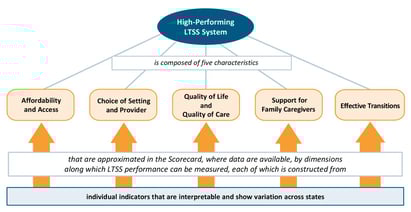
This week an article I saw caught my eye…every three years AARP conducts and publishes a scorecard on how each state performs with regard to caring for our elderly, primarily centered around long-term services and support, basically long-term care. There were five main areas of focus for the study, Affordability and Access, Choice of Setting and Provider, Quality of Life and Quality of Care, Support for Family Caregivers, and Effective Transitions. Now people may say what does this have to do with me? I am working, I have a family, and saving for retirement, I am not interested in long-term services for the elderly.

That may be the case, but if you are on the earth and living, then you have parents who may still be living, and at some point you will have to assist them. Or you are older and you can see the top of the mountain you have been climbing for the past 30 plus years and retirement is getting closer; perhaps you need to stop for a moment on the journey and rearrange the gear in your pack, pickup a few tools to make the decent down the mountain much easier and more secure.  Either way this is for you.

Here are some highlights on this interesting article that are important for us to learn.1497018516323_2484036_1497017731134.jpg

Most states saw some improvement in fact more improved than declined. Few had meaningful improvement over 10 percent in any one category. The study reported: "Most notably, the majority of the states had no meaningful change in each of the five measures in the Affordability and Access dimension. The cost of Long-term Services and Support (LTSS) over time remains much higher than what middle-income families can afford, and most adults do not have private long-term care insurance."                                     Source: State Long-Term Services and Supports Scorecard, 2017.

It was interesting to see that there was no improvement in the vast population of this country in regards to people becoming more prepared for their future by purchasing Long-term Care Insurance.

One area where there was significant improvement was in the area of Family-Centered Care. Family caregivers provide the majority of care for the elderly and recognizing their needs is a positive signal. The article discussed the success measured across the following three main areas:

  • Family caregivers are assessed for their own needs;
  • States have adopted spousal impoverishment provisions in Medicaid home and community-based services; and
  • States have enacted the Caregiver Advise, Record, and Enable (CARE) Act to notify the family caregiver before the person is discharged from the hospital and to instruct the caregiver on how to perform follow-up medical/nursing tasks."

Families that care for their parents are true angels and it can be so difficult for them, many work and have children at home complicating matters more. Receiving some support in the form of education and understanding of what needs to be done to take care of your partents is huge.

One area where improvement was not so dramatic was in Effective Transitions. Effective Transitions is the process of moving a person from a hospital to a nursing care facility to recuperate and then back into their community. The aim is to help people who have been in nursing homes 90 or more days to transition back into the community. Only a few states saw improvement in this area.

The benefit of this is that people are really more comfortable in their own surroundings, in their own home, which is where they should be. The challenge is that only about 5 percent of people  on average who have been in a nursing home greater than 90 days transition back home. Receiving care at home is less expensive as well - saving retirees thousands of dollars.

The bottom line is that state law, best practices and the way people are cared for are changing. If people want to be cared for in their advanced age, it is best to make a plans now, if your parents are retired or over age 50, talk to them about their plans. The government has a plan for you - you will be cared for in one way or another, it may not be a the way you would like, but you will get care! Let your family members know what your plans are and make your wishes known (in writing). Helping those closest to you understand what to do to help is one of the kindest things you can do. Nobody wants to improperly care for a parent or other family member.

Educate yourself on the ins and outs of Long-term Care, learn the differences between assisted living, home health care, and nursing home care. What are the long-term care triggers, and how do they work? Review your budget and look at how you would pay for the different levels of care. Part of your plan may include obtaining some long-term care insurance, make sure the premiums are guaranteed for life. It can be difficult to pay into a policy for several years only to get an unaffordable premium increase.

For more information on other long term articles you can look hereor here. To see how your state did in the AARP study you can look here. The report was well done and offered some real insights into the overall needs of one of our nation's most valuable resources, our seniors.

REMEMBER:

I wish my wallet came with FREE refills! ~ Anonymous

Topics: Long term care, Long term care insurance, Long-term Support and Services

120514_WWBrock_1

Wendell W. Brock, MBA, ChFC

Subscribe by Email

Follow Me

Most Popular Posts

Other Sites I Follow, hobbies, fun and info:

gold-vs-silver-1.jpg  Nauvoo Mint brokerage services for precious metals


john Mauldin chair

Note:

Outside Economics is not a registered investment advisory firm (RIA) and does not act as an RIA. Outside Economics does not provide any specific investment advice. Any information obtained from this website or through one of  Outside Economics' representatives should be reviewed by a professional.

Subscribers Note: We do not sell our email list. Period. Thank you for subscribing.

Recent Posts