Outside Economics

Consumer Spending & GDP

Posted by Wendell Brock on Thu, Jun 27, 2024

Consumer Spending & GDP

  • Wendell Brock
  • Jun 27, 2024
  • 1 min read

Consumer spending is a key indicator of economic success and a major driver of the economy. It’s a primary determinant of economic performance and can lead to increased production of goods and services, higher GDP, and job creation. Consumer spending continues to climb, especially for lower-income households. Lower-income spending growth continues to be more than higher-income households. Earlier tax refunds tend to inflate those numbers, as people spend their tax return money. Total spending per household rose 1% year-over-year in April, following a rise of .3% rise in March.


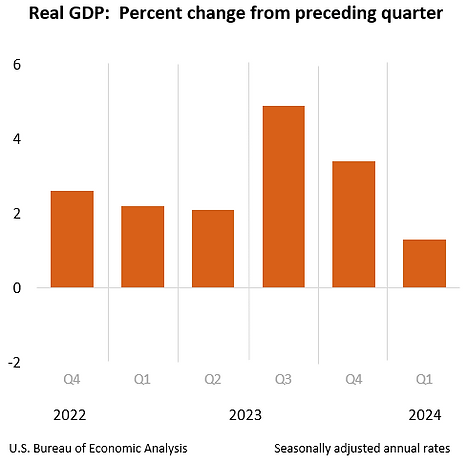
The growth rate of real gross domestic product (GDP) is a key indicator of economic health and activity. As of April 25,2024, the US GDP was $28.28 trillion, which is a 5.49% increase from April of last year. When adjusted for inflation, the GDP increased at an annual rate of 1.6% in the first quarter of 2024, which is a decrease from 3.4% from fourth quarter of 2023. The increase in the first quarter was due to higher consumer spending.


Should You Take an Interest In Your Interest Rate?

Posted by Wendell Brock on Thu, Jun 27, 2024

Should You Take an Interest In Your Interest Rate?

  • Wendell Brock
  • Jun 27, 2024
  • 2 min read

People always ask me where the interest rates are  going. If I knew that, I’d be living on an ivory tower some place making millions. That fact is companies and experts can try and predict, or forecast, where interest rates will go, but there is no way to tell for sure. There are many factors that determine what the interest rate will be including things like Central Bank policy, inflation expectations, national economic conditions, global economic conditions, as well as many other things.


Interest rates are essentially the cost of borrowing money or the rate of  return on investments for lending  money. When you take out a loan you typically pay back more than what you borrowed. That additional amount is the interest. Interest rates are expressed as a percentage of the total amount of borrowed money. These could be fixed rates (meaning they stay the same over the life of the loan) or variable rates (meaning the rate changes based on market conditions). Central banks, like the Federal Reserve, set benchmark interest rates, which influences the rates at which banks lend to each other. Changes in benchmark rates ripple through the economy and affect borrowing and  lending rates for consumers and businesses.


On May 1, 2024, the Federal Reserve made the decision to keep its benchmark rate unchanged. The federal funds rate is the interest rate that banks lend or borrow funds from each other overnight to meet reserve requirements or manage their short-term liquidity needs. When the Fed lowers interest rates, it means that it reduces the target range for the federal funds rate. This latest decision by the Fed is the sixth consecutive in which they have kept its policy rate steady between 5.25% and 5.5%. Rates have not moved since the start of 2024 after eleven rate hikes between 2022 and 2023.


Interest rates can act like a barometer, giving us an idea of how the economy is performing. In an effort to stabilize the economy, the Federal government will adjust the prime interest rate. If the economy is performing well, interest rates will typically be higher, but when there is an economic slowdown, interest rates will come down to stimulate consumer spending and economic growth.


It’s important to understand how interest rates affect your personal financial   economy as well as your community. Interest rates play a crucial role in the financial landscape of our nation and influence everything from the cost of borrowing money to the return on your investments. Whether it’s interest you pay on an auto loan or home mortgage, or interest you earn on your investments, you should always be aware of the interest rates that affect you. Interest rates play a critical role in our lives and are something we should always take an interest in.


Gross Output

Posted by Wendell Brock on Sat, May 25, 2024

Gross Output

  • Wendell Brock
  • May 25, 2024
  • 1 min read

Gross output is used to measure the total economic activity of a business or industry. Where GDP only accounts for the final goods and services provided, GO includes both the final output as well as costs of production. This makes it a more comprehensive measure of economic activity and gives us a broader and more complete picture of the health of the     current economy.


Example: A manufacturer buys leather, rubber for soles, laces, foam insoles, as well as other small items to produce shoes. They also use energy to run their facility and the equipment used to produce their product. The manufacturer pays one employee to help assemble the shoes and another to transport the finished product to customers or retailers. All of these costs are factored into the gross output. In our example, the manufacturer’s gross output is the revenue earned from the selling of their products.


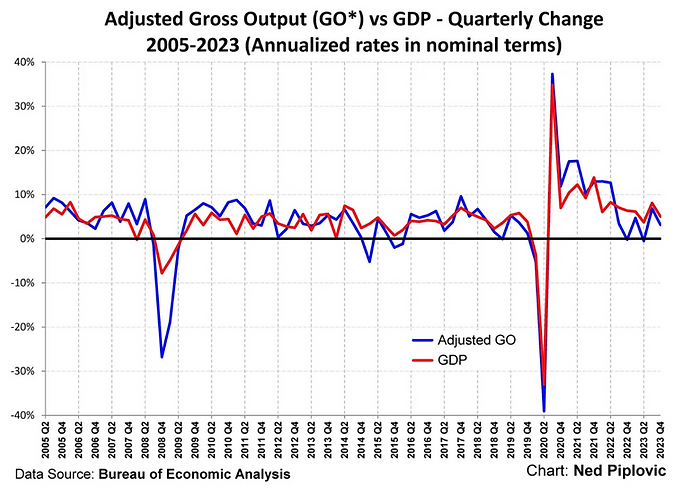
As of March 2024, the U.S. Gross Output has not looked healthy and has trailed the GDP growth rate for the last few quarters. Business spending has shown no real growth since the beginning of 2022. Consumer spending outpaced business spending growth. Unlike consumption, business spending is more volatile and sensitive to economic fluctuations.

The latest GO report showed a rise of 2.4%, which is quite a bit lower than the 3.5% growth from the previous period and trails the 3.4% growth of GDP. In general, when the GO trails the GDP, it usually foreshadows trouble.


The Heartbeat Of Our Country

Posted by Wendell Brock on Wed, May 22, 2024

The Heartbeat Of Our Country

  • Wendell Brock
  • May 22, 2024
  • 2 min read

2024 has undoubtedly been a newsworthy year, and we’re only one quarter through! Between the shouts of wars and cries for cease fire, attacks on shipping vessels, thundering earthquakes, the crash and splash of a massive bridge collapsing, the excitement of a solar eclipse, not to mention all the political noise of an election year it can be hard to focus on what’s going on in our country. Through it all, a steady pulse can be felt, the heartbeat of America- Small Businesses. Much like our own human hearts, most people don’t think about the steady thrum of these individual businesses, yet they work on, keeping the body of our economy alive.


According to SBA Office of Advocacy, small businesses have accounted for over 40% of our GDP over the last few decades. They contribute significantly to our local economies, circulating revenue and supporting other local businesses, which is vital to keeping our economy healthy. Small businesses help to stabilize our economy. These enterprises provide employment opportunities within our communities and bring creativity, and more competition to the marketplace. New and innovative ideas often come from small businesses, helping to drive our economy forward. Small businesses help to knit our communities together.


The U.S. Chamber of Commerce reports that there were 12.9 million jobs created by small businesses between 1996 and 2021, an average of 516,000 a year. After the pandemic we saw a surge, 5.5 million jobs created from small businesses from 2020 to now, an average of 1,571,000 jobs a year.


Small businesses face plenty of challenges. They have limited access to capital compared to big corporations, increased pressure from other competitors, regulatory hurdles and red tape to deal with, not to mention the volatility of our current economic situation. Recession and inflation have been a huge obstacle for small businesses. Over 50% of small business owners say that inflation is their top challenge (U.S. Chamber of Commerce 2023).


Without small businesses pumping life into our economy the American people and our economy would experience a tremendous strain, on both a national and local scale. The consequences would reach far beyond the loss of millions of jobs. Small businesses contribute  substantially to our economy, without their contribution economic growth and innovation would slow. We would see reduced consumer spending and investing, which could lead to a recession. We would see supply chain disruptions and kinks in our supply chain which affect  other parts of our economy. We would lose the uniqueness and diversity we gain from having so many different businesses, which would result in a                  concentration of economic power in the hands of larger corporations, reducing competition. Without small businesses the government would lose a substantial amount in tax revenues, which would put pressure on government budgets, potentially leading to cuts in  public services and higher taxes on personal wages. 


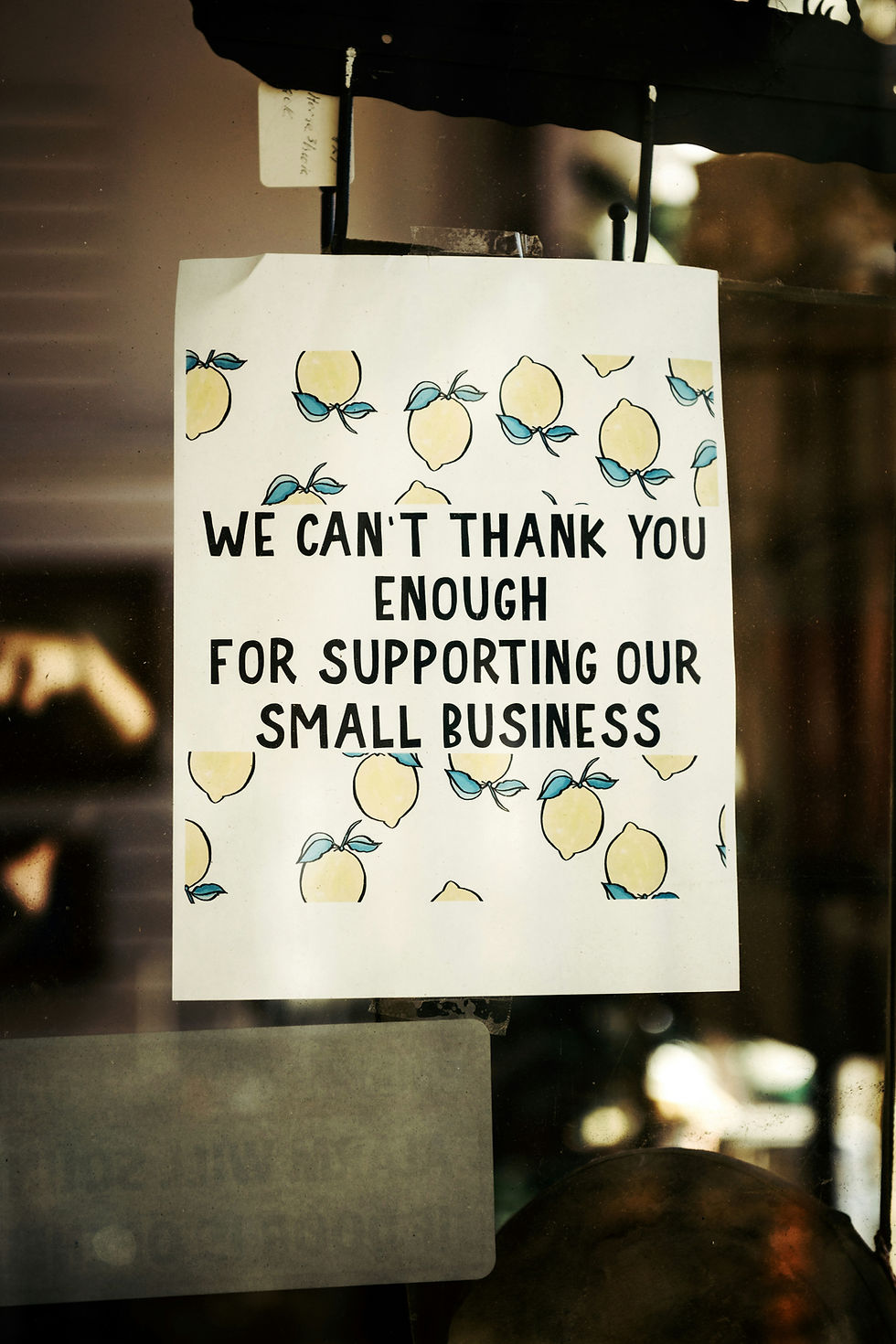
It's crucial, more now than ever, to support small business and create a more stable and healthy economy. The importance of small businesses cannot be overstated. When we support small businesses, we ensure that steady life giving pulse will endure, giving life to our country for decades to come.


Photo 2 by: Tim Mossholder


Bringing Back the Blue Collar

Posted by Wendell Brock on Wed, May 15, 2024

Bringing Back the Blue Collar

  • Wendell Brock
  • May 15, 2024
  • 2 min read

We’re seeing a shift in the popularity of collar colors. For years parents and high school councilors have  encouraged young people to pursue traditional college educations and settle into a high paying white-collar job with a white picket fence to go with it. The prioritization of college degrees over trade careers has created an increasing shortage of skilled blue-collar workers in the US. There are over 9 million unfilled blue-collar jobs. So what do we do when the backbone of our economy starts to give out?


There is a demand for skilled trades people, which is outpacing the supply of people qualified to fill those roles. This shortage has increased the demand, which in turn has increased what businesses are willing to pay those workers. Between 2010 and 2012 the wage increase for blue color jobs went up only .6% compared to the increase of 4.5% for white collar jobs. However, between 2020 and 2022 those same blue color jobs increased pay by 14%, where the white-collar jobs only saw an increase of 7.5%. Wage gains for some blue-collar jobs have started to outpace gains for white collar jobs over the last three years. The combined shortage of trade workers and higher pay is driving up costs, creating a domino effect in our economy.


The starting pay for most white-collar jobs is still higher than entry level blue-collar jobs, but under the latest economic stress we’re seeing more and more layoffs in the white-collar world. Companies are turning to AI, replacing many employees as businesses try to cut back and ease the pinching pressure of our struggling economy. The result: many white-collar jobs are not as stable as they used to be.


Eight of the ten highest earning industries for small business ownership come from blue-collar industries including: construction, roofing, flooring, painting, heating & air conditioning, carpentry, plumbing, and electrical- all of which can earn more than $5,000 a month. This challenges the idea that you need to have a four-year degree in order to stand amongst the top earners of the country.


Blue-collar workers have always been the backbone of the United States and play a vital role in the American economy. In order to fuel a healthy economy, we need to find a balance between the blue-collar and the white-collar, this may require a shift in perspective as we help the young and upcoming workforce realize that blue-collar jobs are worth investing their time in. This country was built on the hard work of people willing to get their hands dirty and put in the extra effort.


Photo by: Jason Richard


So You Want To Invest?

Posted by Wendell Brock on Thu, Apr 18, 2024

So You Want To Invest?

  • Wendell Brock
  • Apr 18, 2024
  • 3 min read

When you invest your money, you’re making your money work for you. Even small amounts of invested money can earn you money due to the power of compounding.  Investing can generate wealth, help you meet financial goals, and aid in securing a solid retirement.

Investing is a personal thing, there is no one set plan for everyone, and your strategy will depend on your own personal financial situation, how long you have to invest, as well as how much risk you are willing to take.


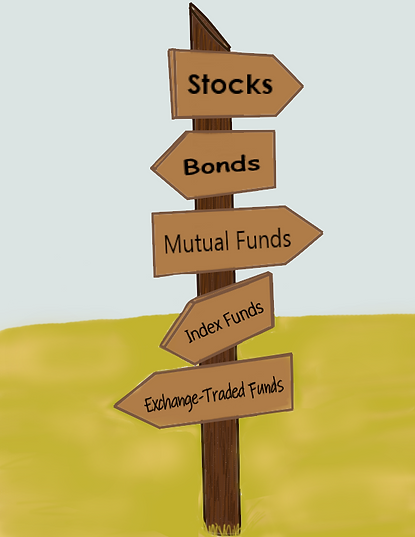
Let’s look at a few of the most common types of investments.


Stocks

Stock is a share in the ownership of a specific company; it represents a small piece of a company’s assets and earnings that you get to claim. Companies sell shares of stock to raise cash. When the value of a company goes up, it’s reflected in the value of their stock. Investors make money on stock when they sell it for higher than what they purchased it. Some stocks also pay dividends to investors, which are distributions of the company’s earnings. Stocks have the potential to earn high returns but can also come with a high risk because the company can lose money or even go out of business.


Bonds

A bond is a loan that you make to the government or a company. When you purchase a bond, you allow the issuer to use your money and pay you back with interest, which is typically paid to investors once or twice a year. The total principal is paid back at the bond’s maturity date. Bonds are usually considered to be low risk, but they usually offer lower returns. Government bonds, especially U.S. Treasury securities, are considered to be the safest investment option available. This is because they are backed by “full faith and credit” of the United States.


Mutual Funds

For a lot of people picking individual stocks can be overwhelming or undesirable. That’s where mutual funds come in. Mutual Funds allow investors to purchase bulk stocks in a single transaction. Mutual funds pool money from multiple investors which gives it more purchasing power. A professional manager uses the invested money to purchase stocks, bonds, and other assets for the fund. Mutual funds follow a predetermined strategy and focus on investments that fall in line with it. When the mutual fund earns money, it distributes a portion of that to the investors of the fund.


Index Funds

Index funds are special mutual funds or ETFs with a portfolio of stocks / bonds that track and mirror an index, like the S&P 500, and hold investments from that particular index. This cuts out needing an active manager and results in lower fees. Index funds have    become more popular over the last decade.

Exchange-traded funds (ETFs)

ETFs are investment funds that trade on the stock exchange. They are similar to individual stocks but are designed to track the performance of a particular index, commodity, sector, or asset class. This allows for a diversified portfolio of assets and exposure to various markets and industries. Like mutual funds, ETFs are passive, which results in lower fees.


There are many other types of investments with varying degrees of risk. Finding the right type of investments for you may take time and research. When investing, remember to consider your financial goals, your personal risk tolerance and find companies or other investments that you understand. If you have questions, please don’t hesitate to contact our office. It’s always wise to seek professional advice before jumping into an investment.


Industrial Production Index

Posted by Wendell Brock on Thu, Apr 18, 2024

Industrial Production Index

  • Wendell Brock
  • Apr 18, 2024
  • 1 min read

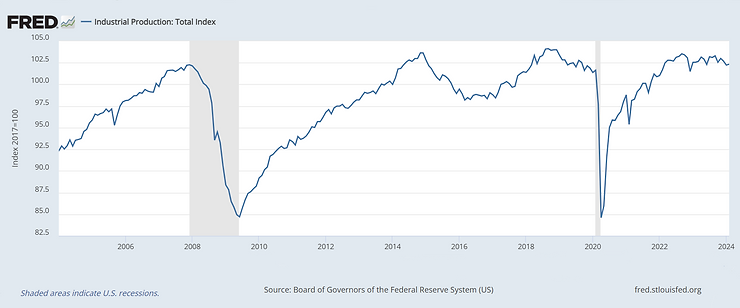
When economists refer to industrial production they are referring to the output of industrial establishments, which covers sectors like mining, manufacturing,  electricity, gas, and air-conditioning. The industrial production index (IPI) shows us the change in volume of production output from these sectors.


The IPI is published in the middle of the month by the Federal Reserve Board. It measures levels of production and the capacity of the manufacturing sector relative to a base year, which is currently 2012. IPI does not express absolute production volumes,  rather the percentage change in production relative to the base year. Revisions are then made to previous estimates based on the data expressed within the index and released at the end of the month.


The IPI is an important economic indicator for economists and investors, especially those     investing within specific lines of business. Fluctuations at the industrial level trickle down to other sectors and account for most of the variation in overall economic growth. The monthly  index helps alert investors to any shifts in output.


Annual changes in industrial production help us see and better understand the state of our economy and where we are within an economic cycle because the production of consumer durables and capital goods tends to decrease during economic downturns. Even though the industrial sector only accounts for a portion of our economy’s total output (less than 20% of GDP) it is still a leading indicator of economic performance due to its direct link to consumer demand and interest rates.


Is Cash Still King?

Posted by Wendell Brock on Wed, Apr 17, 2024

Is Cash Still King?

  • Wendell Brock
  • Apr 17, 2024
  • 2 min read

It seems like everything is available online these days. With more and more of our lives moving online (communication, work, scheduling, meetings, socializing, games, and so much more) is it any surprise that 81% of Americans shop online? In 2023 there were 274.7 million online buyers. A 2023 study done by the Federal Reserve found that credit cards were the most preferred payment method for most US consumers, making up 31% of all payments. The myriad online purchases and the ever-increasing push towards digital currency begs the question: does cash still have a place in our economy?


While shopping online has certainly made some things easier and more convenient cash isn’t quite ready to give up the crown. There are still a lot of benefits to using cash.


In an economy where every penny matters, using cash helps pinch those pennies a little more because it incurs no fees. In contrast, every time you swipe a card, you’re being charged a processing or transaction fee.


Shoppers that use cash don’t have to worry about overspending because they are limited to what they have in their wallet. Using cash goes beyond just what consumers carry with them; a study done by MIT showed that people are willing to spend up to 100% more on transactions that involved digital payments. Often, using digital currency gives people the feeling they have more spending power than they actually do.


Paying with cash can keep you from impulse spending. This is very beneficial when budgeting and allotting certain amounts of money for each area of spending. 


Paying with cash helps small businesses. Every time a customer swipes a card the credit card companies charge fees the small business must pay. In the long run, handling cash is cheaper for business.


Cash can offer better privacy when it comes to your personal information. When using digital payment methods, you leave a digital trail which can be picked up by hackers and other cyber criminals.


There are some downsides to cash, while your personal information is safer with cash, the risk of loss is higher and much more difficult to rectify. Whereas, credit cards and mobile wallets can be frozen, and often reimbursed. Another drawback to cash is its bulk. Carrying stacks of bills and cumbersome coins can be bothersome, especially when compared to the slim credit or debit card.


Whether using cash or digital currency there will be limits and advantages to either. It’s best to find a balance that works for your budget and helps you create and keep healthy spending habits.


 Photo 2 by Nathan Dumlao


Money Supply

Posted by Wendell Brock on Mon, Mar 25, 2024

Money Supply

  • Wendell Brock
  • Mar 25, 2024
  • 1 min read

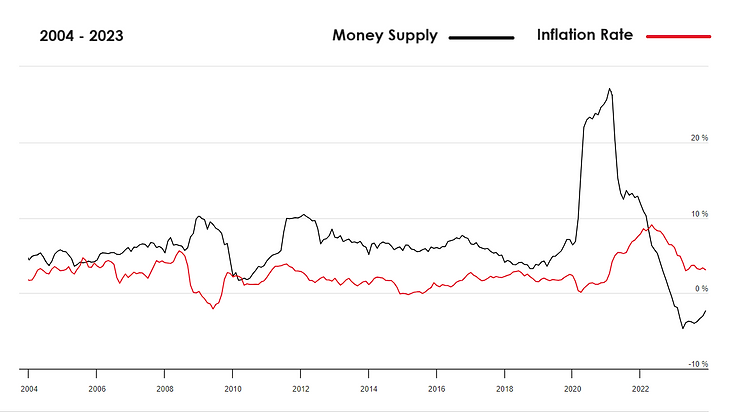
Money supply refers to the volume of money held by the public at a particular time, this includes the currency in circulation (physical cash) and demand deposits (the assets on the books of financial institutions). The record of money supply is kept by the Central Bank of the country. 

Changes in the money supply have been seen as a key factor in driving the economy and business cycles. In the past, measuring the money supply has shown correlation between money supply and inflation as well as between money supply and price levels. However, over the last couple of decades, the relationship between money supply and inflation has become less predictable, making it less reliable as a guide for monetary policy. For this reason, monitoring money supply is used along side other economic measures, which allows for a broader, more accurate picture of the economy.

When the supply of money circulating increases, we typically see lower interest rates, which then generates more investment and puts more money back into circulation for consumers, which then leads to more spending. However, we can see the inverse of this when money supply falls or growth rate declines. When this happens, banks lend less, consumer demand declines, and people tend to hold on to their money rather than spending it, decreases again the amount of money in circulation. Further effects can be seen as businesses slow growth or lay off employees and home and car loans decline.


Understanding the Basics of Medicare

Posted by Wendell Brock on Mon, Mar 18, 2024

Understanding the Basics of Medicare

  • Wendell Brock
  • Mar 18, 2024
  • 3 min read

Turning 65 can mean a lot of things, but for most people it means signing up for Medicare. This can be a confusing thing to navigate. Let’s take a look at some Medicare basics and what your options are.


Medicare is a federal health insurance program. Those who are turning 65 can sign up between three months before their birth month and three months after their birth month, providing a 7-month window.


There are different parts of Medicare to cover specific services.

Medicare Part A (hospital insurance) covers inpatient hospital stays, care in a nursing facility, hospice, and some limited home health care. Normally, you don’t pay a monthly premium for Part A. There are some people who are not eligible for premium-free, but might be able to purchase Part A.


Part B (medical insurance) covers most doctor visits, outpatient care, medical equipment, diagnostic testing, ambulance service, and preventative services. Part B requires a premium amount, which for most people in 2024, is $174.70 per month and an annual deductible of $240. After the deductible is met, Medicare Part B covers 80% of your covered medical services, the remaining 20% you pay out of pocket.


Medicare Parts A & B are often called Original Medicare. Original Medicare pays most, but not all, of the costs of covered health care services. A Medicare Supplement Insurance, also known as Medigap, can help pay some of the remaining costs of your health care. This includes things like copayments, coinsurance, and deductibles, (the 20% from above). Some Medigap policies may also cover services or supplies Original Medicare doesn’t cover. Generally, you must have Medicare Parts A & B to buy a Medigap policy. One of the big advantages of a Medigap policy is you have the freedom to see any doctor that accepts Medicare.


Part C is known as Medicare Advantage and offers an optional, alternative way to receive your Original Medicare benefits. These plans are offered and managed by private health maintenance organizations (HMO’s). Instead of having Original Medicare, Parts A & B, you would have a managed plan like an HMO. To be eligible, you must already be enrolled in Parts A & B. These plans will cover the same services that traditional plans cover, but the independent HMO are allowed to set their own cost share requirements as well as their own co-pay and coinsurance amounts that you are responsible for paying. These costs are subject to increases as per the HMO. They also have different rules for how you can receive services. A downside to Medicare Advantage plans is they don’t always cover certain expenses when you get sick, resulting in unforeseen out-of-pocket costs, and what you end up paying for these plans can differ depending on your overall health. A significant limitation is Medicare Advantage plans use a network of doctors and hospitals, restricting your care to a list of approved doctors and facilities.


One challenge with the Medicare Advantage plans is that they can leave a market area and stop covering people in that area. Leaving these people to wake up one day with no additional coverage other than their original Medicare parts A & B. Medicare Supplement insurance companies can’t do that, providing you with reliable coverage. Once you are covered, the only way to lose the policy coverage is to stop paying the premiums. 


Part D helps pay for prescription drugs and recommended shots and vaccines. To get Medicare drug coverage, you must join a Medicare-approved plan that offers drug coverage. Each plan varies by cost and specific drugs covered, but they all must provide at least the standard coverage set by Medicare.


Deciding what coverage works best for you and your situation can take some research and consideration and will depend on your own personal factors. Do your homework and review each plan and its pricing.

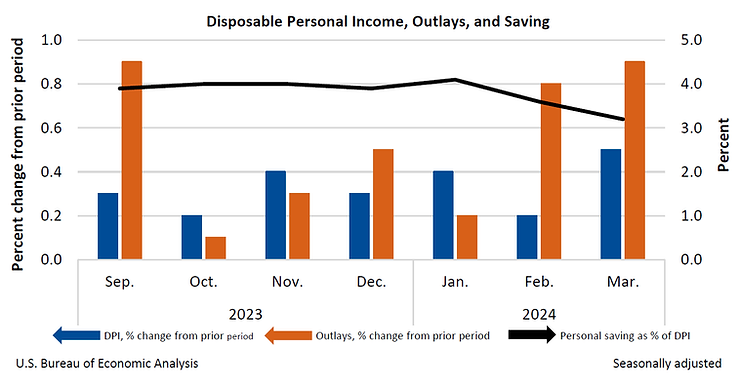
 

Photo 1 by Marcelo Leal

Photo 3 by freestocks


120514_WWBrock_1

Wendell W. Brock, MBA, ChFC

Subscribe by Email

Follow Me

Most Popular Posts

Other Sites I Follow, hobbies, fun and info:

gold-vs-silver-1.jpg  Nauvoo Mint brokerage services for precious metals


john Mauldin chair

Note:

Outside Economics is not a registered investment advisory firm (RIA) and does not act as an RIA. Outside Economics does not provide any specific investment advice. Any information obtained from this website or through one of  Outside Economics' representatives should be reviewed by a professional.

Subscribers Note: We do not sell our email list. Period. Thank you for subscribing.

Recent Posts